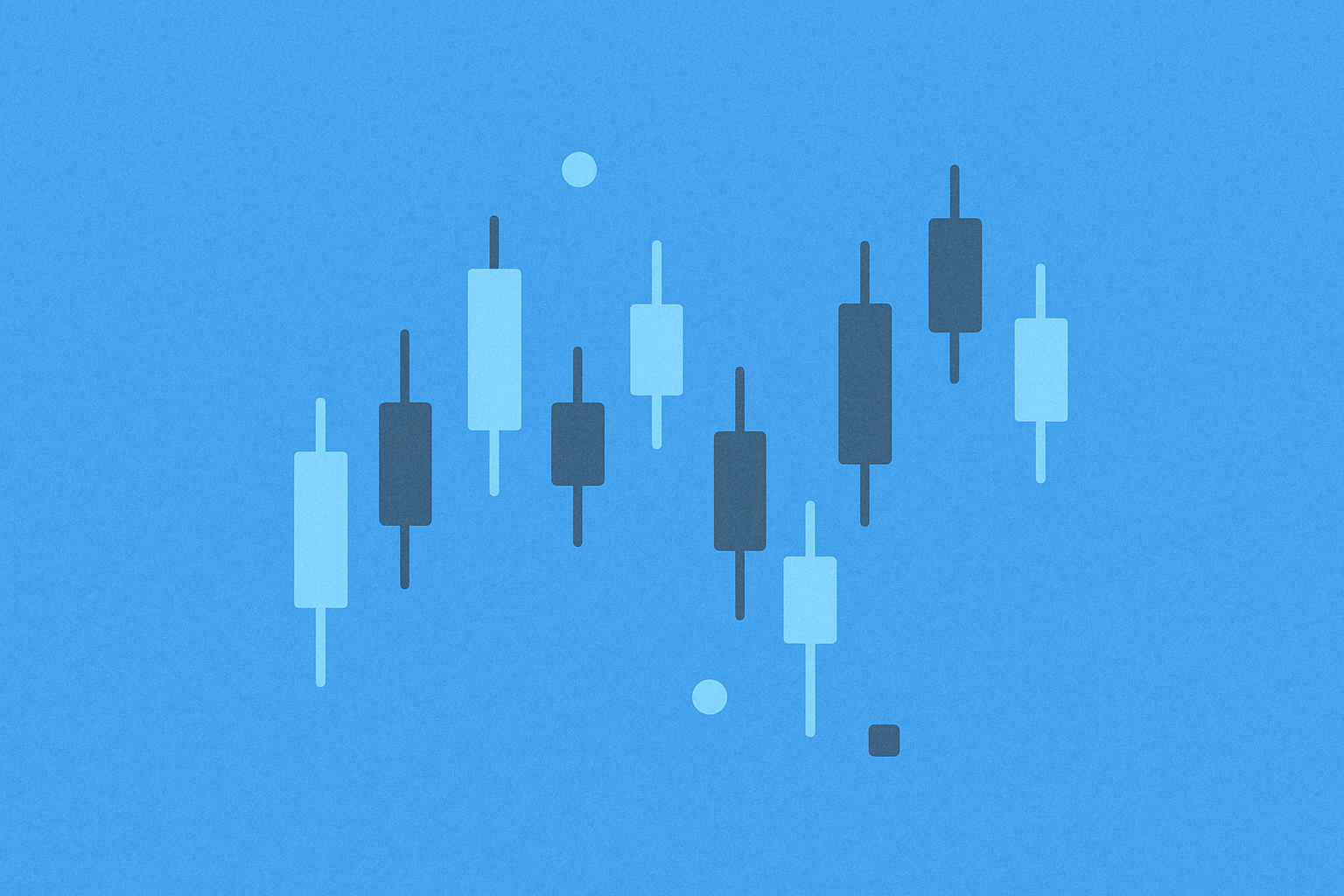
This comprehensive guide explores candlestick patterns as essential tools for cryptocurrency trading on platforms like Gate. Learn how candlestick charts visualize price movements through open, close, high, and low data points, revealing market psychology through color-coded patterns. Master eight critical patterns—including Hammer, Inverted Hammer, Bullish Engulfing, and Morning Star for uptrend reversals, plus Hanging Man, Shooting Star, and Bearish Engulfing for downtrend signals. Discover how to identify each pattern's key characteristics, optimal entry points, and confirmation requirements for reliable trading decisions. Enhance your analysis by combining candlestick patterns with technical indicators like RSI, Moving Averages, and Bollinger Bands to reduce false signals and improve accuracy. This guide equips both day traders and long-term investors with actionable strategies for recognizing reversal points and market sentiment shifts in volatile crypto markets.
A candlestick represents the price movement of an asset over a specific time period. Each candlestick displays four essential elements that provide crucial information for traders:
- Open: The price of the asset at the beginning of the time period.
- Close: The price of the asset at the end of the time period.
- High: The highest price reached during the time period.
- Low: The lowest price observed during the time period.
The candlestick body shows the difference between the opening and closing prices, while the wicks (or shadows) extend above and below to indicate the highest and lowest levels reached during that period. Understanding these components is fundamental to reading candlestick patterns effectively.
Candlesticks are typically color-coded to provide immediate visual information:
- Green (or White): The closing price is higher than the opening price, indicating a price increase and bullish sentiment.
- Red (or Black): The closing price is lower than the opening price, signaling a price decrease and bearish sentiment.
This color-coding system allows traders to quickly assess market direction and momentum at a glance, making candlestick charts one of the most popular tools in crypto trading.
Why Use Candlestick Charts?
Candlestick charts are powerful tools that visually reflect price movements and market psychology in ways that simple line charts cannot. By analyzing multiple candlesticks together, investors can identify potential price reversals, continuation patterns, and market sentiment shifts.
The primary advantages of using candlestick charts in crypto trading include:
- Visual Clarity: They provide a clear, intuitive representation of price action within specific timeframes.
- Market Psychology: Candlestick patterns reveal the battle between buyers and sellers, showing who is gaining control.
- Early Signals: Many candlestick patterns can provide early warning signs of trend reversals before they fully develop.
- Versatility: They work across all timeframes, from minute charts to monthly charts, making them suitable for both day traders and long-term investors.
- Historical Reliability: These patterns have been used for centuries and have proven their effectiveness across various markets, including the volatile crypto market.
How to Read Candlestick Patterns?
Candlestick patterns form over time and indicate trends, reversals, or indecision in the market. Reading these patterns requires understanding both individual candles and how they relate to surrounding price action.
A single candlestick provides clues about price movement within its time frame, such as:
- The strength of buying or selling pressure (shown by body size)
- The presence of rejection at higher or lower prices (shown by wick length)
- Market indecision (shown by small bodies or doji patterns)
However, multiple candlesticks create larger formations that reveal more about trend direction and potential reversals. These multi-candle patterns are generally more reliable than single-candle patterns because they represent sustained market behavior rather than momentary fluctuations.
When analyzing candlestick patterns, traders should consider:
- The preceding trend (uptrend or downtrend)
- The location of the pattern (support/resistance levels)
- Trading volume accompanying the pattern
- Confirmation from subsequent price action
Eight Essential Candlestick Patterns for Crypto Trading
Candlestick patterns are classified as either bullish (reversal to uptrend) or bearish (reversal to downtrend). Understanding these key patterns can significantly improve your trading decisions in the crypto market.
Bullish (Upward) Candlestick Patterns
Hammer
The Hammer is a single-candle pattern that forms at the bottom of a downtrend. It features a small body at the top of the candlestick with a long lower wick (typically at least twice the length of the body) and little to no upper wick.
This pattern indicates that despite strong selling pressure pushing prices lower during the session, buyers stepped in forcefully to drive prices back up near the opening level. The long lower wick represents the rejection of lower prices, suggesting that a reversal may be imminent.
For the Hammer to be most effective:
- It should appear after a significant downtrend
- The longer the lower wick, the stronger the signal
- Confirmation from the next candle (preferably a bullish candle) strengthens the pattern
Inverted Hammer
The Inverted Hammer appears at the bottom of a downtrend and features a small body at the bottom with a long upper wick and little to no lower wick. While it may seem counterintuitive, this pattern can signal a bullish reversal.
The formation shows that buyers attempted to push prices higher during the session, but sellers resisted and pushed prices back down. However, the fact that buyers were able to drive prices significantly higher at all suggests growing buying interest. If confirmed by subsequent bullish price action, the Inverted Hammer can mark the beginning of an uptrend.
Key characteristics:
- Forms after a downtrend
- The upper wick should be at least twice the length of the body
- Requires confirmation from the following candle
Bullish Engulfing
The Bullish Engulfing is a two-candle pattern that occurs at the end of a downtrend. It consists of a smaller red (bearish) candle followed by a larger green (bullish) candle that completely engulfs the body of the previous candle.
This pattern represents a dramatic shift in market sentiment. The first candle shows continued selling pressure, but the second candle demonstrates that buyers have overwhelmed sellers, pushing prices significantly higher and closing above the previous candle's opening price.
The Bullish Engulfing pattern is particularly powerful when:
- The second candle's body is significantly larger than the first
- It appears at a key support level
- Trading volume increases on the second candle
Morning Star
The Morning Star is a three-candle pattern that forms at the bottom of a downtrend and signals a potential reversal to an uptrend. The pattern consists of:
- A long bearish candle showing continued downward momentum
- A small-bodied candle (which can be bullish or bearish) indicating indecision
- A long bullish candle that closes well into the body of the first candle
This pattern illustrates a gradual shift in market control from sellers to buyers. The middle candle represents a pause in selling pressure, while the third candle confirms that buyers have taken control.
Piercing Line
The Piercing Line is a two-candle bullish reversal pattern that appears at the end of a downtrend. It begins with a long bearish candle, followed by a bullish candle that opens below the previous close but rallies to close above the midpoint of the first candle's body.
This pattern shows that although the session started with continued selling pressure, buyers entered forcefully and pushed prices significantly higher. The deeper the second candle penetrates into the first candle's body (ideally above 50%), the stronger the reversal signal.
Bearish (Downward) Candlestick Patterns
Hanging Man
The Hanging Man appears at the top of an uptrend and has the same structure as the Hammer (small body at the top with a long lower wick), but its location gives it a bearish implication.
Despite the uptrend, the long lower wick shows that sellers pushed prices significantly lower during the session, even though buyers managed to push prices back up by the close. This indicates that selling pressure is intensifying and the upward momentum may be weakening.
For a valid Hanging Man pattern:
- It must appear after an uptrend
- The lower wick should be at least twice the body length
- Confirmation from a subsequent bearish candle strengthens the signal
Shooting Star
The Shooting Star forms at the top of an uptrend and features a small body at the bottom with a long upper wick and little to no lower wick. This pattern signals that although buyers pushed prices higher during the session, they faced strong rejection, and the price closed near its opening level.
The long upper wick represents the rejection of higher prices, suggesting that sellers are gaining strength and a reversal may be approaching. The Shooting Star is particularly significant when it appears at resistance levels or after extended rallies.
Bearish Engulfing
The Bearish Engulfing is a two-candle pattern that occurs at the top of an uptrend. It consists of a smaller green (bullish) candle followed by a larger red (bearish) candle that completely engulfs the body of the previous candle.
This pattern indicates a powerful shift from bullish to bearish sentiment. The first candle shows continued buying pressure, but the second candle demonstrates that sellers have overwhelmed buyers, pushing prices significantly lower and closing below the previous candle's opening price.
The pattern is most reliable when:
- The second candle is substantially larger than the first
- It forms at a resistance level
- Volume increases on the bearish candle
Combining Candlestick Patterns with Other Indicators
While candlestick patterns are powerful on their own, they become significantly more effective when combined with other technical indicators. This multi-layered approach helps confirm signals and reduce false positives.
Key indicators to combine with candlestick patterns include:
-
Relative Strength Index (RSI): Helps identify overbought or oversold conditions that support reversal patterns. For example, a Hammer pattern combined with an RSI below 30 provides stronger confirmation of a bullish reversal.
-
Moving Averages: Can confirm trend direction and provide dynamic support/resistance levels. Candlestick patterns forming near major moving averages (such as the 50-day or 200-day MA) carry more significance.
-
Bollinger Bands: Help identify volatility and potential reversal points. Candlestick patterns forming at the outer Bollinger Bands often signal potential reversals.
-
Volume Indicators: Increasing volume during pattern formation strengthens the signal's reliability. A Bullish Engulfing pattern with high volume is more trustworthy than one with low volume.
-
Support and Resistance Levels: Candlestick patterns forming at key support or resistance levels are more likely to result in significant price movements.
By integrating multiple analytical tools, traders can build a more comprehensive view of market conditions and make more informed trading decisions in the volatile crypto market.
FAQ
What are candlestick patterns? How to read candlesticks in crypto trading?
Candlestick charts display crypto price movements within time periods, showing opening, closing, high, and low prices. Green candles indicate price increases, red ones indicate decreases. Each candle's body and wicks reveal market sentiment and potential trend reversals through pattern recognition and technical analysis.
Common candlestick patterns include what, and what market signals do they represent respectively?
Common patterns include hammer, doji, gravestone, shooting star, and morning/evening star. Hammer signals potential reversal upward with strong buying. Doji indicates indecision. Gravestone and shooting star suggest bearish reversal. Morning star predicts uptrend, evening star predicts downtrend based on transaction volume and price action.
How to identify and trade classic candlestick patterns like hammer, engulfing, and harami?
Hammer and harami appear at trend bottoms signaling reversal; engulfing patterns show trend changes when larger candles completely cover smaller ones. Bullish engulfing and hammer suggest upward moves; bearish engulfing indicates downward pressure. Confirm patterns with volume and price action before trading.
How accurate are candlestick pattern analyses in crypto trading?
Candlestick patterns in crypto trading typically have accuracy rates around 40%. Traders should combine patterns with other technical indicators to improve reliability. Patterns alone cannot guarantee trading success and should be used alongside additional confirmation signals.
How to combine K-line patterns with other technical indicators for more accurate trading decisions?
Combine K-line patterns with technical indicators like RSI, MACD, and moving averages to enhance signal reliability. Use volume confirmation and trend analysis together. For example, pair overbought RSI readings with bearish patterns. Always verify patterns with additional indicators before executing trades.
What are common misconceptions and risks to watch for when analyzing candlestick patterns in crypto trading?
Common pitfalls include over-relying on single patterns and ignoring market context. Key risks are neglecting market sentiment, trading volume changes, and external factors. Combine candlestick analysis with other technical indicators and fundamental analysis for more reliable trading decisions.
* The information is not intended to be and does not constitute financial advice or any other recommendation of any sort offered or endorsed by Gate.