# Article Overview: VTG vs XTZ - Emerging Blockchain Platforms Comparison
This comprehensive analysis compares Victory Gem (VTG) and Tezos (XTZ) across price performance, tokenomics, and investment value. The article evaluates two contrasting crypto assets: VTG, a gaming play-to-earn token on Binance Smart Chain, and XTZ, an established Layer-1 blockchain with formal verification security. Readers gain data-driven insights into historical price trends, market capitalization ($151,700 vs $600M+), technical ecosystems, and 2026-2031 price forecasts to determine optimal investment positioning. The guide addresses beginner to institutional investors, providing risk assessments, allocation strategies, and actionable recommendations. Trade both assets on Gate with real-time pricing and market data for informed decision-making.
Introduction: VTG vs XTZ Investment Comparison
In the cryptocurrency market, the comparison between Victory Gem (VTG) and Tezos (XTZ) reflects two distinctly different investment philosophies. The two assets differ significantly in market capitalization ranking, application scenarios, and price performance, representing contrasting positions within the crypto asset landscape.
Victory Gem (VTG): Launched as a token on the Binance Smart Chain, VTG has carved out a niche in the gaming and play-to-earn sector. Users can earn VTG by participating in multiplayer competitive games on nWayPlay, then utilize earned tokens to purchase NFTs that provide in-game utilities. The ecosystem includes officially IOC-authorized Olympic Games Jam titles.
Tezos (XTZ): Since its inception in 2018, Tezos has established itself as a decentralized blockchain platform focused on formal verification and self-evolving protocol governance. The network emphasizes mathematical certainty in transaction code accuracy and enhanced smart contract security, positioning itself as a universal and self-amending cryptographic ledger.
This analysis will comprehensively examine the investment value proposition of VTG versus XTZ across historical price performance, supply mechanics, market adoption, technical ecosystems, and forward-looking perspectives. We aim to address the core question investors face:
"Which is the better buy right now?"
I. Price History Comparison and Current Market Status
Victory Gem (VTG) and Tezos (XTZ) Historical Price Trends
- April 29, 2022: Victory Gem (VTG) reached its all-time high of $0.04579417.
- May 13, 2023: Victory Gem (VTG) touched its all-time low of $0.00005.
- October 4, 2021: Tezos (XTZ) reached its all-time high of $9.12.
- December 7, 2018: Tezos (XTZ) touched its all-time low of $0.350476.
- Comparative analysis: Victory Gem experienced a dramatic decline from its peak of $0.04579417 in April 2022 to $0.00005 by May 2023, representing a 99.89% decrease. Tezos demonstrated similar volatility, declining from $9.12 in October 2021 to current levels around $0.5504, though with longer market cycles and greater ecosystem development.
Current Market Status (January 6, 2026)
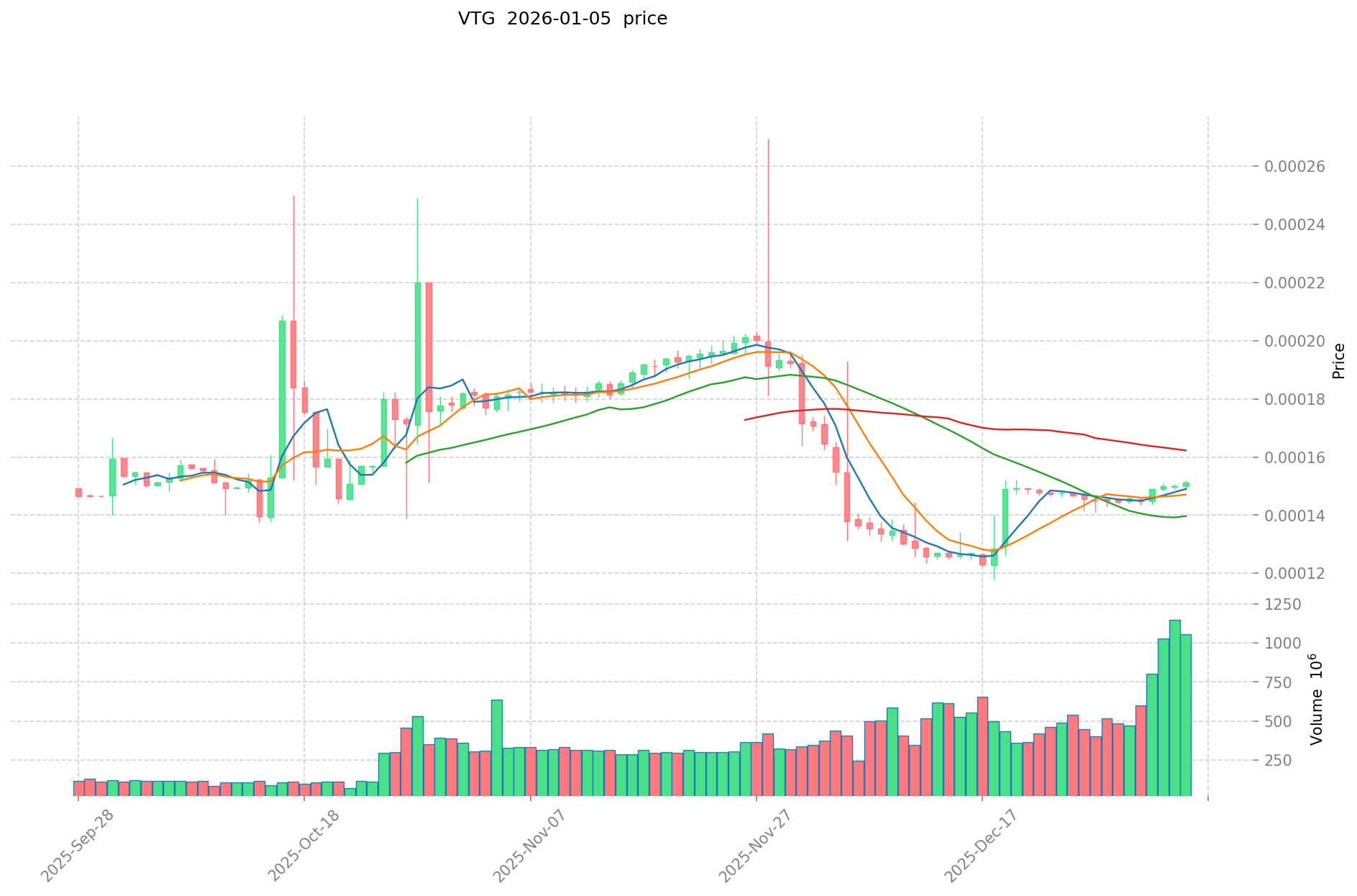
- Victory Gem (VTG) current price: $0.0001517
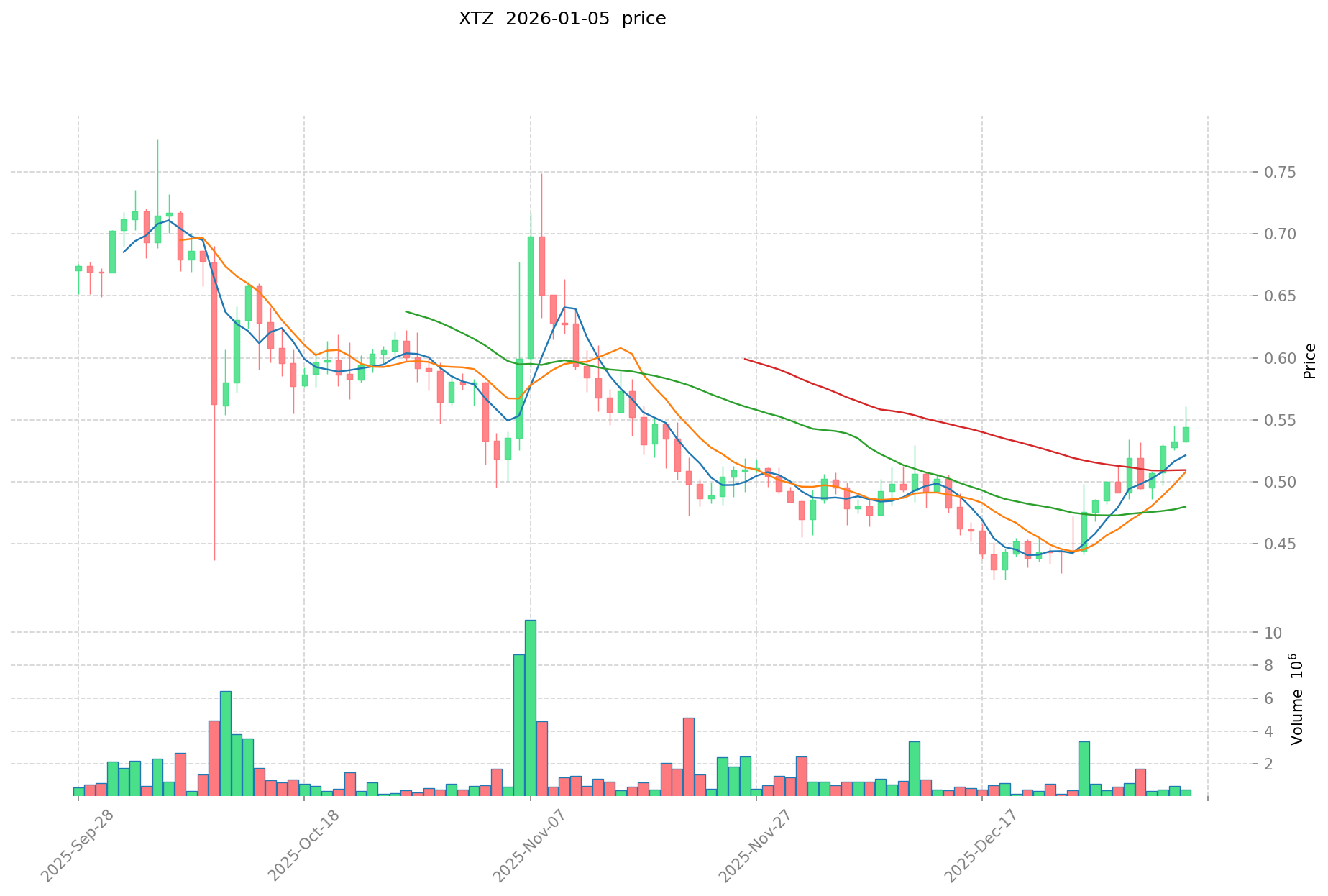
- Tezos (XTZ) current price: $0.5504
- 24-hour trading volume: VTG $73,327.41 vs XTZ $226,698.34
- Market capitalization: VTG $151,700.00 vs XTZ $600,583,608.94
- Market sentiment index (Fear & Greed Index): 26 (Fear)
View real-time prices:
II. Core Factors Affecting VTG vs XTZ Investment Value
Tokenomics Comparison
-
XTZ: Tezos features an unlimited maximum supply model, differing from fixed-supply assets like Bitcoin. Currently, 98.16% of total supply is in circulation (1.069 billion / 1.089 billion XTZ), with locked portions creating low inflation pressure and a mature supply structure. The unlimited supply framework may impact long-term scarcity and price appreciation potential, though high circulation rate indicates most tokens actively participate in the ecosystem.
-
VTG: Information on VTG's tokenomics is not available in the reference materials.
-
📌 Historical Patterns: XTZ reached an all-time high of $9.12 on October 4, 2021, representing significant appreciation from initial stages. However, the token experienced a 69.83% annual decline, demonstrating how supply dynamics and market cycles influence price trajectories.
Institutional Adoption and Market Application
-
Institutional Holdings: XTZ's institutional adoption remains moderate, with daily trading volume approximately $290,000, indicating medium liquidity and position volatility risk. VTG adoption data is unavailable in reference materials.
-
Enterprise Adoption: XTZ applications focus on blockchain infrastructure and protocol development rather than traditional cross-border payment or settlement use cases. The platform emphasizes on-chain governance and smart contract security through formal verification, positioning it within the developer and infrastructure segments.
-
National Policy: Global regulatory uncertainty represents a significant risk factor for both assets. However, specific country-level regulatory attitudes toward XTZ or VTG are not detailed in available materials.
Technology Development and Ecosystem Building
-
XTZ Technical Upgrades: The 18th protocol upgrade introduced a 1-day network cycle, enhancing staking flexibility and allocating 10% of rewards to data availability layers, strengthening Layer 2 expansion and raising Baker inactivity thresholds. The 17th upgrade reduced block time to 8 seconds with 16-second finality, optimizing staking mechanisms and improving economic models. These upgrades demonstrate continuous technical progress focused on scalability, developer experience, and smart contract security.
-
VTG Technical Development: Specific technical development information for VTG is not available in reference materials.
-
Ecosystem Comparison: Tezos supports modular architecture integrating Bitcoin, Ethereum, and Cryptonote protocols to construct a flexible multi-protocol ecosystem. The platform emphasizes formal verification to mathematically ensure transaction code accuracy and enhance smart contract safety, distinguishing itself from traditional blockchains requiring hard forks through on-chain governance enabling protocol evolution without network splits. However, formal verification improves security but cannot eliminate all smart contract risks.
Macroeconomic Factors and Market Cycles
-
Performance in Inflationary Environments: XTZ's unlimited supply structure may limit its anti-inflation attributes compared to fixed-supply assets. The 69.83% annual decline reflects substantial vulnerability to market downturns and crypto market cyclicality.
-
Monetary Policy Impact: XTZ demonstrates significant sensitivity to crypto market cycles and macroeconomic sentiment. Interest rate changes and dollar index fluctuations impact medium-sized crypto assets more severely than established cryptocurrencies. As a Layer-1 blockchain platform, XTZ competes with stronger platforms like Ethereum and Cardano, with market sentiment substantially influencing performance.
-
Geopolitical Factors: Information regarding geopolitical impacts on cross-border transaction demand or international situation effects on VTG or XTZ is not provided in available materials.
III. 2026-2031 Price Forecast: VTG vs XTZ
Short-term Forecast (2026)
- VTG: Conservative $0.00014402 - $0.0001516 | Optimistic $0.000222852
- XTZ: Conservative $0.296892 - $0.5498 | Optimistic $0.791712
Medium-term Forecast (2028-2029)
- VTG may enter consolidation phase, expected price range $0.00013897 - $0.000270729
- XTZ may enter growth phase, expected price range $0.418184 - $0.899491
- Key drivers: institutional capital inflows, ETF adoption, ecosystem development
Long-term Forecast (2031)
- VTG: Base case $0.000213060 - $0.000304372 | Optimistic scenario $0.000356115
- XTZ: Base case $0.613270 - $0.958234 | Optimistic scenario $1.111551
View detailed VTG and XTZ price forecasts
VTG:
| 年份 |
预测最高价 |
预测平均价格 |
预测最低价 |
涨跌幅 |
| 2026 |
0.000222852 |
0.0001516 |
0.00014402 |
0 |
| 2027 |
0.00026398866 |
0.000187226 |
0.0001591421 |
23 |
| 2028 |
0.000270728796 |
0.00022560733 |
0.0002053026703 |
48 |
| 2029 |
0.00026553982741 |
0.000248168063 |
0.00013897411528 |
63 |
| 2030 |
0.00035188990493 |
0.000256853945205 |
0.000133564051506 |
69 |
| 2031 |
0.000356115152329 |
0.000304371925067 |
0.000213060347547 |
100 |
XTZ:
| 年份 |
预测最高价 |
预测平均价格 |
预测最低价 |
涨跌幅 |
| 2026 |
0.791712 |
0.5498 |
0.296892 |
0 |
| 2027 |
0.82502988 |
0.670756 |
0.6036804 |
21 |
| 2028 |
0.8301611634 |
0.74789294 |
0.598314352 |
35 |
| 2029 |
0.899490838938 |
0.7890270517 |
0.418184337401 |
43 |
| 2030 |
1.07220886055513 |
0.844258945319 |
0.76827564024029 |
53 |
| 2031 |
1.111551327406995 |
0.958233902937065 |
0.613269697879721 |
74 |
IV. Investment Strategy Comparison: VTG vs XTZ
Long-term vs Short-term Investment Strategy
-
VTG: Suitable for investors focused on emerging gaming and play-to-earn ecosystem participation, with tolerance for extreme volatility and speculative positioning. Short-term trading opportunities may exist during consolidation phases, though liquidity constraints present execution challenges.
-
XTZ: Suitable for investors seeking protocol-level blockchain infrastructure exposure with emphasis on formal verification security and self-amending governance. Medium to long-term allocation appropriate for those believing in Layer-1 platform maturation and institutional adoption of decentralized infrastructure.
Risk Management and Asset Allocation
-
Conservative Investors: VTG 0% vs XTZ 5-10% (minimal exposure given XTZ's volatility; allocation limited to portfolio diversification purposes)
-
Aggressive Investors: VTG 5-15% vs XTZ 15-25% (VTG allocation constrained by liquidity and market capitalization; XTZ represents higher-conviction infrastructure play)
-
Hedging Tools: Stablecoin allocation for volatility management, dollar-cost averaging across forecast periods, cross-asset correlation monitoring with Ethereum and Cardano, multi-timeframe position sizing
V. Potential Risk Comparison
Market Risk
-
VTG: Extreme liquidity concentration ($73,327.41 daily volume) creates significant slippage risk and potential price manipulation vulnerability. Market capitalization of only $151,700 indicates micro-cap exposure with limited exit liquidity during market stress. The 99.89% decline from all-time high demonstrates catastrophic downside potential without fundamental support mechanisms.
-
XTZ: Moderate liquidity ($226,698.34 daily volume) and established market capitalization ($600,583,608.94) provide better trading execution, though the 69.83% annual decline reflects substantial vulnerability to crypto market cycles. Competition from larger Layer-1 platforms (Ethereum, Cardano) creates competitive displacement risk for developer adoption and ecosystem value capture.
Technology Risk
-
VTG: Limited technical information available in reference materials prevents comprehensive security assessment. Gaming and play-to-earn ecosystems face smart contract risk, user engagement sustainability risk, and NFT valuation dependency risks.
-
XTZ: Formal verification mechanisms improve transaction code certainty but cannot eliminate all smart contract vulnerabilities. Protocol upgrade complexity requires careful coordination to prevent unforeseen consensus issues. On-chain governance enables rapid adaptation but introduces political risk through Baker voting concentration.
Regulatory Risk
-
Global Policy Uncertainty: Both assets face indefinite regulatory exposure across major jurisdictions. Gaming tokens encounter intensified scrutiny in gaming-restricted markets. Blockchain infrastructure tokens face classification uncertainty regarding securities regulations and platform liability frameworks.
-
Enforcement Actions: Changes in enforcement priorities toward decentralized platforms or gaming-based tokens could rapidly impact valuations and operational viability.
VI. Conclusion: Which Is the Better Buy?
📌 Investment Value Summary:
-
VTG Advantages: Gaming and play-to-earn ecosystem participation, official Olympic Games partnership potential, early-stage speculative appreciation opportunity if ecosystem gains market traction
-
XTZ Advantages: Established protocol with 2018 genesis, formal verification security framework, continuous technical upgrades (protocols 17-18) demonstrating active development, significantly larger market capitalization and liquidity providing execution certainty, self-amending governance enabling long-term protocol evolution
✅ Investment Recommendations:
-
Beginner Investors: Focus allocation exclusively on XTZ (if any cryptocurrency allocation intended). XTZ provides superior liquidity, regulatory clarity as established infrastructure asset, and reduced execution risk. VTG exposure introduces prohibitive complexity and illiquidity challenges for retail market participants.
-
Experienced Investors: XTZ allocation (10-20% of crypto portfolio) provides infrastructure exposure balanced with macro crypto participation. VTG limited to 2-5% allocation only if possessing specific gaming ecosystem conviction and high risk tolerance; consider opportunistic accumulation during extreme oversold conditions ($0.00005 reference level) with strict position sizing discipline.
-
Institutional Investors: XTZ acceptable for diversified blockchain infrastructure mandates with established governance frameworks and upgrade mechanisms. VTG currently unsuitable due to illiquidity, micro-cap status, and insufficient institutional infrastructure (custody, trading systems, regulatory clarity).
⚠️ Risk Disclaimer: Cryptocurrency markets demonstrate extreme volatility with potential total loss probability. VTG exhibits 99.89% historical drawdown capacity; XTZ maintains 69.83% annual decline vulnerability. This analysis does not constitute investment advice. Investors must conduct independent research, assess individual risk tolerance, and consult financial advisors before asset allocation decisions. Past price performance does not guarantee future results.
FAQ
VTG和XTZ分别是什么?有什么区别?
VTG是Verge项目的代币,主要关注隐私保护和交易速度。XTZ是Tezos项目的代币,专注于链上治理和智能合约。两者分属不同公链生态,功能定位和技术方向有明显差异。
VTG和XTZ的技术特点和共识机制有什么不同?
VTG采用权威证明(PoA)共识机制,专注供应链和企业解决方案;XTZ采用权益证明(Baking)共识,强调链上治理和智能合约功能。两者技术路线和应用场景差异明显。
VTG和XTZ哪个更安全?风险分别是什么?
XTZ安全性更高,具有成熟的链上治理机制。VTG主要风险是监管不确定性,XTZ风险在于网络升级复杂性。两者都需谨慎评估。
VTG和XTZ的应用场景和生态发展现状如何?
XTZ是智能合约平台,应用于DeFi、NFT等领域,生态发展成熟。VTG信息有限,建议查阅官方资料了解其具体应用场景和生态进展。两者都在不断完善生态建设。
VTG和XTZ作为投资对象,哪个更有潜力?
XTZ在智能合约和治理方面应用更广泛,生态更成熟。VTG的应用场景不够明确。从长期发展潜力看,XTZ更值得关注。
VTG和XTZ的交易流动性和市场规模对比如何?
XTZ的市场规模和交易流动性明显优于VTG。XTZ作为知名公链,具有更大的市场认可度和更高的交易活跃度,而VTG的交易流动性相对较低,市场参与度有限。
* The information is not intended to be and does not constitute financial advice or any other recommendation of any sort offered or endorsed by Gate.