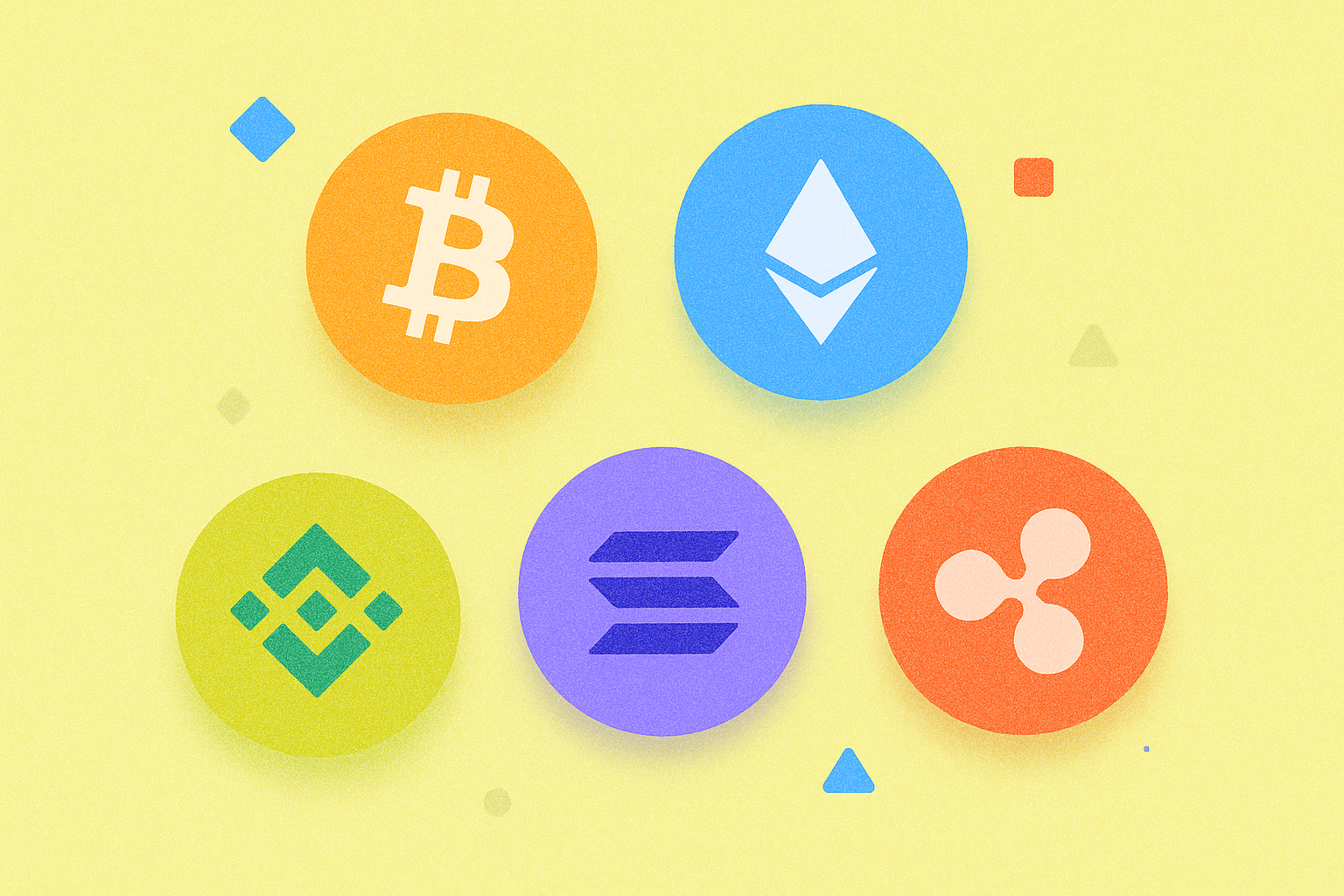
This article examines the competitive landscape of top five cryptocurrencies in 2026: Bitcoin, Ethereum, BNB, Solana, and XRP, analyzing their market capitalization and performance metrics. It explores how these digital assets differentiate through innovative Layer 2 scalability solutions, transaction speed optimization, and ecosystem development strategies. The piece highlights emerging projects like Bitlayer that leverage Bitcoin infrastructure and BitVM implementations to capture market share through specialized utility. Market dynamics reveal significant year-over-year growth rates among innovation-focused cryptocurrencies, demonstrating how projects with tangible use cases gain competitive positioning. The article provides investors with comprehensive insights into competitive advantages, performance comparisons, blockchain technology impacts, and evaluation frameworks for assessing cryptocurrency investment value across the evolving digital asset market.
As we navigate the cryptocurrency landscape in 2026, the five leading digital assets maintain their positions through distinct competitive advantages. Bitcoin continues to dominate with its unparalleled market capitalization and first-mover advantage, establishing itself as the crypto competitors' benchmark for security and institutional adoption. Ethereum follows closely, leveraging its smart contract capabilities and DeFi ecosystem to maintain significant market influence and developer adoption.
BNB has established itself as a formidable competitor through its exchange ecosystem integration and blockchain network functionality. Solana and XRP round out the top five, each delivering unique value propositions—Solana through high-speed transactions and developer incentives, while XRP focuses on cross-border payment solutions and partnerships.
When comparing performance metrics in 2026, market cap alone doesn't tell the complete story. Transaction volumes, network activity, and real-world utility increasingly differentiate these crypto competitors. Bitcoin's market share remains substantial despite emerging challengers, while Ethereum's network effects through Layer 2 solutions strengthen its competitive moat. Solana's throughput capabilities and BNB's ecosystem growth demonstrate how diversified competitive strategies drive performance variations across the sector. XRP's regulatory clarity efforts represent a different competitive advantage in the evolving marketplace.
Differentiation strategies: Layer 2 scalability, transaction speed, and ecosystem development advantages
Competing cryptocurrency projects distinguish themselves through innovative Layer 2 scalability solutions that fundamentally improve network performance. These differentiation strategies focus on accelerating transaction speed while maintaining security and enabling robust ecosystem development. Projects implementing Layer 2 technology can process transactions significantly faster than base layers, addressing a critical pain point for users and developers seeking practical blockchain applications.
Bitlayer exemplifies this approach by pioneering the first BitVM implementation on Bitcoin. By integrating unparalleled security with a lightning-fast smart contract engine, Bitlayer unlocks Bitcoin DeFi's full potential. The platform constructs a trust-minimized BitVM Bridge and a high-throughput Bitcoin Rollup, enabling true utility and composability for the Bitcoin ecosystem. This Layer 2 architecture dramatically improves transaction speed compared to traditional Bitcoin transactions while preserving the security guarantees users demand.
Ecosystem development represents another critical differentiation factor. Bitlayer's comprehensive DeFi infrastructure, including yield-bearing assets like YBTC, creates a complete environment attracting developers and users. The project raised $30 million from prestigious investors including Polychain Capital and Franklin Templeton, validating its Layer 2 scalability vision. Such ecosystem development distinguishes leading projects from competitors, as robust infrastructure attracts more projects and liquidity, creating a virtuous growth cycle that strengthens long-term competitive positioning.
Market share dynamics: Year-over-year growth rates and competitive positioning shifts among leading cryptocurrencies
The cryptocurrency market in 2026 demonstrates significant competitive repositioning, with emerging projects capturing substantial market share through specialized utility rather than pure speculation. Year-over-year growth rates reveal this transformation, particularly among Bitcoin infrastructure projects like Bitlayer, which has achieved 292.74% growth over the past month alone. This exceptional performance reflects a broader market shift where cryptocurrencies with tangible use cases gain competitive ground. Bitlayer's current market cap positioning at rank 727 with $28.5 million valuation shows how smaller, innovation-focused projects can achieve rapid growth rates. The 24-hour increase of 63.44% and 7-day gain of 78.43% demonstrate volatile but upward momentum that challenges traditional market share leaders. Such competitive positioning shifts indicate investors increasingly differentiate between mature cryptocurrencies and emerging solutions addressing real ecosystem needs. Projects built on Bitcoin's native security architecture, utilizing technologies like BitVM implementations and high-throughput rollups, establish new competitive categories. These growth dynamics don't necessarily displace established players but rather expand the total addressable market as different cryptocurrencies serve distinct purposes. The shifting competitive landscape rewards innovation and practical application development, fundamentally altering how market share is distributed across the cryptocurrency space in 2026.
FAQ
What are the top five cryptocurrencies by market cap in 2026?
As of January 2026, Bitcoin leads with the largest market cap, followed by Ethereum, BNB, Solana, and XRP. Bitcoin maintains dominance due to institutional adoption and store-of-value positioning, while Ethereum benefits from DeFi ecosystem growth. These top five represent over 60% of total crypto market capitalization.
Bitcoin maintains dominance with higher market cap around $2.1 trillion, while Ethereum's smart contract ecosystem drives its valuation to approximately $850 billion. Bitcoin shows stronger price appreciation, trading near $95,000, while Ethereum trades around $4,200. Ethereum leads in transaction volume and network activity.
Which emerging cryptocurrencies are expected to become major competitors in 2026?
Layer-2 solutions like Arbitrum and Optimism, AI-focused tokens such as Render and Fetch.ai, and modular blockchains like Celestia are positioned as top contenders. These projects show strong fundamentals, growing transaction volume, and expanding ecosystem adoption throughout 2026.
What are the differences between different cryptocurrencies in terms of transaction speed, security, and scalability?
Bitcoin prioritizes security with slower ~10min blocks. Ethereum balances both, processing 15 TPS. Solana excels in speed, achieving 65k TPS, but with less decentralization. Layer-2 solutions like Arbitrum offer fast, secure scaling. Trade-offs exist: maximum decentralization, security, and speed rarely coexist simultaneously.
What is the expected total market capitalization of the cryptocurrency market in 2026?
Based on current market trends and growth trajectories, the global crypto market capitalization is projected to reach approximately 5 to 10 trillion USD by 2026, driven by institutional adoption, regulatory clarity, and increased mainstream integration of blockchain technology.
How should investors evaluate the investment value and risks of different cryptocurrencies?
Evaluate cryptocurrencies by analyzing market cap, trading volume, technical fundamentals, and adoption rate. Compare performance metrics, development activity, and ecosystem strength. Assess tokenomics, regulatory environment, and competitive positioning. Consider both growth potential and volatility in your analysis.
How does blockchain technology development impact the competitiveness of major cryptocurrencies?
Blockchain advancements enhance transaction speed, security, and scalability. Bitcoin maintains dominance through security, Ethereum leads via smart contracts, Solana excels in speed, and newer chains compete on innovation. Superior technology directly drives adoption, trading volume, and market cap growth among major cryptocurrencies.
* The information is not intended to be and does not constitute financial advice or any other recommendation of any sort offered or endorsed by Gate.