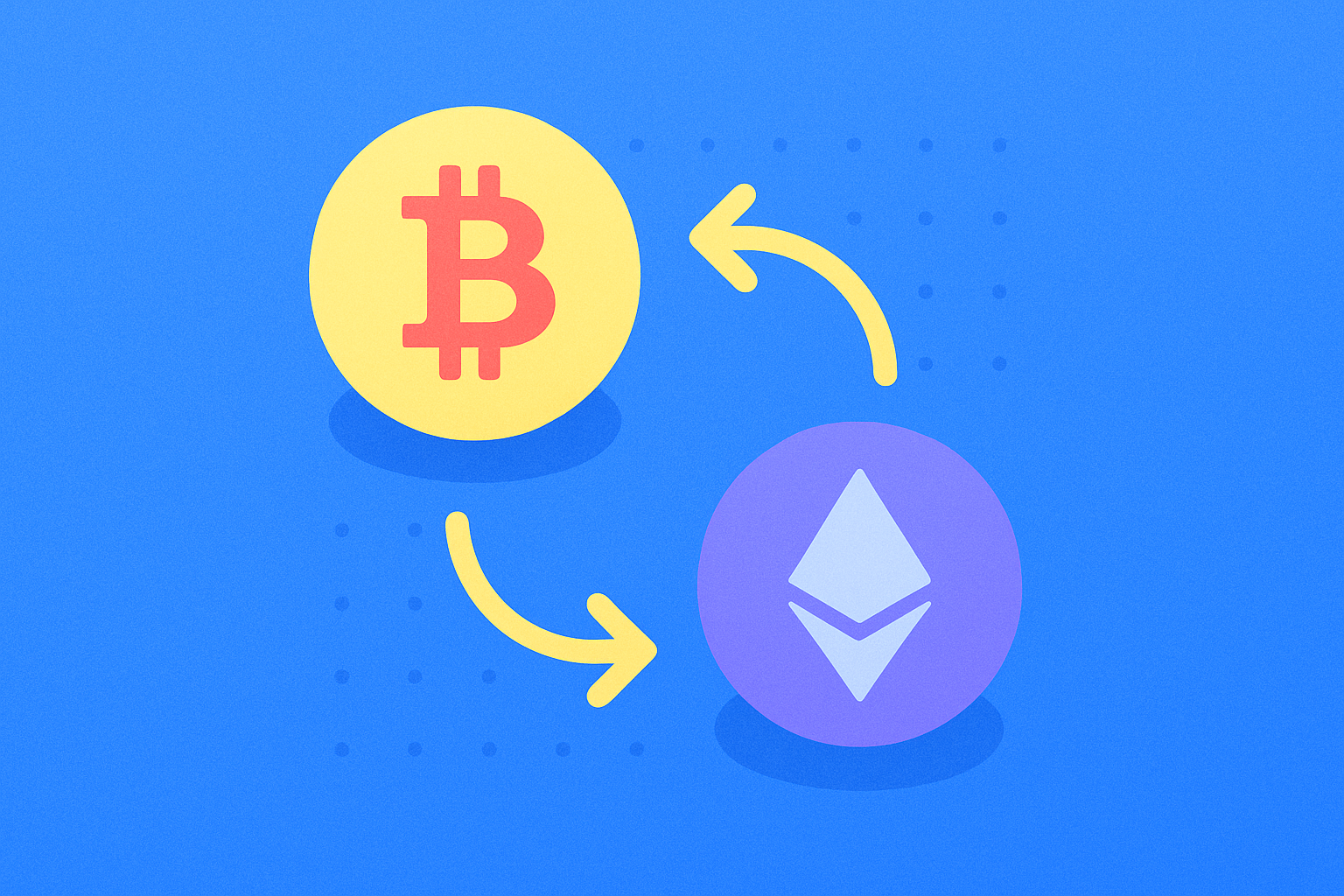
What is spot trading?

2026-01-09 01:53:53
Altcoins
Crypto Trading
Crypto Tutorial
Spot Trading
Stablecoin
Article Rating : 3
80 ratings
Explore the comprehensive guide to spot trading, covering essential concepts, benefits, and pricing mechanisms. Gain practical insights into executing spot trades on Gate, calculating transaction fees, and managing trading risks. This resource is designed for both cryptocurrency investors and newcomers looking to quickly get started with spot trading.
What is spot trading?

Basic Concepts of Crypto-to-Crypto Trading

Crypto-to-crypto trading means directly exchanging one digital asset for another. Its essential feature is using one digital asset as the quote currency to purchase another. This type of trading uses a matching engine that prioritizes price and then time. When the buy price meets or exceeds the sell price, the order fills instantly, enabling fast swaps between digital assets.

In traditional digital asset trading, investors usually see leading cryptocurrencies like Bitcoin (BTC) and Litecoin (LTC) quoted in stablecoins such as Tether (USDT). Quoting Bitcoin in Tether creates a BTC/USDT trading pair. A trading pair forms when one digital asset is used to price another. The pair’s price indicates how much USDT you pay to buy one BTC, or how much USDT you receive when selling one BTC.

Crypto-to-crypto trading stands out because it lets you exchange one digital asset for another without needing a stablecoin intermediary. For example, quoting Litecoin in Bitcoin creates the LTC/BTC trading pair. The pair’s price shows how much BTC you pay to buy one LTC or how much BTC you get for selling one LTC. For instance, if the opening price is 1LTC=0.0099BTC on a trading day, one Litecoin is valued at about 0.01 Bitcoin.

Major exchanges typically organize crypto-to-crypto trading into several markets—USDT, USDC, USDs, and CRYPTO—each with different quote currencies. This structure gives investors a broad range of trading choices.

Crypto-to-crypto trading gives investors flexibility to exchange digital assets. For example, after buying Bitcoin with Tether, if the Bitcoin price rises, the investor can swap Bitcoin for more Tether, increasing asset value. If Bitcoin’s price falls, the same amount of Bitcoin yields less Tether. Suppose you buy 1 BTC at 30,000 USDT, and Bitcoin climbs to 40,000 USDT per BTC before you sell—1 BTC then equals 40,000 USDT, netting a 10,000 USDT profit.

In the USDs and CRYPTO markets, investors can use other digital assets as quote currencies. For example, in the CRYPTO market, you can use BTC to buy platform tokens or other assets directly, creating even more flexible allocation options.

Advantages of Crypto-to-Crypto Trading

Crypto-to-crypto trading offers clear advantages over traditional methods—most notably, it’s faster, more convenient, and incurs lower transaction costs. In the traditional model, if you want to convert Bitcoin to another digital asset, you typically pay a fee to sell BTC for a stablecoin, then another fee to buy the target asset with that stablecoin. This two-step process means double the fees and more time spent.

With crypto-to-crypto trading, you swap digital assets directly—no stablecoin or fiat in the middle—so you pay only one fee per transaction. This approach cuts costs and boosts efficiency, making asset conversion more seamless.

Beyond lower trading costs, crypto-to-crypto trading also offers these key benefits:

Lower switching costs between assets: When rebalancing portfolios, investors can move directly between digital assets, without the need to convert into fiat or stablecoins repeatedly. This saves on both fees and time.

Arbitrage opportunities within the platform: Price differences among trading pairs enable skilled investors to arbitrage within the platform. For example, exploiting spreads among BTC/USDT, ETH/USDT, and BTC/ETH pairs creates triangular arbitrage opportunities.

Greater privacy: Crypto-to-crypto trading doesn’t touch fiat onramps or offramps. All transactions happen on the blockchain, offering stronger privacy protection than fiat trading and aligning with the decentralized principles of digital assets.

Easier conversion and liquidity for digital assets: Crypto-to-crypto trading boosts market liquidity, making it easy to move between assets and supporting the overall growth of the digital asset ecosystem. Investors can adjust allocations and optimize portfolios flexibly based on market conditions and their own strategy.

Crypto-to-Crypto Trading Pricing Mechanisms

Crypto-to-crypto trading uses the same pricing mechanism as fiat-to-crypto trading: market supply and demand determine prices, which fluctuate in real time as market dynamics shift. This ensures prices remain fair and transparent.

When buying interest outweighs selling pressure—meaning more investors want to buy than sell—the trading pair’s price rises. If selling outpaces buying, prices fall.

Take the LTC/BTC trading pair as an example. If more investors want to swap Bitcoin for Litecoin, demand for Litecoin outpaces supply, causing the LTC/BTC price to climb. That means you’ll pay more BTC for each Litecoin.

If, instead, more investors want to trade Litecoin for Bitcoin, Litecoin supply increases and demand falls—so the LTC/BTC price drops, and you need less BTC to buy one Litecoin.

This supply-demand model lets crypto-to-crypto prices reflect market participants’ views on relative asset values. Investor behavior, sentiment, technical factors, and fundamental news all influence supply and demand, ultimately moving prices.

Keep in mind, prices for the same trading pair may vary between platforms due to differences in liquidity, user base, and depth of market. These discrepancies create cross-platform arbitrage opportunities for professionals and help bring prices into alignment, supporting market equilibrium.

Understanding the pricing mechanism is crucial for developing trading strategies and spotting market opportunities. By tracking supply and demand trends, investors can better anticipate price movements and make smarter trades.

FAQ

What is crypto-to-crypto trading? How is it different from fiat trading?

Crypto-to-crypto trading means exchanging one cryptocurrency for another, like using Bitcoin to buy Ethereum. Fiat trading uses government-issued currencies—such as USD or CNY—to buy or sell crypto. Crypto-to-crypto trading offers more pairs and higher volumes, while fiat trading is the standard entry point into the crypto market.

How do you execute a crypto-to-crypto trade? What’s the process on an exchange?

Crypto-to-crypto trading is the process of swapping one cryptocurrency for another. Steps: 1. Register and complete identity verification; 2. Deposit funds and buy stablecoins (like USDT); 3. Transfer funds to your spot account; 4. Select a trading pair and place a limit or market order; 5. After the trade, you can sell for cash or withdraw your crypto.

What risks are involved in crypto-to-crypto trading? What should you watch out for?

Key risks include: sharp price swings from market volatility, lack of liquidity affecting trade execution, smart contract vulnerabilities, overuse of leverage, not setting stop-losses to protect your funds, poor pair selection, and buying at highs or selling at lows.

What fees apply to crypto-to-crypto trading? How do you calculate costs?

Fees usually range from 0.1% to 0.5% of the transaction amount, depending on the platform. Trading cost = transaction amount × fee rate. For example, if you trade 1,000 units at a 0.2% fee, the fee is 2 units. Some platforms offer discounts based on trading volume or membership status.

Is crypto-to-crypto trading suitable for beginners? How should a newcomer start?

Crypto-to-crypto trading is challenging for beginners. Start by learning the basics and market rules, start small, choose liquid major pairs, set stop-loss and take-profit levels, and gradually build trading and risk management skills.

What are the most common crypto-to-crypto trading pairs? Why do some pairs have better liquidity?

Popular pairs include Bitcoin/Ethereum, Ethereum/stablecoins, and other leading combinations. Pairs with better liquidity typically feature large-cap cryptocurrencies, attracting more traders, higher trading volumes, narrower spreads, and faster execution.

* The information is not intended to be and does not constitute financial advice or any other recommendation of any sort offered or endorsed by Gate.
Related Articles
How to Use MACD, RSI, and Bollinger Bands for Technical Indicator Analysis in Crypto Trading?

How to Use MACD, RSI, and Bollinger Bands for Technical Indicator Analysis in Crypto Trading?

This article provides a comprehensive guide on utilizing MACD, RSI, and Bollinger Bands for technical analysis in crypto trading, specifically AVAX. It explores how these indicators identify overbought/oversold conditions and trend reversals, offering traders a clearer market picture. Key strategies include moving average crossovers for entry/exit signals and volume-price divergence analysis to validate breakouts. By combining multiple indicators, the piece ensures enhanced trade reliability and reduced false positives. This content is essential for traders seeking improved accuracy and strategic insights in cryptocurrency trading.
2025-12-18 09:08:01
Budget-Friendly Crypto Trading: Transform $100 into $1000 for Beginners

Budget-Friendly Crypto Trading: Transform $100 into $1000 for Beginners

This article provides a detailed guide on transforming a $100 investment into $1000 through budget-conscious cryptocurrency trading. It addresses key needs such as understanding trading basics, selecting reliable platforms like Gate, portfolio diversification, and employing strategies such as dollar-cost averaging. The structure follows a logical sequence, from education and exchange selection to risk management and automation tools. With optimized keyword density, the article is ideal for beginners seeking actionable insights and strategies to navigate the volatile crypto market effectively with a modest budget.
2025-12-18 19:15:24
How to Use MACD, RSI, and Bollinger Bands for Crypto Technical Analysis in 2025

How to Use MACD, RSI, and Bollinger Bands for Crypto Technical Analysis in 2025

Explore effective crypto technical analysis for 2025 using MACD, RSI, and Bollinger Bands, focusing on Terra Classic (LUNC). Learn how these indicators provide insights on market consolidation, breakout opportunities, and trend validation. The article addresses traders looking to improve entry and exit precision in volatile crypto environments through multifactor confirmation. Keywords include "MACD alignment," "RSI neutral," "Bollinger Band squeeze," and "LUNC price target." Whether you're evaluating market momentum or validating trends, this guide enhances your trading strategy.
2025-12-22 09:32:15
What Is Slippage in Crypto? Meaning, Causes, and How It Works

What Is Slippage in Crypto? Meaning, Causes, and How It Works

The article delves into the concept of slippage in crypto trading, emphasizing its impact on trading outcomes and strategies to mitigate it. It explains slippage as the price difference between expected and actual trade execution, driven by market volatility and liquidity constraints. The piece caters to traders seeking to improve execution quality by offering solutions such as timing trades, setting slippage tolerance, and using limit orders. Structured to enhance understanding and application, it provides insights into mastering order execution, ensuring readers make informed decisions and optimize their trading performance on platforms like Gate.

2025-12-22 03:09:36
# How to Use MACD, RSI, and KDJ Technical Indicators for Crypto Trading Signals

# How to Use MACD, RSI, and KDJ Technical Indicators for Crypto Trading Signals

This article delves into the use of MACD, RSI, and KDJ indicators as crucial tools for identifying trend reversals and momentum shifts in the cryptocurrency markets. It discusses their unique functions and the strengths of combining these indicators for more accurate trading signals. Readers will learn how to utilize moving average crossovers, particularly the Golden/Death Cross, with various EMAs for entry and exit confirmations, and analyze volume-price divergence to detect weak trends and breakout opportunities. This comprehensive guide targets traders on Gate, aiming to enhance decision-making in volatile markets.
2025-12-20 09:49:49
How to Start Micro Trading with Just $1: A Guide for Beginners

How to Start Micro Trading with Just $1: A Guide for Beginners

This article serves as a beginner's guide to start micro trading with just $1 in the cryptocurrency market. It explores the fundamentals of trading with minimal capital, selecting low-cost trading pairs, and implementing risk management strategies using limit orders. Emphasizing discipline and patience, the guide highlights how traders can strategically use stop-loss and take-profit tools to protect their investments. The intended audience is beginner traders interested in learning the basics without significant financial exposure. Keywords include micro-trading, cryptocurrency, risk management, and trading strategies, enhancing readability and comprehension for a quick scan.


2025-12-23 23:44:39
Recommended for You
Adam Back: Bitcoin Can Combat Quantum Threats Through Soft-Forks

Adam Back: Bitcoin Can Combat Quantum Threats Through Soft-Forks

This article explores how Bitcoin can fortify its security against quantum computing threats through soft-fork upgrades. According to Blockstream CEO Adam Back, quantum computers pose a distant threat—estimated 20-40 years away—providing ample time for implementation. The article examines key technical solutions including NIST's SLH-DSA algorithm and Bitcoin's soft-fork mechanism, which enables backward-compatible cryptographic enhancements without network disruption. Drawing parallels with Taproot's successful implementation, the piece demonstrates Bitcoin's proven capacity for secure, modular evolution. The framework allows quantum-resistant features to be deployed incrementally, ensuring thorough testing and gradual adoption while maintaining current network stability and security integrity.
2026-01-09 22:00:59
Arthur Hayes is reported to have sold $2.5 million worth of crypto assets

Arthur Hayes is reported to have sold $2.5 million worth of crypto assets

Arthur Hayes has sold $2.5 million in crypto assets, including 1.66 million ETH. This report covers transaction analysis, market impact, and his asset allocation strategy across platforms. Explore a detailed breakdown of the actions taken by this leading figure in the crypto industry.
2026-01-09 21:58:33
Solana Maintains Stability Above $140 Despite Exchange Hack and ETF Application

Solana Maintains Stability Above $140 Despite Exchange Hack and ETF Application

This article analyzes Solana's remarkable price resilience above the $140 level despite facing a $37 million security breach on a major exchange and ongoing regulatory uncertainties. The key focus examines how strong ecosystem fundamentals and institutional interest, particularly Franklin Templeton's Solana ETF application with the SEC, support SOL's stability and long-term viability. Market analysis reveals persistent buying activity at support levels and traders monitoring the $142-$145 resistance zone for potential uptrend signals. The article emphasizes that while the security incident affected the exchange platform rather than Solana's core protocol, the swift crisis management response demonstrates industry maturation. Institutional adoption through potential ETF approval represents a significant milestone for mainstream acceptance and capital inflows into Solana's ecosystem, positioning it as an increasingly mature asset despite short-term volatility pressures.
2026-01-09 21:55:28
BlackRock has acquired $130 million in Bitcoin and Ethereum from leading exchanges

BlackRock has acquired $130 million in Bitcoin and Ethereum from leading exchanges

BlackRock has acquired $130 million in Bitcoin and Ethereum. Institutional investors are rapidly entering the crypto asset market, fueling the mainstream adoption of digital assets. This article offers a detailed overview of investment strategies and portfolio construction in the Web3 era.
2026-01-09 21:45:02
Crypto Presale Momentum: Apeing, SUI, and Cardano Attract Significant Interest

Crypto Presale Momentum: Apeing, SUI, and Cardano Attract Significant Interest

This article explores emerging cryptocurrency presale opportunities for 2026, focusing on three key projects: Apeing, SUI, and Cardano. The presale market offers strategic entry points with advantageous pricing and exclusive access before public launches. Apeing's whitelist strategy provides early supporters preferential pricing, while SUI has surpassed $1 billion in TVL, validating its DeFi infrastructure strength. Cardano approaches the significant $1 price threshold, attracting investor attention. The guide covers project evaluation criteria, including team credentials, whitepaper analysis, tokenomics, and community engagement. It addresses common presale risks such as scams and project failures, offering practical risk management strategies. Essential for investors seeking early-stage crypto investment opportunities on Gate exchange with strong fundamentals and innovative technology.
2026-01-09 21:43:19
US Dollar M2 Money Supply Reaches Record High of $22.02 Trillion

US Dollar M2 Money Supply Reaches Record High of $22.02 Trillion

This article examines how the US dollar M2 money supply, which has reached a historic $22.02 trillion, significantly influences cryptocurrency markets and broader financial ecosystems. M2 encompasses physical currency, checking deposits, and liquid assets, serving as a key monetary indicator for assessing economic liquidity and inflation pressures. The expansion is driven by fiscal stimulus and Federal Reserve quantitative easing, creating abundant capital for investment. Record-high M2 supply increases market liquidity, affecting asset prices across equities, real estate, and alternative investments including cryptocurrencies. Investors on Gate should consider diversifying into crypto and commodities as inflation hedges, positioning Bitcoin as a store of value against potential currency devaluation in a high-liquidity environment.
2026-01-09 21:41:45