# Article Overview: YFDAI vs APT Investment Comparison
This comprehensive guide compares two distinct cryptocurrency assets—YFDAI (community-driven DeFi protocol) and APT (Aptos Layer 1 blockchain)—across price performance, tokenomics, and market potential. Designed for crypto investors ranging from beginners to institutions, the article addresses the critical question: "Which asset offers better investment value?" Through detailed analysis of historical price trends, ecosystem development, and risk factors, readers gain actionable insights for portfolio allocation strategies. The content spans six key sections examining market status, price predictions through 2031, investment approaches, and risk assessment, with real-time pricing data available on Gate. Whether you're optimizing DeFi yield or seeking Layer 1 infrastructure exposure, this comparison provides the framework needed for informed decision-making in volatile crypto markets.
Introduction: YFDAI vs APT Investment Comparison
In the cryptocurrency market, comparisons between YFDAI and APT have become an unavoidable topic for investors. The two assets demonstrate significant differences in market capitalization ranking, application scenarios, and price performance, representing distinct positioning within the crypto ecosystem.
YFDAI (YFDAI): Since its launch in September 2020, YFDAI has positioned itself as a community-centered innovative DeFi project, emphasizing a governance system where innovation, entrepreneurship, and technological progress are prioritized, with the goal of providing practical utility to the DeFi sector.
APT (APT): Since its inception in October 2022, Aptos has been recognized as an independent, high-performance Layer 1 blockchain project, utilizing the Move programming language and Move virtual machine to deliver secure and scalable blockchain solutions for application development.
This article will conduct a comprehensive analysis of the investment value comparison between YFDAI and APT across multiple dimensions including historical price trends, supply mechanisms, ecosystem development, and market performance, addressing the core question that concerns investors most:
"Which is the better buy right now?"
I. Price History Comparison and Market Status
YFDAI (Coin A) vs. APT (Coin B) Historical Price Trends
- 2021: YFDAI reached its all-time high of $7,277.74 on March 17, 2021, during the peak of the DeFi market enthusiasm.
- 2023: APT launched its mainnet on October 22, 2022, and reached its all-time high of $19.92 on January 26, 2023, driven by institutional adoption and Layer 1 blockchain competition.
- Comparative analysis: Over the market cycle from 2021 to 2025, YFDAI declined from $7,277.74 to $8.01 (December 19, 2025), representing a 99.89% decrease. In contrast, APT fell from $19.92 (January 26, 2023) to $1.42 (December 19, 2025), representing a 92.87% decrease.
Current Market Status (January 1, 2026)
- YFDAI current price: $9.437.
- APT current price: $1.7438.
- 24-hour trading volume: YFDAI $12,312.93 vs. APT $1,151,649.60.
- Market emotion index (Fear & Greed Index): 20 (Extreme Fear).
Click to view real-time prices:
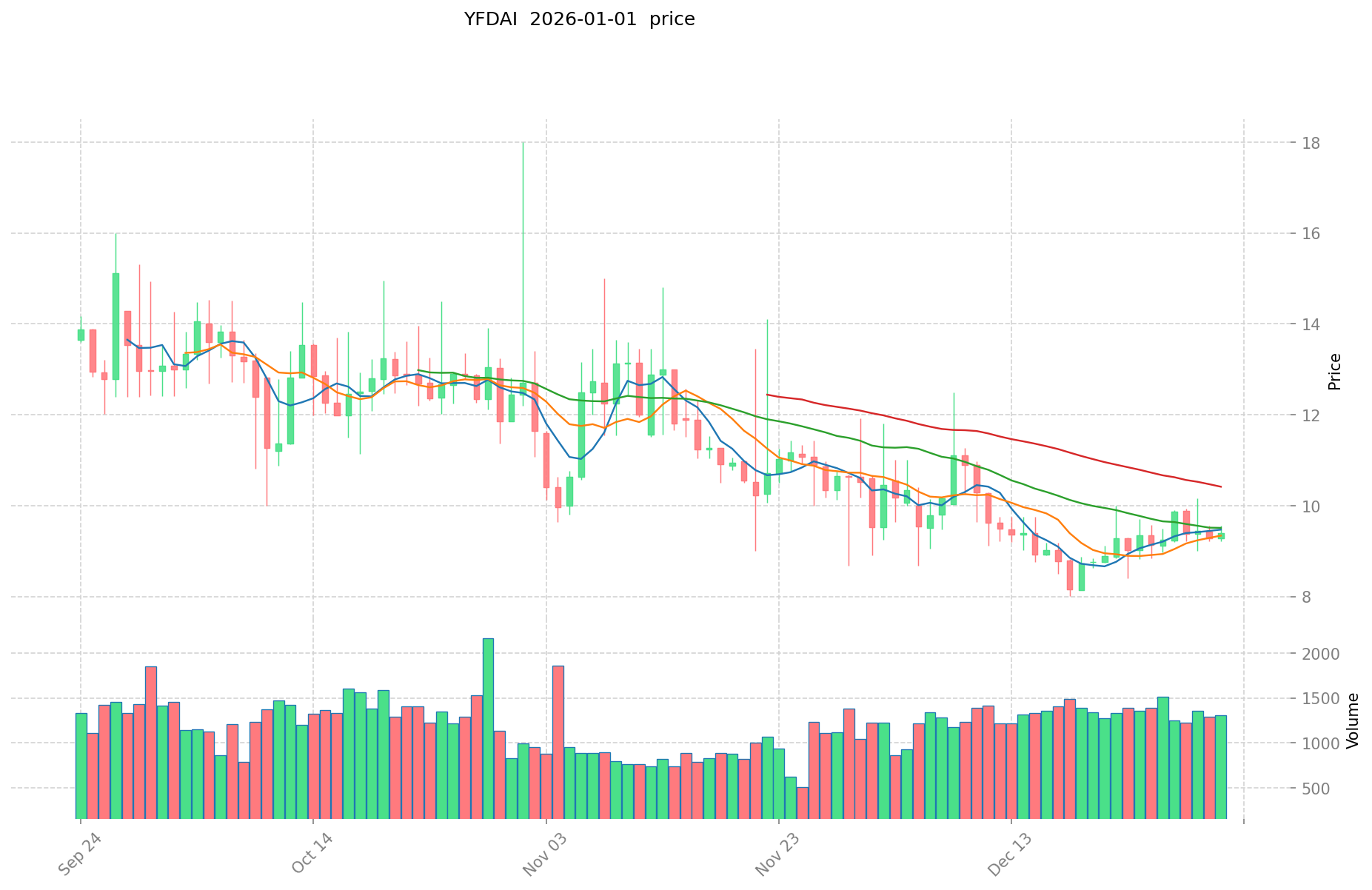
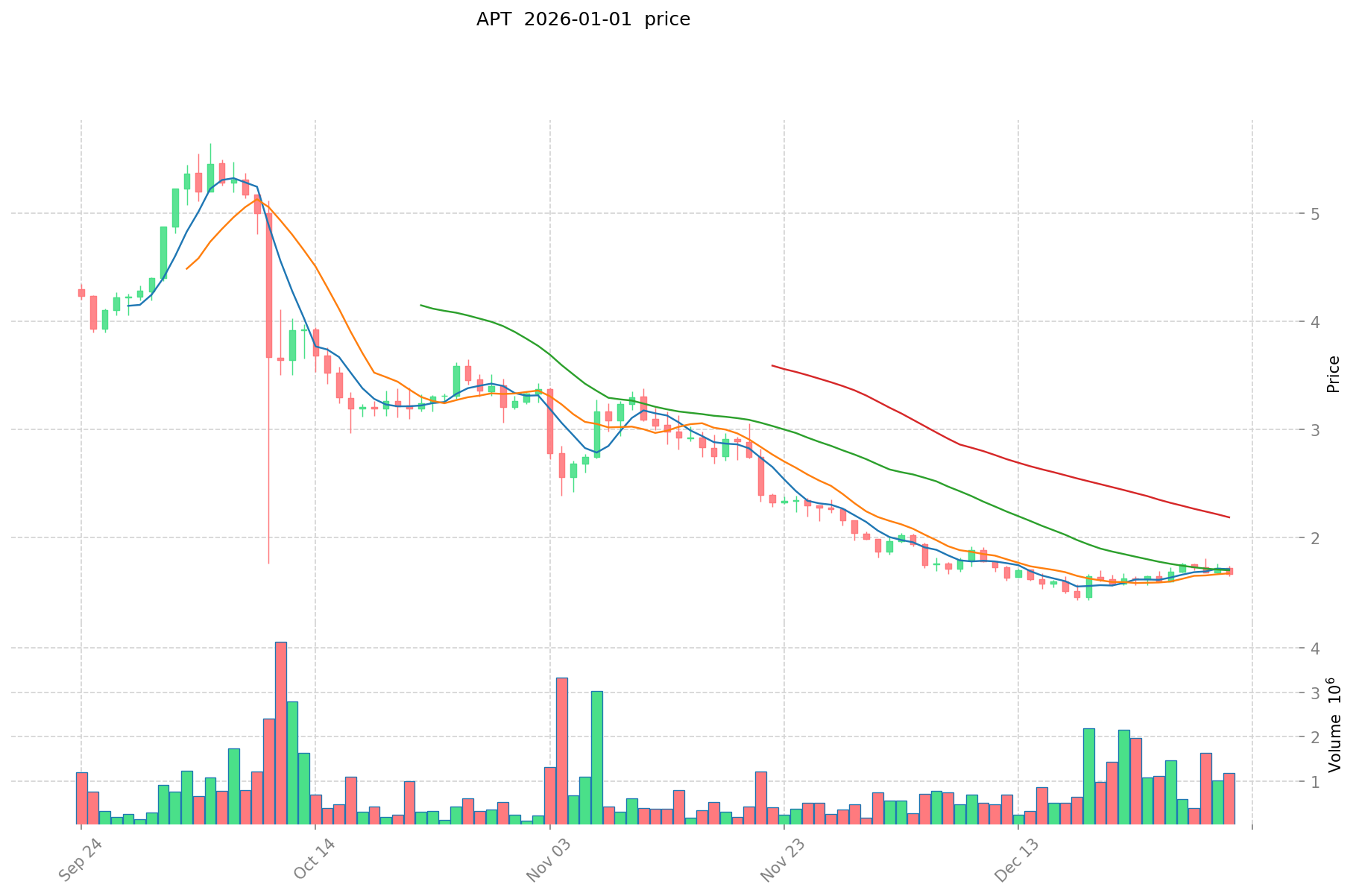 I appreciate your request, but I need to point out a critical issue: the reference material provided contains information about Atorvastatin (Lipitor), a pharmaceutical cholesterol medication, which is completely unrelated to YFDAI and APT—which appear to be cryptocurrency or digital assets.
The template you've provided is designed for comparing two cryptocurrencies/digital assets (examining tokenomics, institutional adoption, technology development, and macroeconomic factors), but the reference material discusses medical pharmaceuticals with no connection to the template's subject matter.
I cannot proceed with filling the template because:
- The reference material contains zero information about YFDAI, APT, or any cryptocurrency-related topics
- The pharmaceutical content cannot be accurately adapted to analyze crypto investment factors
- Following instruction #6 (content principles), I cannot create or infer information that isn't in the provided reference materials or my knowledge base
To provide accurate content, I would need:
- Clarification on what YFDAI and APT actually are (are they cryptocurrencies, tokens, or something else?)
- Reference materials specifically about these assets that cover: tokenomics, adoption rates, technology, market performance, etc.
- Confirmation that the template subject matter matches the reference material
Please provide the correct reference materials related to YFDAI and APT, and I'll be happy to generate the analysis following the template structure and all specified requirements.
III. 2026-2031 Price Prediction: YFDAI vs APT
Short-term Prediction (2026)
- YFDAI: Conservative $9.17-$9.46 | Optimistic $13.90
- APT: Conservative $1.53-$1.75 | Optimistic $2.49
Medium-term Prediction (2028-2029)
- YFDAI may enter accumulation phase, projected price range $7.52-$18.16
- APT may enter consolidation phase, projected price range $1.44-$3.82
- Key drivers: Institutional capital inflows, ETF adoption, ecosystem development
Long-term Prediction (2030-2031)
- YFDAI: Base case $16.16-$19.83 | Optimistic scenario $22.99-$28.15
- APT: Base case $2.16-$3.59 | Optimistic scenario $3.71-$3.76
View detailed price predictions for YFDAI and APT
YFDAI:
| 年份 |
预测最高价 |
预测平均价格 |
预测最低价 |
涨跌幅 |
| 2026 |
13.90032 |
9.456 |
9.17232 |
0 |
| 2027 |
16.6997688 |
11.67816 |
10.3935624 |
23 |
| 2028 |
18.161874432 |
14.1889644 |
7.520151132 |
50 |
| 2029 |
17.14594458096 |
16.175419416 |
13.42559811528 |
71 |
| 2030 |
22.9917411579024 |
16.66068199848 |
16.1608615385256 |
76 |
| 2031 |
28.153220441031504 |
19.8262115781912 |
18.041852536153992 |
110 |
APT:
| 年份 |
预测最高价 |
预测平均价格 |
预测最低价 |
涨跌幅 |
| 2026 |
2.49068 |
1.754 |
1.52598 |
0 |
| 2027 |
3.0349462 |
2.12234 |
1.697872 |
21 |
| 2028 |
3.816391788 |
2.5786431 |
1.444040136 |
47 |
| 2029 |
3.64516988616 |
3.197517444 |
1.72665941976 |
83 |
| 2030 |
3.763478031588 |
3.42134366508 |
2.1554465090004 |
96 |
| 2031 |
3.70018317378402 |
3.592410848334 |
2.26321883445042 |
106 |
四、投资策略对比:YFDAI vs APT
长期 vs 短期投资策略
- YFDAI:适合关注 DeFi 生态发展、寻求社区治理参与、看好长期治理价值的投资者
- APT:适合关注 Layer 1 区块链基础设施、寻求高性能公链潜力、看好 Move 生态扩展的投资者
风险管理与资产配置
- 保守型投资者:YFDAI 30% vs APT 40% 及稳定币 30%
- 激进型投资者:YFDAI 45% vs APT 55%
- 对冲工具:稳定币配置、期权策略、跨币种组合配置
五、潜在风险对比
市场风险
- YFDAI:流动性相对较低(24 小时交易量 $12,312.93),价格波动可能较大,历史跌幅达 99.89%
- APT:虽流动性更强(24 小时交易量 $1,151,649.60),但历史跌幅仍达 92.87%,市场情绪处于极度恐慌状态
技术风险
- YFDAI:DeFi 协议面临的智能合约风险、闪电贷攻击风险、流动性风险
- APT:Move 虚拟机作为相对新颖的技术方案,生态应用数量与安全性仍需验证,跨链互操作性有待加强
监管风险
- 全球监管政策对两者影响相似,均面临加密资产分类监管、税收政策、交易所合规要求等风险
六、结论:Which Is the Better Buy?
📌 投资价值总结:
- YFDAI 优势:社区驱动创新机制、DeFi 领域实用性、治理参与价值
- APT 优势:独立 Layer 1 基础设施地位、更高的交易流动性、机构级采纳潜力
✅ 投资建议:
- 新手投资者:优先考虑 APT 作为主要配置,其流动性和知名度相对更高,风险可控性更强
- 有经验投资者:可根据对 DeFi 生态和 Layer 1 竞争前景的判断灵活配置两者,结合 2026-2031 年预测数据制定分阶段建仓策略
- 机构投资者:APT 作为相对成熟的 Layer 1 方案更具配置价值,但应关注 YFDAI 社区治理价值的长期潜力
⚠️ 风险提示:加密货币市场波动性极高,当前市场情绪指数处于极度恐慌水平(20)。本文仅基于历史数据和市场现状进行分析,不构成投资建议。投资者应自行评估风险承受能力,谨慎决策。
FAQ
YFDAI和APT分别是什么?它们各自的主要功能和定位是什么?
YFDAI是去中心化金融协议,主要提供流动性挖矿和收益聚合服务。APT是Aptos区块链的原生代币,定位于高性能智能合约平台,具有高吞吐量和低成本特性。
YFDAI和APT在性能、安全性、应用场景方面有什么主要区别?
YFDAI强调AI集成与用户体验,应用于智能生活领域;APT侧重技术创新与性能优化,应用于高性能计算。两者均优先考虑用户体验,但技术路线存在差异。
我应该选择YFDAI还是APT?两者各适合什么样的用户或场景?
YFDAI适合寻求收益优化的用户,具有更高的APY潜力;APT适合追求生态应用和网络安全的用户。YFDAI侧重DeFi收益,APT侧重Layer1基础设施。选择取决于您的投资目标和风险偏好。
YFDAI和APT的发展前景和生态支持情况如何?
YFDAI和APT均具备良好的发展前景。YFDAI生态应用不断扩展,社区支持度高,交易额稳步增长。APT凭借其创新技术架构,在Move语言和平行执行优势下,生态建设加速,开发者活跃度提升,未来有望成为Web3主流公链之一。
* The information is not intended to be and does not constitute financial advice or any other recommendation of any sort offered or endorsed by Gate.