Decentralized Finance (DeFi) was originally built around crypto assets, with lending, trading, and return mechanisms primarily relying on on-chain native assets like ETH and stablecoins. While this approach improved capital efficiency, it also led to a limited range of assets and single-source returns. Since most returns are driven by on-chain trading and market volatility, DeFi has struggled to establish a direct connection to the real-world economy.
The emergence of Real World Assets (RWA) has transformed this dynamic. By mapping real-world debt assets on-chain, DeFi capital can now participate in actual economic activities and earn cash flow returns from tangible assets.
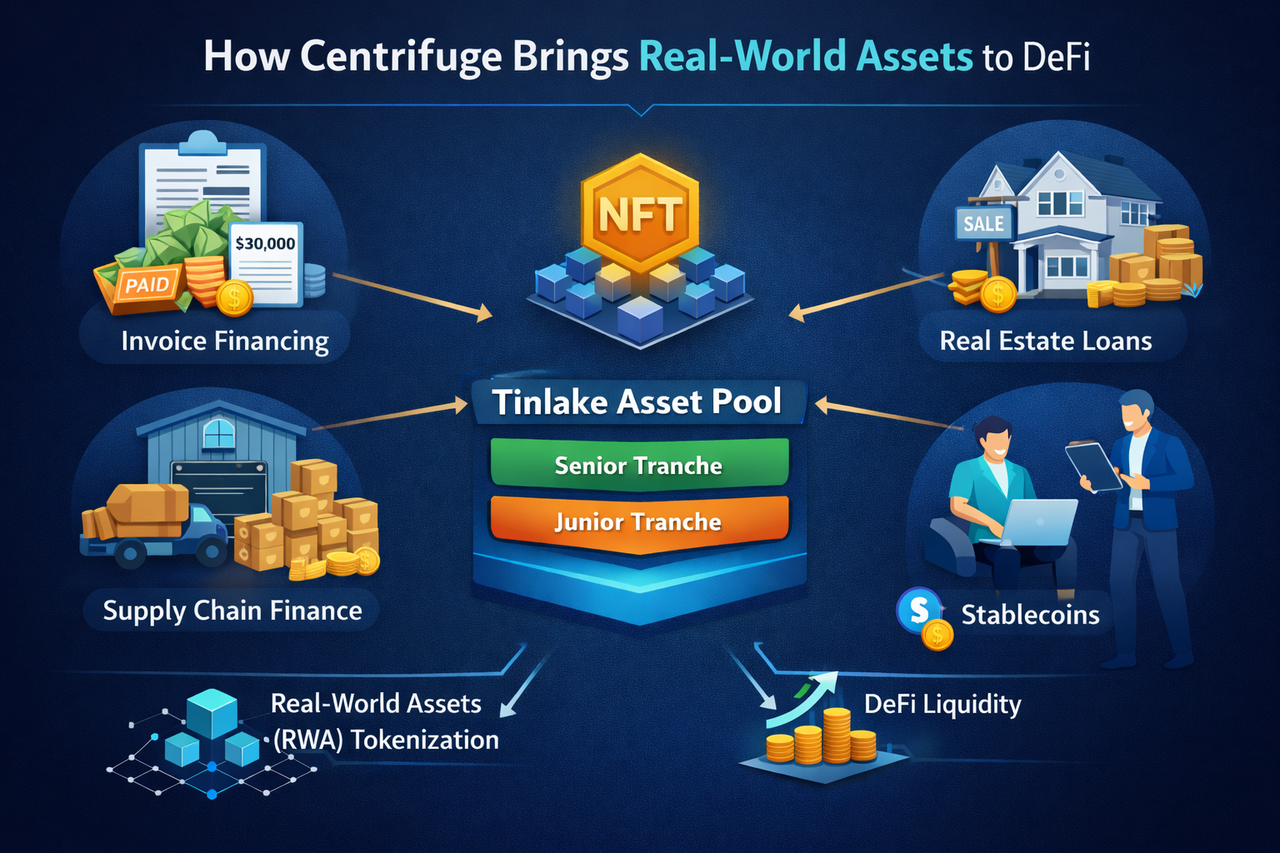
Centrifuge, an on-chain protocol focused on real-world asset financing, plays a pivotal role in converting traditional financial assets into DeFi-accessible financing instruments. Leveraging asset pools and Smart Contract infrastructure, Centrifuge empowers businesses to tokenize assets such as invoices, loan receivables, or accounts receivable, and bring them on-chain as financing targets—backed by on-chain liquidity support. This integration creates a closed loop between real-world asset financing and on-chain capital flows, making Centrifuge a leading protocol in advancing RWA adoption.
What Are Centrifuge’s Core Use Cases?
Centrifuge’s primary applications are centered on real-world debt asset financing, including invoice financing, accounts receivable financing, real estate loans, and private credit. These assets typically generate clear cash flows but face complex financing processes and limited liquidity in traditional finance.
By tokenizing these assets and bringing them into on-chain asset pools, Centrifuge boosts asset liquidity and enables real-world assets to access the decentralized finance marketplace. For asset holders, this means more efficient access to funding; for on-chain investors, it opens up new sources of return tied to the real economy.
How Does Invoice Financing Work with Centrifuge?
Invoice financing stands out as one of Centrifuge’s hallmark use cases.
In practical business operations, companies often face delays in cash flow while waiting for customers to settle invoices, which can hinder operational efficiency. With Centrifuge, businesses can tokenize unsettled invoices as financing assets, introduce them into on-chain asset pools, and secure liquidity from investors.
This model allows companies to access funds before invoice expiry, boosting cash flow efficiency. Simultaneously, investors earn returns by providing capital for these invoice assets, completing the on-chain financing cycle.
How Does Supply Chain Finance Leverage Centrifuge to Go On-Chain?
In supply chain finance, significant accounts receivable often tie up working capital, while traditional financing relies on bank credit and cumbersome review processes.
Centrifuge transforms supply chain accounts receivable into on-chain financing assets, making them eligible for DeFi capital pools. Businesses can access funding from asset pools, improving capital turnover, while on-chain investors can earn returns by supporting these financing needs.
This approach reduces reliance on traditional intermediaries and enables supply chain finance to achieve more efficient capital circulation through on-chain protocols.
How Do Real Estate Loans Become On-Chain Financing Assets?
Real estate loans are another significant use case supported by Centrifuge.
Traditionally, real estate loan assets are held by financial institutions and financed through conventional channels. Centrifuge enables these loan receivables to be tokenized as on-chain financing assets, allowing them to enter asset pools and receive on-chain liquidity support.
This process enhances the liquidity of real estate loans and provides on-chain investors with opportunities to earn returns linked to the real estate market, integrating real estate finance into the on-chain ecosystem.
How Do Private Credit Assets Achieve Liquidity with Centrifuge?
Private credit assets, typically non-public loans issued by enterprises or financial institutions, often suffer from low liquidity and limited financing options.
Centrifuge allows these credit assets to secure funding via on-chain asset pools, maximizing asset utilization. Asset holders gain liquidity through on-chain financing, while investors participate in the returns generated by real-world credit assets.
This mechanism brings private credit assets onto the on-chain capital market and broadens the spectrum of assets supported by DeFi.
How Does Centrifuge Facilitate RWA Integration into On-Chain Finance?
Centrifuge leverages asset tokenization and asset pool financing to bridge real-world assets with the DeFi market.
First, real-world assets are tokenized as on-chain certificates; then, they are placed in financing pools, where investors provide stablecoins to participate in funding. Smart Contracts automate capital flows and return distribution, streamlining the on-chain financing process for real assets.
This framework delivers on-chain liquidity to real assets and enables on-chain capital to participate in real economic activities, accelerating the integration of real-world assets into decentralized finance.
What Are the Advantages and Challenges of Centrifuge’s Use Cases?
Centrifuge’s use cases offer the advantage of improving real asset financing efficiency and diversifying DeFi’s sources of return. The on-chain asset pool model increases liquidity for real assets and gives investors access to returns tied to the real economy.
However, bringing real assets on-chain presents challenges such as asset authenticity verification, default risk, and legal and compliance requirements. These factors mean on-chain protocols still depend on off-chain legal structures and asset management.
As Centrifuge expands RWA applications, it must balance on-chain efficiency with robust off-chain risk controls.
Summary
Centrifuge’s applications span invoice financing, supply chain finance, real estate loans, and private credit—enabling these real-world assets to enter the on-chain financial market through tokenization and on-chain financing pools.
This approach not only increases the efficiency of real asset financing but also introduces real-world sources of return into DeFi. As RWA’s role in on-chain finance grows, Centrifuge is becoming a foundational infrastructure for bringing real assets into the DeFi ecosystem.
FAQs
What are the main use cases for Centrifuge?
Centrifuge is primarily used in real-world asset financing scenarios such as invoice financing, supply chain finance, real estate loans, and private credit.
Why is invoice financing well-suited to Centrifuge?
Invoices have clear cash flows and can be financed in advance through on-chain asset pools, enhancing corporate cash flow efficiency.
How does Centrifuge support supply chain finance?
By tokenizing accounts receivable and introducing them into asset pools, Centrifuge provides supply chain enterprises with on-chain financing channels.
How do real estate loans access on-chain finance?
Real estate loan receivables can be tokenized and placed in on-chain financing pools to receive on-chain liquidity support.
What is Centrifuge’s core value?
Centrifuge’s core value lies in enabling real-world assets to enter the on-chain financial market, connecting real-world financing needs with DeFi capital liquidity.







