How Global Trade Policy Risks Are Reshaping Lululemon’s Supply Chain and Profit Model

Last Updated 2026-03-26 03:03:02
Reading Time: 1m
With global trade policies in flux, Lululemon faces mounting pressure on its supply chain costs. This article examines how emerging policy risks, inventory pricing dynamics, and market performance are transforming Lululemon’s supply chain structure and profitability.

Global Trade Policy Risks on the Rise and the Lululemon Supply Chain
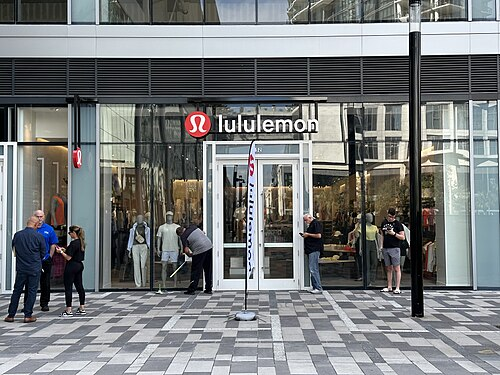

Source: https://en.wikipedia.org/wiki/Lululemon

With the United States ending the previous de minimis tax exemption threshold and imposing higher tariffs on imports, global trade policy risks have shifted from an abstract macro concept to a concrete factor impacting Lululemon’s (hereafter “LULU”) operating costs and supply chain design. Recent analysis shows that these policy changes are pushing LULU to evolve its supply chain from a cost-driven model to a multi-country, regionalized structure.

From 2025 through 2026, the US will continue to increase tariffs on goods imported from Vietnam, other Asian countries, and China. As a result, LULU will face higher tax burdens at the import stage, which will intensify overall supply chain cost pressures.

How Tariff Changes Are Reshaping Lululemon’s Cost Structure

The US has eliminated the longstanding de minimis provision that exempted low-value packages (under $800) from tariffs. Until this policy takes effect in August 2025, most of LULU’s online orders have entered the US via Canadian warehouses, avoiding many tariffs. Once the new policy is in force, these orders will be subject to standard tariff rates, which will directly impact LULU’s profitability.

Estimates suggest this single policy shift could reduce LULU’s gross profit by roughly $240 million in 2025. If even higher reciprocal tariffs take effect in 2026, the company’s operating profit could face an additional hit of more than $320 million.

This shift not only increases pressure on LULU’s supply chain cost structure but also worsens inventory pricing challenges. Without adjustments to pricing or supply chain configuration, the company’s gross margin will face further compression.

Supply Chain Transformation: Lululemon’s Strategic Response

LULU is taking proactive steps to counter these trade policy changes, including:

1. Diversifying the Supply Chain: LULU is rebalancing its supplier network to reduce reliance on any single country, especially by sourcing more from Southeast and South Asia for better cost efficiency and risk diversification.

2. Regional Production and Distribution Hubs: By establishing more warehouses and production centers near key markets, LULU can shorten shipping times, reduce tariff exposure, and improve both inventory turnover and customer service efficiency.

3. Negotiation and Cost Buffering: The company is negotiating more aggressively with suppliers for better pricing and terms, and making targeted price adjustments on select products to pass some costs on to long-term customers.

These moves are designed to build a more resilient supply chain—not only to address current risks but also to keep options open for future policy shifts.

Market Pricing and Inventory: Analyzing Price Fluctuations

As cost pressures mount, LULU is adjusting its pricing strategy. The company is slightly raising prices on certain high-margin, core products to offset the impact of higher tariffs on gross margins. At the same time, it’s using promotions and discounts in selected markets to maintain sales and ensure steady inventory turnover.

Despite rising supply chain costs, LULU continues to see robust growth in Asia—especially in China—which has helped offset pressure in North America. In 2025, the Chinese market delivered double-digit growth, providing stability to overall revenue performance.

Risk Trends and Long-Term Strategic Insights

Over the long term, global trade policy risks are unlikely to fade quickly. Geopolitical tensions and protectionist policies are reshaping the international apparel supply chain landscape. For global brands like LULU, ongoing optimization in the following areas will be essential:

  • Multi-regional production and sourcing strategies
  • Intelligent supply chain risk forecasting systems
  • More flexible pricing and inventory management

In summary, global trade policy risks are not just external challenges—they may also serve as catalysts for supply chain innovation and business transformation at Lululemon.

Author: Max
Disclaimer
* The information is not intended to be and does not constitute financial advice or any other recommendation of any sort offered or endorsed by Gate.
* This article may not be reproduced, transmitted or copied without referencing Gate. Contravention is an infringement of Copyright Act and may be subject to legal action.

Related Articles

What is Fartcoin? All You Need to Know About FARTCOIN
Intermediate

What is Fartcoin? All You Need to Know About FARTCOIN

Fartcoin (FARTCOIN) is a representative meme coin within the Solana ecosystem based on an AI-driven narrative. Its core concept originated from an experiment aimed at exploring the "boundaries between AI Agents and humor." More than just a digital asset with social attributes, the project deeply couples absurd humor culture with on-chain financial logic by integrating autonomous AI interaction models.
2026-04-04 22:01:19
Gold Price Forecast for the Next Five Years: 2026–2030 Trend Outlook and Investment Implications, Could It Reach $6,000?
Beginner

Gold Price Forecast for the Next Five Years: 2026–2030 Trend Outlook and Investment Implications, Could It Reach $6,000?

Analyze current gold price trends alongside authoritative five-year forecasts, integrating an evaluation of market risks and opportunities. This gives investors insight into the potential trajectory of gold prices and the main drivers expected to shape the market over the next five years.
2026-03-25 18:13:30
Aster vs Hyperliquid: Which Perp DEX Will Prevail?
Beginner

Aster vs Hyperliquid: Which Perp DEX Will Prevail?

Aster and Hyperliquid are the two representative protocols of the "purpose-built L1 path" within the current decentralized perpetual exchange (Perp DEX) sector. As a pioneer in the field, Hyperliquid has built a deep liquidity moat through its highly mature order book architecture and strong community consensus. Conversely, Aster, as a rising challenger, seeks to leapfrog the competition in high-performance trading through more aggressive multi-chain aggregation logic, private transaction modules, and an underlying execution environment optimized for 2026 market demands.
2026-03-24 11:58:33
AI-Native Settlement Layers: How United Stables Is Building the Next Financial Rail
Beginner

AI-Native Settlement Layers: How United Stables Is Building the Next Financial Rail

Stablecoins were originally designed as dollar substitutes within exchanges, primarily used for asset pricing and trade settlement. As on-chain financial ecosystems have matured, their role has expanded beyond simple payments to include collateral assets, cross-chain liquidity mediums, and unified settlement units. In particular, as AI systems and automated agents begin to participate directly in economic activity, demand has risen sharply for programmable value units capable of instant settlement. This shift is pushing stablecoins toward the role of foundational financial infrastructure.
2026-03-25 03:16:17
Aerodrome Tokenomics: How ve(3,3) Powers Base's Most Profitable DEX
Beginner

Aerodrome Tokenomics: How ve(3,3) Powers Base's Most Profitable DEX

AERO is the native token of Aerodrome Finance, a core decentralized exchange and liquidity protocol in the Base ecosystem. It is primarily used for liquidity incentives and ecosystem operations. veAERO is a governance NFT that users receive by locking AERO, representing both voting power and the right to share protocol revenue. Through a dual track structure of AERO as a utility token and veAERO as a governance credential, Aerodrome separates liquidity usage value from long term governance power, allowing participants to act as liquidity providers, governance decision makers, and revenue sharers within the same system.
2026-03-25 06:40:31
Hybrid Collateral Stablecoins: Inside United Stables' Stability and Yield Architecture
Beginner

Hybrid Collateral Stablecoins: Inside United Stables' Stability and Yield Architecture

In the early stages of the crypto market, traditional stablecoins mainly relied on single-reserve or single-collateral models. Their primary focus was price stability and payment convenience, which allowed them to become foundational tools for on-chain trading and capital flows. As the market has entered a more mature financial phase, however, this structure has begun to reveal limitations, including high concentration risk and the difficulty of balancing liquidity with yield. These constraints have driven the evolution toward multi-layer collateral and portfolio-based designs, such as the dual-layer hybrid collateral architecture proposed by United Stables, which seeks to redefine the underlying logic of stable assets.
2026-03-25 03:17:39





