Sei and Xiaomi Form Global Partnership to Pre-Install Crypto Wallets: Smartphones Will Integrate Blockchain Access and Accelerate Web3 Mass Adoption

Beginner
Quick Reads
Last Updated 2026-03-26 23:27:36
Reading Time: 1m
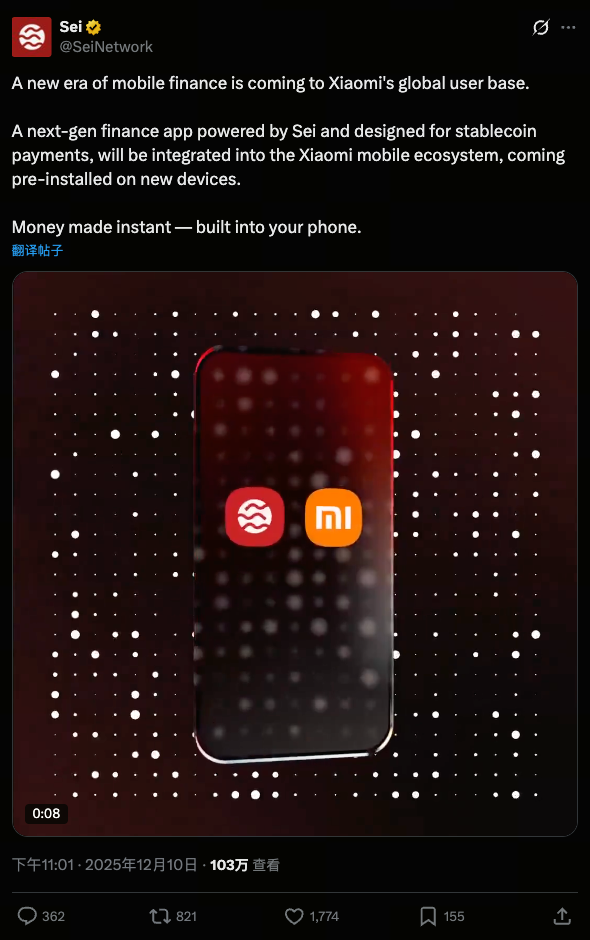
Sei and Xiaomi have announced a global collaboration to pre-install crypto wallets on new smartphones. These devices will come equipped with blockchain wallets and Web3 applications, opening a new chapter for hundreds of millions of users to access crypto assets and use stablecoin payments. This development has the potential to revolutionize digital finance and reshape the future of payment ecosystems.


Image: https://x.com/SeiNetwork/status/1998769931718922608

Sei and Xiaomi Announce Global Pre-Installation of Crypto Wallets

Sei Network, a leading blockchain project, has officially announced a landmark partnership with global smartphone giant Xiaomi. According to their joint statement released on December 10, 2025, new Xiaomi smartphones sold worldwide—excluding Mainland China and the United States—will come pre-installed with the Sei blockchain wallet and Web3 discovery app starting in 2026. With this move, users can access crypto asset management and decentralized application features right out of the box, making it the largest blockchain application rollout to date.

This pre-installed app goes beyond a typical wallet. It serves as a unified digital asset gateway, integrating DeFi, peer-to-peer transfers, stablecoin payments, and more—delivering a new blockchain experience for smartphone users.

Strategic Significance and Technical Highlights

The heart of the Sei-Xiaomi partnership isn’t just “pre-installation.” It’s about creating a low-barrier, intuitive blockchain entry point for everyday users:

  • Effortless Login: Users can sign in with Google or Xiaomi accounts, bypassing the typical mnemonic phrase setup required by most crypto wallets. This dramatically lowers the onboarding hurdle.
  • High-Performance Blockchain Infrastructure: Sei delivers low fees and high throughput, supporting rapid transaction finality (under 400ms), making it suitable for daily use.
  • Decentralized App Discovery: The pre-installed app doubles as a Web3 portal, recommending popular DeFi, NFT, and blockchain gaming services—no manual searching required.

With these features, Xiaomi smartphone users can access the blockchain ecosystem as easily as they use mobile payments—opening the door to mainstream adoption.

Stablecoin Payments and Commercial Payment Plans
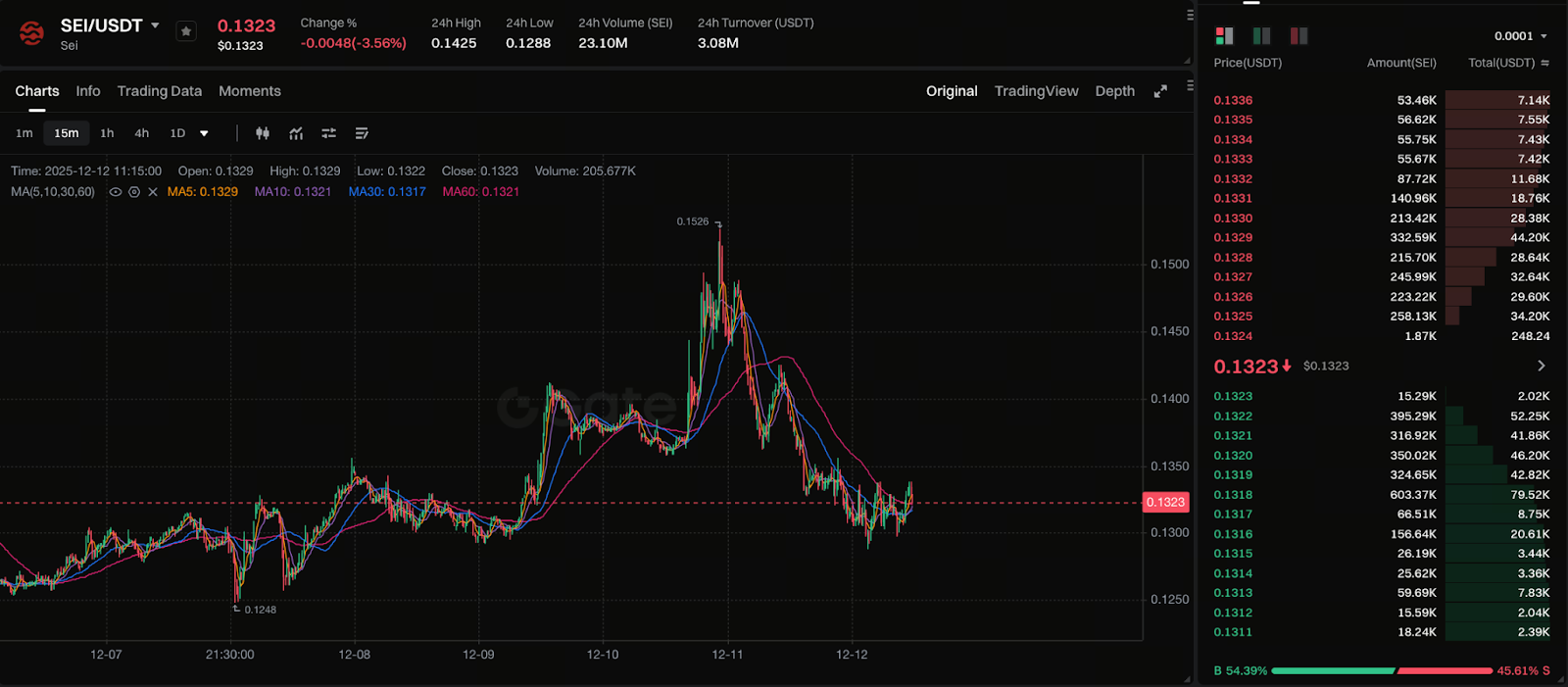

Image: https://www.gate.com/trade/SEI_USDT

In addition to wallet and Web3 features, the Sei-Xiaomi partnership aims to bring stablecoin payments into everyday commerce. According to official sources, the system will launch in Q2 2026 in markets with clear regulatory frameworks, such as Hong Kong and the European Union. Users will be able to pay with stablecoins like USDC at Xiaomi retail stores and online shops—purchasing smartphones, smart devices, and even electric vehicles directly.

This initiative moves crypto beyond “investment and collecting” into real-world “payment and consumption,” potentially creating a new digital economy where digital assets are tightly integrated with the physical world.

Market Response and Industry Impact

The market sees this pre-installed crypto wallet as a critical step in bringing Web3 to the mainstream. Sei’s strategy breaks away from the traditional “download-to-distribute” model, embedding blockchain apps directly into the smartphone ecosystem and reaching millions of users at scale.

Smartphones are nearly indispensable in modern life. With built-in crypto wallets, blockchain technology moves from the lab to daily living. This creates an unprecedented channel for user growth and prompts the industry to consider: Will future blockchain users interact with digital assets as naturally as they use messaging or maps today?

Future Outlook: Mainstream Web3 Adoption and a New Digital Economy

Looking ahead, the Sei-Xiaomi partnership could be just the beginning. As more consumer electronics makers, social platforms, and even OS vendors explore Web3 integration, the digital asset onboarding experience will keep improving. As stablecoin payments and similar features gain traction, blockchain technology could become an everyday part of people’s lives.

This trend may further blur the lines between traditional finance and the digital economy, expanding decentralized finance from professional investors to everyday consumers. And it could all start with the new Xiaomi smartphone in your hand—pre-installed with a blockchain wallet.

Author: Max
Disclaimer
* The information is not intended to be and does not constitute financial advice or any other recommendation of any sort offered or endorsed by Gate.
* This article may not be reproduced, transmitted or copied without referencing Gate. Contravention is an infringement of Copyright Act and may be subject to legal action.

Related Articles

What is Fartcoin? All You Need to Know About FARTCOIN
Intermediate

What is Fartcoin? All You Need to Know About FARTCOIN

Fartcoin (FARTCOIN) is a representative meme coin within the Solana ecosystem based on an AI-driven narrative. Its core concept originated from an experiment aimed at exploring the "boundaries between AI Agents and humor." More than just a digital asset with social attributes, the project deeply couples absurd humor culture with on-chain financial logic by integrating autonomous AI interaction models.
2026-04-04 22:01:19
Gold Price Forecast for the Next Five Years: 2026–2030 Trend Outlook and Investment Implications, Could It Reach $6,000?
Beginner

Gold Price Forecast for the Next Five Years: 2026–2030 Trend Outlook and Investment Implications, Could It Reach $6,000?

Analyze current gold price trends alongside authoritative five-year forecasts, integrating an evaluation of market risks and opportunities. This gives investors insight into the potential trajectory of gold prices and the main drivers expected to shape the market over the next five years.
2026-03-25 18:13:30
Aster vs Hyperliquid: Which Perp DEX Will Prevail?
Beginner

Aster vs Hyperliquid: Which Perp DEX Will Prevail?

Aster and Hyperliquid are the two representative protocols of the "purpose-built L1 path" within the current decentralized perpetual exchange (Perp DEX) sector. As a pioneer in the field, Hyperliquid has built a deep liquidity moat through its highly mature order book architecture and strong community consensus. Conversely, Aster, as a rising challenger, seeks to leapfrog the competition in high-performance trading through more aggressive multi-chain aggregation logic, private transaction modules, and an underlying execution environment optimized for 2026 market demands.
2026-03-24 11:58:33
AI-Native Settlement Layers: How United Stables Is Building the Next Financial Rail
Beginner

AI-Native Settlement Layers: How United Stables Is Building the Next Financial Rail

Stablecoins were originally designed as dollar substitutes within exchanges, primarily used for asset pricing and trade settlement. As on-chain financial ecosystems have matured, their role has expanded beyond simple payments to include collateral assets, cross-chain liquidity mediums, and unified settlement units. In particular, as AI systems and automated agents begin to participate directly in economic activity, demand has risen sharply for programmable value units capable of instant settlement. This shift is pushing stablecoins toward the role of foundational financial infrastructure.
2026-03-25 03:16:17
How Does Kite Work? An In-Depth Look at Kite's Identity and Programmable Permission Architecture
Beginner

How Does Kite Work? An In-Depth Look at Kite's Identity and Programmable Permission Architecture

Kite is an EVM compatible Layer 1 blockchain network that runs on proof of stake. It is designed to give AI agents verifiable identity, programmable permissions, and real time settlement in an on-chain execution environment. In Kite's design, AI is no longer only a tool that follows instructions. It becomes an economic participant with independent on-chain identity and direct control over assets. Within secure and auditable infrastructure, an AI agent can complete payments, call services, and coordinate tasks autonomously, making Kite a foundational layer for the emerging agent economy.
2026-03-25 06:02:34
DePIN Identity Network and Real World Applications: How Humanity Protocol Brings on-chain Identity Into the Physical World
Beginner

DePIN Identity Network and Real World Applications: How Humanity Protocol Brings on-chain Identity Into the Physical World

Most Web3 identity systems remain confined to on-chain environments and struggle to achieve meaningful adoption in real world settings. Through a DePIN architecture and physical verification hardware, Humanity Protocol aims to bring decentralized identity into access control systems, hospitality, public services, and offline events, allowing on-chain identity to function not just as a digital credential, but as foundational infrastructure for real world access.
2026-03-25 07:40:53