Stablecoins in 2025 are marked by both excitement and division. The U.S. “Genius Act” has provided a regulatory definition for stablecoins, while Hong Kong’s passage of the “Stablecoin Ordinance” has sparked intense debate around offshore Chinese yuan (RMB) stablecoins and the dynamics of digital RMB. All of this sets the stage for the final chapter of stablecoins in mainland China in 2025.
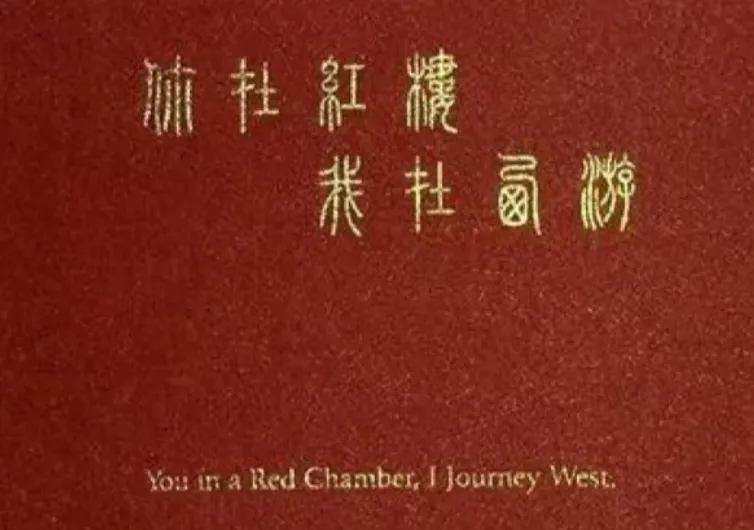
Who belongs in the Red Chamber, and who journeys West? We likely all have our own answers.
Yet, it is essential to look beyond appearances and grasp the underlying reality. We must clarify the logic behind stablecoins in 2025 to understand future trends.
As stablecoins draw global attention in 2025, what has truly changed at the core, and what remains fundamentally the same?
At the 2025 Financial Street Forum Annual Conference in October, Pan Gongsheng, Governor of the People’s Bank of China, stated: “Since 2017, the People’s Bank of China has worked with relevant departments to issue multiple policy documents to prevent and address risks from domestic virtual currency trading and speculation. These documents remain valid. Going forward, the People’s Bank will continue to collaborate with law enforcement to crack down on domestic virtual currency activities and speculation, uphold economic and financial order, and closely monitor and dynamically evaluate developments in overseas stablecoins.”
We focus on two key points: “policy documents remain valid” and “dynamic evaluation of overseas stablecoin development.”
I. Mainland China’s Regulatory Stance on Virtual Currencies Remains Unchanged—Continued Crackdown
1.1 Regulatory View: Stablecoins Are Virtual Currencies
Recently, 13 ministries and commissions convened to define the legal status of stablecoins within China’s regulatory system:
http://www.pbc.gov.cn/goutongjiaoliu/113456/113469/5916794/index.html
On November 28, 2025, the People’s Bank of China held a coordination meeting on cracking down on virtual currency trading and speculation. Attendees included senior officials from the Ministry of Public Security, Cyberspace Administration of China, Central Financial Office, Supreme People’s Court, Supreme People’s Procuratorate, National Development and Reform Commission, Ministry of Industry and Information Technology, Ministry of Justice, People’s Bank of China, State Administration for Market Regulation, National Financial Regulatory Administration, China Securities Regulatory Commission, and State Administration of Foreign Exchange.
The meeting noted that in recent years, all departments have diligently implemented the decisions of the CPC Central Committee and State Council. In line with the requirements of the 2021 joint “Notice on Further Preventing and Disposing of Risks Related to Virtual Currency Trading and Speculation” issued by the People’s Bank of China and ten other departments, authorities have resolutely cracked down on virtual currency trading and speculation, rectified market irregularities, and achieved significant results. Recently, due to various factors, speculation in virtual currencies has resurfaced, with related illegal activities occurring sporadically, presenting new risks and challenges.
The meeting emphasized:
- Virtual currencies do not have the same legal status as fiat currency. They lack legal tender status and should not—and cannot—be used as currency in the market. Related business activities are considered illegal financial activity.
- Stablecoins are a form of virtual currency. Currently, they cannot effectively meet requirements for customer identification, anti-money laundering, and other compliance standards, and carry risks of money laundering, fundraising fraud, and unauthorized cross-border fund transfers.
The meeting called on all departments to adhere to Xi Jinping Thought on Socialism with Chinese Characteristics for a New Era, fully implement the spirit of the 20th National Congress and its plenary sessions, and treat risk prevention as a permanent theme of financial work. Authorities must continue the ban on virtual currencies, maintain a crackdown on related illegal financial activities, deepen collaboration, improve regulatory policies and legal frameworks, focus on key areas such as information and capital flows, strengthen information sharing, enhance monitoring capabilities, and strictly combat illegal activities to protect public property and maintain economic and financial stability.
1.2 Regulatory Position Remains Unchanged
- The recent meeting was a direct implementation of the 2021 “Notice on Further Preventing and Disposing of Risks Related to Virtual Currency Trading and Speculation” (Yinfa [2021] No. 237), confirming that “policy documents remain valid.” https://www.gov.cn/zhengce/zhengceku/2021-10/08/content_5641404.htm
- Stablecoins are classified as virtual currencies, meaning that stablecoin/virtual currency-related business activities are illegal financial activity. “Continue to enforce the ban on virtual currencies and maintain the crackdown on related illegal financial activities.”
- This reflects a trend toward stricter regulation. Previously, illegal financial activities involving virtual currencies were listed as examples; now, the policy is more broadly defined.
Although virtual currencies are recognized in China as “virtual commodities” (with some property attributes acknowledged in criminal and civil judicial practice), their existence as “financial assets” or “settlement tools” has been completely eliminated in mainland China.
1.3 Industry Practitioners—Still Walking on Thin Ice
Although stablecoins are now included in China’s regulatory definition of virtual currencies, what has changed for industry practitioners?
In reality, nothing has changed. We are still operating offshore, still pursuing compliance, obtaining licenses in relevant jurisdictions, and meeting local regulatory requirements. We continue to move forward with caution.
(A Brief Overview of China’s Regulatory Attitude Toward Virtual Currencies)
II. Blockchain-Based Financial Infrastructure Has Changed—Dynamic Evaluation of Overseas Stablecoins
The U.S. “Genius Act” offers a clear definition of stablecoins:
“Payment stablecoin” refers to digital currency built on distributed ledger technology, pegged to national fiat currency, and used for payment and settlement.
Let’s set aside the different forms of digital currency for now—stablecoins, deposit tokens, CBDCs.
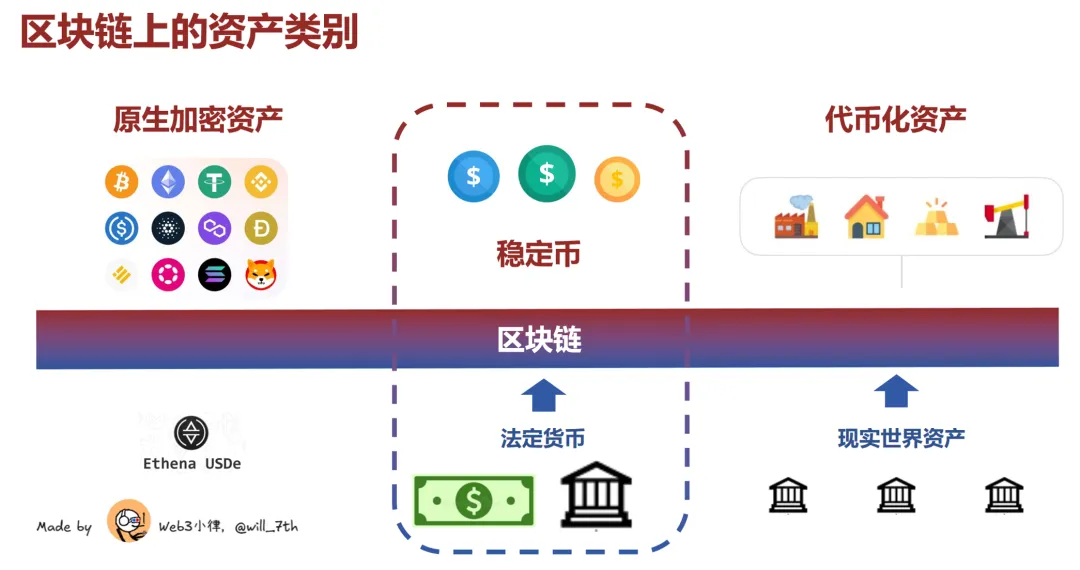
What has changed? The underlying ledger for asset backing has evolved, becoming more efficient, convenient, and global.
This is the focal point for Western markets. As BlackRock’s CEO remarked, “asset tokenization” will drive the next financial revolution. The Federal Reserve has held “historic” meetings to discuss embracing innovation, and Nasdaq is moving toward tokenized trading, tokenized IPOs, and 24/7 trading.
This also represents the dynamic assessment focus for Chinese regulators—the blockchain-based financial infrastructure, regardless of the digital asset type built upon it.
2.1 Back to Blockchain Fundamentals
As Dr. Xiao suggests, we need to return to the fundamentals of blockchain, examine first principles, and reflect on today’s hot topics: digital currencies, crypto assets, the crypto market, and the blockchain technology behind them.
What is the essence of finance? It is the mismatch of value across time and space—a principle unchanged for millennia.
Blockchain-powered new finance dramatically increases efficiency:
- Across time: Reflecting both the time value of money and transaction/settlement cycles.
- Across space: Global value allocation.
- Methods of value transfer.
Just as the fundamental properties of money (unit of value) and its core function (medium of exchange) remain constant, the essence of finance does not change, even as money’s form evolves—from shells and tokens to cash, deposits, electronic money, and stablecoins. The challenge is how to deliver better financial services in a distributed, digital, and cross-time-space context.
2.2 New Financial Infrastructure
The greatest innovation in new finance, compared to traditional finance, is the shift in accounting methods—blockchain as a transparent, global public ledger. Humanity has only changed its accounting system three times in thousands of years, each time profoundly reshaping economic and social structures and reflecting the co-evolution of technology and civilization.
- Single-entry bookkeeping in Sumer (circa 3500 BCE) overcame oral transmission limits, promoted early trade and state formation, and introduced commercial dispute clauses in the Babylonian Code of Hammurabi.
- Double-entry bookkeeping drove the commercial revolution during the Renaissance (14th–15th centuries). Prosperous Mediterranean city-states, Genoese fleet investments, and the Medici family’s multinational banking relied on complex financial instruments, leading to the rise of banks and multinational companies and the establishment of commercial credit.
- The latest change is distributed ledger technology, introduced by Bitcoin in 2009, which enabled decentralized finance, transformed trust mechanisms, and led to the rise of digital currencies.
This new finance, built on distributed ledger transformation, is inseparable from blockchain, smart contracts, digital wallets, and programmable currency. Blockchain, as the financial infrastructure settlement layer, was designed to solve payment finality. Digital currencies on distributed ledgers, combined with smart contracts, unlock new possibilities: near-instant settlement, 24/7 availability, low transaction costs, and the programmability, interoperability, and composability of digital tokens and DeFi.
New finance shows three major shifts:
First, accounting moves from centralized double-entry to decentralized distributed ledgers.
Second, accounts shift from bank accounts to digital wallets.
Third, the unit of account shifts from fiat currency to digital currency.
The most important aspect of distributed ledgers is their digital nature, enabling value transfer across time, space, and organizations.
2.3 The Great Transformation of Financial Infrastructure
So, regardless of the form—stablecoins, deposit tokens, CBDCs—blockchain-based financial infrastructure has undergone a fundamental transformation.
What seeds have been planted?
Digital currency sits at the intersection of three enormous markets: payments, lending, and capital markets. It also promises future value channels for AI-driven, silicon-based civilization.
Despite waves of de-globalization driven by geopolitics, blockchain’s unified ledger continues to align markets globally. The world is truly flat. As the book says, “We wanted transoceanic airplanes, but we invented Zoom.”
III. Final Thoughts
Ultimately, the principles of “policy documents remain valid” and “dynamic evaluation of overseas stablecoin development” still guide our direction. Although the reality of stablecoins in 2025 may seem surreal—“you are in the Red Chamber, I am on the Journey to the West.”
“I am on the Journey to the West”—it means departure, perseverance through countless trials, and the ambition to explore next-generation financial infrastructure.
In 2008, Modern Sky released an album titled “You Are in the Red Chamber, I Am on the Journey to the West,” inspired by “Dream of the Red Chamber” and “Journey to the West.” The album reinterprets classic tracks, creating a cultural dialogue between classical and modern, East and West, fantasy and reality.
You follow your old dreams; I set out on my own journey.
Yet in the end, we may all arrive at the same destination.
Statement:
- This article is republished from [Web3 Xiaolu]. Copyright belongs to the original author [Web3 Xiaolu]. If you have concerns about this republication, please contact the Gate Learn team. The team will address the issue promptly according to established procedures.
- Disclaimer: The views and opinions expressed in this article are solely those of the author and do not constitute investment advice.
- Other language versions of this article are translated by the Gate Learn team. Unless otherwise stated, translated articles may not be copied, distributed, or plagiarized without reference to Gate.