The Metamorphosis of a16z: From Capital Allocators to Reality Architects
Something fundamental is shifting at Andreessen Horowitz (@ a16z). What once presented itself as Silicon Valley’s preeminent venture capital firm is morphing into something far more ambitious—a full-stack coordination engine for technological and political reality itself.
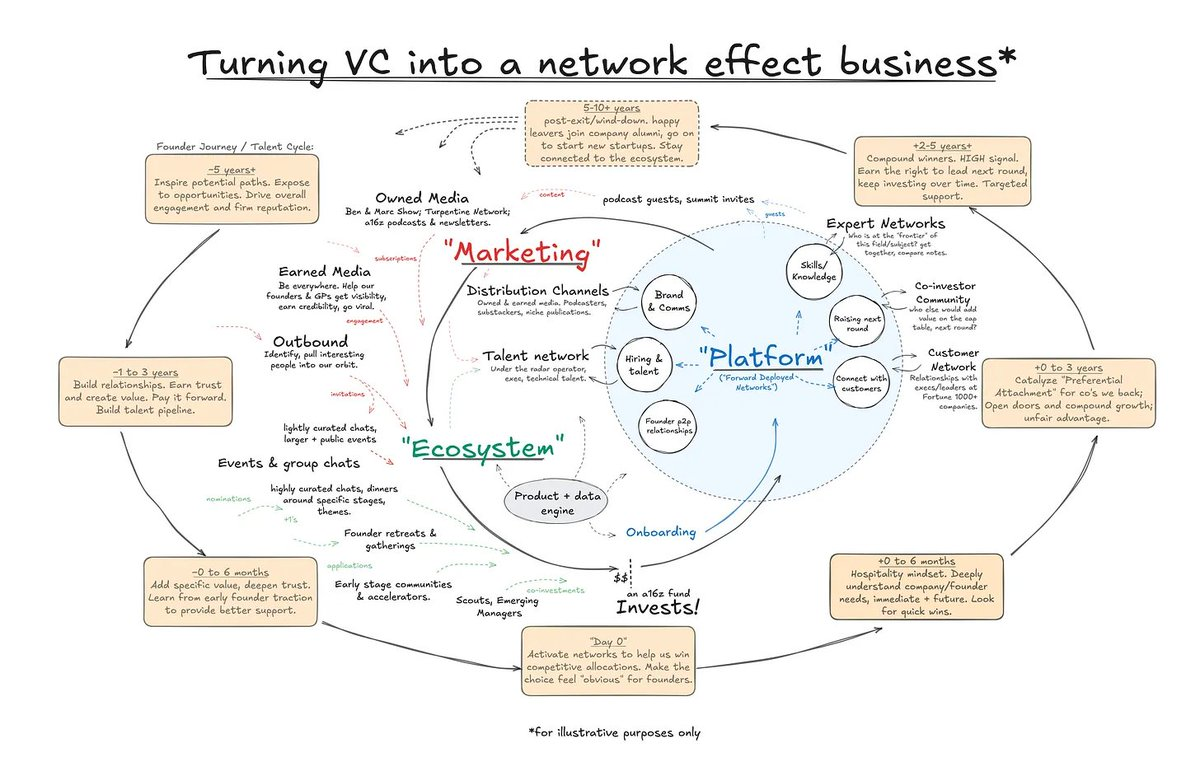
The clearest signal came in August 2025 when Alex Danco (@ Alex_Danco) joined as Editor-at-Large, tasked with the firm’s entire written output. This wasn’t a communications hire. Danco sees writing as “power transfer technology”—a mechanism where legitimacy is “jointly incepted” between writer and reader, not benevolently bestowed by institutions.
But Danco’s appointment is merely one piece of a much larger machine. In November 2025, a16z published its New Media manifesto, revealing an operation that goes far beyond traditional venture capital. The firm now offers what it explicitly calls “timeline takeover” as a service—the ability to “win the internet for a day” for portfolio companies through coordinated content across video, podcasts, essays, and social media.
Building the Media Machine
The infrastructure is elaborate. Erik Torenberg (@ eriktorenberg) leads the New Media team, which includes in-house content creators described as “online legends,” “forward deployed New Media” personnel who embed directly with portfolio companies during launches, and a network of high-signal talent ready to amplify chosen narratives.
In October 2025, David Booth (@ david__booth) joined as Partner and Head of Ecosystem, explicitly focused on building what he calls “preferential attachment” mechanisms—the infrastructure that makes resources, talent, and attention flow toward a16z portfolio companies rather than competitors. As Marc Andreessen (@ pmarca) explains in Booth’s announcement, startups need to get “into a loop where it’s accruing more and more resources as it goes… qualified executives, technical employees, future downstream financing, positive brand momentum, public perception, customers, revenue, ability to throw weight in the government.”

The firm is launching an 8-week New Media Fellowship starting January 2026 to train operators, creators and storytellers who will then be placed at portfolio companies. This isn’t consulting—it’s building an entire parallel talent pipeline optimized for narrative warfare.
The operational capacity is striking. The team produces content 5x per week across multiple channels, operates an in-house video production unit “trained on set and inspired by New Media legends like Mr. Beast,” and maintains what they describe as “the group chats, the dinners, the events, and the hidden networks that help talented and trusted people find each other.”
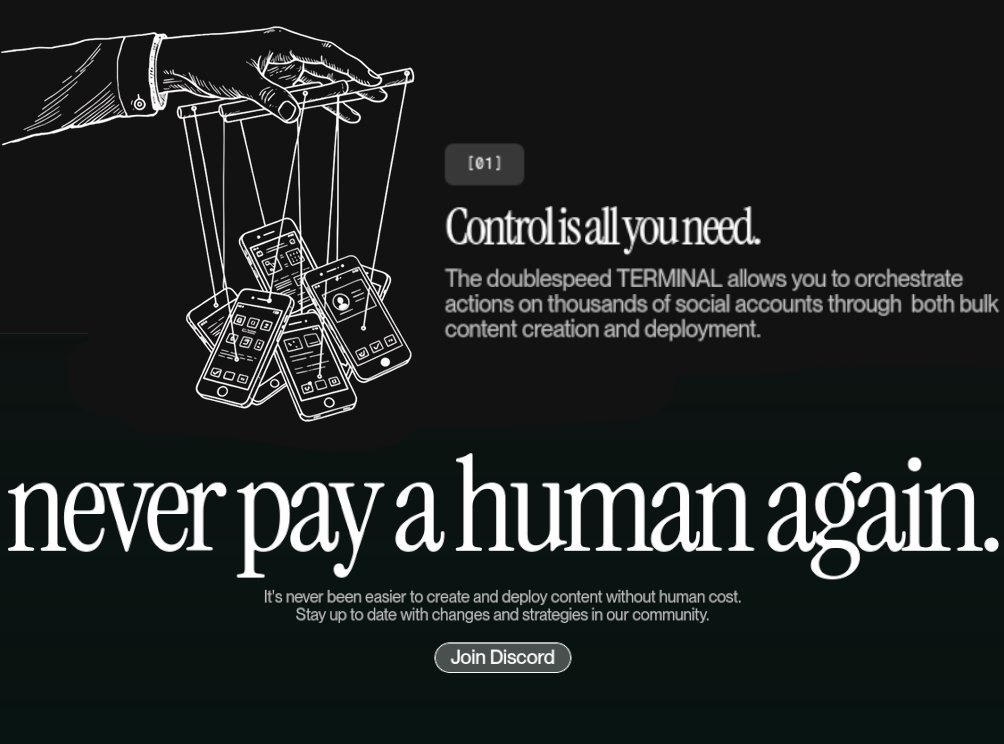
One portfolio company demonstrates the logical endpoint: DoubleSpeed (@ rareZuhair) enables controlling thousands of social media accounts with AI, ensuring they “look as human as possible.” The pitch: “never pay a human again.”
The Twitter Beachhead
This infrastructure building began in earnest with a16z’s $400 million commitment to Elon Musk’s Twitter acquisition in 2022—an investment that has reportedly lost $288 million as of September 2024. The financial loss misses the point. Ben Horowitz (@ bhorowitz) declared at the time that “Elon is the one person we know and perhaps the only person in the world who has the courage, brilliance, and skills to fix all of these and build the public square that we all hoped for and deserve”.
The firm immediately embedded personnel. Sriram Krishnan (@ sriramk), an a16z general partner focused on crypto, publicly announced he was “helping out Elon Musk with Twitter temporarily with some other great people,” stating “I (and a16z) believe this is a hugely important company and can have great impact on the world”.
The Prediction Market Infrastructure Play
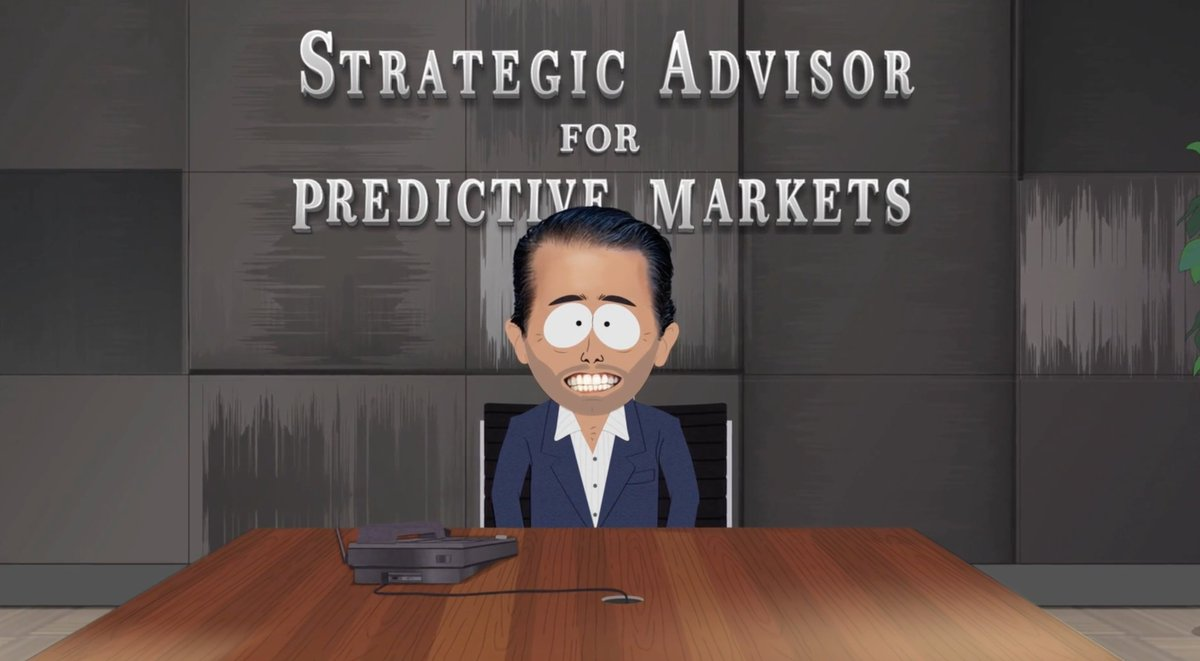
But the media machinery is just one layer. Danco’s essay “Prediction: the successor to postmodernism” argues that prediction markets represent a fundamental reframe of civilization, comparable to modernism and postmodernism themselves.
In October 2025, a16z co-led Kalshi’s $300 million Series D at a $5 billion valuation, with partner Alex Immerman declaring that prediction markets have “the opportunity to capture what may become the largest and most important financial market.”
The firm attempted to place Brian Quintenz (@ CFTCquintenz), an a16z executive who sat on Kalshi’s board, as head of the CFTC—the agency that regulates prediction markets. However, the White House withdrew Quintenz’s nomination in September/October 2025 after major controversies over conflicts of interest and opposition from crypto figures like the Winklevoss twins. The failed nomination reveals both the firm’s ambitions for regulatory capture and current limits.
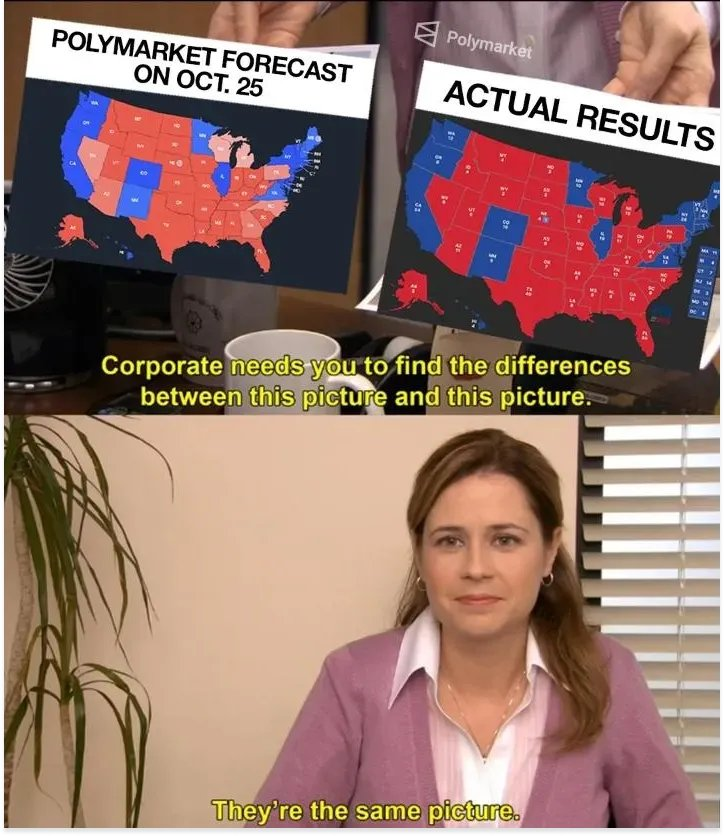
Prediction market volume grew 42-fold between early June and the week of the 2024 election, with platforms like Polymarket and Kalshi seeing billions in combined monthly trading volume. During the 2024 election, journalists and Wall Street traders began to lean on prediction markets, and markets themselves “beat the polls” to become signals “the world can use”.
When CEOs like Brian Armstrong are influenced to mention specific cryptocurrencies during investor communications based on market signals, the feedback loop becomes visible: markets don’t just forecast—they coordinate.
Even a16z’s market design expert Scott Kominers (@ skominers) acknowledges that “prediction markets themselves aren’t always a great way to aggregate information: Even for global, ‘macro’ events, they can be unreliable; for more ‘micro’ questions, prediction pools can be too small to get meaningful signal”. But Kalshi has scaled to $50B+ of annualized volume, up over 25x since the start of 2024. At that scale, the distinction between prediction and coordination collapses.
The Political Realignment
Marc Andreessen supported Hillary Clinton in 2016, even tweeting “I’m with her.” By 2024, he had switched completely. He and Ben Horowitz donated over $5 million to pro-Trump groups, with Andreessen putting $33.5 million into pro-cryptocurrency political groups—more than six times what he gave to Trump directly.
Andreessen explained that Biden’s proposal to tax unrealized capital gains was “the final straw,” as it would force startups to pay taxes on valuation increases. He described the Biden administration as practicing “soft authoritarian social revolution,” with direct government censorship pressure on tech companies.
The coordination went deeper. Andreessen organized WhatsApp group chats that became “the memetic upstream of mainstream opinion,” functioning as “the equivalent of samizdat” and helping produce the national “vibe shift”. These encrypted, disappearing-message groups constituted “dark matter of American politics and media,” where “a stunning realignment toward Donald Trump was shaped and negotiated”.
Erik Torenberg, now leading a16z’s New Media team, was instrumental in organizing these groups. The same person coordinating the firm’s “timeline takeover” services was coordinating the political group chats that shaped the 2024 election discourse.
The Legitimacy Infrastructure
The firm sees itself as a “legitimacy bank” where founders can “take out legitimacy on credit, or make a legitimacy deposit”. This isn’t metaphor. In their essay “How to be Legitimate,” Danco and former Microsoft executive Steven Sinofsky trace the history of legitimacy-making in tech—from Special Interest Groups in the 1960s, to PC Magazine’s kingmaker reviews in the 1980s, to today’s ecosystem of coordinated influence.
The key insight: once you have legitimacy infrastructure, you’re not selling products—you’re selling visions of the future. As Sinofsky explains, when Microsoft sold to enterprise, “all they wanted to hear about was my Ten Year Plan.” The legitimacy came from the ability to “sound credible forecasting the future.”
This is what a16z has built: The ability to make certain futures feel inevitable by controlling the infrastructure through which we understand what’s possible.
The Convergence
In April 2025, a16z formally launched the American Innovators Network with Y Combinator and AI companies, positioning themselves as “America’s Little Tech ecosystem leading the next era of innovation”. Their stated position: “If a candidate supports an optimistic technology-enabled future, we are for them. If they want to choke off important technologies, we are against them”.
Look at what they’ve assembled:
- Media infrastructure: Torenberg’s New Media team offering “timeline takeover as a service,” in-house production, forward-deployed narrative specialists
- Talent pipeline: New Media Fellowship training cohorts to embed at portfolio companies
- Platform presence: $400M into Twitter/X, personnel embedded during transition
- Market infrastructure: Leading investor in Kalshi ($5B valuation), betting on prediction markets as coordination mechanism
- Coordination networks: The WhatsApp groups, the dinners, “the hidden networks where talented and trusted people find each other”
- Political alignment: Direct relationships with Trump administration, $40M+ in political spending
- Attempted regulatory influence: Failed Quintenz nomination shows both ambition and current limits
The F1 Pit Crew Theory
The firm describes itself using an F1 metaphor. General Partners are the drivers. But “races are won or lost years in advance by teams who design the right chassis, hire the right engineers, drill their pit crews, build cult-like fanbases to keep the sponsor dollars flowing.”
As David Booth writes: “Adrian Newey didn’t win any races — but his arrival as CTO at Red Bull Racing transformed them from a cash-burning midfield team into a generational, world-champion franchise. And the generational VC firms of the next decade won’t just have the best drivers; they’ll also make deliberate investments in the machines they put on the track.”
The machine a16z is building has multiple engines: One that manufactures legitimacy through coordinated media. One that coordinates capital and attention through prediction markets. One that coordinates political outcomes through encrypted group chats and strategic donations. One that coordinates talent flow through fellowship programs and “ecosystem” infrastructure.
What This Means
When prediction markets have institutional adoption and are integrated with media machinery, they stop being forecasting tools. Markets produce “a live probability that is more disciplined than a poll, pundit, or headline”—and when journalists, traders, and executives use those probabilities to make decisions, the market becomes self-fulfilling.
According to a16z’s own framing, “Prediction” is emerging as the framework that comes after postmodernism—a new way of organizing human attention, capital, and action. The firm has positioned itself at every critical junction.
They fund the platforms where odds are set. They employ the media team that decides which questions feel important. They organized the group chats where political strategy was coordinated. They train the talent that will staff the next generation of companies. They attempted (and failed, for now) to place their people in regulatory agencies.
This isn’t conspiracy. It’s sophisticated institutional design by people who understand that controlling the infrastructure of belief is more valuable than controlling the infrastructure of production.
The failed Quintenz nomination shows there are still limits to this strategy. Opposition from within the crypto industry, concerns about conflicts of interest, and political complications can still block moves that look too obviously like regulatory capture.
But the broader machinery continues. The New Media team scales up. The prediction markets grow. The coordination networks deepen. The Fellowship starts placing trained narrative specialists at portfolio companies.
The game isn’t to predict the future. It’s to build the infrastructure that determines which futures are legible, which questions get asked, and whose answers feel authoritative.
And a16z is building that infrastructure right now, in public, with remarkable transparency about what they’re doing—while most people are still arguing about whether prediction markets are “more accurate than polls.”
Disclaimer:
- This article is reprinted from [aaronjmars]. All copyrights belong to the original author [aaronjmars]. If there are objections to this reprint, please contact the Gate Learn team, and they will handle it promptly.
- Liability Disclaimer: The views and opinions expressed in this article are solely those of the author and do not constitute any investment advice.
- Translations of the article into other languages are done by the Gate Learn team. Unless mentioned, copying, distributing, or plagiarizing the translated articles is prohibited.







