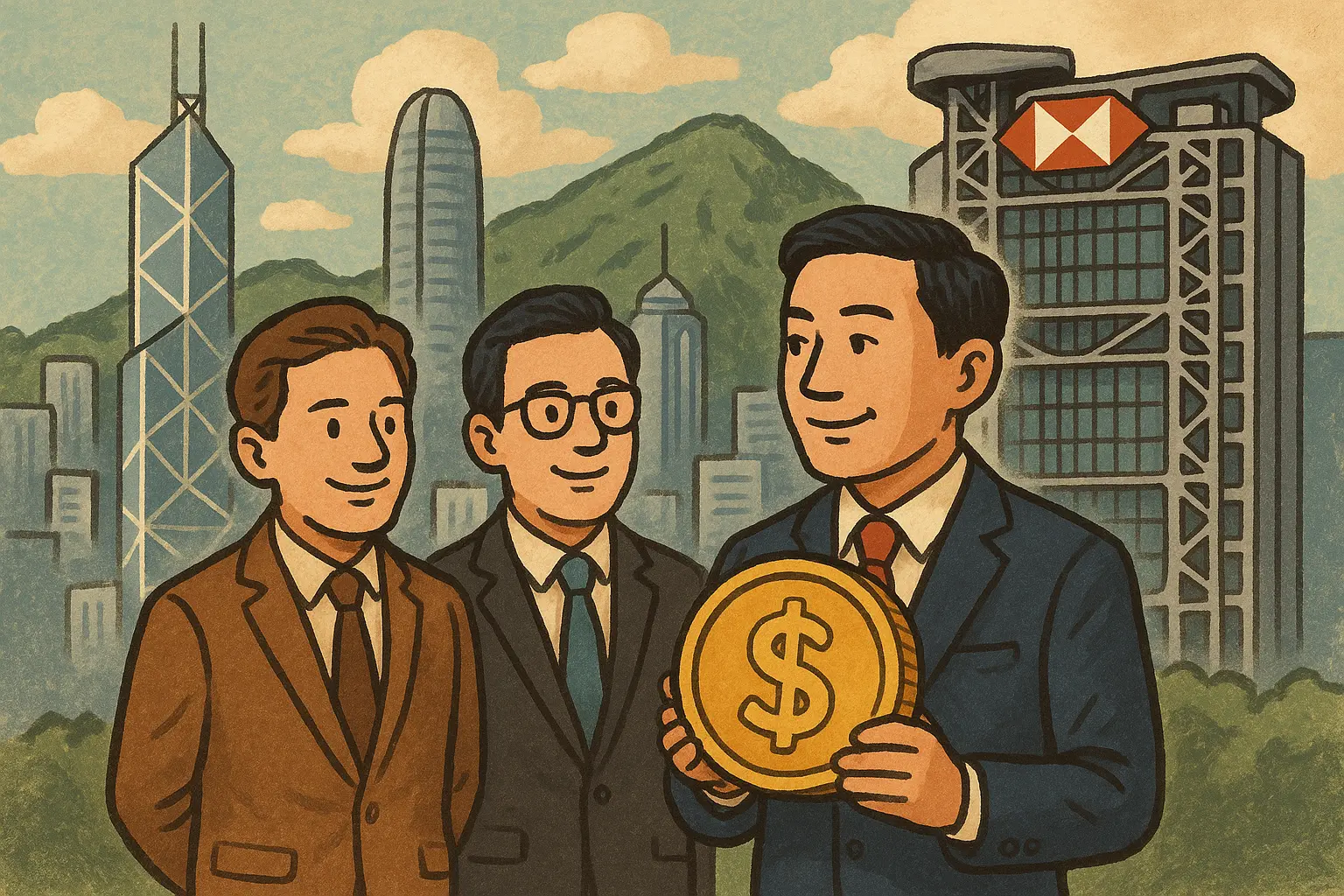
Hong Kong is about to officially issue its first batch of stablecoin licenses. The candidates shortlisted for the initial Hong Kong stablecoin licenses include HSBC, a joint venture led by Standard Chartered called Anchorpoint, and the cryptocurrency asset platform OSL Group. The Hong Kong Monetary Authority (HKMA) is expected to announce the list as early as next week, with the announcement scheduled after the conclusion of the National People’s Congress on Friday.
Detailed Overview of the Three Major Candidates: Each Has Its Identity and Characteristics
The three institutions shortlisted for Hong Kong’s stablecoin licenses represent three very different market backgrounds:
Anchorpoint (Standard Chartered + Animoca Brands + Hong Kong Telecom joint venture): This is the most active participant in HKMA’s stablecoin regulatory sandbox, continuously testing various applications since 2024, including e-commerce payments, cross-border settlements, and tokenized asset trading. Standard Chartered has publicly announced plans to issue a stablecoin pegged to the Hong Kong dollar. Anchorpoint’s long-term engagement in the field makes it one of the candidates most aligned with regulatory expectations.
OSL Group: Last month, OSL launched USDGO, a USD-pegged stablecoin aimed at professional investors, bringing a native crypto ecosystem perspective to the shortlist. Whether OSL plans to issue a Hong Kong dollar-pegged stablecoin under the new license has not yet been officially confirmed.
HSBC: Its inclusion was unexpected by many industry insiders. This Hong Kong-based bank, the largest in terms of assets, previously bypassed HKMA’s sandbox entirely, focusing instead on developing tokenized deposit projects. However, HSBC CEO Georges Elhedery clarified earlier this month that HSBC holds a positive attitude toward Hong Kong’s stablecoin market and has maintained active communication with HKMA — which may explain its eventual inclusion in the shortlist.
The Full Picture of the Sandbox and Licenses: The Competition Among 36 Applications
HKMA received a total of 36 stablecoin license applications and announced last month that a small number of licenses would be issued this month. Sources reveal that initially about five institutions were considered candidates, later narrowed down to three, but the other two — RD Technologies, founded by former HKMA Chief Executive Officer Chen Deli, and digital payment company LianLian Digital — are also expected to be among the first approved.
Industry experts generally believe that the final list’s bank-led pattern is not accidental: “To ensure market stability, the final list is very likely to be dominated by banks.” Strict regulation of stablecoin issuers and maintaining market confidence are considered key factors in the regulatory screening process.
Absence of Chinese Capital: An In-Depth Analysis of Beijing’s Role
The complete absence of Chinese mainland tech companies in Hong Kong’s first batch of stablecoin licenses is a significant point of observation. Ant Group and JD.com both suspended their stablecoin issuance plans in Hong Kong last year; last month, Beijing further banned domestic entities from engaging in asset tokenization and strengthened scrutiny of overseas activities, explicitly prohibiting the issuance of unlicensed RMB-pegged stablecoins.
Auros, a Hong Kong market maker, CEO Jason Atkins, pointed out sharply that whether Chinese institutions can ultimately operate stablecoin businesses in Hong Kong remains “an intentional uncertainty”: “Informal communications between Beijing and Hong Kong almost certainly determine Hong Kong’s scope of action — we can only see what they want us to see.”
Frequently Asked Questions
Q: Why was HSBC able to enter the candidate list without participating in HKMA’s sandbox?
Although HSBC skipped the regulatory sandbox, it has accumulated relevant technical experience through its own tokenized deposit projects and established regulatory trust through direct communication with HKMA. CEO Elhedery’s public positive stance may also have served as a signal. Participation in HKMA’s sandbox is not a necessary condition for obtaining a license; ultimately, regulators evaluate the overall compliance and stability of the institution.
Q: Why were Ant Group and JD.com not selected?
Both major Chinese tech giants suspended their stablecoin plans in Hong Kong last year. Coupled with Beijing’s restrictions on domestic asset tokenization and increased scrutiny of overseas crypto activities, their absence likely reflects implicit guidance from Beijing and a wait-and-see attitude regarding policy clarity.
Q: What does Hong Kong’s stablecoin license mean for global stablecoin regulation?
Hong Kong is the earliest major financial center in Asia to establish a comprehensive stablecoin regulatory framework after the EU’s MiCA framework (2024). The bank-led pattern of the first licenses indicates that Hong Kong has chosen a conservative path prioritizing financial stability over open market competition. This model may serve as a reference for other Asian financial centers like Japan and Singapore in designing their regulatory frameworks.
Disclaimer: The information on this page may come from third parties and does not represent the views or opinions of Gate. The content displayed on this page is for reference only and does not constitute any financial, investment, or legal advice. Gate does not guarantee the accuracy or completeness of the information and shall not be liable for any losses arising from the use of this information. Virtual asset investments carry high risks and are subject to significant price volatility. You may lose all of your invested principal. Please fully understand the relevant risks and make prudent decisions based on your own financial situation and risk tolerance. For details, please refer to
Disclaimer.


