With two weeks left in the first quarter, 2026 has already handed the crypto economy a proper drubbing, and since Jan. 1, 2026, the sector has coughed up $540 billion. Moreover, the cryptocurrency market is still nursing a wide spread of pullbacks from its respective all-time highs (ATHs).
Bitcoin Over 40% Below Record as Crypto Economy Faces Broad Sell-off Across Major Assets
Bitcoin and the rest of the crypto asset gang have had a rough go of it this year. The top crypto asset, bitcoin ( BTC), is now 43.4% below its peak of $126,080 per coin, according to current figures.
Typically, in the later innings of past bear market cycles, bitcoin has given up 70% to 80% of its value from the ATH. However, plenty believe this round may break script, thanks to corporate adoption, exchange-traded fund (ETF) inflows, and a growing pile of other adoption tailwinds.
The second-largest crypto asset by market capitalization, ethereum ( ETH), has fallen 57.4% from its $4,946 high-water mark. Other top-ten heavyweights, including BNB and XRP, are off 51.9% and 61.3%, respectively, while solana ( SOL) has taken the more dramatic route with a 70% slide.
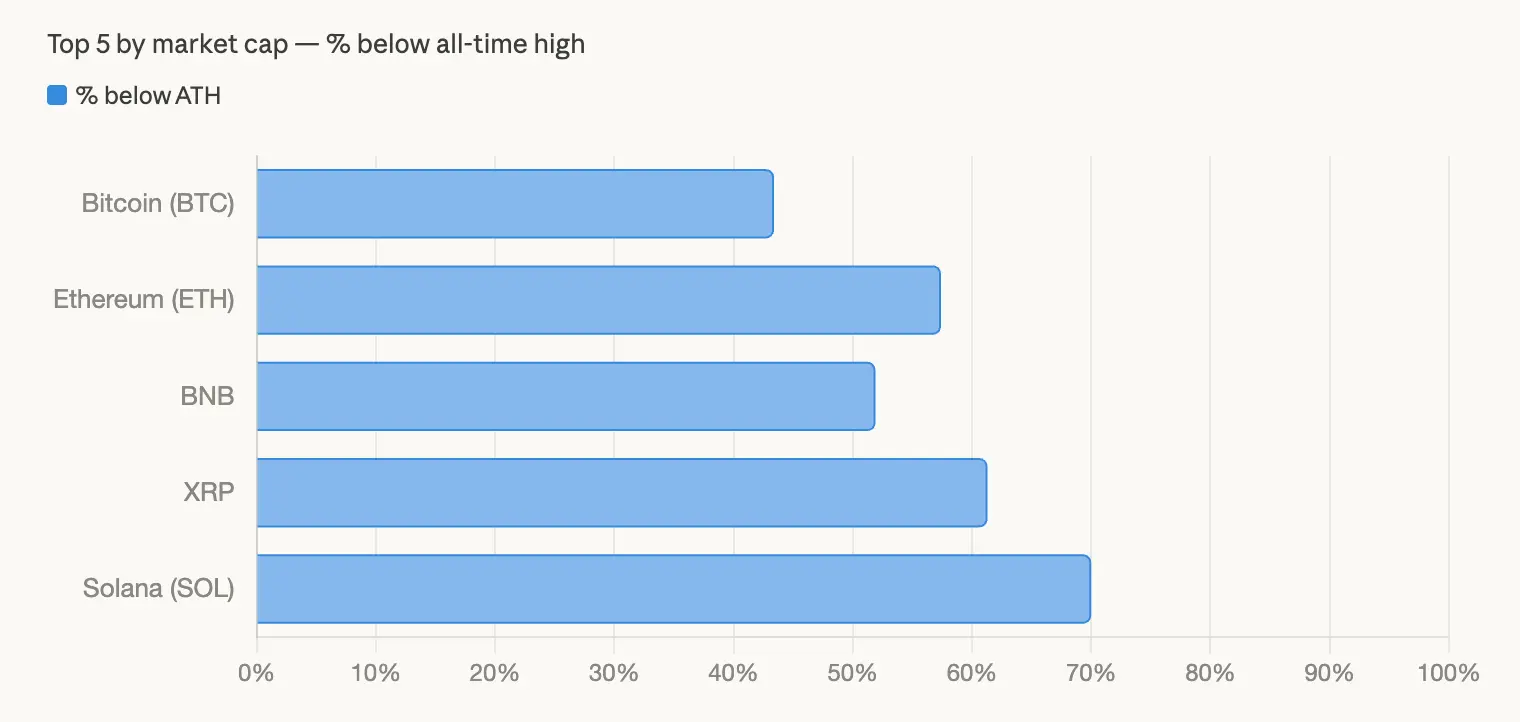
A few assets, however, have held up with a bit more poise, as tron ( TRX) has posted a milder decline of 30.8%, while LEO token is down just 10.5% and whitebit coin (WBT) has slipped 12.9%.
In contrast, several older or more turbulence-prone projects have been hit far harder: cardano ( ADA) is down 91.5%, dogecoin (DOGE) is off 87%, and avalanche (AVAX) has tumbled 93.3% from its peak. Hyperliquid (HYPE) is down 37.8% and monero ( XMR) lost 55.6% since its peak.
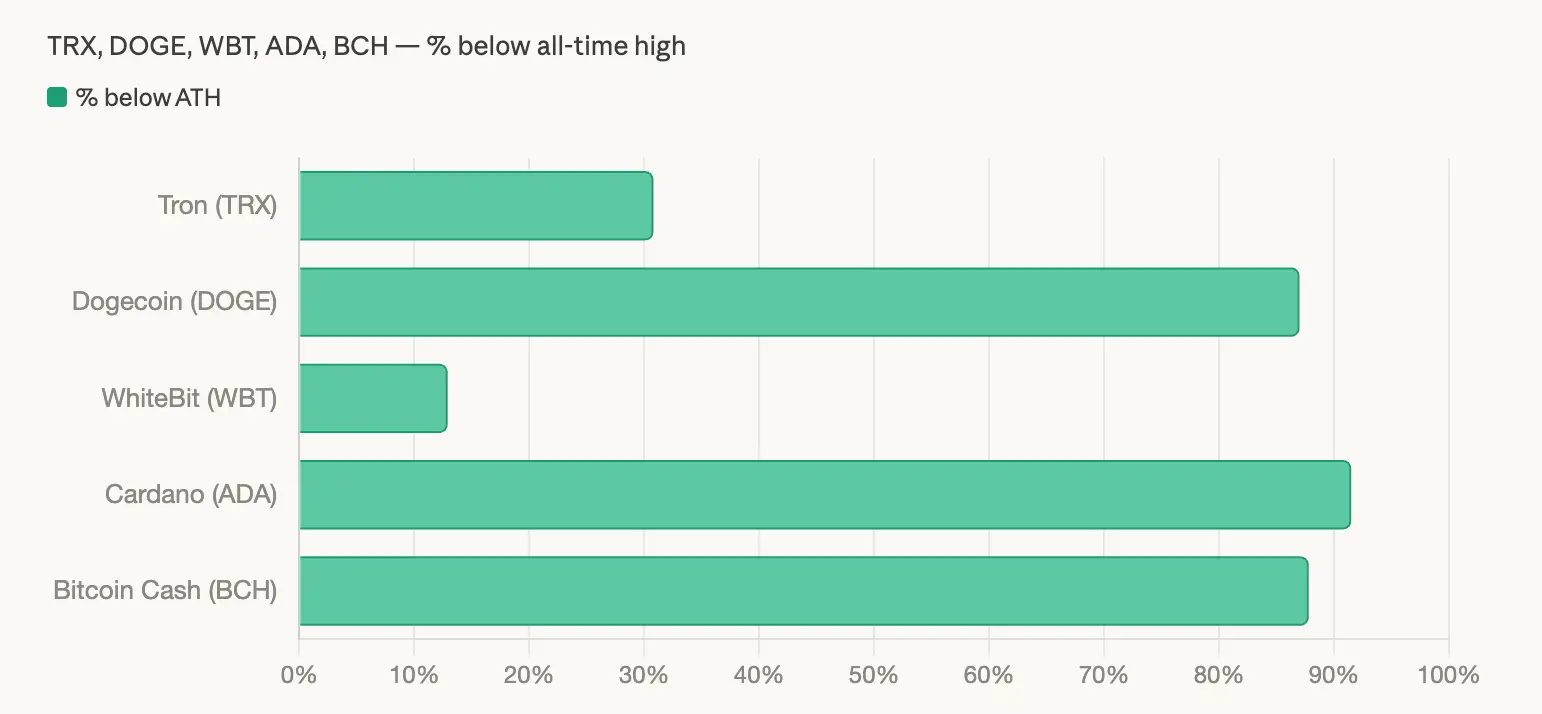
Bitcoin cash ( BCH) is down 87.8%, chainlink (LINK) has dropped 82.6%, stellar ( XLM) is lower by 81% this week, and litecoin ( LTC) is off 86.6%, as most major crypto assets remain parked well below their peak prices. How long this downturn sticks around, and whether the crypto asset economy slides even further, is still anyone’s guess.
For now, traders are waiting patiently for fresh signs in the tea leaves, though lately the market has been anything but calm. Bitcoin is dealing with macroeconomic pressures, policy uncertainties, and internal dynamics.
That includes turmoil in the Middle East, uncertainty tied to the CLARITY Act, and the latest bouts of bickering among the community, market players and developers over flashpoint issues such as arbitrary data added to the blockchain and fears about quantum computing.
As the first quarter nears its close, the crypto market remains bruised but far from finished. Prices sit well below their peaks, yet history shows downturns rarely last forever. Whether this cycle deepens or stabilizes, the coming months will test conviction across traders, institutions, miners, and developers watching bitcoin’s move.
FAQ 🔎
- How much has the crypto market lost in 2026? The cryptocurrency market has shed roughly $540 billion in value since Jan. 1, 2026, with many major digital assets trading far below their all-time highs.
- How far is bitcoin from its all-time high in 2026? Bitcoin is about 43.4% below its record price of $126,080 per coin as of mid-March 2026.
- Which major cryptocurrencies have fallen the most from their peaks? Assets such as avalanche, cardano and dogecoin have recorded some of the steepest declines, with drawdowns exceeding 85% to 90% from their highs.
- Why are crypto prices down in early 2026? Analysts point to macroeconomic pressure, geopolitical tensions, regulatory uncertainty and ongoing debates within the crypto community as key factors weighing on prices.
Disclaimer: The information on this page may come from third parties and does not represent the views or opinions of Gate. The content displayed on this page is for reference only and does not constitute any financial, investment, or legal advice. Gate does not guarantee the accuracy or completeness of the information and shall not be liable for any losses arising from the use of this information. Virtual asset investments carry high risks and are subject to significant price volatility. You may lose all of your invested principal. Please fully understand the relevant risks and make prudent decisions based on your own financial situation and risk tolerance. For details, please refer to
Disclaimer.


