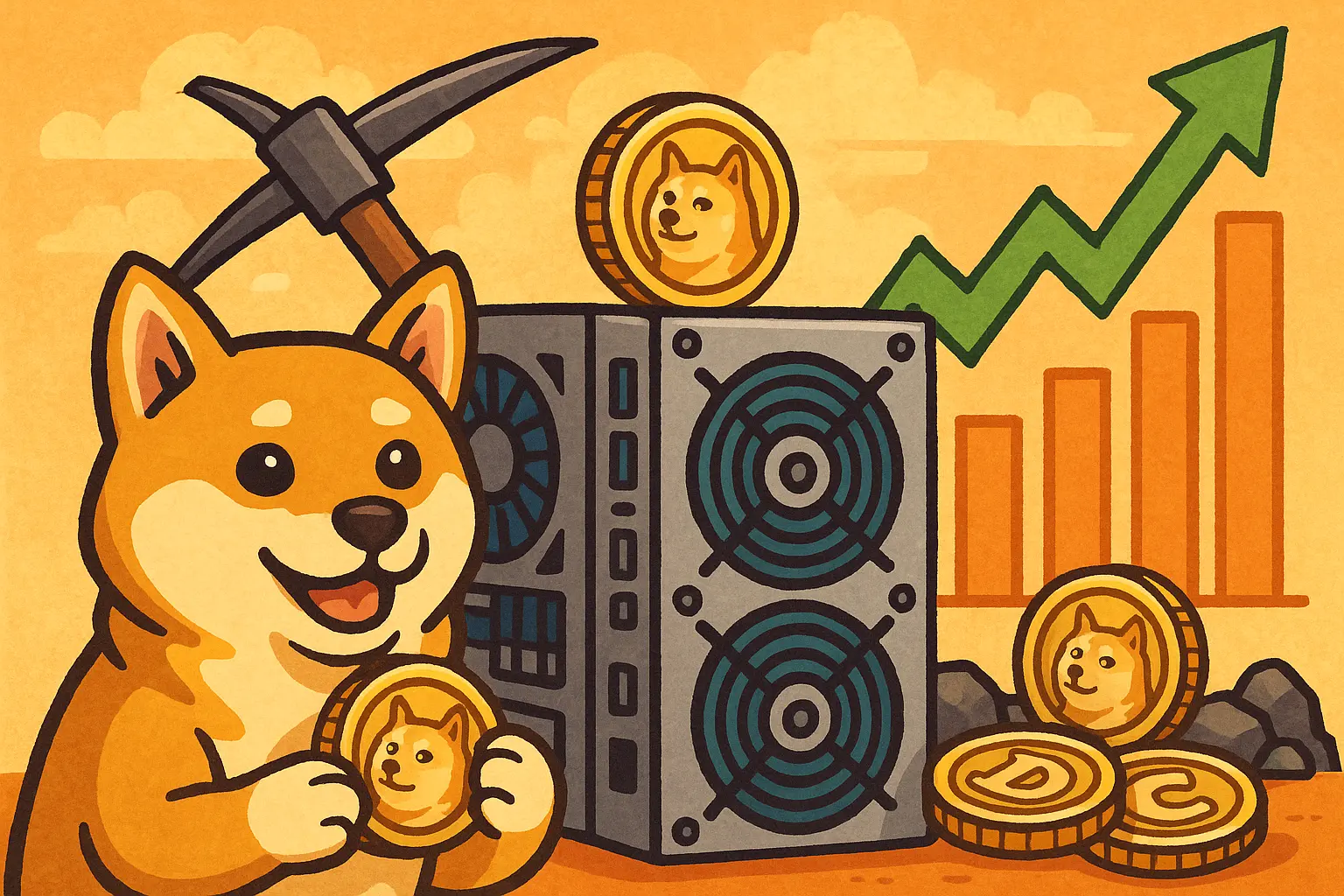
Bitdeer, a Bitcoin mining chip manufacturer (NASDAQ: BTDR), announced on Monday the launch of the SEALMINER DL1 Air, the first mining machine specifically optimized for the Scrypt proof-of-work algorithm used by Litecoin (LTC) and Dogecoin (DOGE). Following the announcement, Bitdeer’s stock price surged approximately 8% in a single day.
Technical Specifications and Merged Mining Mechanism of the SEALMINER DL1 Air
The release of the SEALMINER DL1 Air directly fills a product gap in Bitdeer’s Dogecoin mining lineup. Previously, Bitdeer openly admitted that its Bitcoin-centric SHA-256 algorithm miners are “like a high-end paperweight” when it comes to Dogecoin—since the underlying algorithms are fundamentally different, existing Bitcoin miners cannot effectively mine Dogecoin.
The core technical specifications of the new DL1 Air are as follows:
Algorithm: Scrypt (the common proof-of-work algorithm for Litecoin and Dogecoin)
Hash Rate: 25 GH/s
Energy Efficiency: 149 J/GH
Cooling Architecture: Continues the existing SEALMINER air-cooling design
Supported Chains: Besides Litecoin and Dogecoin, it also supports multiple smaller blockchains based on Scrypt, including Bellscoin (BELLS), Junkcoin (JKC), Luckycoin (LKY), and Pepecoin (PEP)
The merged mining mechanism is a key commercial highlight of this product. Through a “parent-child chain verification” architecture, successful mining operations on Litecoin automatically include verification of the auxiliary Dogecoin chain. This allows miners to earn block rewards for both cryptocurrencies simultaneously without additional computational effort, maximizing the efficiency of their hash power capital.
Bitdeer’s Strategic Transformation: From Cloud Mining to AI Infrastructure
Founded in 2020 by former Bitmain executive Jihan Wu, Bitdeer initially focused on cloud mining services before gradually shifting toward high-value-added development of ASIC chips. The SEALMINER series is a flagship result of this transformation. Notably, Bitdeer’s strategic direction is not limited to traditional mining equipment:
Recently, the company announced plans to raise $300 million through private placement of convertible preferred notes. The funds will be used for data center expansion, high-performance computing (HPC), and AI infrastructure development, indicating its active pursuit of the industry’s shift toward AI computing services.
Regarding Bitcoin holdings, Bitdeer liquidated all its previously held Bitcoin last month. The CEO stated this was part of a financing plan and pledged to rebuild Bitcoin reserves. As of December last year, the company’s total hash rate reached 71 EH/s, with 55.2 EH/s from self-mined and hosted mining operations.
However, Bitdeer is currently facing a class-action securities lawsuit filed in the Southern District of New York, alleging false statements regarding the release schedule of the SEAL04 chips, which poses a potential risk factor affecting investor assessments of the company’s prospects.
Frequently Asked Questions
Q: How significant is the economic benefit of merged mining for Litecoin and Dogecoin for miners?
In practical terms, merged mining allows miners to earn block rewards for both cryptocurrencies simultaneously with the same hash power investment. This effectively creates a second revenue stream without additional hardware costs or electricity consumption. During periods when Dogecoin’s market value is stable and mining yields are attractive, merged mining can significantly improve the overall return on investment (ROI) of mining rigs. For miners already owning Scrypt miners, this is a cost-free way to increase earnings.
Q: Why can’t Bitdeer’s previous Bitcoin miners be used for Dogecoin mining?
Bitcoin uses the SHA-256 algorithm, while Dogecoin and Litecoin use Scrypt. The two algorithms are fundamentally different, and ASIC miners are highly specialized for specific algorithms. SHA-256 miners cannot generate effective hash power on Scrypt-based chains, making Bitcoin miners technically incompatible with Dogecoin mining.
Q: Will the launch of Dogecoin mining machines affect Bitdeer’s competitive position in the Bitcoin mining market?
The DL1 Air expands Bitdeer’s SEALMINER product line horizontally and does not replace its Bitcoin mining operations. The company’s Bitcoin mining business (including self-mining and hosting, totaling 71 EH/s) remains its core revenue source. Entering the Scrypt algorithm space allows Bitdeer to reach potential customers outside the Bitcoin mining market, helping diversify income streams and reduce reliance on a single algorithmic mining sector.
Disclaimer: The information on this page may come from third parties and does not represent the views or opinions of Gate. The content displayed on this page is for reference only and does not constitute any financial, investment, or legal advice. Gate does not guarantee the accuracy or completeness of the information and shall not be liable for any losses arising from the use of this information. Virtual asset investments carry high risks and are subject to significant price volatility. You may lose all of your invested principal. Please fully understand the relevant risks and make prudent decisions based on your own financial situation and risk tolerance. For details, please refer to
Disclaimer.


