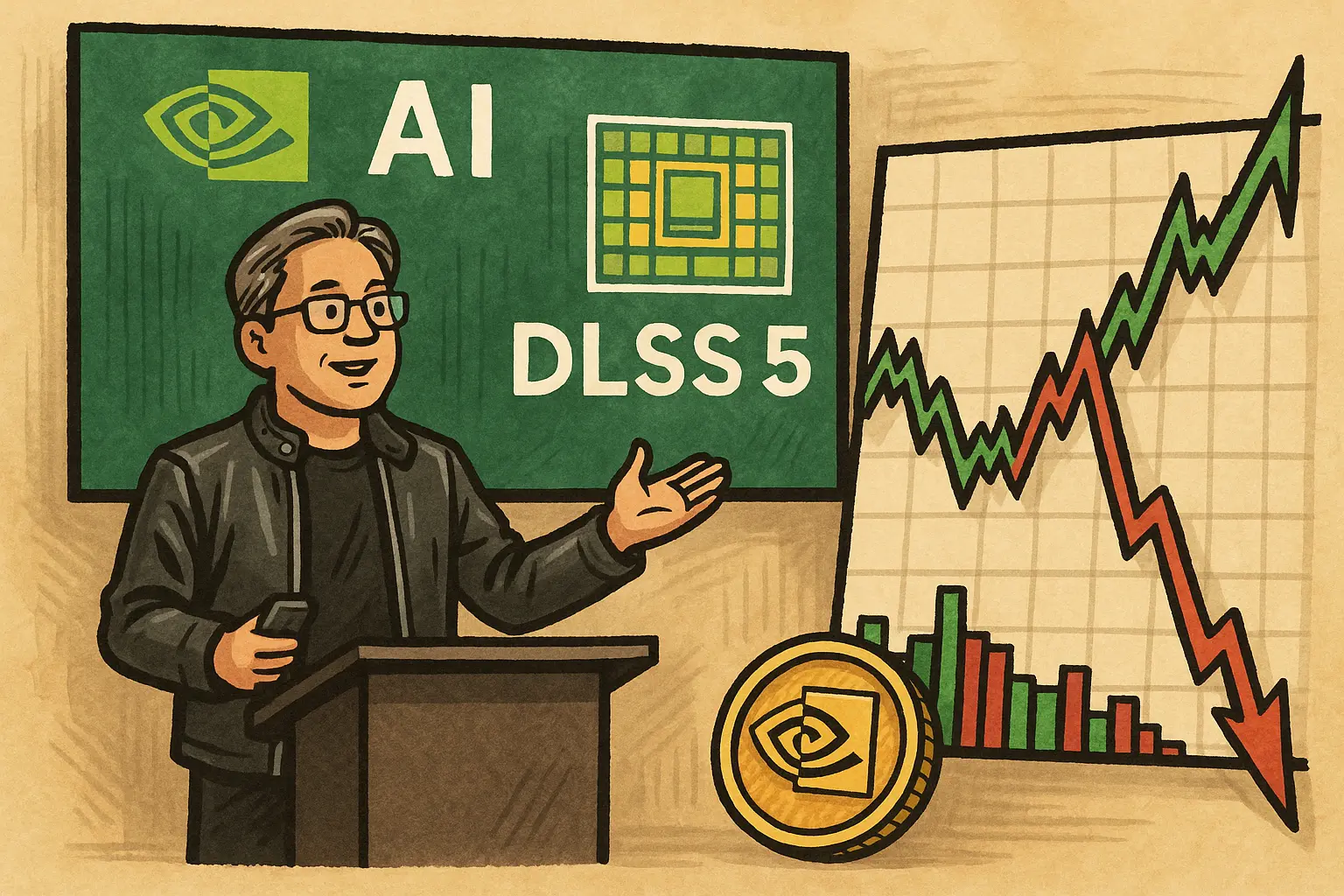
NVIDIA, during its annual GTC developer conference, unveiled a series of major announcements led by CEO Jensen Huang, covering a new AI architecture, inference chips, and cutting-edge graphics technologies. The company also forecasted that by 2027, the AI infrastructure market will reach a staggering $1 trillion in revenue. However, after a brief surge in stock price following Huang’s keynote speech, NVIDIA’s shares quickly retreated, failing to sustain the previous upward momentum.
Four Major Announcements at GTC 2026
At this GTC event, NVIDIA introduced four core updates spanning two key areas: AI computing power and gaming technology:
Next-Generation Vera Rubin AI Architecture: NVIDIA officially revealed its new GPU architecture, continuing the tradition of naming chips after astronomers, signifying a significant leap forward in inference efficiency and training performance.
New Inference Chips: Addressing the growing demand for AI model inference (deployment rather than training), NVIDIA launched specialized chips optimized for high-efficiency inference, aligning with industry trends shifting from training-intensive to inference-intensive deployment.
First Look at DLSS 5: This is the latest generation of NVIDIA’s AI-powered graphics technology, capable of real-time generation of lighting effects and material details in video games, representing a major breakthrough in game rendering technology.
$1 Trillion AI Infrastructure Market Forecast: NVIDIA predicts that as enterprises deploy AI models at scale, demand for AI computing will accelerate, and by 2027, the AI infrastructure revenue market will reach $1 trillion.
Why Didn’t the Stock Price Continue to Rise? Three Market Explanations
Despite the substantial announcements, the stock price did not rally as strongly as expected. Market analysts suggest several possible reasons:
Pre-Event Pricing (Buy the Rumor, Sell the News): Over the past two years, NVIDIA’s stock has surged significantly due to the AI boom, indicating that many investors had already built positions before GTC. When the announcements were made, these investors chose to take profits, creating selling pressure.
The $1 Trillion Figure Reflects Long-Term Potential, Not Immediate Revenue: NVIDIA’s trillion-dollar forecast depicts a long-term opportunity in 2027, not short-term earnings that can be immediately reflected in financial reports. Analysts note that investors are waiting for clearer signals on how quickly AI spending will translate into actual profit growth.
Concerns Over Macroeconomic Sustainability: Cloud computing companies continue to invest heavily in AI data centers, but there are doubts about the sustainability of this capital expenditure cycle. Once large cloud customers complete their initial build-out peaks, whether subsequent demand can maintain rapid growth remains a core risk that investors find difficult to confirm.
Frequently Asked Questions
How does DLSS 5 compare to previous DLSS technologies?
DLSS (Deep Learning Super Sampling) is NVIDIA’s flagship AI technology for enhancing game graphics. DLSS 5 introduces real-time generative AI capabilities, allowing the game to generate lighting effects and material details on the fly, rather than relying solely on traditional image upscaling. This enables developers to deliver near-cinematic quality rendering at high frame rates, though actual performance gains await third-party testing for confirmation.
Is there a basis for NVIDIA’s $1 trillion AI infrastructure market forecast?
NVIDIA’s prediction is based on accelerated enterprise AI deployment, increasing data center compute demands, and the rapid expansion of inference markets. Supporting factors include ongoing AI data center investments by major tech giants like Microsoft, Google, and Amazon, as well as the widespread adoption of generative AI applications in business. However, the forecast assumes sustained strong industry demand; if AI commercialization proceeds more slowly or competitors like AMD, Intel, or custom AI chipmakers capture market share, actual growth may differ.
Does the lack of a stock rebound imply that the AI boom is cooling off?
It’s too early to draw that conclusion. The muted stock reaction after GTC mainly reflects a short-term “sell the news” effect rather than a pessimistic view of NVIDIA’s long-term fundamentals. NVIDIA remains dominant in AI hardware, with its data center revenue continuing to grow rapidly. A true cooling of the AI boom would require signs of reduced capital expenditure from large cloud clients or a systematic slowdown in NVIDIA’s order backlog.
Disclaimer: The information on this page may come from third parties and does not represent the views or opinions of Gate. The content displayed on this page is for reference only and does not constitute any financial, investment, or legal advice. Gate does not guarantee the accuracy or completeness of the information and shall not be liable for any losses arising from the use of this information. Virtual asset investments carry high risks and are subject to significant price volatility. You may lose all of your invested principal. Please fully understand the relevant risks and make prudent decisions based on your own financial situation and risk tolerance. For details, please refer to
Disclaimer.


