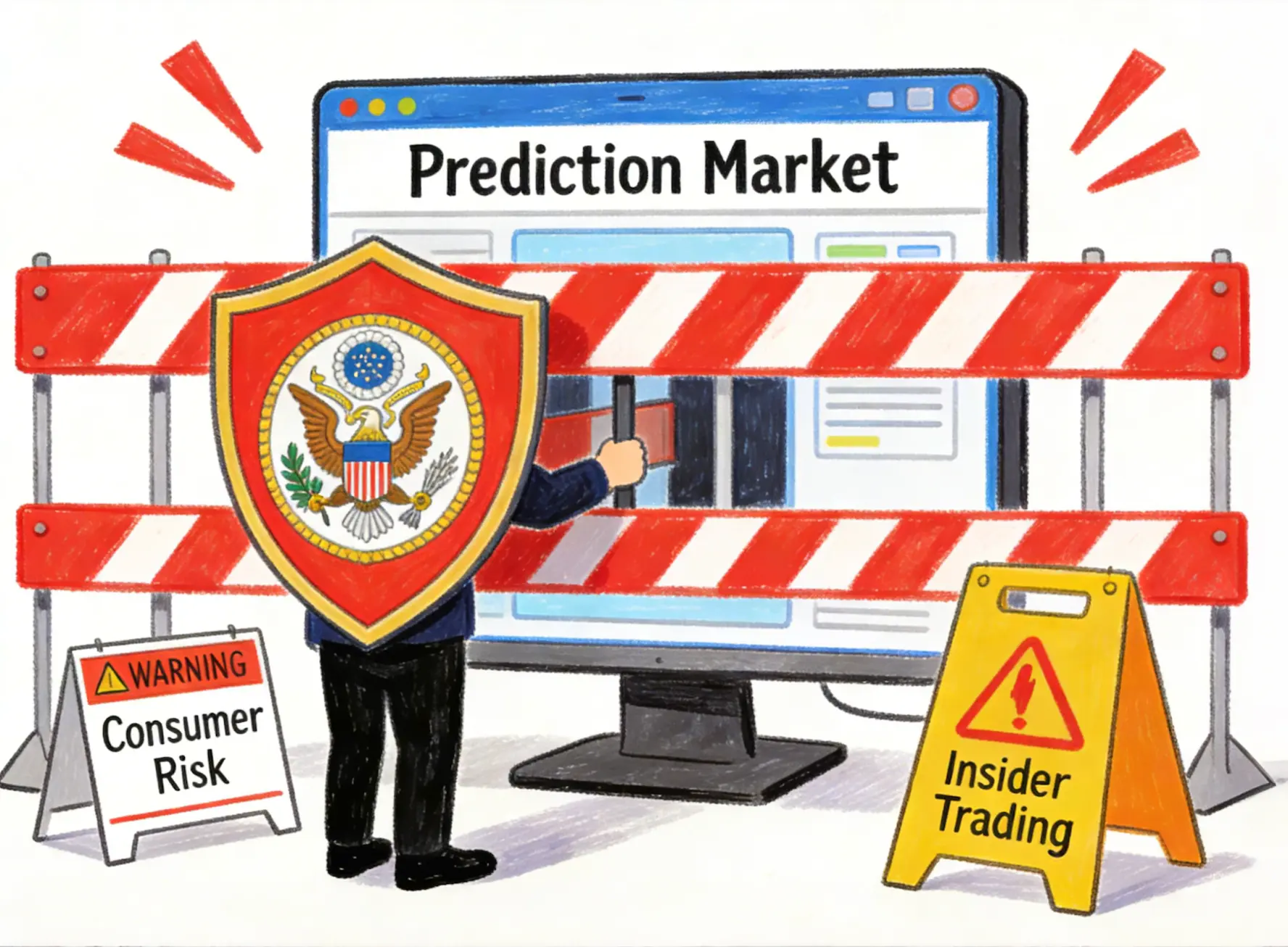
 Argentina has ordered a nationwide block of prediction market platform Polymarket, becoming the first Latin American country to restrict access to the site, following a court ruling that classified the platform as an unregulated betting operation.
The Buenos Aires court directed the National Communications Entity (ENACOM) to coordinate with internet service providers to enforce the block, while Google and Apple have been ordered to remove Polymarket’s mobile applications from Android and iOS app stores for Argentine users.
The ban, initiated by complaints from the Buenos Aires City Lottery (LOTBA) and the Argentine Chamber of Casinos and Bingos (CASCBA), was accelerated after Polymarket recorded suspicious trading activity in a contract tied to Argentina’s February inflation rate—with the trend reversing 15 minutes before official data release, raising suspicions of insider information access.
Regulatory Action: Scope and Enforcement
Ban Implementation
The Argentine justice system has ordered ENACOM to “implement the necessary actions through Internet service providers” to block nationwide access to Polymarket’s website. The measure is already in effect, with ISPs required to enforce the block under Argentine law.
Simultaneously, authorities have ordered Apple and Google to eliminate access to Polymarket’s mobile applications on their respective app stores for users located in Argentina.
Legal Basis
The case was pursued by the Specialized Prosecutor’s Office for Gambling in the City (FEJA) with technical support from the Judicial Investigations Corps (CIJ). The investigation concluded that Polymarket operated as an online betting system disguised as a “prediction market,” without proper authorization in any Argentine province.
Consumer Protection Concerns
Identity Verification Gaps
Authorities flagged that Polymarket allows users to access services without passing mandatory identity checks, potentially enabling minors to participate in betting contracts using credit cards or cryptocurrencies. This contrasts with regulated platforms like Kalshi, which features identity verification and promotes itself as a compliant prediction market operator.
Payment Method Risks
The platform’s acceptance of crypto payments and credit card deposits without adequate age verification mechanisms raised additional consumer protection concerns under Argentine law.
Inflation Data Incident: The Immediate Catalyst
Suspicious Trading Activity
The ban followed observations of unusual activity on Polymarket related to Argentina’s February inflation rate announcement. According to local media reports, the platform’s prediction trend reversed approximately 15 minutes before the official inflation data (2.9%) was publicly released, suggesting possible insider information access.
Investigation Context
This suspicious trading pattern provided additional momentum to the existing lawsuit initiated by LOTBA and CASCBA, reinforcing arguments that Polymarket operated without regulatory oversight in Argentine jurisdiction.
Global Regulatory Context
International Restrictions
Argentina joins more than 30 countries that have restricted Polymarket’s operations:
Colombia: Gambling authority banned Polymarket in 2025
Netherlands: Dutch regulators ordered Polymarket to cease operations in February 2026
United States: Prediction markets face heightened scrutiny, with Democratic lawmakers recently proposing legislation to prohibit event-based contracts tied to sensitive topics including war and death
Regulatory Debate in Latin America
Brazil is actively debating the legal classification of prediction markets, with some officials arguing these platforms more closely resemble gambling operations and should be regulated accordingly.
Related Incident: User Harassment Investigation
Threat Campaign Against Journalist
Separately, Polymarket banned accounts of users allegedly involved in threatening Times of Israel military correspondent Emanuel Fabian. The harassment followed Fabian’s March 10 report that an Iranian ballistic missile struck an open area outside Beit Shemesh, Israel, with no injuries.
Pressure Tactics
Bettors who had wagered against an Iranian strike on Israel on March 10 stood to lose significant sums if Fabian’s account held. The pressure campaign escalated from email requests for correction to threatening WhatsApp messages, with one individual warning Fabian that the group stood to lose $900,000 and would “invest no less than that to finish” him. Messages included references to Fabian’s home neighborhood and family members.
Fabricated screenshots circulated on social media falsely suggested Fabian had acknowledged error and agreed to issue a correction. Israeli police are now investigating the matter.
Frequently Asked Questions
Why did Argentina ban Polymarket?
Argentine courts blocked Polymarket for operating as an unregulated betting platform disguised as a prediction market, without proper authorization in any province. Authorities cited consumer protection risks including lack of age verification, crypto payments, and credit card deposits that could potentially allow minors to participate. The ban was accelerated following suspicious trading activity suggesting possible insider information access regarding February inflation data.
How is Argentina enforcing the Polymarket ban?
The court ordered ENACOM, the National Communications Entity, to coordinate with all internet service providers to block nationwide website access. Google and Apple have been directed to remove Polymarket’s mobile applications from Android and iOS app stores for Argentine users. The measure is already in effect.
What triggered the investigation?
The investigation originated from complaints filed by the Buenos Aires City Lottery (LOTBA) and the Argentine Chamber of Casinos and Bingos (CASCBA). The case gained additional urgency when Polymarket recorded a trend reversal in a contract tied to Argentina’s February inflation rate approximately 15 minutes before official data release, raising suspicions of insider trading.
Disclaimer: The information on this page may come from third parties and does not represent the views or opinions of Gate. The content displayed on this page is for reference only and does not constitute any financial, investment, or legal advice. Gate does not guarantee the accuracy or completeness of the information and shall not be liable for any losses arising from the use of this information. Virtual asset investments carry high risks and are subject to significant price volatility. You may lose all of your invested principal. Please fully understand the relevant risks and make prudent decisions based on your own financial situation and risk tolerance. For details, please refer to
Disclaimer.


