Legislator Lai Shih-po pointed out the AI proxy tool OpenClaw (commonly known as “Lobster”) during the Legislative Yuan’s Financial Committee meeting, questioning the Financial Supervisory Commission: if financial institutions use AI for automatic trading and errors occur, who is responsible? FSC Chair Peng Jinlong responded that if it affects the safety of financial institutions’ operations, the regulatory authority will naturally oversee it. In the future, AI proxy technology will be officially included in the guidelines.
(Background: Clawdbot, a legendary 24/7 AI butler that sold out Mac minis)
(Additional context: Jensen Huang announced NVIDIA’s entry into space computing: Vera Rubin Space-1 to build orbital data centers)
On March 18, at the Legislative Yuan’s Financial Committee, legislator Lai Shih-po walked up to the witness stand holding a screenshot of an AI tool with a red lobster logo. He referred to OpenClaw, an open-source AI proxy software that can directly take over computers through natural language commands, read browsers, access local files, and operate in a way completely different from traditional chatbots.
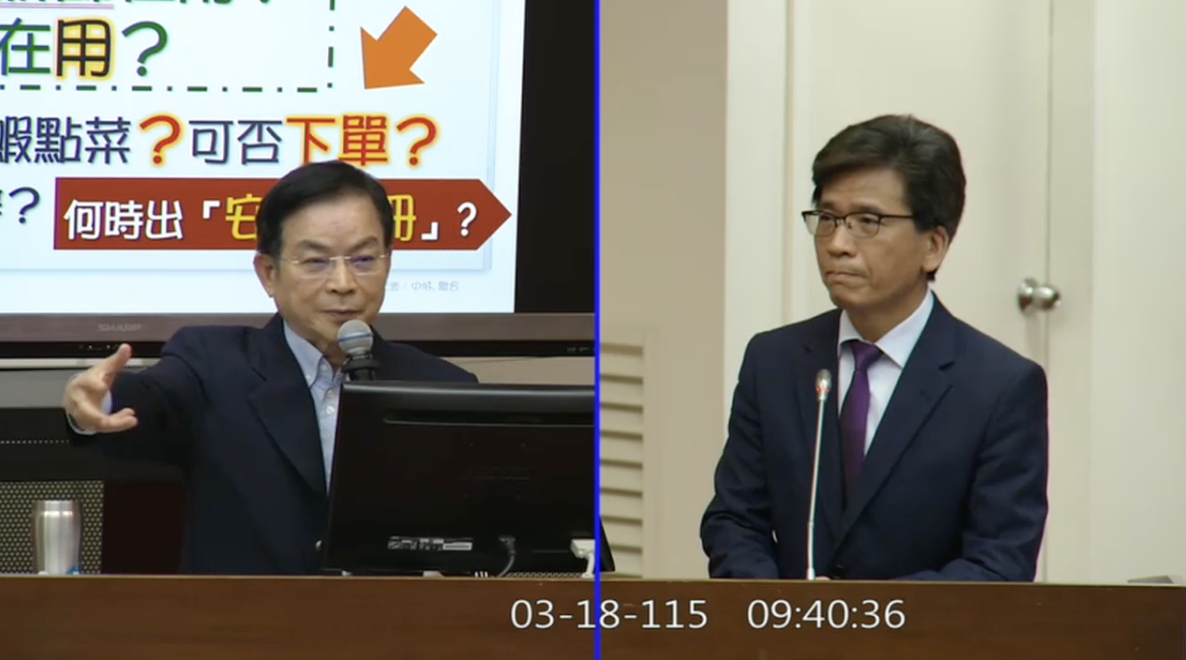
Now the question arises. Lai Shih-po pointed out that some domestic stock analysts and brokerages have already started using it. He posed a hypothetical scenario to Peng Jinlong: “If I tell it to buy 1 share of TSMC, but it ends up buying 10 shares, how is that responsibility calculated?”
FSC: If it affects operational safety, it will be regulated
Peng Jinlong did not dodge the question. He stated that if related AI applications impact the safety of financial institutions’ operations, “the regulatory authority will naturally include them within supervision.” The FSC issued the “Guidelines for Financial Industry Using AI” in June 2024, covering principles of data governance, model risk, and information security. However, he also admitted that AI proxy technology is evolving too quickly, and current guidelines need to keep pace.
Peng Jinlong maintained a calm attitude, saying that careful research and testing are needed before establishing precise and feasible regulatory standards. He emphasized that rules will not be hastily drawn, but they will not be ignored either.
The “Lobster Safety Manual” is taken seriously
Lai Shih-po jokingly pointed out that China’s Ministry of State Security has officially released a “Lobster Farming Safety Manual,” and he urged the FSC to require financial institutions using such tools to produce similar safety operation documentation.
Further reading: Chinese Ministry of State Security warns about “Lobster Farming”: OpenClaw embeds four major security mines, your device could be hijacked
OpenClaw’s logo features a red lobster. Jensen Huang called it the “next ChatGPT” at GTC 2026, and NVIDIA has also launched the enterprise version NemoClaw. From Silicon Valley to the Legislative Yuan, this lobster is advancing faster than anyone expected.
When it comes to AI proxy tools, the real challenge for financial regulators isn’t the technology itself but the question of responsibility. Ultimately, the financial industry may need a human-machine accountability mechanism for AI.
Disclaimer: The information on this page may come from third parties and does not represent the views or opinions of Gate. The content displayed on this page is for reference only and does not constitute any financial, investment, or legal advice. Gate does not guarantee the accuracy or completeness of the information and shall not be liable for any losses arising from the use of this information. Virtual asset investments carry high risks and are subject to significant price volatility. You may lose all of your invested principal. Please fully understand the relevant risks and make prudent decisions based on your own financial situation and risk tolerance. For details, please refer to
Disclaimer.


