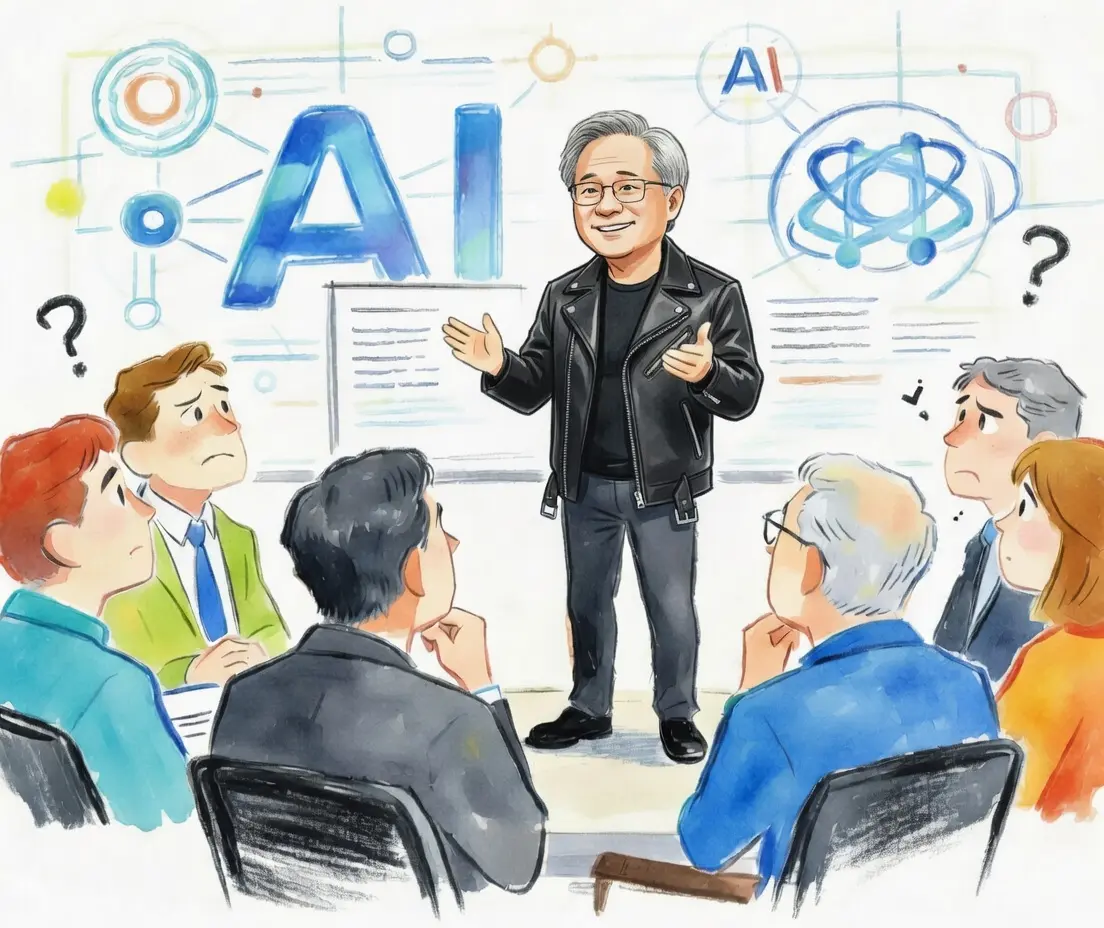
 Nvidia CEO Jensen Huang stated on a March 23, 2026, episode of the Lex Fridman podcast that artificial general intelligence (AGI) has been achieved, marking one of the strongest public claims yet that AI systems may have crossed the threshold of human-level reasoning and adaptability.
Huang said “I think it’s now. I think we’ve achieved AGI,” when asked how long it would take to reach the benchmark, adding that it is “not out of the question” for an AI system to run a company or launch a low-cost app used by billions. He pointed to OpenClaw, an open-source AI agent platform, as an example of autonomous systems already performing complex tasks. However, Huang later clarified that “the odds of 100,000 of those agents building Nvidia is zero percent,” noting that many such projects fade after initial interest.
The remarks have intensified an ongoing industry debate, as AGI lacks a universally accepted definition and no major scientific or regulatory body has confirmed its arrival.
Huang’s AGI Statement
Definition and Context
Artificial general intelligence refers to AI capable of learning, reasoning, and operating across multiple domains without requiring separate models for each task—distinct from narrow AI systems that excel at specific functions like writing or coding. Fridman defined AGI as an AI system able to “essentially do your job,” including starting, growing, and running a successful tech company. When asked how long it would take to reach AGI, Huang responded: “I think it’s now. I think we’ve achieved AGI.”
Examples and Clarifications
Huang cited OpenClaw, an open-source AI agent platform, as evidence of current capabilities, noting that people are using individual AI agents to perform various tasks. He suggested that an AI could potentially create a digital influencer or social application that becomes an instant success. However, he also tempered his claim, stating that “a lot of people use it for a couple of months and it kind of dies away,” and that the likelihood of such agents building a company of Nvidia’s scale is zero.
Industry Debate Over AGI Definition
Competing Perspectives
The lack of a consensus definition has made it difficult to pin down a reliable timeline for AGI’s creation and widespread adoption:
OpenAI CEO Sam Altman told Forbes in February 2026 that “we basically have built AGI, or very close to it,” later clarifying that his statement was “spiritual” rather than literal, and that AGI will require “a lot of medium-sized breakthroughs” rather than a single large one
Microsoft CEO Satya Nadella offered a different perspective, stating that the industry is “not anywhere close to AGI” and that “we have a good process in place. It’s not about Sam or me declaring it”
Nvidia’s Huang acknowledged the ambiguity, noting that while he believes AGI has been achieved, the term itself is loosely defined
Contractual Implications
The definition of AGI has become more than an academic debate, with key clauses in major contracts—including agreements between OpenAI and Microsoft—potentially triggering significant financial consequences based on when AGI is deemed achieved.
Technical Reality and Limitations
Current AI Capabilities
Many researchers argue that today’s AI systems still struggle with reliability, long-term planning, and real-world understanding. While AI can excel at specific tasks, the ability to reason across domains, adapt without retraining, and operate autonomously in complex environments remains contested.
Huang’s Caveat
Huang’s own remarks highlighted the gap between achieving AGI and deploying it at scale. He noted that many AI agents see initial use but “kind of dies away,” suggesting that even if the technical threshold is crossed, sustained autonomous operation at enterprise scale remains unproven.
Market Context
Nvidia shares closed up 1.5% on March 23, though the stock remains down nearly 6% year-to-date following broader market volatility. Nvidia, the world’s most valuable company, has been propelled by surging AI usage among consumers and businesses.
Frequently Asked Questions
What did Jensen Huang say about AGI?
Huang stated on the Lex Fridman podcast that he believes AGI has already been achieved, saying “I think it’s now. I think we’ve achieved AGI.” He pointed to OpenClaw, an open-source AI agent platform, as an example of autonomous systems already performing complex tasks.
What is AGI and why is its definition controversial?
Artificial general intelligence (AGI) refers to AI that can learn, reason, and adapt across multiple domains like a human, unlike narrow AI systems that excel at specific tasks. There is no universally accepted definition, and tech leaders have offered varying perspectives on when—or if—it has been achieved. The definition has contractual significance, with major agreements potentially hinging on when AGI is deemed reached.
How do other tech leaders view AGI?
OpenAI CEO Sam Altman has said “we basically have built AGI, or very close to it,” though he described the statement as “spiritual” rather than literal. Microsoft CEO Satya Nadella has said the industry is “not anywhere close to AGI.” Huang himself noted that while he believes AGI has been achieved, the odds of AI agents building a company of Nvidia’s scale are zero.
Disclaimer: The information on this page may come from third parties and does not represent the views or opinions of Gate. The content displayed on this page is for reference only and does not constitute any financial, investment, or legal advice. Gate does not guarantee the accuracy or completeness of the information and shall not be liable for any losses arising from the use of this information. Virtual asset investments carry high risks and are subject to significant price volatility. You may lose all of your invested principal. Please fully understand the relevant risks and make prudent decisions based on your own financial situation and risk tolerance. For details, please refer to
Disclaimer.


