

Trade
Trading Type
Spot
Trade crypto freely
Alpha
Points
Get promising tokens in streamlined on-chain trading
Pre-Market
Trade new tokens before they are officially listed
Margin
Magnify your profit with leverage
Convert & Block Trading
0 Fees
Trade any size with no fees and no slippage
Leveraged Tokens
Get exposure to leveraged positions simply
Futures
Futures
Hundreds of contracts settled in USDT or BTC
Options
HOT
Trade European-style vanilla options
Unified Account
Maximize your capital efficiency
Demo Trading
Futures Kickoff
Get prepared for your futures trading
Futures Events
Participate in events to win generous rewards
Demo Trading
Use virtual funds to experience risk-free trading
Earn
Launch
CandyDrop
Collect candies to earn airdrops
Launchpool
Quick staking, earn potential new tokens
HODLer Airdrop
Hold GT and get massive airdrops for free
Launchpad
Be early to the next big token project
Alpha Points
NEW
Trade on-chain assets and enjoy airdrop rewards!
Futures Points
NEW
Earn futures points and claim airdrop rewards
Investment
Simple Earn
Earn interests with idle tokens
Auto-Invest
Auto-invest on a regular basis
Dual Investment
Buy low and sell high to take profits from price fluctuations
Soft Staking
Earn rewards with flexible staking
Crypto Loan
0 Fees
Pledge one crypto to borrow another
Lending Center
One-stop lending hub
VIP Wealth Hub
Customized wealth management empowers your assets growth
Private Wealth Management
Customized asset management to grow your digital assets
Quant Fund
Top asset management team helps you profit without hassle
Staking
Stake cryptos to earn in PoS products
BTC Staking
HOT
Stake BTC and earn 10% APR
GUSD Minting
Use USDT/USDC to mint GUSD for treasury-level yields


More


- Trending TopicsView More
4.5K Popularity
522.13K Popularity
62.28K Popularity
1.8K Popularity
664 Popularity
- Hot Gate FunView More
- MC:$3.51KHolders:10.00%
- MC:$3.55KHolders:20.00%
- MC:$3.56KHolders:20.00%
- MC:$3.61KHolders:30.53%
- MC:$3.47KHolders:10.00%


- Pin
"It's not just their league"… How ETFs have changed the cryptocurrency investment landscape
Source: DigitalToday Original Title: “Not Just Their League”… How ETFs Are Changing the Cryptocurrency Investment Landscape Original Link: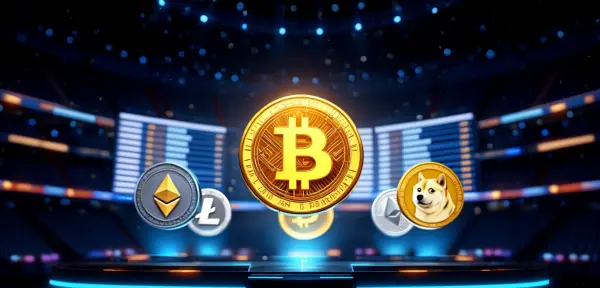
Since its inception, the cryptocurrency market has been characterized by a strong “faction culture” that supports only certain coins. Bitcoin maximalists(and purists) have rejected other coins, while the Ethereum camp prided itself on building the next-generation internet. Solana, XRP, Chainlink, among others, have competed based on their own strong fandoms. However, with the advent of exchange-traded funds (ETFs)(ETF), signs of a shift in this landscape are beginning to emerge.
On the 9th(local time), blockchain media reported that the introduction of ETFs is transforming the culture of the crypto market from “factionalism” to one focused on “portfolio management.”
Cryptocurrency ETFs provide investors with an environment where they can access a variety of coins with just a single click. Now, not only Bitcoin and Ethereum, but also Solana, Dogecoin, Chainlink, and others, flow through the same financial infrastructure. They pass through the same custodians and clearinghouses(DTCC) and are under the control of the same institutional investors and risk management teams.
This suggests that rational portfolio management has become more important than blind brand loyalty. In fact, since 2022, the 90-day correlation coefficient between Bitcoin and Ethereum has averaged 83%. This high correlation is not because their fundamentals are identical, but because the infrastructure through which capital flows and trades has become unified.
Of course, the intrinsic faction culture of cryptocurrencies will not disappear overnight, but as institutional investment structures like ETFs become established, the market is likely to gradually move as a “united team.” The key focus of the market moving forward is expected to shift from “which coin is superior” to “how to allocate the proportion of digital assets within the entire portfolio.”
As infrastructure integration increases and correlations between assets rise, the previously exclusive fan culture is expected to diminish. The industry believes that cryptocurrencies will evolve from a “their own league” to a popular investment product, similar to stocks, that anyone can own.