

Trade
Basic
Futures
Futures
Hundreds of contracts settled in USDT or BTC
Options
HOT
Trade European-style vanilla options
Unified Account
Maximize your capital efficiency
Demo Trading
Futures Kickoff
Get prepared for your futures trading
Futures Events
Participate in events to win generous rewards
Demo Trading
Use virtual funds to experience risk-free trading
Earn
Launch
CandyDrop
Collect candies to earn airdrops
Launchpool
Quick staking, earn potential new tokens
HODLer Airdrop
Hold GT and get massive airdrops for free
Launchpad
Be early to the next big token project
Alpha Points
NEW
Trade on-chain assets and enjoy airdrop rewards!
Futures Points
NEW
Earn futures points and claim airdrop rewards
Investment
Simple Earn
Earn interests with idle tokens
Auto-Invest
Auto-invest on a regular basis
Dual Investment
Buy low and sell high to take profits from price fluctuations
Soft Staking
Earn rewards with flexible staking
Crypto Loan
0 Fees
Pledge one crypto to borrow another
Lending Center
One-stop lending hub
VIP Wealth Hub
Customized wealth management empowers your assets growth
Private Wealth Management
Customized asset management to grow your digital assets
Quant Fund
Top asset management team helps you profit without hassle
Staking
Stake cryptos to earn in PoS products
Smart Leverage
NEW
No forced liquidation before maturity, worry-free leveraged gains
GUSD Minting
Use USDT/USDC to mint GUSD for treasury-level yields

More





Cryptocurrency World Shift: From Technical Experiments to Power Struggles
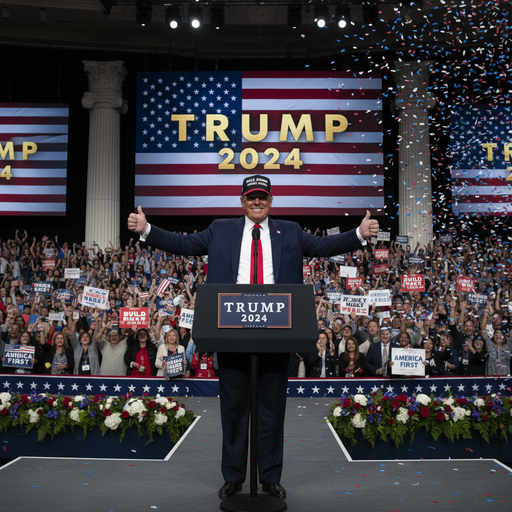
Trump is about to make an appearance at Davos, and this signal is a bit different. More intriguingly, Coinbase CEO Armstrong has refused to support a cryptocurrency bill at this time. These two events seem unrelated but actually point to a deeper change happening in the crypto circle — from fighting for regulatory recognition to vying for control over the fundamental rules of the economy.
Davos Is Changing Its Nature
This year’s Davos is different. The atmosphere, traditionally characterized by the “Thinkers’ Club,” is shifting toward a “Policy-Making Factory.” For the first time in six years, Trump is attending in person, and the US Pavilion has officially returned, with high-level government officials and business leaders participating, reaching a record high in scale.
The forum’s agenda reflects this shift — artificial intelligence is no longer regarded as an “emerging technology” but as a foundational infrastructure on par with energy, supply chains, and other critical systems. The core issues discussed by regulators and corporate executives are now: which systems will remain vital in ten years? What decision-making frameworks can support the next economic era?
This means Davos is upgrading from “conceptual clashes” to “rule-making.”
Crypto Finance Has Quietly Entered the Infrastructure Era
The same logic is playing out in the crypto space.
Stablecoins settle billions of dollars in transactions daily, mainly used for cross-border payments and fund management. Tokenized assets are expanding from fund products to real-world assets. By 2025, the Davos Web3 Center will release the “Davos Web3 Declaration,” explicitly supporting the four principles of “Responsible Innovation, Sustainable Development, Accountability, and Trust.”
Cryptocurrencies are no longer just experimental products but are becoming part of financial infrastructure. This identity shift is crucial — it means the focus of discussion is moving from “should we develop” to “how to develop” and “who sets the rules.”
Trump’s True Intentions
Trump’s decision to appear at Davos at this moment essentially sends an economic signal: the US aims to maintain leadership in the tech-driven global competition, with cryptocurrencies and digital assets at the heart of this contest.
Digital assets can offer faster settlement speeds, new financing models, and efficiency improvements, aligning with policies aimed at promoting growth. But they also involve risks related to sanctions enforcement, financial regulation, and the US dollar’s status. While Davos is not a legislative body, it is a key platform for transmitting policy priorities — signals sent here can directly influence market expectations and regulatory directions.
In other words, Trump is using Davos as a strategic platform to shape “America’s narrative power in the digital economy.”
Why Armstrong Said “No”
At this moment, Armstrong’s opposition stance is particularly interesting.
This isn’t just about opposing regulation. According to Reuters, the bill Armstrong refused to support has three core issues:
First, artificially dividing winners and losers. The bill clearly favors large existing companies and centralized institutions, excluding startups and open networks, effectively using regulation to entrench market structures.
Second, increasing burdens rather than solving problems. The bill does not clearly define operational rules for crypto products but instead piles on compliance obligations, which could exacerbate rather than reduce legal uncertainties.
Third, undermining the core advantages of crypto. The bill’s provisions would push the ecosystem toward high centralization, damaging the resilience and global interoperability of decentralized networks, ultimately leading to innovation resource outflow or long-term market concentration.
The underlying logic of this stance is: Unreasonably designed regulation can entrench a fragile system, which is more dangerous than having no regulation at all.
A New Stage in Power Struggles
Therefore, Trump’s presence at Davos and Armstrong’s rejection of the bill are essentially two sides of the same coin.
Trump is trying to establish US leadership in setting the rules of the digital economy through the Davos forum. Meanwhile, Armstrong is resisting those unreasonable rules that could prematurely lock in the future form of digital finance through legislative processes.
This is an inevitable outcome of the crypto space’s development today — as digital assets become true infrastructure, the focus of contention shifts from “can we exist” to “what rules should we follow.” More fundamentally, it’s about who can control the underlying logic of modern economic operation.
From hype to a battle for control over the economic system, the game rules in the crypto circle have been rewritten. Every signal from Davos, every legislative push or obstacle, will directly influence the direction of this power struggle.