

Trade
Basic
Futures
Futures
Hundreds of contracts settled in USDT or BTC
TradFi
Gold
Trade global traditional assets with USDT in one place
Options
Hot
Trade European-style vanilla options
Unified Account
Maximize your capital efficiency
Demo Trading
Futures Kickoff
Get prepared for your futures trading
Futures Events
Participate in events to win generous rewards
Demo Trading
Use virtual funds to experience risk-free trading
Earn
Launch
CandyDrop
Collect candies to earn airdrops
Launchpool
Quick staking, earn potential new tokens
HODLer Airdrop
Hold GT and get massive airdrops for free
Launchpad
Be early to the next big token project
Alpha Points
Trade on-chain assets and enjoy airdrop rewards!
Futures Points
Earn futures points and claim airdrop rewards
Investment
Simple Earn
Earn interests with idle tokens
Auto-Invest
Auto-invest on a regular basis
Dual Investment
Buy low and sell high to take profits from price fluctuations
Soft Staking
Earn rewards with flexible staking
Crypto Loan
0 Fees
Pledge one crypto to borrow another
Lending Center
One-stop lending hub
VIP Wealth Hub
Customized wealth management empowers your assets growth
Private Wealth Management
Customized asset management to grow your digital assets
Quant Fund
Top asset management team helps you profit without hassle
Staking
Stake cryptos to earn in PoS products
Smart Leverage
New
No forced liquidation before maturity, worry-free leveraged gains
GUSD Minting
Use USDT/USDC to mint GUSD for treasury-level yields

More





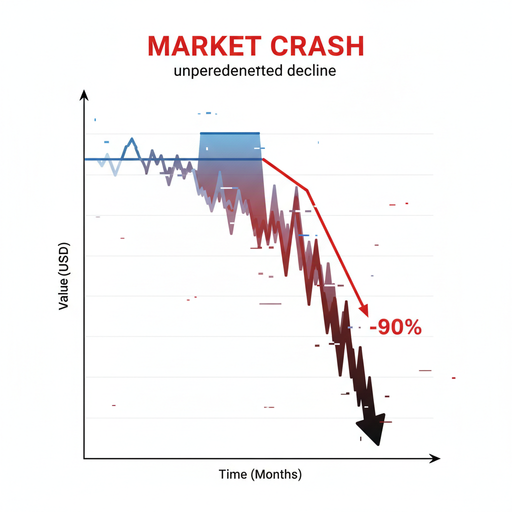

Cryptocurrency Decline: Bitcoin Plummets Below $89 K Amid Macroeconomic Turmoil
The decline in cryptocurrencies reached a new level on Tuesday, with Bitcoin crashing to $88,280, marking its lowest level in weeks. Risk aversion involved not only the digital currency market but also reverberated throughout the global financial ecosystem, fueled by international economic crises and signs of increased volatility. Ether fell to $2,960, while Solana retreated to $123.53, reflecting the widespread selling pressure that took over digital markets.
Market in Liquidation: Massive Sales Trigger Chain Losses
The liquidation dynamics dominated Tuesday’s trading sessions. A total of $486 million in long positions were liquidated across all assets during the day, marking the worst two-day sequence for this type of position in the year. Investor panic translated into sharp losses: the benchmark CoinDesk 20 index fell more than 5%, while the S&P 500 and Nasdaq 100 closed down over 2%, their worst performance since October.
Shares of companies related to the crypto sector also suffered significant hits. Coinbase, the largest US exchange, plummeted 5.5%, while Circle, issuer of stablecoin, retreated 7.5%. Strategy (MSTR), the largest corporate holder of Bitcoin among publicly traded companies, lost 7.8%, while Ether treasuries like Bitmine Immersion recorded declines exceeding 9%.
Macroeconomic Factors: The Tokyo Chaos Contaminates Wall Street
The trigger for the decline in cryptocurrencies did not emanate from the digital platforms themselves but from the collapse in Japan’s government bond market. According to Arthur Hayes, co-founder of BitMEX, markets are increasingly focused on the turbulence unfolding in JGB (Japanese government bonds) yields, with potential “spillover” to US Treasuries.
The MOVE index, which measures Treasury yield volatility, rose significantly toward critical levels of 130–140, signaling a possible cascade of forced liquidations. Add to this Trump’s new threats regarding tariffs against Europe, and the risk aversion picture is complete.
Trader Analysis: Gold Shines While Bitcoin Disappoints
A notable contrast emerged as the cryptocurrency decline accelerated: gold and silver surged. Gold reached $4,757, rising 3% during the day, while silver surpassed $95 per ounce with an increase of over 7%. Peter Schiff commented that silver’s strength anticipated Bitcoin’s collapse, reversing the narrative that prevailed weeks earlier when BTC traded around $96,000.
Mike Novogratz, founder of Galaxy Digital, observed that gold’s price indicates a loss of confidence in the dollar as a reserve currency. “Selling long-term bonds is also not a good sign. Bitcoin is disappointing because it is still being sold,” he said, reiterating that BTC would need to break the $100,000–$103,000 range to resume an upward trend.
Derivatives Data Reveal Traders’ Strategy: Short Selling Dominates
Analysis of the derivatives market provides clues on how traders are navigating the crypto downturn. Open interest in Bitcoin derivatives increased from $28.5 billion to $29.3 billion during the liquidation, suggesting traders are shorting the decline rather than unwinding spot positions.
For Ether, the story is reversed: open interest fell more proportionally to the 6% price drop, accompanied by heavy volume. This indicates underlying spot sales are driving the price action, with trading volume in the last 24 hours reaching $36.8 billion, surpassing Bitcoin’s $34.1 billion.
Privacy Coins Suffer Steep Losses; DeFi Maintains Resilience
Among the assets most affected by the crypto decline, privacy coins like Monero (XMR) and Dash (DASH) dropped 11.6% and 9.41%, respectively. Zcash (ZEC) retreated 6.96%, now trading at $365.67, its lowest level since mid-December after a governance dispute led to the departure of development teams.
Despite the widespread selling pressure, the DeFi market demonstrated resilience. The total value locked in protocols has maintained an upward trend since October 2023, with DeFi traders opting to use stablecoins to generate yield while remaining neutral.
Contrarian Highlights: Some Assets Swim Against the Tide
While the crypto decline dominated, some names emerged with gains: Canton Network (CC) advanced 4.71% in the last 24 hours, while Pumpfun (PUMP) registered minimal variation despite widespread pressures. These highlights suggest certain segments maintain support from buyers amid the turbulence.
Future Outlook: How Low Can It Go?
Veteran analyst Peter Brandt discussed the potential for the price to reach between $58,000 and $62,000 in the next two weeks, a level that would cause significant losses to investors. Options data suggest a 30% chance of Bitcoin falling below $80,000 by the end of June. If the $87,586 (year open) level is broken, all gains accumulated in 2026 will be erased.
The “fear and greed” index plummeted to 31, its lowest recent level, signaling extreme panic among traders. The recovery from the crypto plunge may depend on resolving geopolitical tensions, stabilizing Japanese and US bond markets, and moderating tariff threats—scenarios still uncertain for the coming weeks.