

Trade
Basic
Futures
Futures
Hundreds of contracts settled in USDT or BTC
TradFi
Gold
Trade global traditional assets with USDT in one place
Options
Hot
Trade European-style vanilla options
Unified Account
Maximize your capital efficiency
Demo Trading
Futures Kickoff
Get prepared for your futures trading
Futures Events
Participate in events to win generous rewards
Demo Trading
Use virtual funds to experience risk-free trading
Earn
Launch
CandyDrop
Collect candies to earn airdrops
Launchpool
Quick staking, earn potential new tokens
HODLer Airdrop
Hold GT and get massive airdrops for free
Launchpad
Be early to the next big token project
Alpha Points
Trade on-chain assets and enjoy airdrop rewards!
Futures Points
Earn futures points and claim airdrop rewards
Investment
Simple Earn
Earn interests with idle tokens
Auto-Invest
Auto-invest on a regular basis
Dual Investment
Buy low and sell high to take profits from price fluctuations
Soft Staking
Earn rewards with flexible staking
Crypto Loan
0 Fees
Pledge one crypto to borrow another
Lending Center
One-stop lending hub
VIP Wealth Hub
Customized wealth management empowers your assets growth
Private Wealth Management
Customized asset management to grow your digital assets
Quant Fund
Top asset management team helps you profit without hassle
Staking
Stake cryptos to earn in PoS products
Smart Leverage
New
No forced liquidation before maturity, worry-free leveraged gains
GUSD Minting
Use USDT/USDC to mint GUSD for treasury-level yields

More


Trending Topics
View More74.97K Popularity
4.04K Popularity
1.46K Popularity
1.98K Popularity
6.02K Popularity




Pin
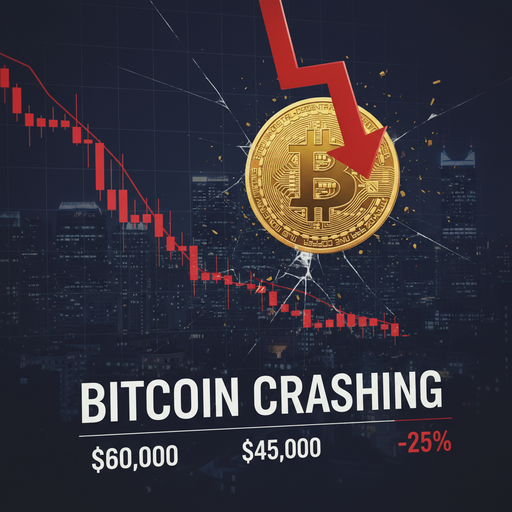
Bitcoin lags behind gold—cryptocurrencies retreat due to yen appreciation and capital outflows
Due to yen appreciation and international capital outflows, the cryptocurrency market is facing a tough situation. Following Bitcoin’s lag behind gold, investors are accelerating their withdrawal from risk assets across the board.
From late January to early February, stress has been spreading across the entire financial market, especially with capital outflow pressures originating in Japan affecting global markets. Risk assets like Bitcoin are facing a shift toward safer, more liquid assets.
Japan’s Rising Interest Rates Trigger - Yen Carry Trade Unwinding and Capital Flight
Immediately after former Prime Minister Sanae Takaichi stated, “We will take all necessary measures to respond to speculative and extremely abnormal movements,” the yen appreciated by over 1.4% against the dollar. This statement was made against the backdrop of Japan’s 10-year government bond yield reaching its highest level in 27 years.
The “rate check” by the New York Federal Reserve suggests the possibility of coordinated intervention, which market participants interpret as a sign of impending capital outflows. Traders are expecting about $5 trillion in overseas investments to be rapidly withdrawn from risk assets in anticipation of yen appreciation.
Michael Burry, an investor who profited during the subprime crisis, pointed out that Japan’s government bond yields are narrowing the gap with global interest rates, warning of a large-scale capital reflow. In fact, the Nikkei 225 index fell 1.8%, and Nasdaq futures and S&P 500 futures also experienced selling pressure.
Why Gold Is Chosen? Bitcoin’s Liquidity Turns Counterproductive
Surprisingly, the outflow of capital is not flowing into Bitcoin but rather into gold. Precious metals first surpassed $5,000 per ounce early this morning and are currently around $5,090. Meanwhile, Bitcoin has fallen to $78,550 (-5.18% in 24 hours), and Ethereum has dropped to $2,410 (-8.60%).
According to Greg Cipolaro, Head of Global Research at NYDIG, this phenomenon suggests that Bitcoin’s advantages are actually becoming a hindrance. “During periods of stress and uncertainty, liquidity preference dominates, and this trend hits Bitcoin much harder than gold,” he said.
The ability to instantly realize liquidity within 24 hours is usually a strength for Bitcoin. However, during market turmoil, this characteristic actually makes it easier to sell, accelerating capital flight and causing a double blow. On the other hand, gold’s liquidity is somewhat limited, and its long-term holding stability is highly valued.
Blockchain Data Indicates Bearish Signs
On-chain data also supports the market’s weakness. According to CryptoQuant analysis, older Bitcoin holders have started selling at a loss for the first time since October 2023, which is a key signal indicating a shift from a bullish trend.
While the CoinDesk 20 index has fallen 1.54%, Bitcoin dominance has slightly decreased to 59.79%. The Ethereum-to-Bitcoin ratio is at 0.03294, up 1.31%, but overall, there is a bearish mood across the entire crypto sector.
Technical Resistance and Short-term Outlook
From a technical analysis perspective, Bitcoin’s weekly closing price has fallen below $88,000, and it is rebounding from the 50-week exponential moving average at $96,700. With strong resistance present, unless the price surpasses $88,000 again, it is expected to move into a consolidation range between $80,000 and $88,000.
Until a broader breakout is attempted, this local uncertainty is likely to define short-term volatility.
Federal Reserve Meeting and Government Shutdown Risks
A key focus is the upcoming Federal Reserve meeting this week. With interest rates expected to remain unchanged, Chairman Jerome Powell’s guidance could be a turning point for the market.
Additionally, the risk of a US government shutdown cannot be ignored. Market estimates suggest a 79% chance of a government shutdown in the Polymarket and 78% in Calshi, and this uncertainty is also exerting pressure on risk assets.
The phenomenon of Bitcoin lagging behind gold is not just a price fluctuation but suggests a fundamental change in the capital flow structure within the global financial system. Close attention is needed to see how this develops.