


Futures
Access hundreds of perpetual contracts
TradFi
Gold
One platform for global traditional assets
Options
Hot
Trade European-style vanilla options
Unified Account
Maximize your capital efficiency
Demo Trading
Introduction to Futures Trading
Learn the basics of futures trading
Futures Events
Join events to earn rewards
Demo Trading
Use virtual funds to practice risk-free trading
Launch
CandyDrop
Collect candies to earn airdrops
Launchpool
Quick staking, earn potential new tokens
HODLer Airdrop
Hold GT and get massive airdrops for free
Launchpad
Be early to the next big token project
Alpha Points
Trade on-chain assets and earn airdrops
Futures Points
Earn futures points and claim airdrop rewards


More


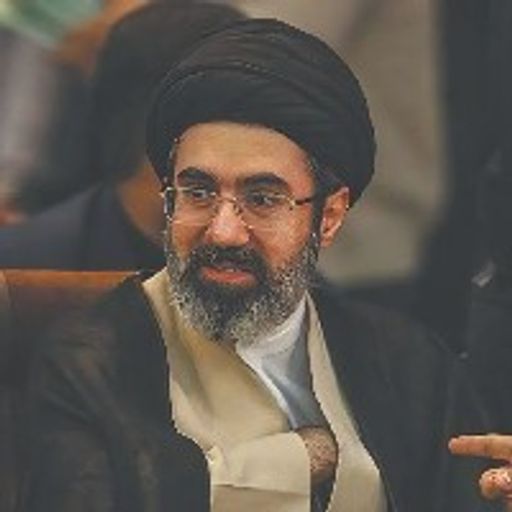


#IranSetsClearCeasefireConditions Iran Sets Clear Conditions for Any Ceasefire — Tehran Demands Guarantees and Justice Before Talks Begin
March 12, 2026 — Amid the escalating war between Iran and a U.S.–led coalition including Israel, Iran has publicly outlined clear and stringent conditions for any ceasefire or negotiation. Tehran’s latest statements signal that a simple “pause” in fighting is not enough — it wants long-term security assurances, recognition of rights, and reparations before committing to dialogue or a halt in hostilities.
This declaration comes as countries including China, Russia, and France have reportedly reached out to Iran with proposals for a ceasefire. However, Iran’s leadership insists that talks will not resume unless its core demands are acknowledged and guaranteed.
1. Security Guarantees Against Future Attacks
One of Tehran’s most central conditions is a firm guarantee that neither the United States nor Israel will conduct future attacks on Iranian territory or forces. Iranian officials have communicated through intermediaries that this assurance is essential before any ceasefire agreement can be considered.
Iran’s leadership is particularly concerned about the possibility of renewed hostilities after a temporary halt in fighting — a scenario it fears would be used to launch unexpected strikes once attention shifts away from the immediate conflict.
2. Recognition of Iran’s “Legitimate Rights”
Alongside security guarantees, Iran’s president has stated that the war’s end must include formal recognition of Iran’s legitimate national rights. In his latest public statement, he emphasized that without acknowledgment of these rights — which Tehran sees as including sovereignty, territorial integrity, and political autonomy — no true peace can be achieved.
This demand goes beyond a military ceasefire to a broader political acknowledgment of Iran’s position, setting it apart from simple armistice agreements.
3. Reparations for War Damages
Iran has also pressed for reparations — financial compensation for the destruction caused by foreign strikes. The president stated that reparations must form part of any comprehensive end-of-war arrangement.
While the specifics have not been fully detailed publicly, references to reparations reflect Tehran’s insistence that the consequences of recent attacks on both civilian and military infrastructure must be acknowledged and addressed.
4. Rejection of Negotiations Without Guarantees
Iran’s foreign minister and other senior officials have been unequivocal in rejecting talks without prior commitments to these conditions. They argue that past negotiations with the U.S. ended with renewed aggression, making Iran wary of entering discussions without iron-clad assurances backed by international actors.
In recent remarks, a top Iranian official stated that negotiations with Washington are unlikely for the time being, reflecting deep mistrust rooted in previous conflict escalations.
The Context of Iran’s Conditions
Ongoing War and Regional Tensions
The current conflict began in late February when U.S. and Israeli forces launched a large-scale campaign of airstrikes against Iranian targets, including key leadership and infrastructure. In response, Iran has carried out missile and drone attacks on U.S. bases, regional partners, and Israeli positions.
Iran’s military posture has been increasingly assertive, with its Islamic Revolutionary Guard Corps (IRGC) declaring its mission is to force the “complete surrender” of what it calls the aggressors — a stance that makes negotiations more complex.
Diplomatic Efforts and Third-Party Mediation
While Tehran has not closed the door entirely on diplomacy, it has set terms that many see as difficult for Western powers to accept without major concessions. Countries such as China, Russia, and France have reportedly offered Iran avenues for ceasefire talks, but Iran has emphasized that these discussions must be grounded in the conditions it has outlined.
International diplomats suggest that mediators now face the delicate challenge of bridging Iran’s demands with the security concerns of the U.S. and its allies — especially Israel, which has been reluctant to make guarantees about future restraint.
Reactions From Tehran and Abroad
Iran’s Internal Messaging
Iranian officials have framed their position as both defensive and principled. Parliament speakers and foreign ministry representatives have stressed that Tehran will not pursue a ceasefire that leaves the country vulnerable again or that fails to force acknowledgement of perceived injustices from previous strikes.
Officials argue that historical patterns of negotiation followed by renewed aggression have taught Tehran that security guarantees and international enforcement mechanisms are necessary.
International and Regional Responses
While the international community broadly supports de-escalation, many Western governments are cautious about pledging legally binding future non-attack guarantees that could limit their strategic flexibility. Regional powers are also watching closely, as a prolonged conflict could destabilize energy markets and upscale refugee flows.
China and Russia — both holding significant diplomatic influence in the region — have expressed a willingness to support ceasefire frameworks, but have also stopped short of fully endorsing all of Iran’s conditions outright.
What Comes Next?
Iran’s insistence on clear, enforceable conditions has made the prospect of an immediate ceasefire unlikely. With both sides entrenched and regional tensions soaring, bridging these conditions to a formal agreement is now a central focus of diplomatic efforts in the Middle East.
As it stands, Tehran maintains that peace negotiated without justice and long-term security is not real peace — and until those conditions are met, Iran is unlikely to accept a cessation of hostilities that leaves its demands unresolved.