


Futures
Access hundreds of perpetual contracts
TradFi
Gold
One platform for global traditional assets
Options
Hot
Trade European-style vanilla options
Unified Account
Maximize your capital efficiency
Demo Trading
Introduction to Futures Trading
Learn the basics of futures trading
Futures Events
Join events to earn rewards
Demo Trading
Use virtual funds to practice risk-free trading
Launch
CandyDrop
Collect candies to earn airdrops
Launchpool
Quick staking, earn potential new tokens
HODLer Airdrop
Hold GT and get massive airdrops for free
Launchpad
Be early to the next big token project
Alpha Points
Trade on-chain assets and earn airdrops
Futures Points
Earn futures points and claim airdrop rewards


More


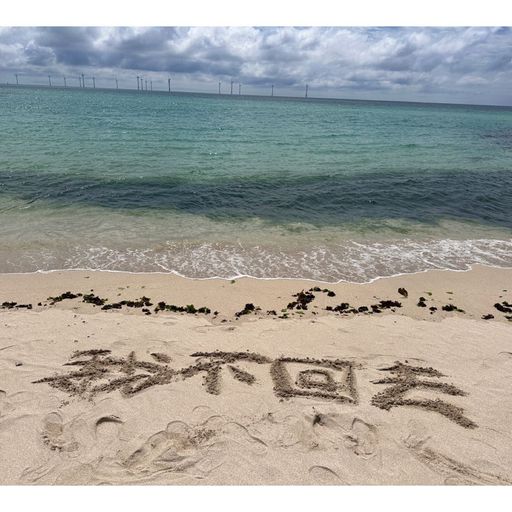



[TokenPost Column] Merely Changing the Signboard is Not a True Exit
Last summer, the Tax Tribunal made a landmark ruling. It determined that imposing Korean corporate tax on domestic blockchain companies with overseas subsidiaries is justified. This decision confirms that the basis for taxation is not the location of the company’s registration but the actual place of business and management. If the actual operations are conducted in Seoul, then regardless of where the legal entity is registered, it is considered a Korean company. The industry was stunned by this response, but in fact, this decision was foreshadowed long ago. Because it was only a matter of changing the signboard; the entity never truly left.
Establishing a legal entity overseas has long been a common workaround in the industry. It’s a way to evade domestic regulations and provide legal grounds for token issuance. However, the decision was made in Seoul, with the development team working from an office in Gangnam, and the founders’ roots still in Seoul. The only change was the address; the focus remains the same. The Tax Tribunal accurately pointed out where that focus lies.
To understand what true overseas expansion looks like, look at the taekwondo masters of the 1970s and 80s. When the Seoul dojang market became saturated, they packed their bags to survive. They dispersed to small towns in Brazil, Germany, and the U.S. — learning local languages, training disciples, who then became masters themselves. This wasn’t government planning; it was driven by urgent personal needs, building networks from the ground up. The hardship and isolation laid the foundation for taekwondo’s inclusion as an Olympic sport.
The difference is clear. “Escaping” to evade regulation is pretending to turn away from Korea while still relying on Korea. In contrast, true “escape” isn’t turning away but planting roots in a new land.
Today, what the blockchain industry needs isn’t just registering a company in Singapore. It’s about truly surviving there—studying local laws, convincing local investors, and establishing a foothold in the community. Sitting in an office in Gangnam simply won’t accomplish this. Just like the taekwondo masters, the body must move first.
The era of merely changing signs is over. There is no middle ground anymore. Either fiercely hold your ground or genuinely root yourself elsewhere. The Tax Tribunal’s decision is just the beginning. Overseas provisions have not even been fully implemented yet. Even if a company is established abroad, conducting business targeting domestic users can still fall under domestic regulation.