 :
:
 :
:#OilPricesRise
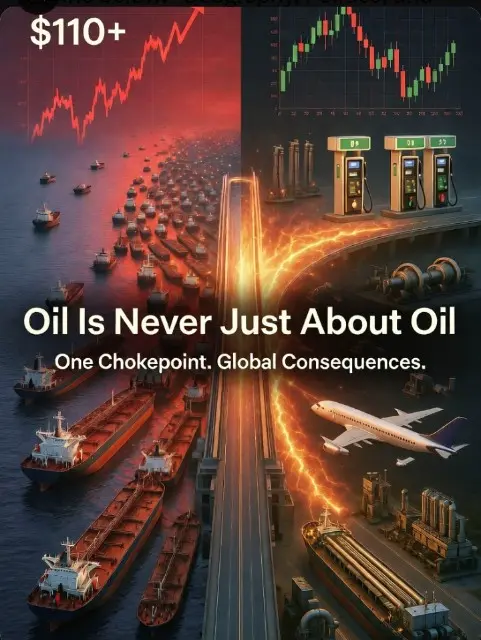
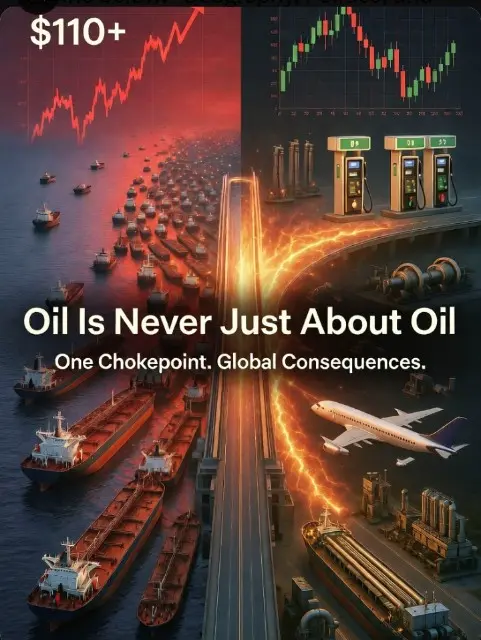
The world is being reminded, once again, that the price of oil is never just about oil. It is about geography, politics, fear, and the fragile infrastructure of global civilization that most people take for granted until the day it stops working.
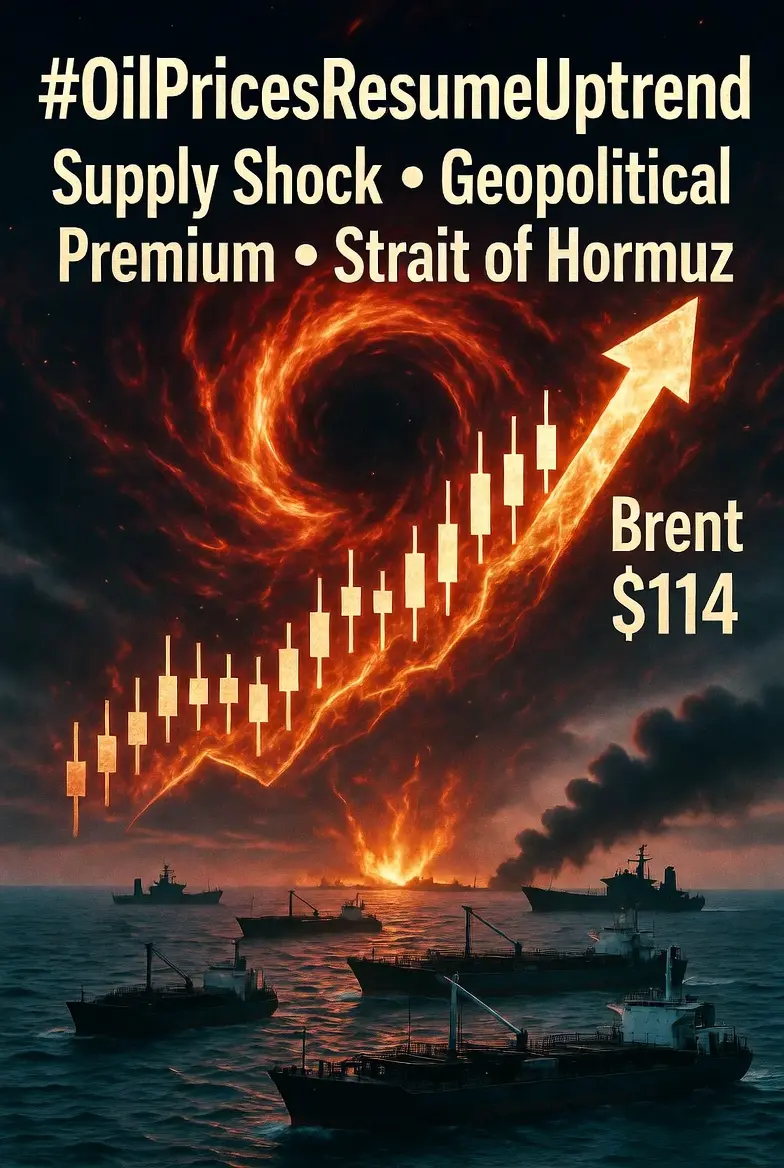
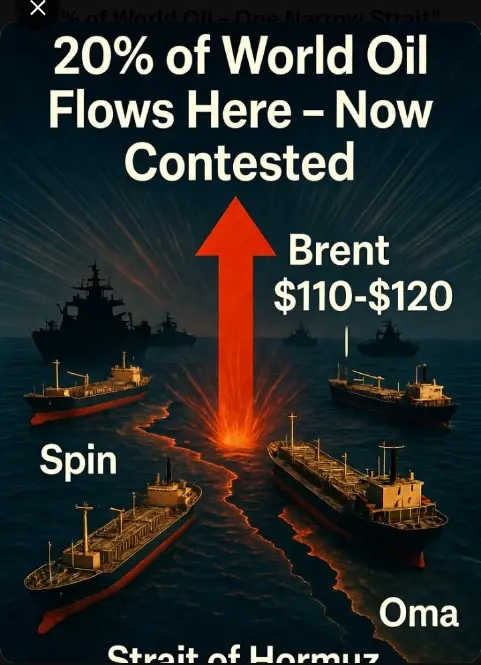
At the center of the current surge is the Strait of Hormuz — one of the most consequential stretches of water on the planet. Roughly 20% of the world's entire oil and liquefied natural gas supply transits through this narrow passage every single day. When that channel becomes disrupted, the shockwave does not stay regional. It travels instantly into fuel prices, shipping costs, airline ticket rates, food distribution chains, manufacturing input costs, and ultimately the wallets of ordinary people in countries that have never even heard of the conflict that caused it.
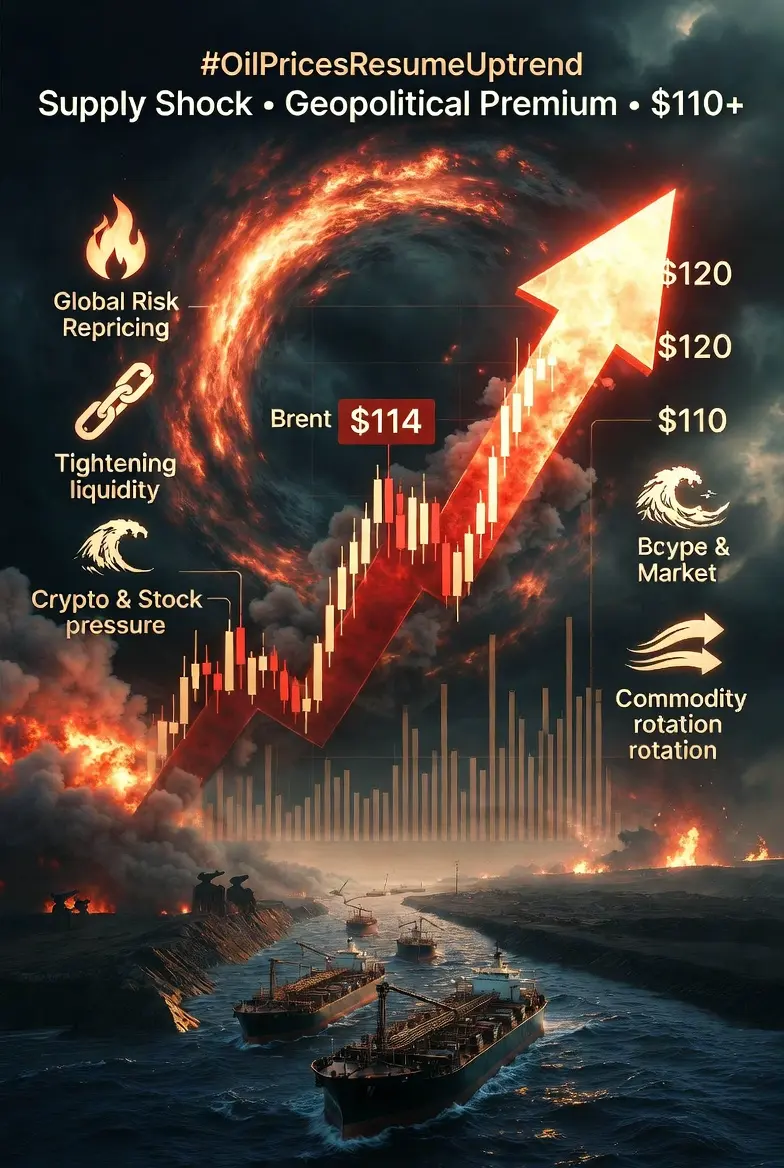
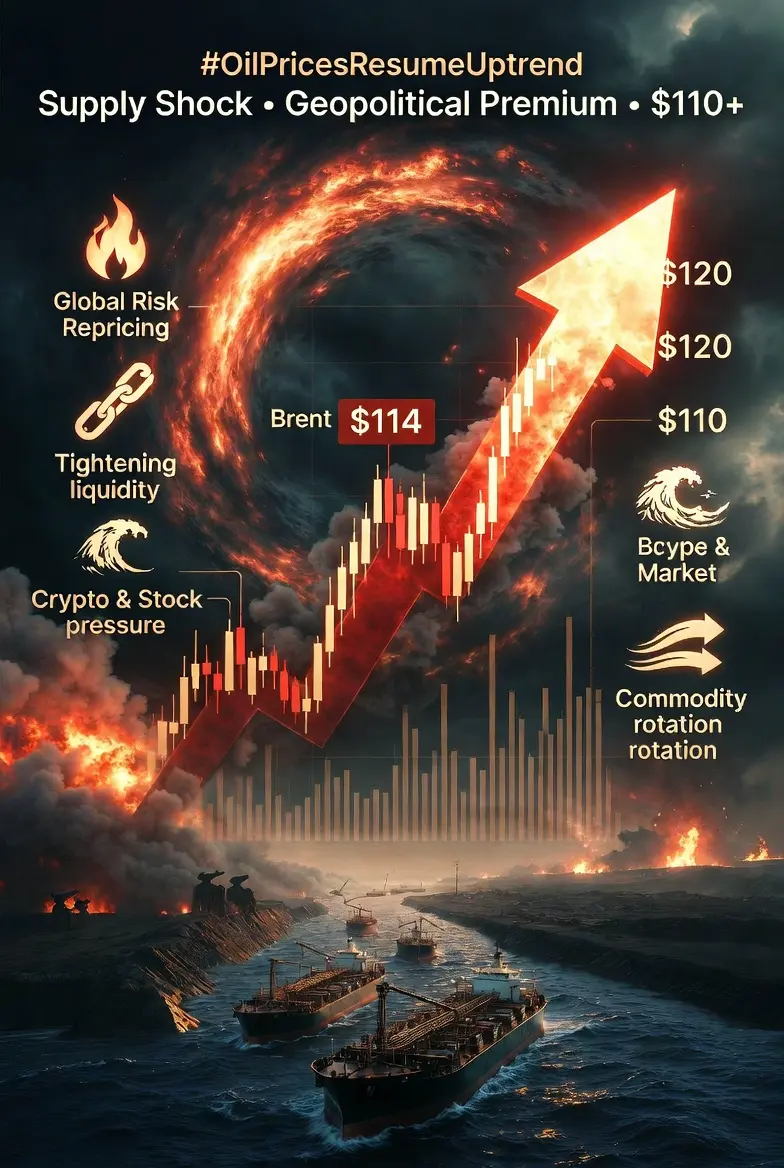
The ongoing military conflict involving the United States, Israel, and Iran has pushed Brent crude prices to levels not seen in years, with some reports placing the benchmark near the $110 to $119 range. Prediction market traders have at various points assigned meaningful probability to oil touching $120 before March closes. The IEA has described the supply disruption as the largest in history by certain measures. That is not a phrase the agency uses lightly.
Iran's effective closure of the Strait of Hormuz has been the single most decisive factor. Iran controls the northern shore of the strait, and its ability to threaten or physically restrict passage has been a recurring lever in geopolitical standoffs. This time, the lever was pulled in a context where global oil inventories were already tighter than many analysts expected, OPEC+ supply policy remained uncertain, and the economic momentum of major consuming nations was still grinding through the aftermath of years of rate hikes and trade disruptions.
The consequences have cascaded in multiple directions simultaneously. Equity markets have swung violently in both directions depending on the news cycle. On days when diplomatic signals emerged — including reports of a 15-point U.S. peace framework relayed through Pakistan to Tehran — stocks rallied and oil pulled back sharply. On days when those hopes faded, or when Israel launched new waves of strikes, markets reversed just as abruptly. The Dow Jones saw single-session losses approaching 750 to 800 points during peak panic periods. The volatility is not noise. It is a market genuinely uncertain about how long this lasts and how bad it can get.
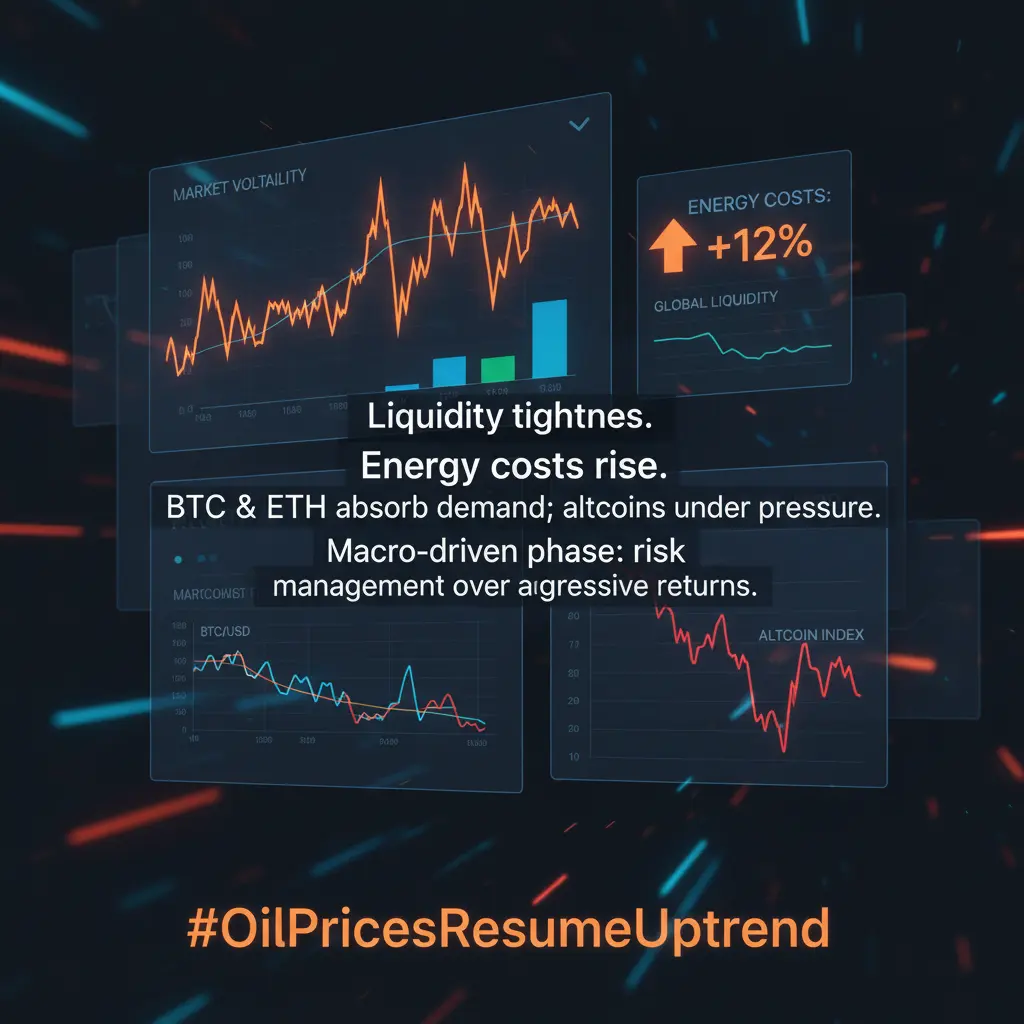
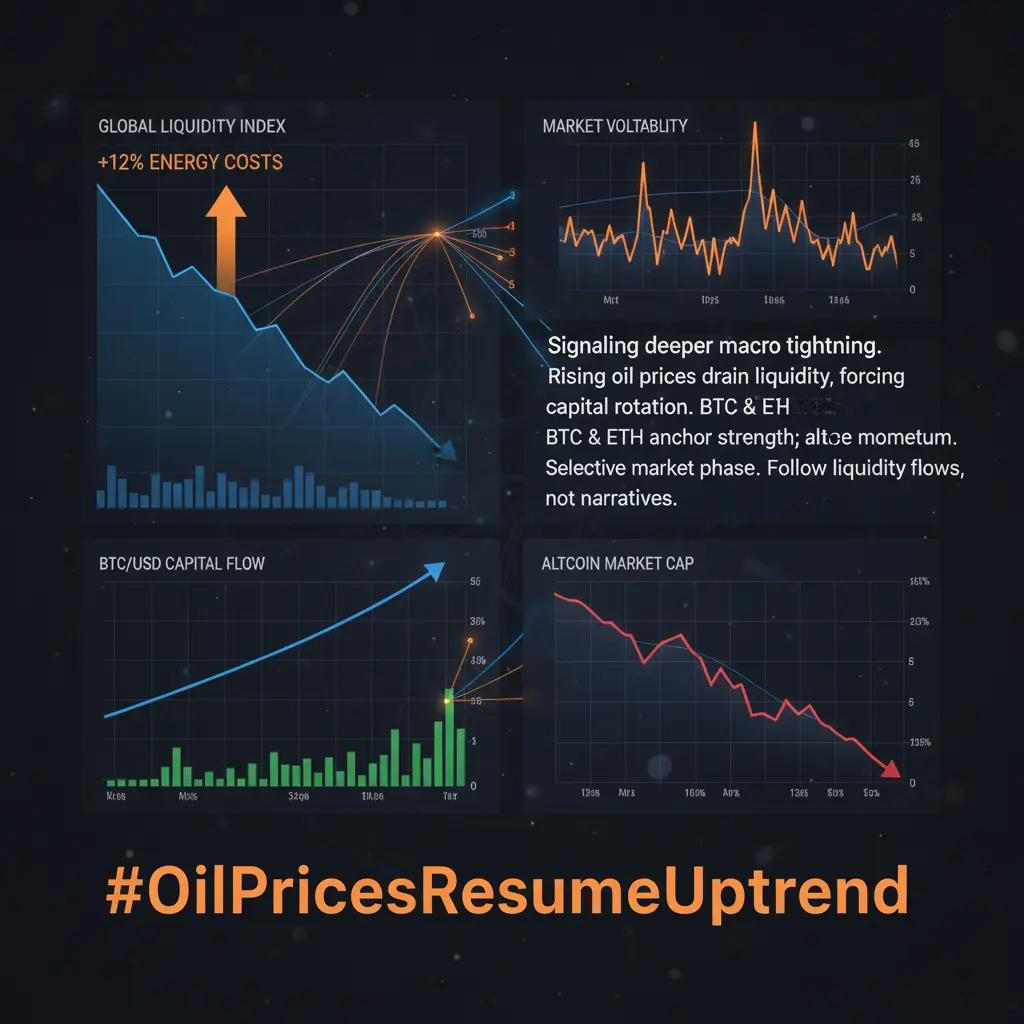
For the crypto market, the dynamic has been complex and revealing. Bitcoin initially showed relative resilience during the early stages of the conflict, trading near the $67,000 range when oil first spiked toward $110. But as the war entered its fourth and fifth weeks and the macro repricing process deepened — particularly the expectation that sustained high energy prices would reignite inflation and delay central bank rate cuts — Bitcoin came under meaningful pressure, pulling back toward the low $70,000s before recovering on peace-talk optimism. The inverse relationship between oil and risk assets is not mechanical or guaranteed, but during periods of genuine macro stress, the correlation tends to tighten.
The deeper issue that this episode forces back into public awareness is structural: the global energy system was never diversified enough to absorb a shock of this magnitude without significant pain. For decades, analysts warned that concentration of oil flows through a handful of critical chokepoints created systemic vulnerability. The Strait of Hormuz, the Suez Canal, the Turkish Straits — each one is a potential single point of failure for the global economy. The current crisis is a live demonstration of what happens when one of those points becomes contested in wartime.
What happens next depends on whether diplomacy succeeds. The U.S. peace proposal, whatever its specific terms, represents an acknowledgment that the economic cost of continued conflict is rising past acceptable thresholds. Markets are pricing in both a scenario where talks advance and one where they collapse entirely. The extreme tail risk — which remains on the table — involves direct damage to Kharg Island, which handles roughly 90% of Iran's oil export capacity. Analysts have suggested that such a development could push prices toward $200 per barrel, a level that would represent a genuine global economic emergency comparable in severity to the worst energy shocks of the past century.
Until there is clarity, the markets will keep doing what they have been doing: reacting sharply to every headline, finding brief relief in any hint of diplomacy, and then selling the doubt when certainty fails to arrive. Oil at these levels is not just a trading story. It is a reminder that energy security is national security, and that the price at the pump is always, somewhere downstream, the price of unresolved conflict.
The world is being reminded, once again, that the price of oil is never just about oil. It is about geography, politics, fear, and the fragile infrastructure of global civilization that most people take for granted until the day it stops working.
At the center of the current surge is the Strait of Hormuz — one of the most consequential stretches of water on the planet. Roughly 20% of the world's entire oil and liquefied natural gas supply transits through this narrow passage every single day. When that channel becomes disrupted, the shockwave does not stay regional. It travels instantly into fuel prices, shipping costs, airline ticket rates, food distribution chains, manufacturing input costs, and ultimately the wallets of ordinary people in countries that have never even heard of the conflict that caused it.
The ongoing military conflict involving the United States, Israel, and Iran has pushed Brent crude prices to levels not seen in years, with some reports placing the benchmark near the $110 to $119 range. Prediction market traders have at various points assigned meaningful probability to oil touching $120 before March closes. The IEA has described the supply disruption as the largest in history by certain measures. That is not a phrase the agency uses lightly.
Iran's effective closure of the Strait of Hormuz has been the single most decisive factor. Iran controls the northern shore of the strait, and its ability to threaten or physically restrict passage has been a recurring lever in geopolitical standoffs. This time, the lever was pulled in a context where global oil inventories were already tighter than many analysts expected, OPEC+ supply policy remained uncertain, and the economic momentum of major consuming nations was still grinding through the aftermath of years of rate hikes and trade disruptions.
The consequences have cascaded in multiple directions simultaneously. Equity markets have swung violently in both directions depending on the news cycle. On days when diplomatic signals emerged — including reports of a 15-point U.S. peace framework relayed through Pakistan to Tehran — stocks rallied and oil pulled back sharply. On days when those hopes faded, or when Israel launched new waves of strikes, markets reversed just as abruptly. The Dow Jones saw single-session losses approaching 750 to 800 points during peak panic periods. The volatility is not noise. It is a market genuinely uncertain about how long this lasts and how bad it can get.
For the crypto market, the dynamic has been complex and revealing. Bitcoin initially showed relative resilience during the early stages of the conflict, trading near the $67,000 range when oil first spiked toward $110. But as the war entered its fourth and fifth weeks and the macro repricing process deepened — particularly the expectation that sustained high energy prices would reignite inflation and delay central bank rate cuts — Bitcoin came under meaningful pressure, pulling back toward the low $70,000s before recovering on peace-talk optimism. The inverse relationship between oil and risk assets is not mechanical or guaranteed, but during periods of genuine macro stress, the correlation tends to tighten.
The deeper issue that this episode forces back into public awareness is structural: the global energy system was never diversified enough to absorb a shock of this magnitude without significant pain. For decades, analysts warned that concentration of oil flows through a handful of critical chokepoints created systemic vulnerability. The Strait of Hormuz, the Suez Canal, the Turkish Straits — each one is a potential single point of failure for the global economy. The current crisis is a live demonstration of what happens when one of those points becomes contested in wartime.
What happens next depends on whether diplomacy succeeds. The U.S. peace proposal, whatever its specific terms, represents an acknowledgment that the economic cost of continued conflict is rising past acceptable thresholds. Markets are pricing in both a scenario where talks advance and one where they collapse entirely. The extreme tail risk — which remains on the table — involves direct damage to Kharg Island, which handles roughly 90% of Iran's oil export capacity. Analysts have suggested that such a development could push prices toward $200 per barrel, a level that would represent a genuine global economic emergency comparable in severity to the worst energy shocks of the past century.
Until there is clarity, the markets will keep doing what they have been doing: reacting sharply to every headline, finding brief relief in any hint of diplomacy, and then selling the doubt when certainty fails to arrive. Oil at these levels is not just a trading story. It is a reminder that energy security is national security, and that the price at the pump is always, somewhere downstream, the price of unresolved conflict.

 :
: