Аналіз Western Digital (WDC) має виходити за межі широкої наративи про «зростання даних у сфері ШІ». Після відокремлення SanDisk компанія WDC тепер є суто HDD-компанією, а ключові змінні включають цикли закупівель у хмарних клієнтів, попит на диски великої ємності, валовий прибуток, грошовий потік і фінансову звітність після відокремлення. When evaluating WDC, users often focus only on stock price performance, AI buzz, or single-quarter revenue changes. This misses the HDD industry cycle, cloud customer concentration, post-spin-off reporting shifts, and platform trading rules, making it difficult to separate company fundamental risk from order execution risk.
A more comprehensive risk checklist should cover business, financial, spin-off, and trading metrics. Business metrics capture demand and product mix; financial metrics reflect earnings quality; spin-off metrics address historical data comparability; and trading metrics verify ticker, fees, hours, and USDT fund denomination.
What Are the Core Metrics for WDC?
WDC's post-spin-off core metrics fall into three categories: business, financial, and trading. Business metrics gauge HDD demand and competitiveness; financial metrics measure earnings quality and capital structure; trading metrics relate to platform, liquidity, and account rules.
| Metric Category |
Key Observation Points |
Description |
| Business |
HDD shipments, average capacity, cloud customer demand |
Assess demand strength and product mix |
| Financial |
Revenue, gross margin, free cash flow, debt |
Gauge operating quality and capital pressure |
| Spin-off |
Continuing operations basis, historical comparability |
Separate WDC and SNDK business boundaries |
| Trading |
Ticker, trading hours, fees, liquidity |
Impact order placement and position management |
These metrics must be analyzed together. Improvement in one metric does not eliminate overall risk, and a single quarter's fluctuation does not necessarily signal a long-term trend change.
How Does the HDD Cycle Affect WDC?
The HDD industry is cyclical. Cloud customer purchases, enterprise IT spending, inventory adjustments, pricing, and large-capacity drive upgrades all influence revenue and gross margin. Concentrated cloud buying can boost WDC's shipments and profits; delayed purchases or inventory digestion may pressure near-term performance.
The HDD cycle differs from NAND or DRAM cycles. WDC's HDD demand is capacity-driven, tied to data center construction and data preservation by major customers. In contrast, Micron or SanDisk are more impacted by memory prices and wafer supply-demand. The storage stock classification of WDC, Seagate, and Micron helps analysts use an HDD lens rather than simply applying the memory price cycle.
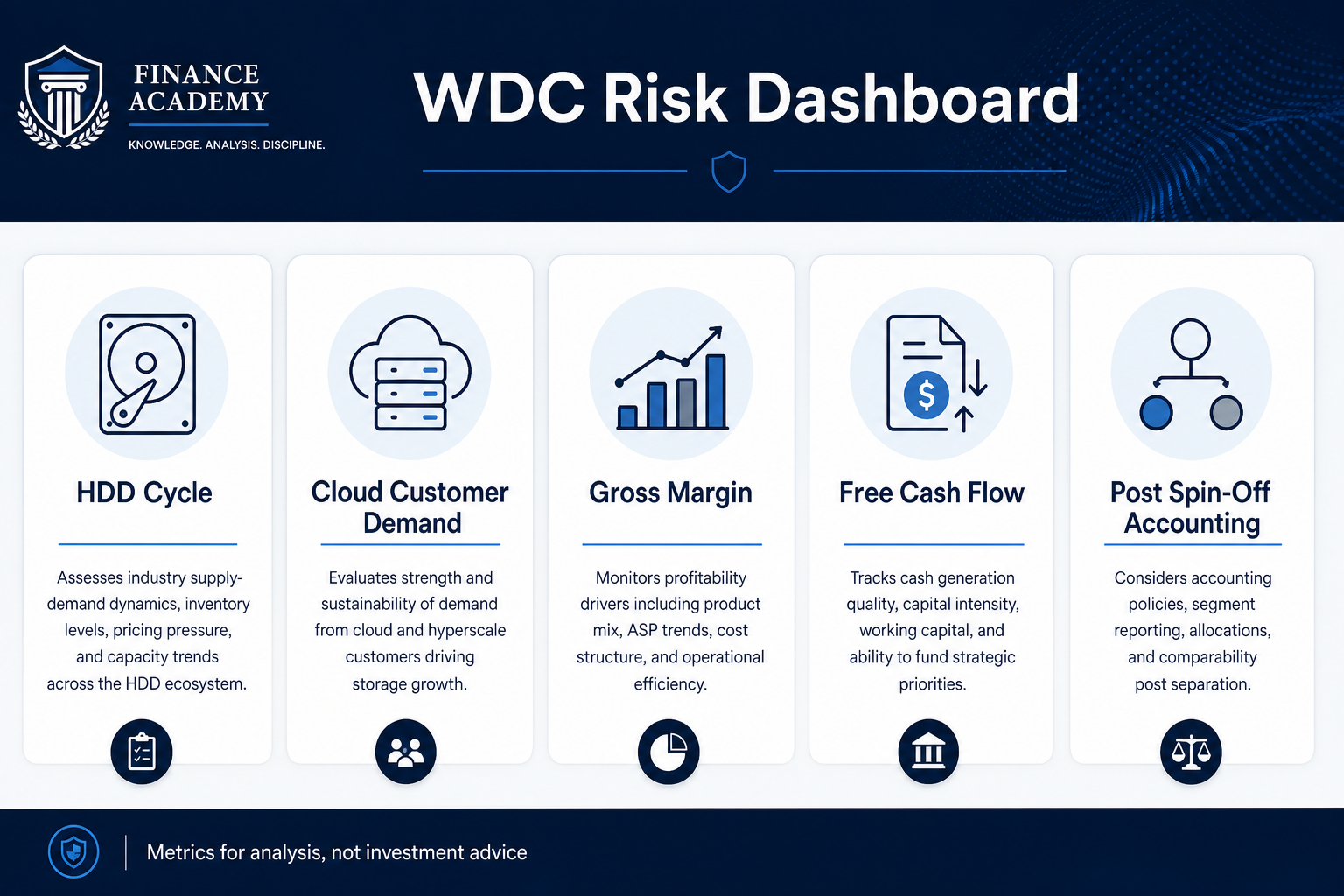 Figure 1. WDC Risk Dashboard: HDD cycle, cloud customer demand, gross margin, cash flow, and post-spin-off financial reporting are core checkpoints.
Why Is Cloud Customer Demand a Key Variable?
WDC's large-capacity HDDs primarily serve cloud data centers, enterprise storage, and long-term data preservation. AI, video, logs, backups, and enterprise data archiving steadily expand capacity needs, but procurement timing depends on major clients' capex, inventory levels, and storage architecture.
Strong cloud demand can boost large-capacity HDD shipments, average capacity, and product mix; a slowdown can affect order cadence, pricing, and capacity utilization. Customer concentration is also critical—procurement changes from a few large clients can significantly impact WDC's results.
How Should Financial Data Be Viewed After the SanDisk Spin-Off?
The SanDisk spin-off clarifies WDC's business boundaries but creates historical comparability issues. Pre-spin-off Western Digital included both HDD and Flash; post-spin-off WDC mainly reflects HDD. Directly comparing revenue, profit, or gross margin before and after may miss business structure changes.
When reviewing financials, focus on continuing operations, spin-off adjustments, one-time charges, debt arrangements, cash flow, and management guidance for the HDD business. If metrics come from different reporting bases, first confirm whether SanDisk operations are included.
How to Assess Gross Margin, Cash Flow, and Debt?
Gross margin reflects pricing, cost control, and product mix. A higher share of large-capacity enterprise HDDs typically supports margins; pricing pressure, inventory adjustments, or underutilization may drag them down. Free cash flow measures the ability to convert operating earnings into cash.
Debt and capex also require attention. The storage business needs continuous R&D and manufacturing investment, and debt costs amplify pressure during downturns. After the spin-off, WDC's capital structure, debt size, and cash flow stability should be assessed independently.
What Else Should Be Noted When Trading WDC on Gate?
Trading risks include price volatility, trading hours, order types, fees, liquidity, USDT fund denomination, and ticker confusion. WDC and SNDK are different tickers—always confirm the page shows Western Digital, not SanDisk.
If using USDT for stock trading, also check fund transfers, available balance, estimated fees, and settlement rules. The Gate Stocks WDC trading process helps verify search, order placement, and position review steps. Platform-displayed trading conditions, regional restrictions, and risk disclosures remain the basis for actual execution.
How to Categorize WDC Metrics into Three Layers: Business, Financial, and Trading?
A clearer approach is to split the WDC risk list into three layers. Layer one: business metrics (HDD shipments, average capacity, cloud demand, product mix). Layer two: financial metrics (gross margin, free cash flow, debt, capex). Layer three: trading metrics (ticker, trading hours, order types, fees, USDT fund denomination).
These layers are not interchangeable. Business improvement does not guarantee smooth trade execution, and platform availability does not confirm fundamental health. By layering, users can first verify the entity boundaries of WDC vs. SNDK, then cross-check industry cycle, financial quality, and platform rules separately.
This layering also reduces single-metric misinterpretation. Looking at revenue changes alone without also checking gross margin, cash flow, and customer mix leads to incomplete risk assessment.
Summary
WDC analysis should center on the HDD cycle, cloud customer demand, post-spin-off financial reporting, gross margin, cash flow, capital structure, and trading execution risk. The SanDisk spin-off makes WDC a purer HDD play, requiring recalibration of historical data and peer comparisons. Before trading, investors should confirm the ticker and entity, then cross-check using business, financial, and trading metrics.
FAQ
What are the most important metrics for analyzing WDC?
Core metrics include HDD shipments, average capacity, cloud customer demand, gross margin, free cash flow, debt, and the post-spin-off continuing operations basis.
Where does WDC's risk primarily come from?
Main risks: HDD cycle volatility, changes in cloud customer procurement, customer concentration, gross margin pressure, technological substitution, and post-spin-off financial reporting shifts.
Does the SanDisk spin-off affect WDC financial analysis?
Yes. Pre-spin-off data may include Flash; post-spin-off WDC is HDD-focused. When comparing historical data, confirm the reporting basis.
Can WDC and Micron metrics be directly compared?
Direct comparison is not recommended. WDC is HDD-centric, while Micron covers DRAM and NAND—different technologies and cycle drivers.
What should be especially noted when trading WDC on Gate?
Before trading, verify ticker WDC, company name Western Digital, order type, fees, trading hours, and USDT fund denomination.