


Overview
The core innovation of HIP-3 lies in builder-deployed perps: it enables external teams to deploy and operate their own perpetual contract markets on top of HyperCore infrastructure.
Under the HIP-3 framework, deployers must meet several key requirements:
Staking threshold: Each deployer must stake 500,000 HYPE.
Fee sharing: Deployers can earn up to 50% of trading fee revenue.
Risk constraints: If malicious actions occur—such as faulty oracles or improper market operations—the staked assets may be subject to slashing.
Source: hl.eco
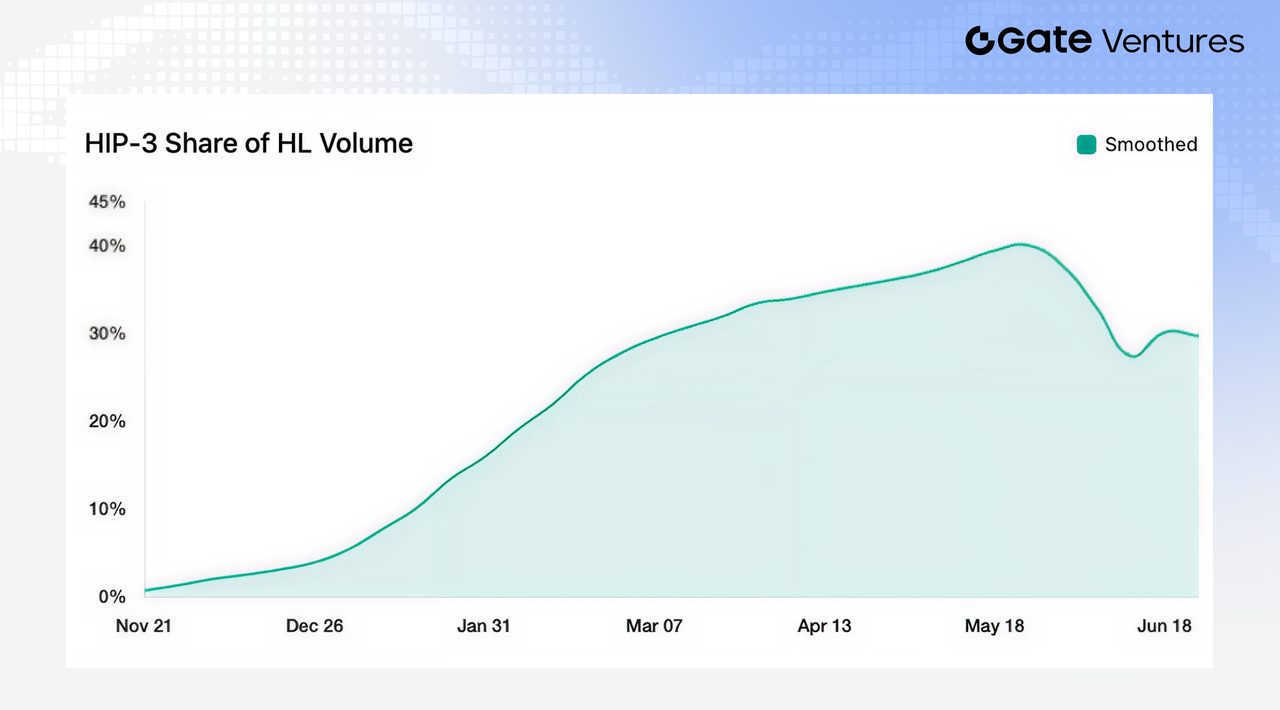
This mechanism opens the Hyperliquid ecosystem to more diverse and specialized markets, including long-tail assets, niche perps, and professional trading venues. Data shows HIP-3 is rapidly gaining market share within Hyperliquid perps trading: at its peak, HIP-3 accounted for about 38% of Hyperliquid perps volume, with cumulative trading volume reaching approximately $200 billion.
However, the 500,000 HYPE staking requirement creates a significant capital barrier, preventing most teams from directly participating in HIP-3 deployment.
This is where Kinetiq Launch comes in. Launch is an Exchange-as-a-Service (EaaS) platform built on the Hyperliquid HIP-3 protocol, designed to lower the entry barrier for teams to deploy and operate their own perpetual contract exchanges.
Specifically, Launch combines Kinetiq’s verified LST infrastructure with a crowdfunding model, helping teams raise the required 500,000 HYPE staking capital for builder-deployed markets. Each deployed market corresponds to an independent staking pool, meaning users supporting a particular exchange have their risk isolated within that specific market, rather than being exposed to the broader system.
Kinetiq’s Business Model and Revenue Structure
Kinetiq serves as a key infrastructure driving HIP-3 ecosystem growth.
The 500,000 HYPE staking requirement, equivalent to roughly $31 million at current prices, remains a high capital hurdle for most teams. Currently, market.xyz and Borsa have launched perp markets via the Kinetiq Launch model. Perps.fun is also rumored to be preparing for deployment through Launch.
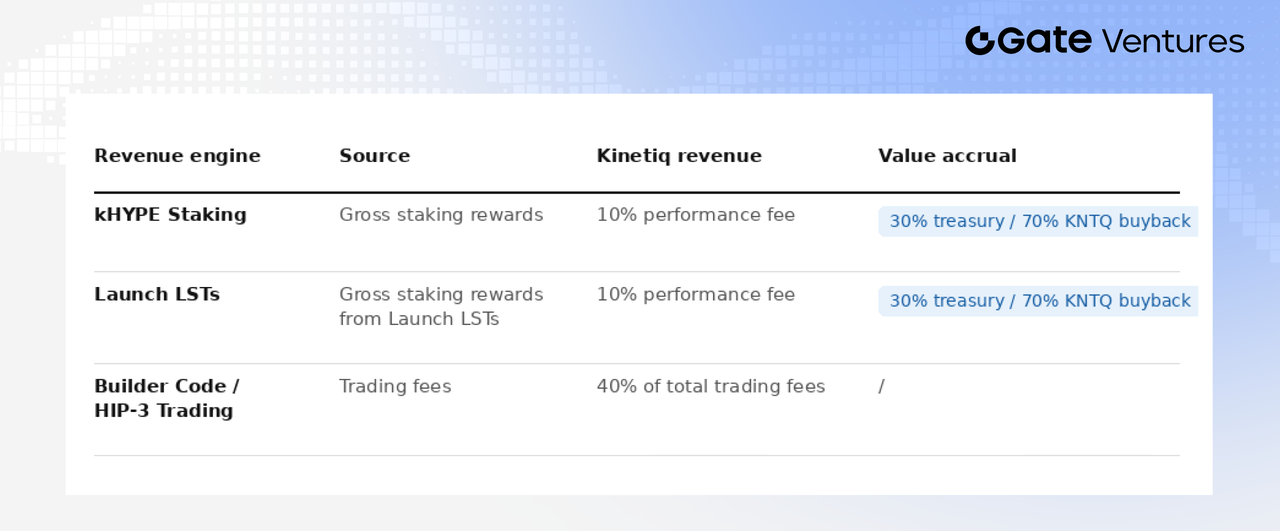
On this foundation, Kinetiq’s revenue model is taking shape: HIP-3 markets and builder code generate trading fee income, while kHYPE staking and Launch LSTs contribute performance fees. Together, these sources form a sustainable revenue model closely tied to Hyperliquid ecosystem growth.
Source: DeFiLlama
Kinetiq’s revenue model consists of two main components:
The first comes from staking rewards, including kHYPE staking and Launch LSTs. The protocol typically charges a 10% performance fee on these rewards, with 30% allocated to the protocol treasury and 70% used for KNTQ buybacks, creating clear value accrual for token holders.
The second component is trading fees, with Kinetiq capturing a 40% share of fees generated by HIP-3 markets.
Source: DeFiLlama
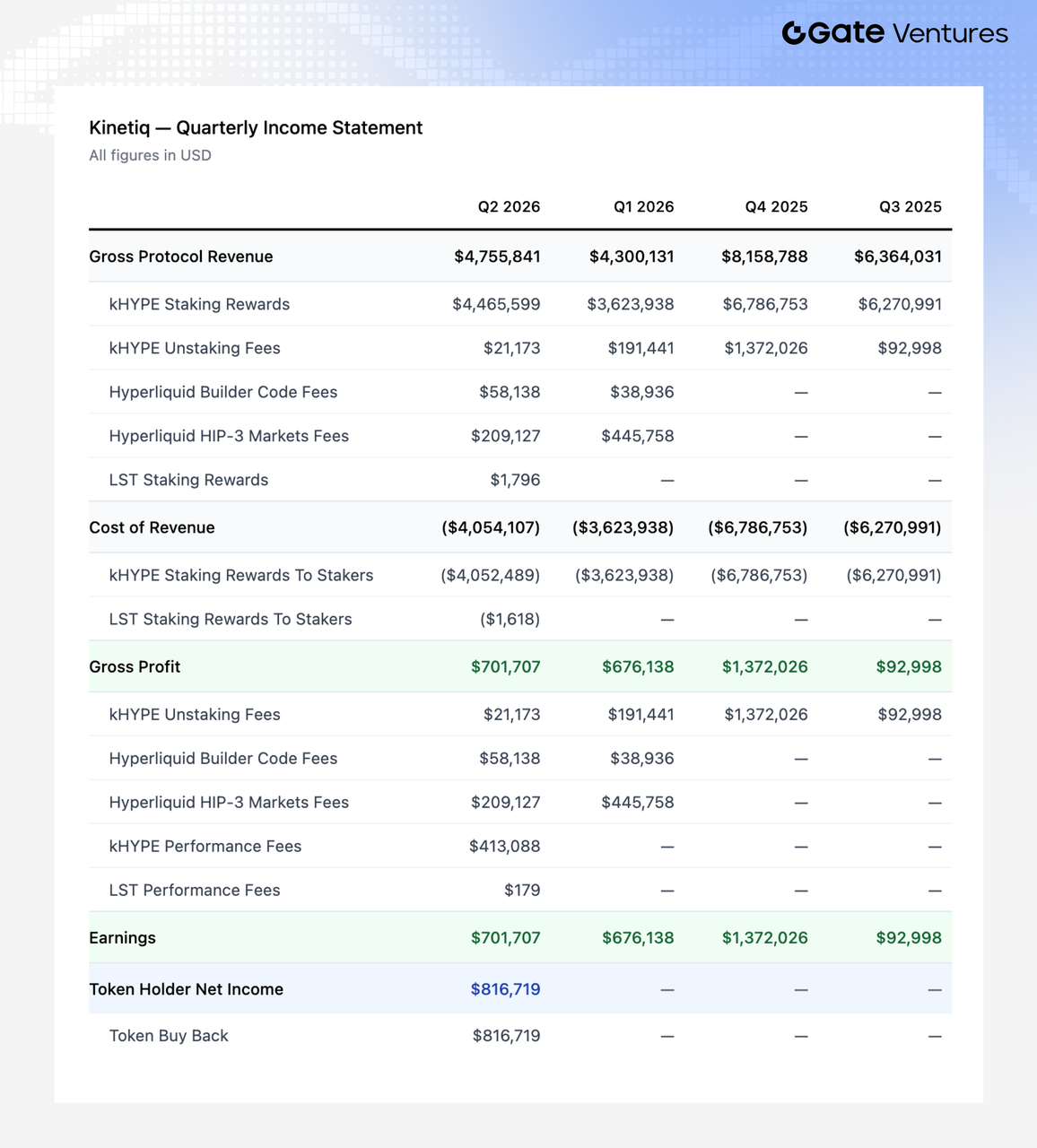
Looking at Kinetiq’s revenue breakdown, kHYPE staking rewards remain its primary income source.
Performance in Q3 and Q4 of 2025 was particularly strong, with average quarterly staking rewards around $6.5 million. After early incentives and initial airdrops following the TGE ended in 2026, protocol TVL declined from a Q4 2025 peak of $2.07 billion to around $1 billion, leading to a drop in kHYPE staking rewards. Since 2026, quarterly staking rewards have averaged about $4 million.
On the other hand, EaaS is a key part of Kinetiq’s future growth narrative, making HIP-3 market fees an important area to watch. In the first half of 2026, HIP-3 Market Fees averaged roughly $330,000.
Due to overall weak market sentiment, Q2 performance was lower than Q1. However, the main catalyst for this revenue stream is more markets launching via Kinetiq Launch. For example, Borsa, a newly launched perp market, has validated Kinetiq Launch’s potential as HIP-3 market issuance infrastructure. As more markets join, Kinetiq’s growth path becomes clearer: it continues to capture staking fee revenue from kHYPE and Launch LSTs, while expanding HIP-3 markets to capture trading fees.
Staking Rewards
Source: DeFiLlama
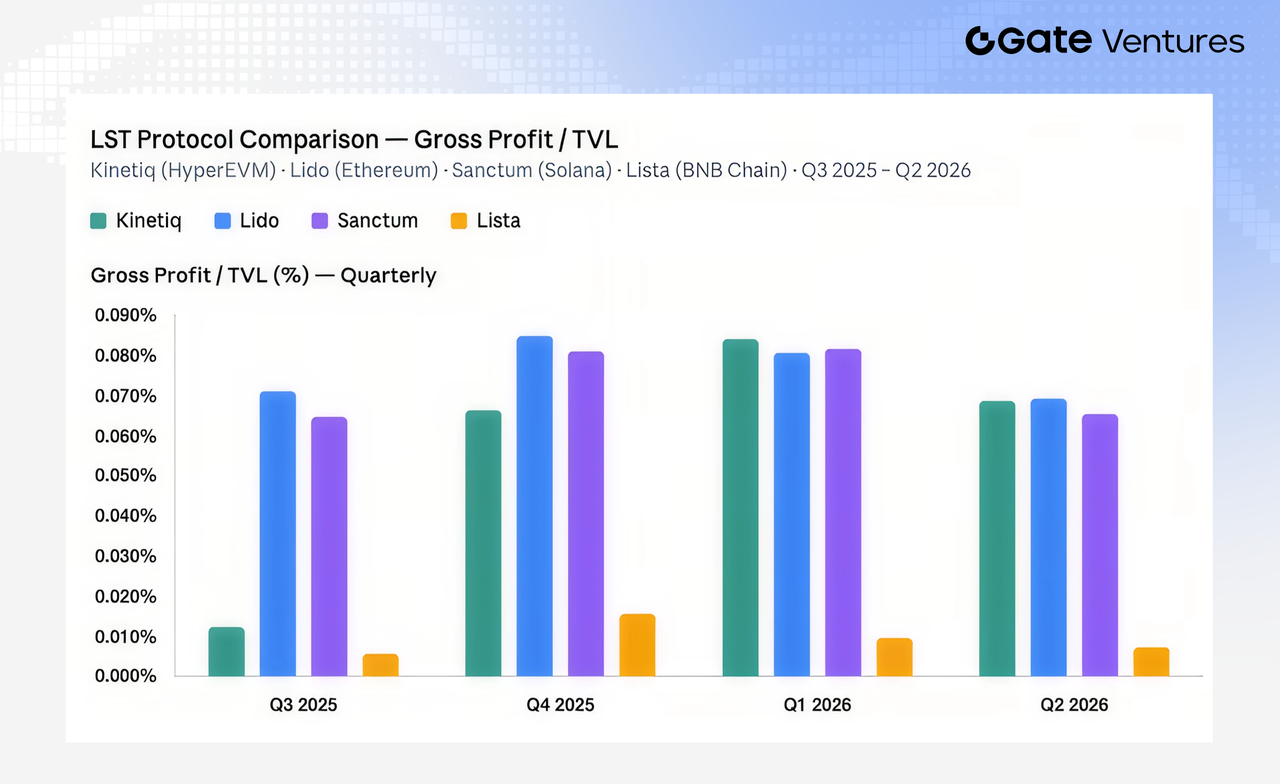
In terms of profit capture, Kinetiq demonstrates strong efficiency among LST protocols.
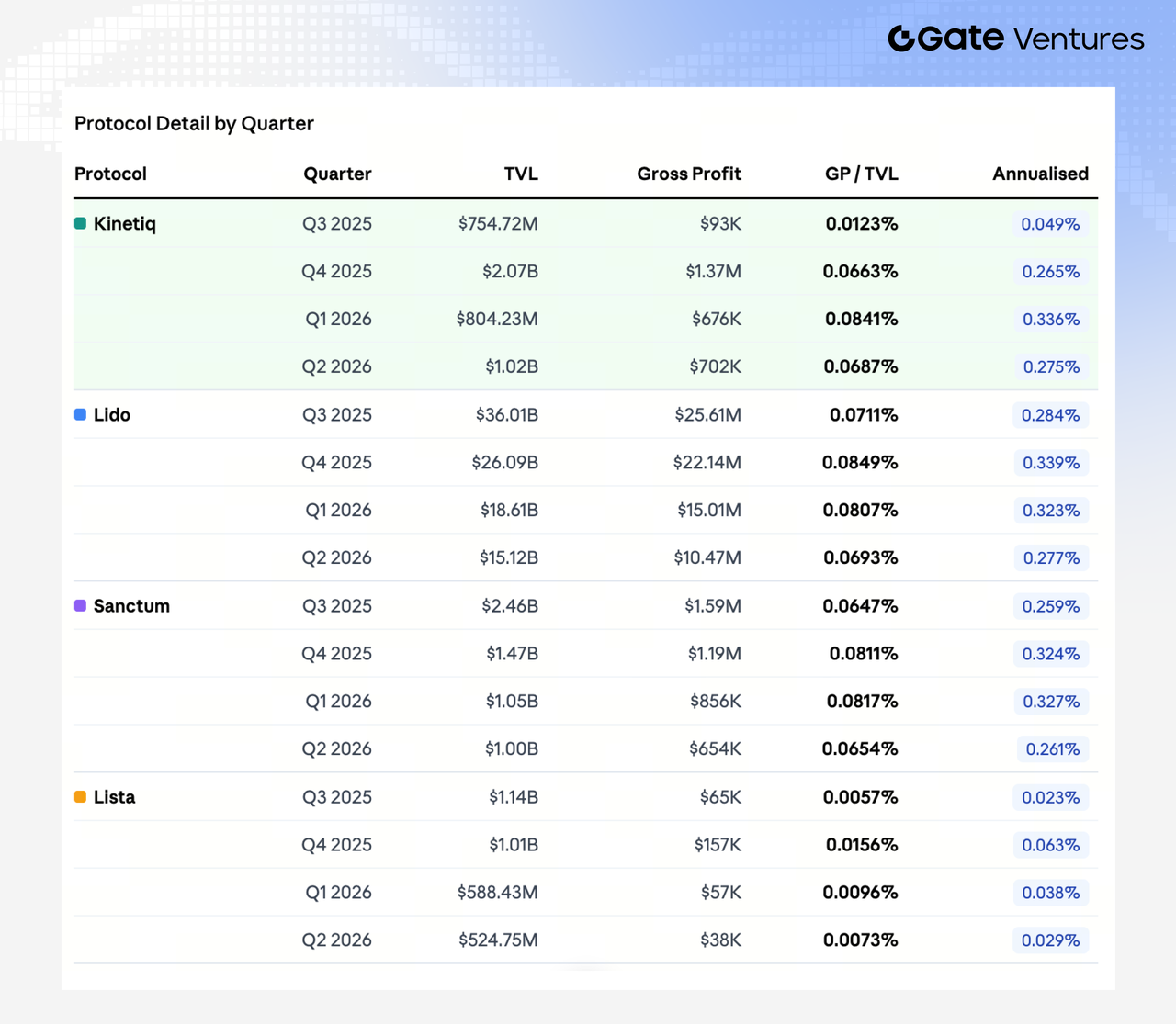
We compared it to leading LST protocols in other ecosystems, including Ethereum’s Lido, Solana’s Sanctum, and BNB Chain’s Lista. In the first half of 2026, Kinetiq’s average gross profit was about $680,000. While its absolute TVL isn’t the largest, its gross profit/TVL ratio averaged 7.6 basis points, outperforming peers.
Moreover, Kinetiq’s profit capture has improved significantly since Q3 2025, rising from around 1.2 basis points to 7.6 basis points in the first half of 2026. This shows Kinetiq isn’t just relying on TVL growth, but is also achieving higher efficiency in revenue conversion and profit capture per unit TVL.
This improvement mainly stems from a fee mechanism adjustment implemented after April 9, 2026: previously, 100% of kHYPE staking rewards went to HYPE stakers, with protocol revenue mainly from unstaking fees. After the adjustment, 90% of rewards continue to go to stakers, while the remaining 10% is taken as a performance fee, captured by the protocol and further allocated to treasury and KNTQ buybacks.
Source: DeFiLlama
With Kinetiq’s current TVL of about $1.02 billion and a quarterly gross profit/TVL ratio of 6.8 basis points, the protocol generates roughly $702,000 in gross profit per quarter. By comparison, Lido’s quarterly gross profit is about $10.5 million—a 15-fold difference.
It’s worth noting that the TVL gap is also about 15-fold: Kinetiq at $1.02 billion versus Lido at $15.1 billion. This means Kinetiq’s gross profit capture per unit TVL is already on par with Lido. The current difference in gross profit is mainly due to TVL size, not operational efficiency.
Source: Stakingrewards
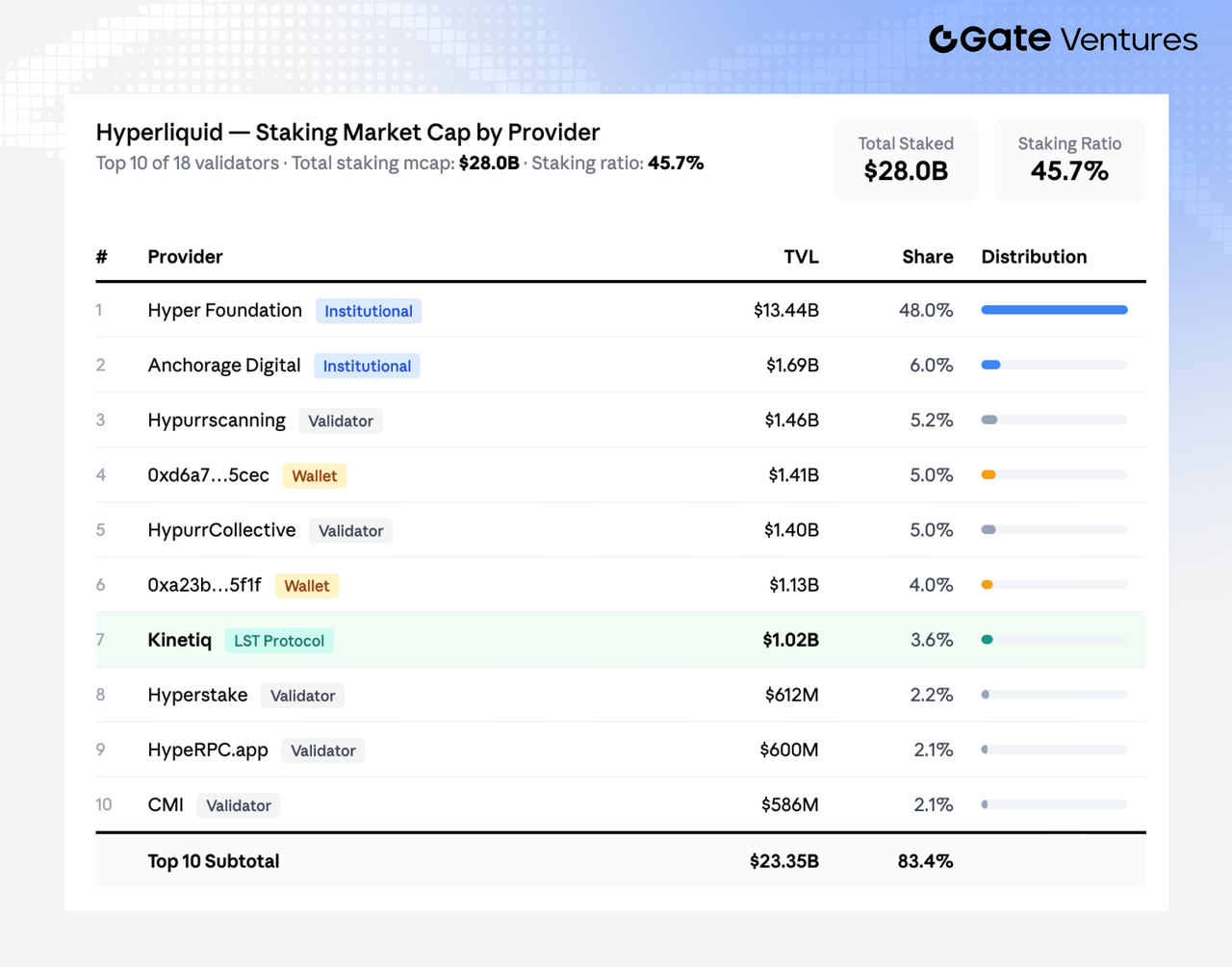
Because staking TVL directly determines Kinetiq’s future revenue potential, it’s important to examine Hyperliquid’s overall staking ecosystem.
A notable feature of Hyperliquid staking is:
The concentration among large staking providers is much higher than in many other ecosystems. Currently, the top ten validators account for about 83.4% of all staked HYPE, with Hyper Foundation holding nearly half. The remainder is distributed among a few mid-sized validators, most with individual stakes around $1 billion.
Meanwhile, Hyperliquid’s current staking rate is about 45.7%, higher than other major ecosystems (Ethereum: 33%, BNB Chain: 19%, Solana: 67%, Polygon: 33%). This suggests that, from the perspective of increasing the network-wide staking rate, Hyperliquid’s incremental growth potential is relatively limited.
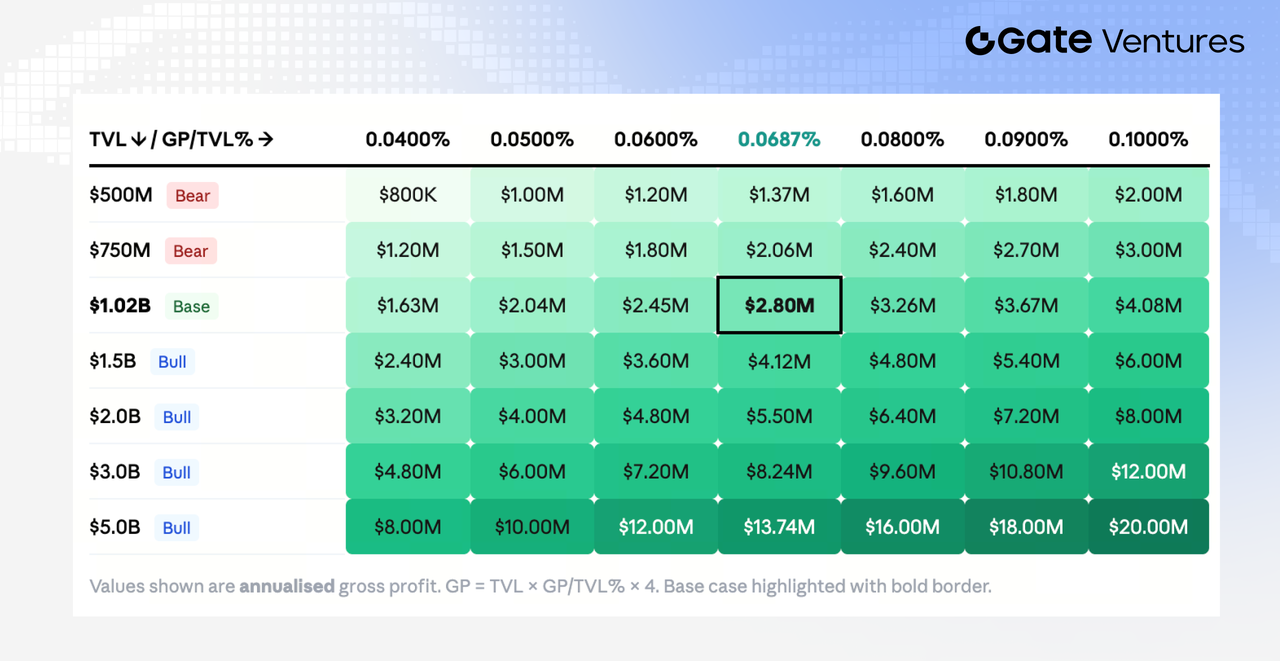
Based on annualized TVL and gross profit rate data for Q2 2026, we can further analyze how Kinetiq’s staking reward revenue changes under different scenarios.
TVL dynamics mainly depend on competition in the HYPE staking market.
Currently, HYPE staking assets are distributed among various institutions and validators. As one of the largest platforms open to retail stakers, Kinetiq still has opportunities to drive TVL growth through lower entry barriers. Conversely, if HYPE staking yields are uncompetitive—currently around 2.24%—investors may shift capital to higher-yield assets, putting downward pressure on Kinetiq’s TVL.
Gross profit rate is mainly influenced by HYPE staking yields and HYPE price.
Since Kinetiq’s core gross profit comes from performance fees on staking rewards, higher HYPE staking yields mean more rewards per unit TVL, which translates to higher protocol profit; lower yields have the opposite effect. Additionally, HYPE price affects both the dollar value of staking rewards and the TVL base in USD terms, making it another key variable for gross profit performance.
HIP-3 Trading Fees
Source: hl.eco
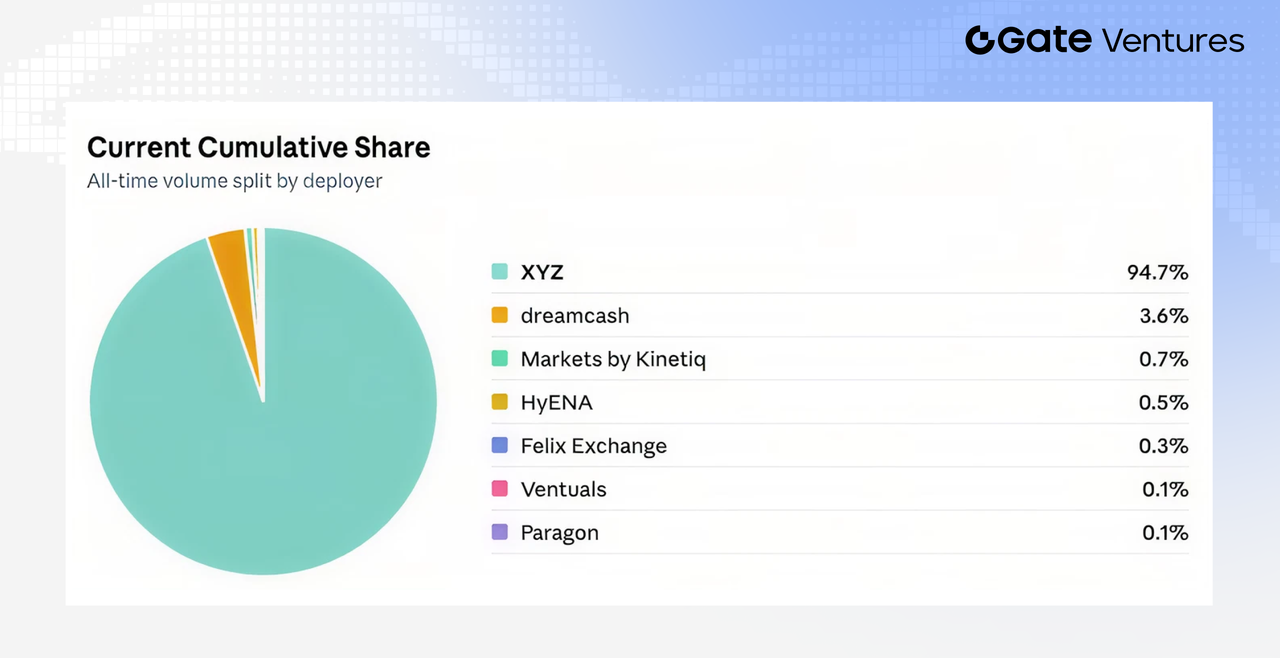
HIP-3 trading fees are another revenue stream for Kinetiq. Currently, two perpetual contract markets have launched via Kinetiq Launch: market.xyz and Borsa (in crowdfunding).
However, in the current HIP-3 trading landscape, trade.xyz remains the dominant player, accounting for about 95% of HIP-3 trading volume. Its main advantage is weekend pricing for RWA perps, which gives it a strong user mindshare and liquidity edge in relevant trading scenarios.
For platforms like market.xyz incubated by Kinetiq Launch, the key question is whether they can offer sufficiently differentiated asset classes or trading experiences to attract traders away from trade.xyz.
So far, this differentiation is unclear. Comparing asset coverage, most actively traded RWA assets are also available on trade.xyz. While market.xyz has launched a few unique stocks, such as Tencent and Xiaomi, many stocks are only listed on trade.xyz and not yet covered by market.xyz.
Thus, at this stage, market.xyz hasn’t shown clear catalysts to challenge trade.xyz’s market share. Without significant differentiation in asset coverage, liquidity, pricing, or trading experience, Kinetiq’s revenue share from HIP-3 trading fees may remain limited.
Source: Kinetiq
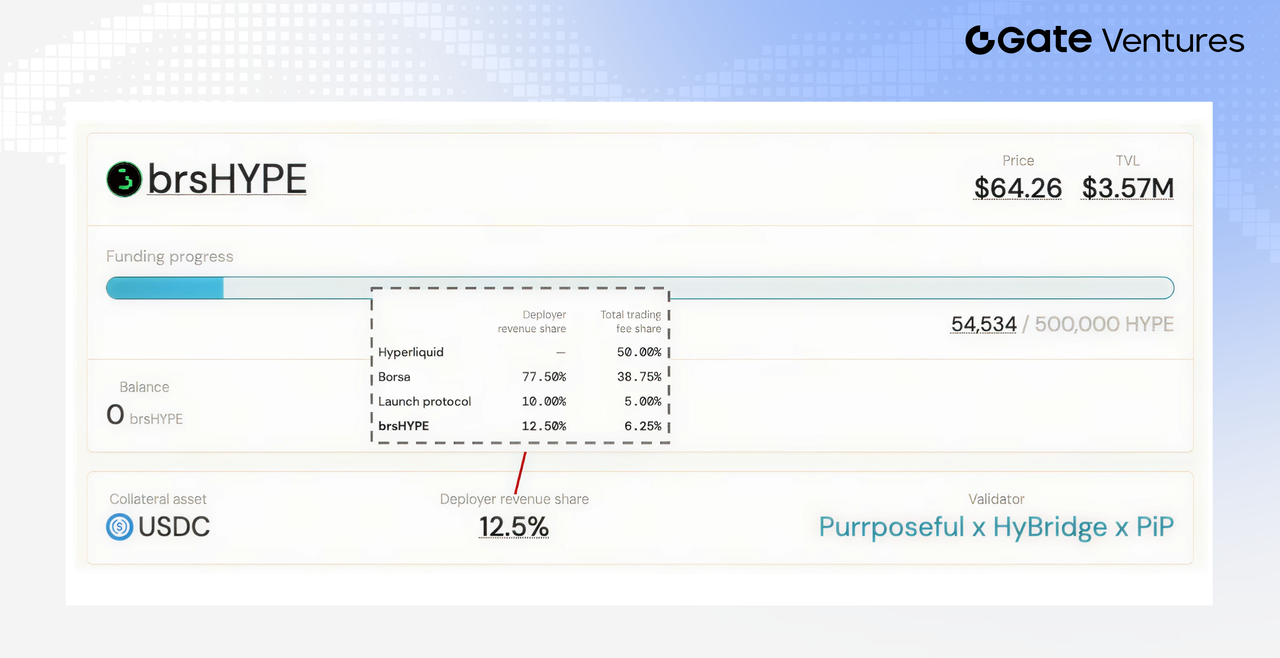
Borsa is another perpetual contract market planned for launch via Kinetiq Launch, positioned as an on-chain trading terminal for professional traders. Its goal is to make advanced execution tools—previously exclusive to hedge funds and proprietary trading teams—accessible to regular traders.
However, several points remain to be addressed. First, Borsa’s fundraising is still far from the 500,000 HYPE deployment threshold. In a weak market with tight on-chain liquidity, it’s uncertain whether Borsa can successfully raise funds and go live.
Second, although Borsa is incubated by Kinetiq Launch, Kinetiq does not earn a share of trading fees from Borsa. In this case, Kinetiq’s additional revenue comes mainly from staking rewards generated by the associated capital, or potential redemption fees, rather than HIP-3 trading fees.
This may be a strategy by Kinetiq to attract more deployers to use Launch, lowering platform fees to boost deployment interest. However, from Kinetiq’s business model perspective, this means giving up some potential HIP-3 trading fee revenue, weakening Launch’s direct contribution to protocol income growth.
Valuation and Outlook
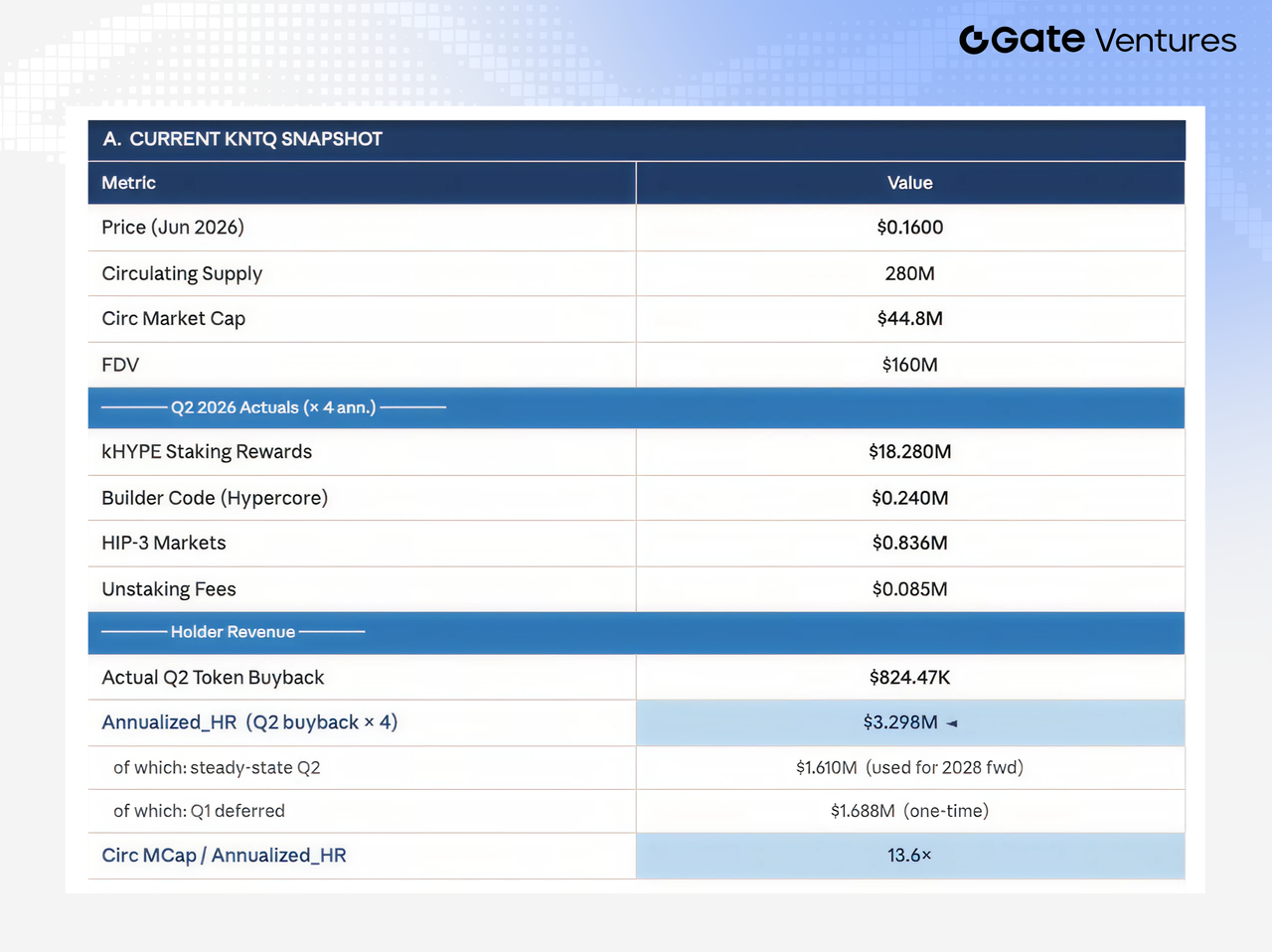
To better assess Kinetiq’s valuation and future prospects, we use a cash flow multiple approach to gauge the potential price of its token. The core valuation metric is circulating market cap / holder income.
Circulating market cap is more suitable than fully diluted valuation for cross-cycle token value assessment. This is because token projects typically have ongoing releases and new circulating supply, so valuation must consider actual circulating supply, not just static fully diluted numbers.
On the denominator side, we use token holder income, not fee or protocol revenue. The reason is that holder income represents economic value that flows back to token holders through buybacks, burns, or direct distribution.
By contrast, protocol revenue—even if it enters the project treasury—shouldn’t be counted as holder income unless there’s a clear mechanism for value accrual to holders.
This is a major difference between token and traditional equity valuation.
In traditional finance, metrics like enterprise value / revenue make sense because shareholders have legal rights to the company’s residual cash flows; all profit distribution ultimately belongs to shareholders.
Token holders do not inherently have such rights. What token holders receive depends entirely on the economic rights defined by the token mechanism. If income simply stays in a team-controlled treasury without explicit buyback, burn, or distribution mechanisms, it doesn’t automatically accrue to token holders just for holding governance tokens.
First, it’s important to clarify that normalized annualized token holder income for $KNTQ should be $1.61 million, not $3.298 million.
The latter figure is calculated by multiplying Q2’s actual buyback amount by four, but Q2 was the first quarter of buybacks and included a one-time payout of about $1.688 million in accumulated Q1 income, making it a non-recurring boost. Excluding this historical catch-up, $1.61 million better reflects the current sustainable quarterly income pace.
For revenue projections, kHYPE staking performance fees remain Kinetiq’s main income source, so growth assumptions should be cautious.
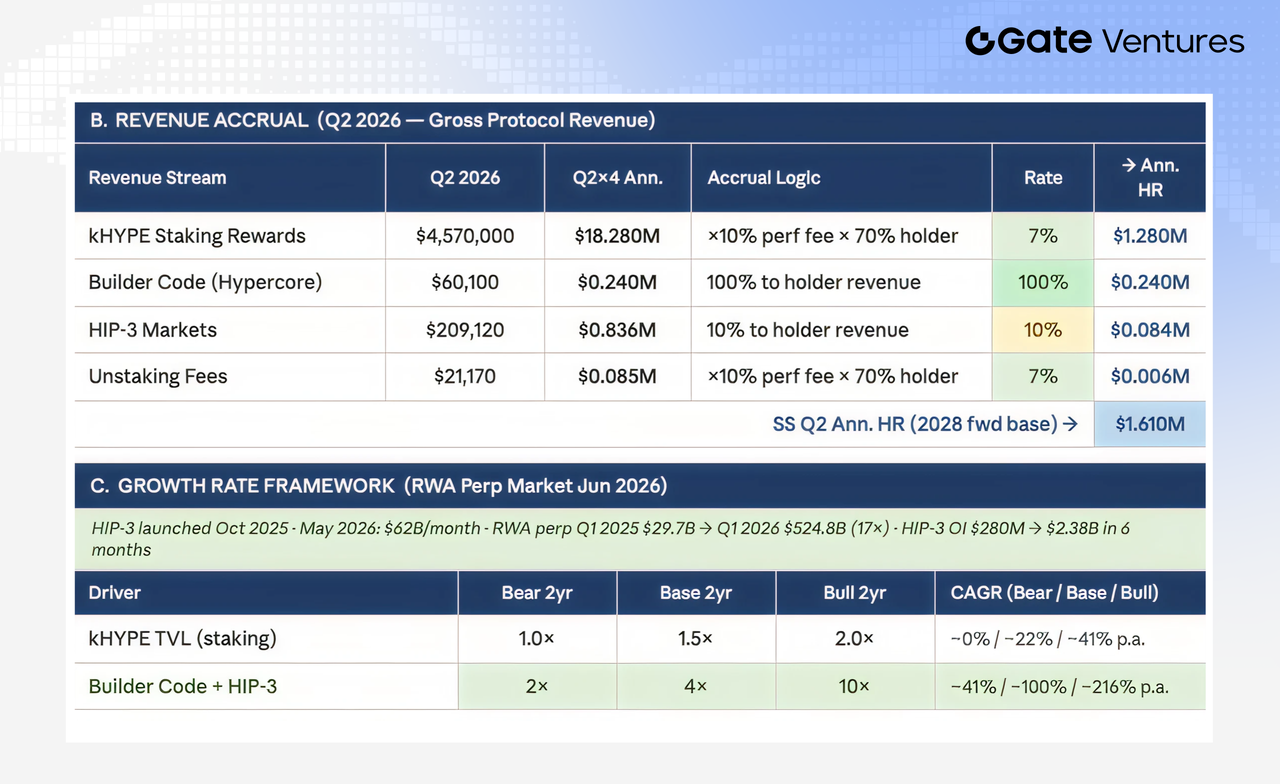
Given that Hyperliquid staking is dominated by a few mid-to-large institutions, Kinetiq’s expansion in the institutional staking market is challenging. However, as a platform mainly open to retail stakers and with synergy in the HIP-3 ecosystem, it can still drive staking TVL growth. Therefore, we assume staking-related income grows by 1.5x and 2x.
In contrast, Builder Code and HIP-3 income come from Hyperliquid perpetual contract trading activity, offering greater growth potential.
RWA perpetual contract volume grew from $29.7 billion in Q1 2025 to $524.8 billion in Q1 2026—a 17-fold increase in one year. HIP-3 open interest also rose from $280 million to $2.38 billion in six months. Based on this, we set three scenarios:
A pessimistic scenario assumes 2x growth, with trade.xyz suppressing market.xyz’s share. The base scenario assumes 4x growth, with market.xyz maintaining stable share as RWA perps expand, and Launch-incubated markets adding incremental volume. The optimistic scenario assumes 10x growth, with continued high market expansion, market.xyz entering new verticals or increasing share, and more Kinetiq Launch markets covering additional long-tail assets.
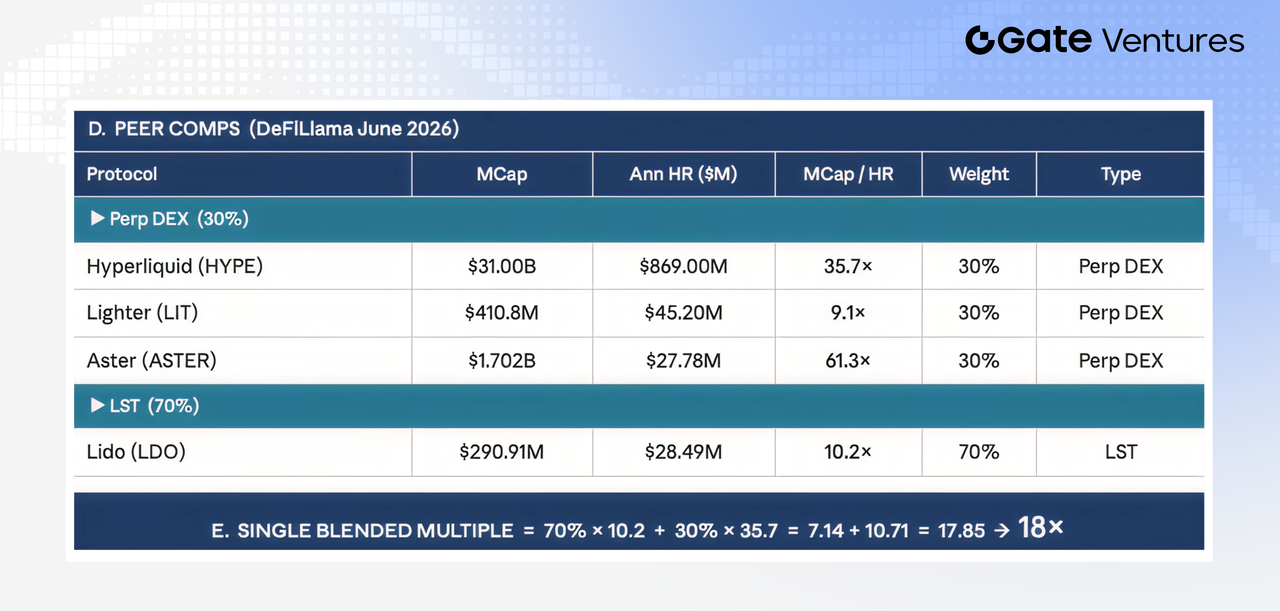
For valuation multiples, we need a reasonable comparable for Kinetiq. Since Kinetiq is currently mainly an LST protocol, Lido is the most direct reference, especially as Lido also has a buyback mechanism for token holders, making its holder income multiple highly relevant.
At the same time, we shouldn’t ignore Kinetiq Launch’s value capture in HIP-3 perpetual contract trading. While kHYPE remains the main income source, HIP-3 trading fees could become an important growth driver. So, besides LST protocols, we also include some decentralized perpetual contract exchanges as valuation references.
Based on Kinetiq’s current revenue mix, we use a blended multiple: 70% LST + 30% perpetual contract exchange, with 70% weight reflecting kHYPE and staking-related income dominance, and 30% weight reflecting Launch and HIP-3 trading fee potential. This results in a blended valuation multiple of about 18x.
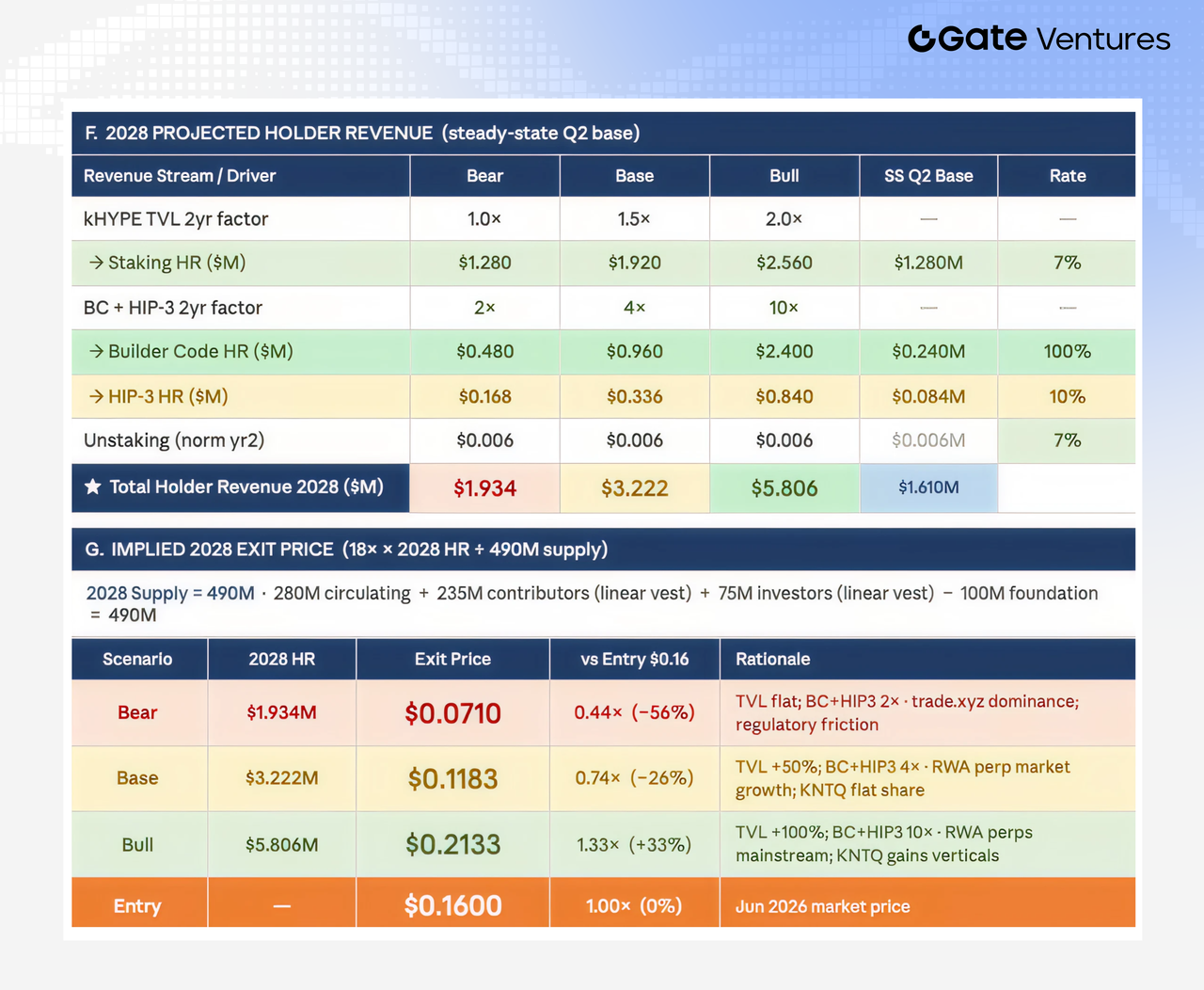
The model uses $1.61 million in steady-state annualized holder income as a baseline, applying growth assumptions to each revenue stream to estimate 2028 holder income.
In the base scenario, even with just 4x growth over two years, Builder Code and HIP-3 combined contribution rises from $324,000 to $1.296 million; in the optimistic scenario, 10x growth lifts contribution to $3.24 million, significantly surpassing staking income in absolute terms.
For valuation, all scenarios use a 2028 circulating supply of 490 million tokens—current circulation of 280 million, plus fully unlocked team and investor shares (1-year lockup from 11/25, 2-year linear vesting), minus the foundation portion. The model consistently applies an 18x blended multiple.
At the current entry price of $0.16, the base scenario yields a target price of $0.1183, about 26% below the current price; the pessimistic scenario gives $0.0710, a 56% drop; the optimistic scenario targets $0.2133, about 33% upside.
This means at $0.16, the market is already pricing in expectations between the base and optimistic scenarios. Further upside depends on whether Builder Code and HIP-3 income can keep pace with RWA perps market expansion; if growth falls short, downside risk at current prices is limited.
Meanwhile, although Kinetiq still has growth potential from kHYPE staking rewards and HIP-3 market fee sharing, about 31% of token supply held by investors and core contributors will gradually unlock over the next few years, creating significant dilution pressure.
If new circulating supply isn’t absorbed by market demand, KNTQ’s price upside could be constrained.
Can HIP-3 Still Foster a Diverse Ecosystem?
As noted earlier, trade.xyz currently holds over 95% of HIP-3 market share, with other protocols yet to make meaningful breakthroughs. The main reason is the homogeneity of perpetual contract asset offerings. trade.xyz’s volume is concentrated among a few large traders, who tend to be sticky; once liquidity and trading habits are established, their willingness to migrate is low.
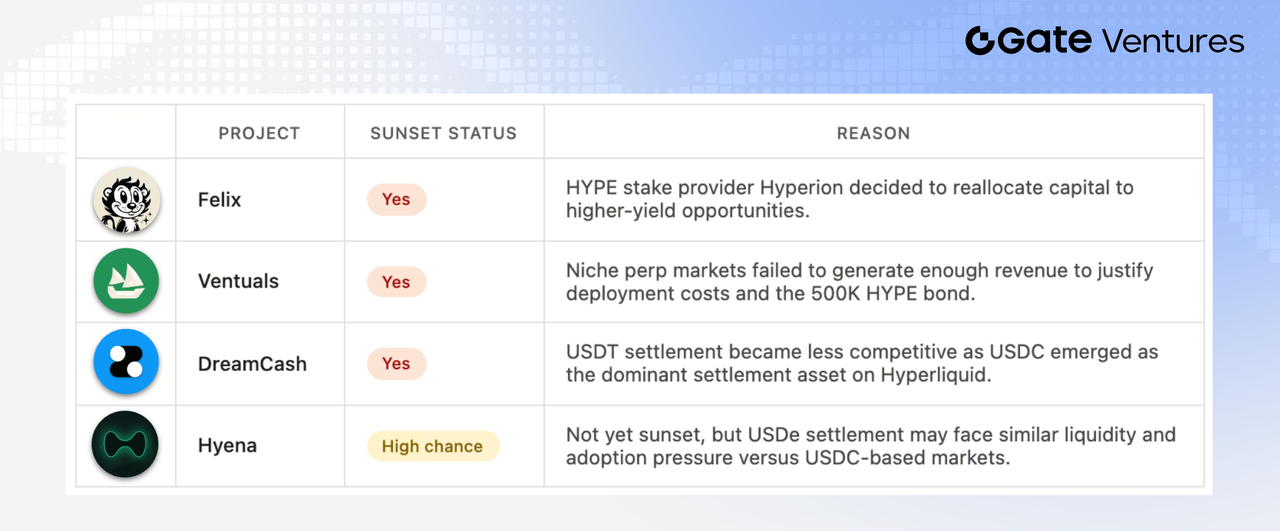
As a result, several HIP-3 protocols have recently exited, including Felix, Ventuals, and most recently DreamCash. These trade.xyz competitors have tried to differentiate—for example, Ventuals launched a semiconductor basket, or Paragon’s BTC.D market. But with a 500,000 HYPE staking threshold, the revenue opportunities in these niche markets often aren’t enough to cover capital lock-up, limited liquidity, and slashing risk.
trade.xyz succeeded due to several factors: first, it built early trust by handling spot assets via Unit; second, while other deployers focused on USDH or USDT markets, trade.xyz was the first to launch USDC pairs, capturing users and liquidity.
When Coinbase became the official USDC deployer on Hyperliquid and acquired the USDH brand, this put extra pressure on other stablecoin settlement deployers, such as DreamCash (using USDT) and Hyena (using USDe).
Moreover, deployer returns are often weaker than headline numbers suggest. Deployers usually don’t use their own HYPE for staking, but obtain it via third parties or crowdfunding. For example, Felix relied on Hyperion for HYPE, while Kinetiq and Ventuals used a crowdfunding staking model. In this structure, underlying HYPE stakers only receive a portion of deployer income. For example, kmHYPE holders get just 10% of Kinetiq deployer income.
This reduces the already modest returns for deployers, making staking less attractive for underlying HYPE stakers and increasing redemption pressure, making it harder for marginal deployers to maintain the 500,000 HYPE threshold.
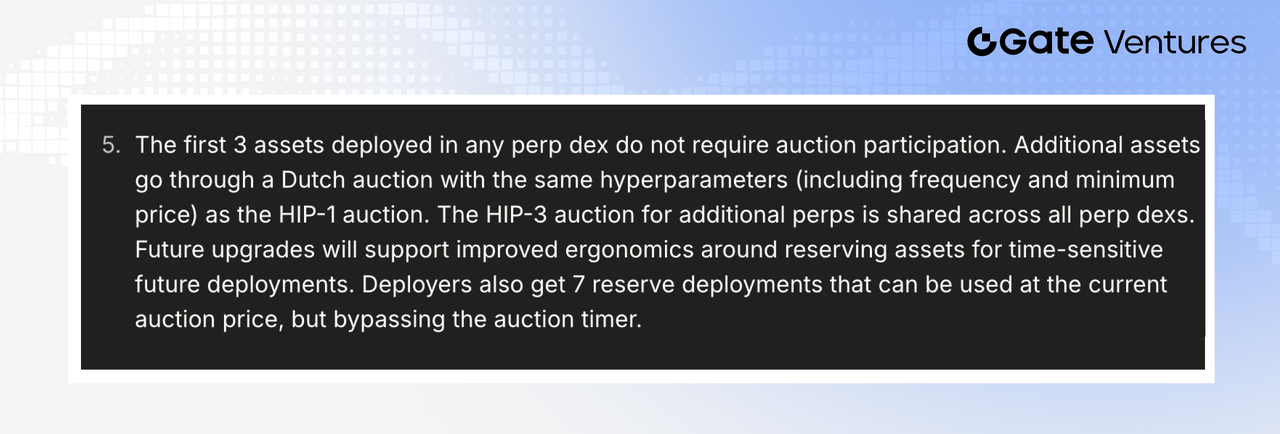
However, the 500,000 HYPE staking requirement is only one capital barrier. For deployers, the more direct cost is auction spending, as launching a new market requires upfront auction fees.
Source: Hyperliquid Docs
Therefore, auction costs form a second real entry barrier: even if deployers raise the 500,000 HYPE staking capital, they still need to invest in auction fees for new markets, which may take years to become economically viable—or may never break even.
The Symbiotic Relationship Between Kinetiq and HIP-3
Kinetiq and HIP-3 essentially form a mutually reinforcing flywheel. HIP-3 provides the infrastructure for Kinetiq’s EaaS, enabling more efficient use of staked HYPE; Kinetiq, via Launch, helps third-party deployers raise the HYPE needed, lowering the capital barrier to enter HIP-3.
But in the current HIP-3 ecosystem, with Felix, Ventuals, DreamCash, and others exiting, challenges are becoming apparent: the 500,000 HYPE deployment threshold, upfront auction costs, and trade.xyz’s concentration are squeezing non-leading deployers. If HIP-3 wants to maintain a diverse market ecosystem, lowering deployment barriers is one of the most direct paths.
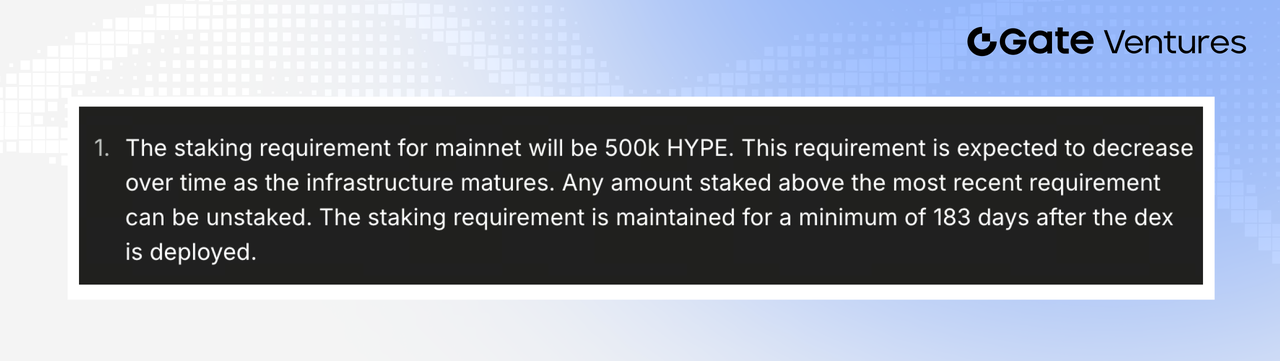
Source: Hyperliquid Doc
Hyperliquid’s official documentation leaves room for this, noting that the 500,000 HYPE staking requirement may gradually decrease as infrastructure matures.
But simply lowering the threshold brings risks. The 500,000 HYPE requirement is essentially a slashing-enabled performance bond, designed to constrain deployers from faulty oracles, malicious market setups, or bad debt risk. If the requirement drops, the bond available to cover risk in case of market issues also decreases.
Lower thresholds may also attract more low-quality, redundant, or illiquid markets. If low-threshold deployers retain privileges like cross-margin or backstop liquidation, risks could spill over from individual markets to the protocol level.
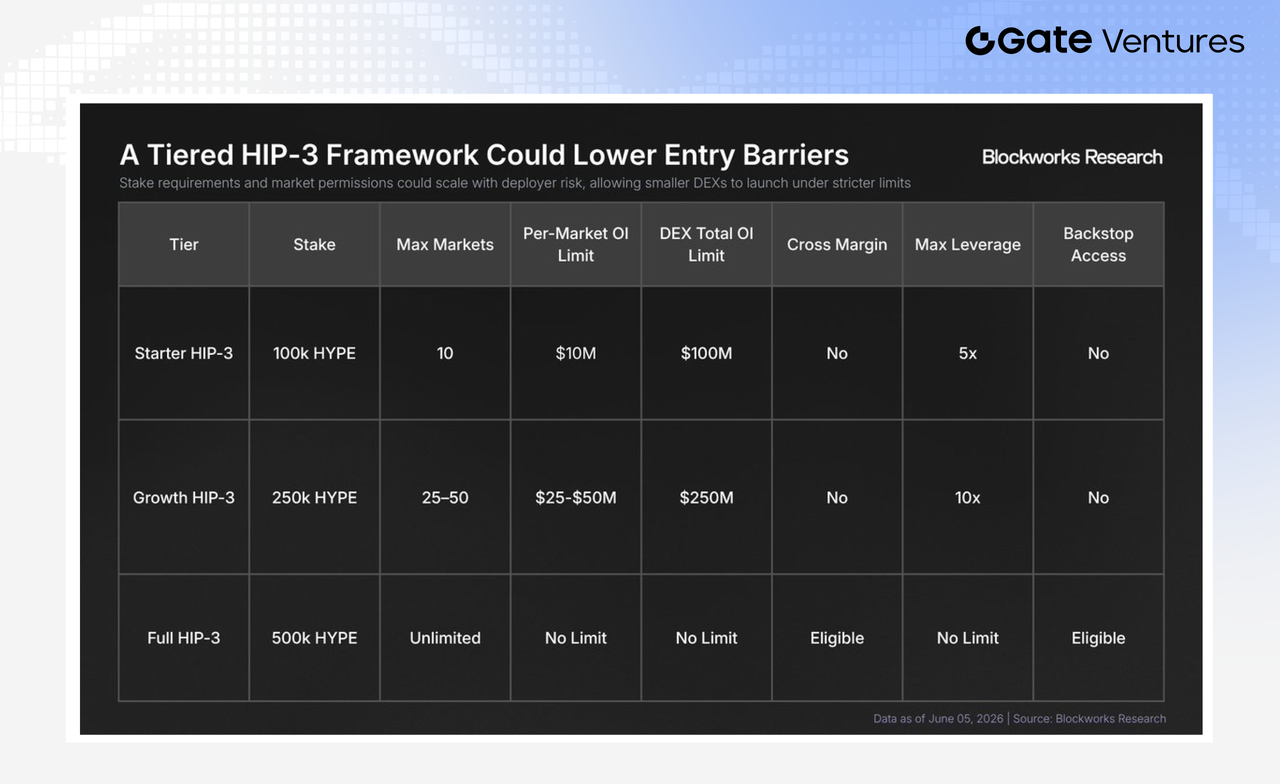
Source: Blockwork Research
A more viable solution is not simply lowering the staking requirement, but introducing a tiered HIP-3 exchange mechanism. As Blockworks Research suggests, different tiers—such as 100,000, 250,000, and 500,000 HYPE—can be set, with privileges scaling with stake size. Lower-tier deployers can launch with reduced requirements, but must accept stricter limits, such as lower open interest caps, reduced leverage, and disabled cross-margin and backstop liquidation.
This approach lowers entry barriers while containing risk within individual markets or exchanges, preventing protocol-level contagion.
Additionally, non-trade.xyz deployers still have many options for differentiated asset offerings. For example, thematic stock baskets—Chinese internet, AI infrastructure, semiconductor excluding Nvidia, EVs, crypto reserve companies, etc. Compared to direct competition with trade.xyz on single stocks, thematic baskets can express specific trading views more clearly and establish differentiated positioning.
Macro rate and policy markets are also worth exploring, such as federal funds rate, 2-year/10-year US Treasury yields, yield curve steepener trades, and SOFR. These products are more differentiated than single-stock perps and suit macro traders, but the main challenge is oracle design and initial liquidity.
Volatility perps are another potential direction, such as , MOVE index, Bitcoin volatility, and Ethereum volatility. Volatility is an independent trading target, currently underrepresented in standard stock, commodity, and FX perps, making it a promising niche for smaller deployers.
The key is for non-trade.xyz deployers to launch these differentiated markets quickly and capture trading volume and users before trade.xyz can replicate them. Only by establishing liquidity, pricing power, and trading habits early can they become the main venue for these niches, rather than being squeezed by trade.xyz’s liquidity advantage after asset replication.
Reference:
https://www.stakingrewards.com/asset/hyperliquid
https://x.com/shaundadevens/status/2065134660942754117
https://x.com/Borsa_HL/status/2051354970717302862


