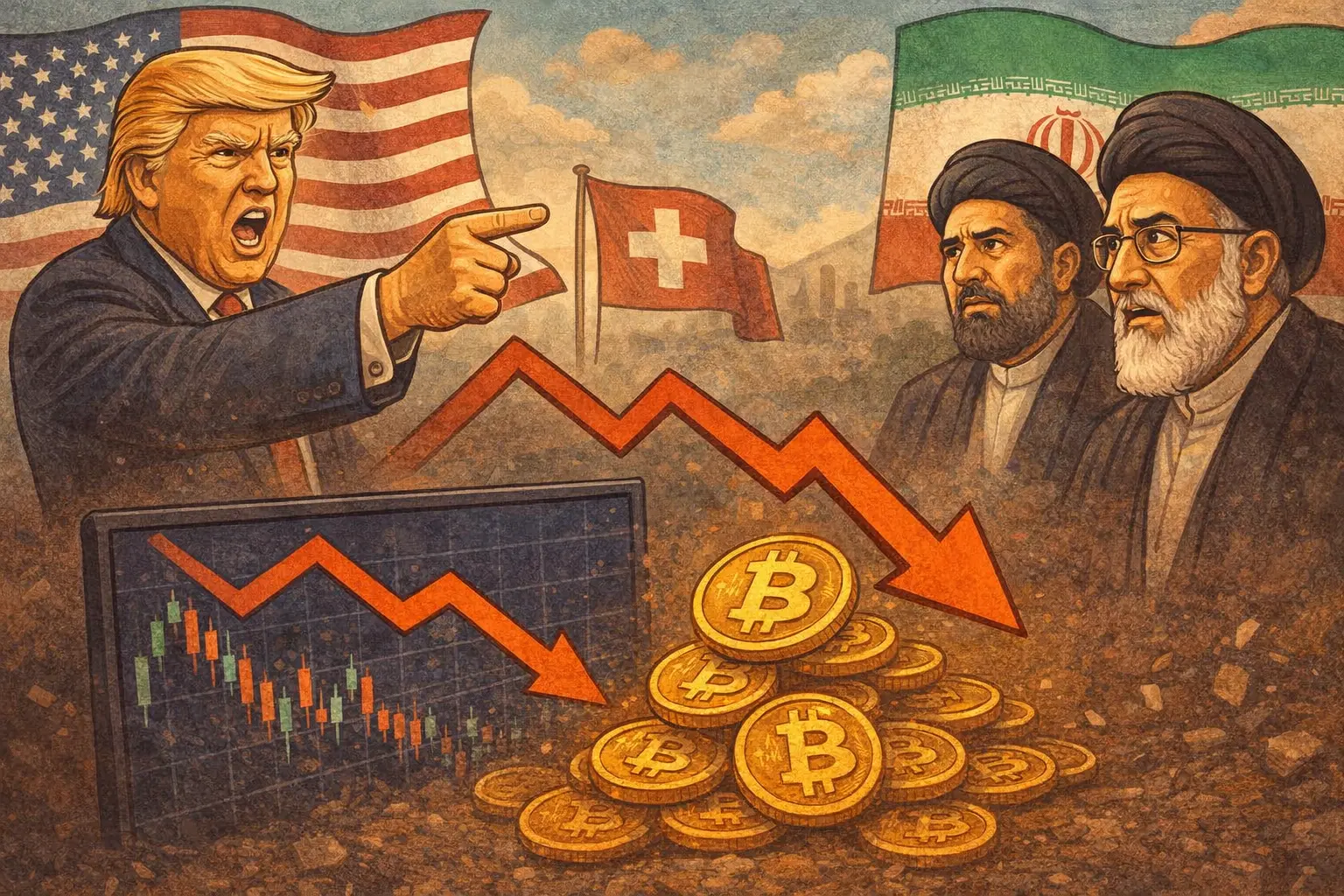
On June 22, Bitcoin weakened in the short term, falling to about $63,746. The Wall Street Journal reported that Iran’s negotiating representatives have paused talks in Burgenstock, Switzerland, with U.S. Vice President JD Vance in protest against Donald Trump’s continued tough threats. Iran said Trump’s threats pose an unacceptable risk to the personal safety of the negotiators, and pointed out that the memorandum of understanding (MOU) signed last week contains a non-aggression agreement.
Iranian negotiators exit Switzerland’s Burgenstock in protest of Trump’s repeated threats
According to reports by The Wall Street Journal and Reuters, the reason Iran’s negotiating representatives left the in-person talks was Trump’s multiple statements on social media and during Fox News interviews: Trump said, “If they don’t stop Hezbollah from making trouble, we will hit Iran again, and we’ll hit them harder”; and in a Fox News interview, he threatened, “If they don’t reach an agreement, we’ll charge them a toll,” and “If you close the Strait, you won’t have a country anymore—you won’t even be able to go back to that damn country.”
Iran’s chief negotiator, Mohammad Bagher Ghalibaf, responded: “We don’t pay any attention to the United States’ threats at all.”
A comparison between Trump’s statements on social media and Fox News and Vance’s more moderate stance
On social media, Trump said the United States could take strike action against Iran because of Iran’s support for Hezbollah, and in a Fox News interview he said, “If necessary, we may take over the Strait of Hormuz.” By contrast, Vance’s tone on-site was more subdued: “What the president has asked us to do is turn the page, change our relationship with the Iranian people. If Iran’s leadership is willing to give up its nuclear weapons ambitions, the United States is prepared to fundamentally change its relationship with that country.”
Vance played down the impact of the conflict in Lebanon, saying progress had been made in ending hostilities, adding, “These things are always a little chaotic.”
Iran reimposes a blockade on the Strait of Hormuz; diplomat: Talks make good progress in keeping the strait open
Iran claims the United States failed to fulfill its commitments for a Lebanon ceasefire (Israel launched airstrikes on central and southern Lebanon on Saturday, killing more than 30 people), and therefore reimposed a blockade in the Strait of Hormuz.
Axios, citing a U.S. diplomat who disclosed late Sunday, said that during the talks the parties made “good progress” toward keeping the Strait of Hormuz open, and the negotiations also involved issues related to implementing the Lebanon ceasefire and the nuclear agreement.
Iran’s foreign minister, Hossein Amir-Abdollahian, briefly entered the Burgenstock venue and embraced Pakistan’s Prime Minister Shehbaz Sharif, the mediator, but did not engage Vance in any public interaction.
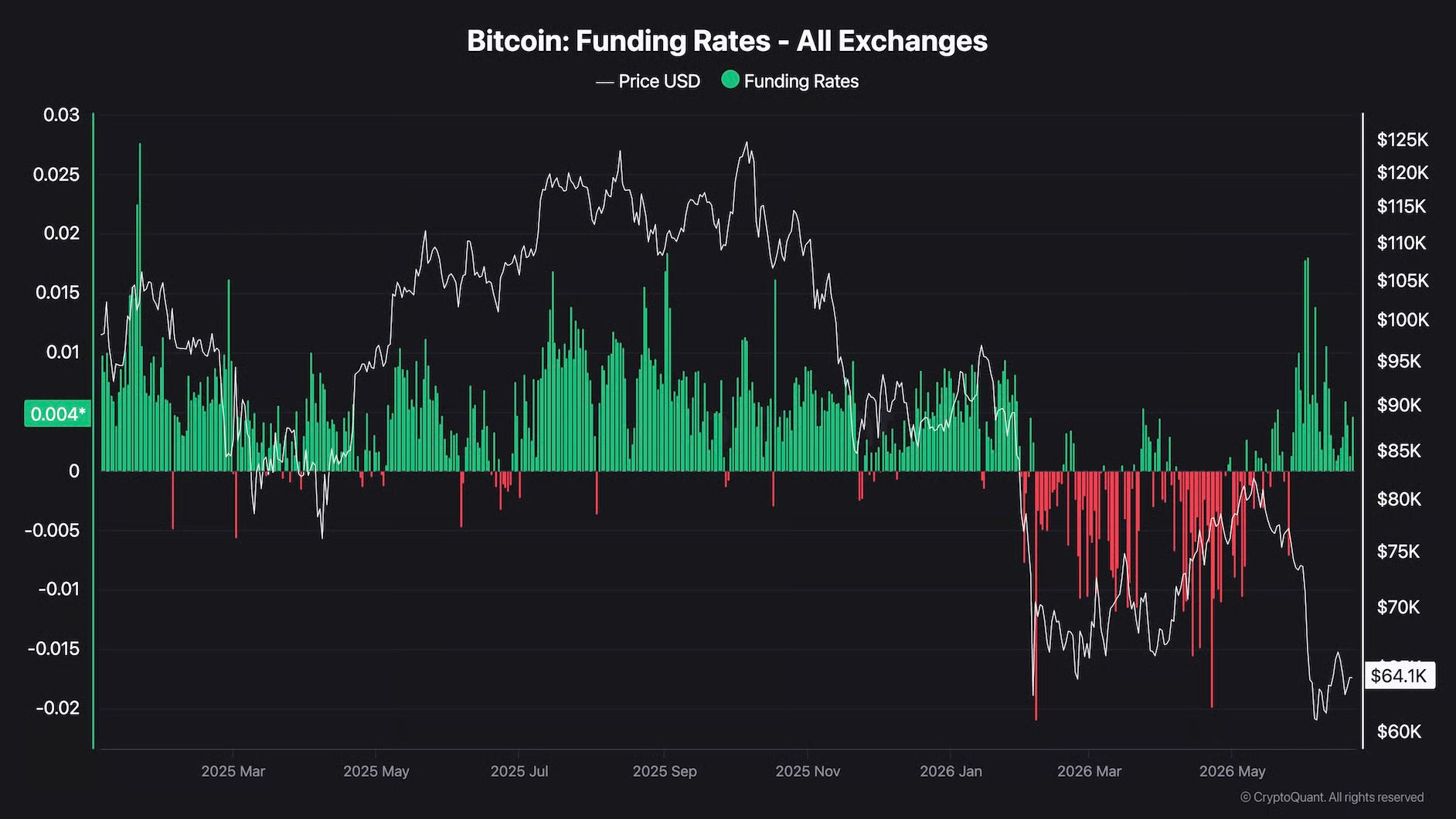
Bitcoin funding rate flips back into the positive range at 0.004
 (Source: CryptoQuant)
Bitcoin weakened in the short term on June 22, 2026, trading temporarily around $63,746. The derivatives market funding rate has shifted from the persistent negative readings recently back into positive territory; it is currently about 0.004, indicating that market participants are gradually rebuilding long positions after rebounding from the $60,000 support zone.
However, the report notes that the current funding rate remains far below the overheating levels seen in prior bull-market phases. Bitcoin still needs to reclaim the $68,000 and the $72,000–$74,000 resistance levels to enter a broader uptrend.
FAQ
Is Iran’s exit from the Switzerland talks permanent or temporary?
According to reports by The Wall Street Journal, it remains unclear whether Iran’s withdrawal from the talks is permanent or a symbolic act of protest. Before withdrawing, Iran had already reached agreement on a draft regarding how the United States would issue waivers to lift sanctions on Iran’s oil exports. Iranian officials said these waivers are expected to be issued soon, and progress has also been made in unfreezing assets in Iran’s overseas bank accounts.
Are Trump’s threats and the MOU terms contradictory?
Iran believes there is a contradiction. Iran said that the MOU jointly signed last week by Trump and Iran’s President Masoud Pezeshkian includes a non-aggression agreement and requires a ceasefire on all fronts, including Lebanon. Israel’s airstrikes on Lebanon last Saturday and Trump’s continued threats were deemed by Iran to violate relevant provisions of the MOU.
What impact does the Strait of Hormuz blockade again have on global markets?
The Strait of Hormuz is a critical chokepoint for global energy transportation and typically handles the transport of about one-fifth of the world’s oil consumption. The prior blockade had already caused global energy prices to spike; in May, U.S. CPI rose to a three-year high of 4.2%, with energy prices being one of the main drivers. The actual impact of this renewed blockade will depend on how the subsequent diplomatic talks progress.


