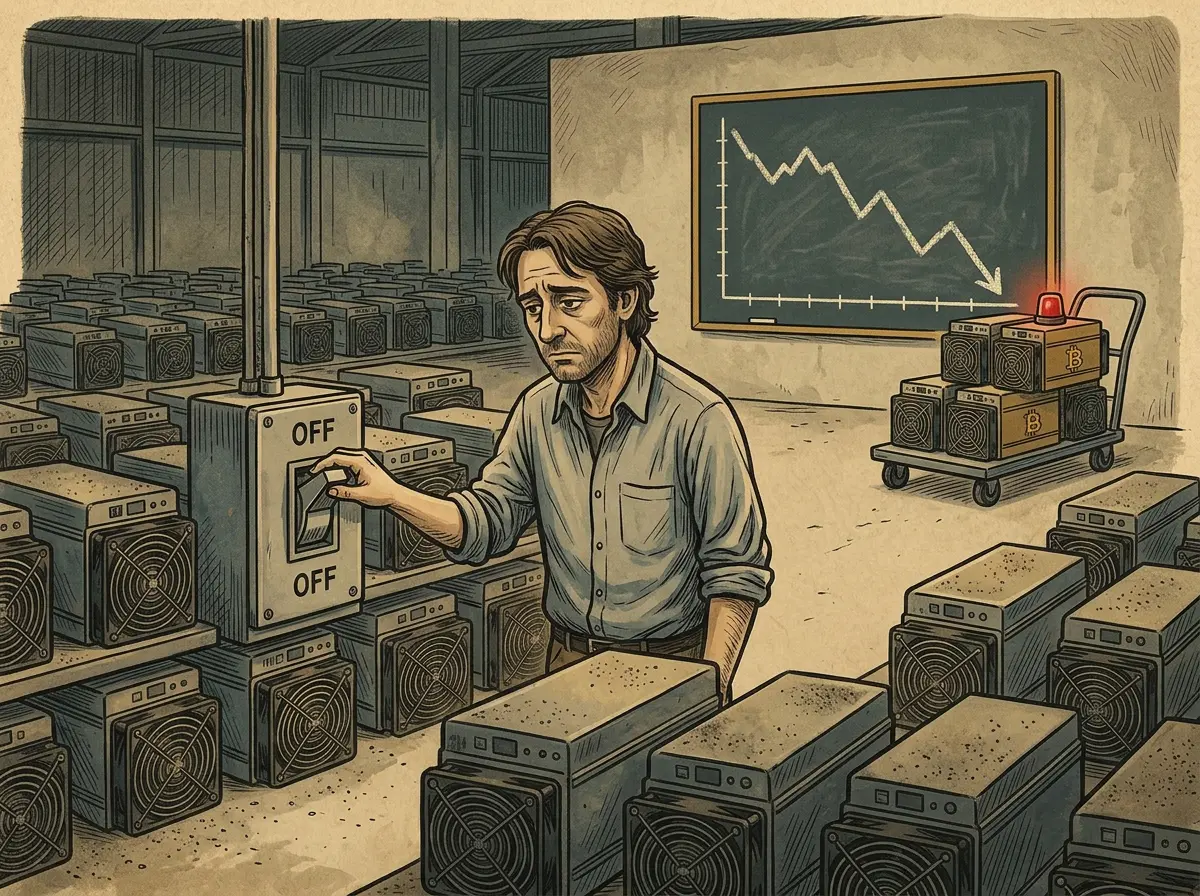
According to data released by Antpool (蚞蟻礦池) on June 4, as Bitcoin network mining difficulty remains at a high level, the daily revenue of Antminer S21, Antminer S3, Bitmain miner M63S (360T), and Avalon miner A1466I series and other models has turned negative, entering the shutdown/hibernation range. Hashrate Index confirms that the 30-day decline in the daily value of 1 petahash per second (1 PH/s) of hashpower is approximately 18%.
Antpool-Confirmed Shutdown Models List
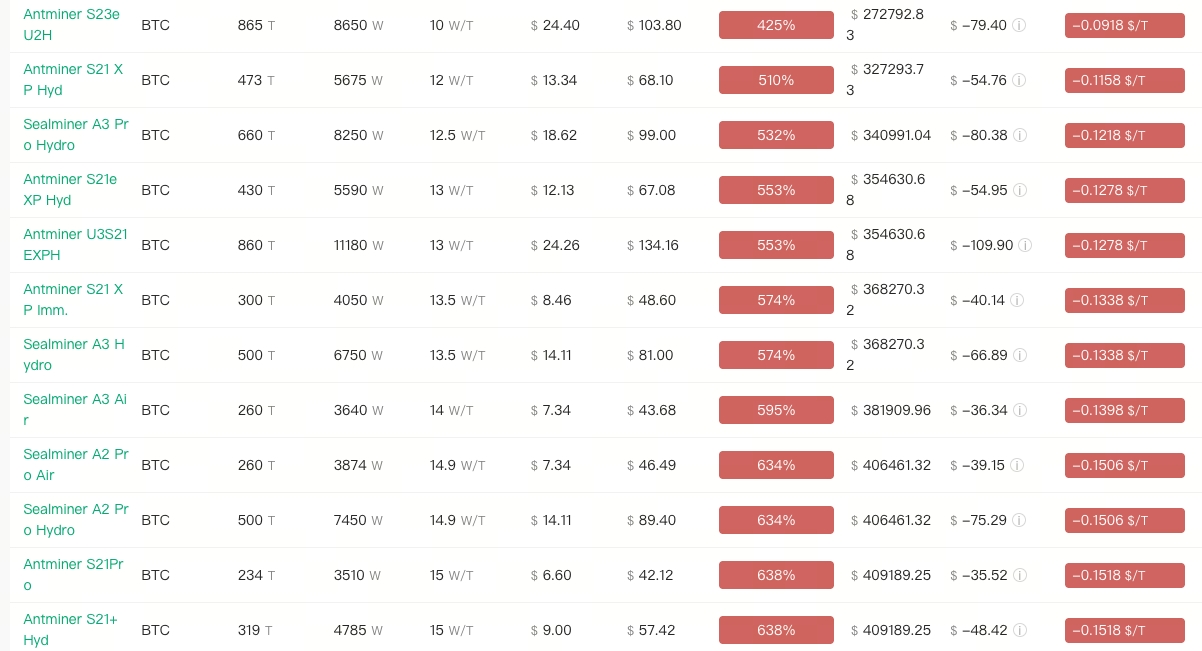
Based on mining data released by Antpool on June 4, 2026, under a benchmark electricity cost of $0.06 per kWh, current daily net earnings are negative, and the models entering the shutdown-and-electricity-cost range include:
· Antminer S21
· Antminer S3
· Bitmain miner M63S (360T)
· Avalon miner A1466I series
All the above models are older; compared with newer, more efficient mining machines, their hashpower efficiency per watt (J/TH) is lower. In scenarios where both Bitcoin price is moving downward and difficulty remains high, they are more likely to fall into loss-making territory.
Hashrate and Difficulty Data: Hashrate Index’s Quantitative Indicators
Based on Hashrate Index data as of June 3, 2026, 6:30 p.m. UTC:
Hash price: Daily value of approximately $30.77 per PH/s (from $37.44 one month ago; a 30-day drop of about 18%)
Total network hashrate: Has fallen from about 1,000 EH/s to below 975 EH/s
Average block time: 10 minutes 59 seconds (above Bitcoin’s 10-minute target)
Estimated next difficulty adjustment: Around June 13, mining difficulty is expected to drop by about 9%
Hashrate Index data shows that due to economic pressure, some mining companies have started reducing activity or disconnecting lower-efficiency miners.
May Miner Revenue and ETF Outflows: Confirmed Figures from Newhedge and Citi
According to Newhedge data, overall miner revenue in May 2026 reached $1.086 billion, the highest monthly revenue since January. Block rewards (3.125 BTC per block) contributed about $1.079 billion, while transaction fees accounted for only about 1.16%.
In a recent research report, a Citigroup analyst noted that Bitcoin spot ETF fund outflows have approached $4 billion, which is a more important factor behind Bitcoin’s weakness than the impact of Strategy selling 32 BTC. Citi described ETF fund movements as “one of the strongest indicators” for measuring Bitcoin demand.
Frequently Asked Questions
What is the technical definition of a “shutdown-and-electricity-cost” coin price?
A shutdown-and-electricity-cost coin price refers to the Bitcoin price threshold at a given electricity rate where a miner’s daily mining revenue equals or is lower than the electricity cost. When the market price of Bitcoin is below the shutdown-and-electricity-cost coin price, continuing to operate the miner will result in losses, so miners typically choose to pause or power down. Antpool’s data calculates the shutdown-and-electricity-cost coin price for each model using an electricity cost benchmark of $0.06 per kWh.
With total network hashrate falling from 1,000 EH/s to below 975 EH/s, what impact will it have on Bitcoin network security?
The short-term decline in hashrate reflects some inefficient miners leaving the network, and it does not directly threaten Bitcoin network security. This is because the difficulty adjustment mechanism will automatically lower mining difficulty in the next adjustment cycle (around June 13) to maintain the approximately 10-minute block target. The current average block time of 10 minutes 59 seconds indicates that hashrate is already below the level needed to sustain the 10-minute target.
Why does Citi believe ETF outflows are more important than Strategy selling BTC?
Citi’s logic in its research report is that ETF outflows are approaching $4 billion, meaning a large amount of capital continues to systematically withdraw from Bitcoin spot ETFs. The magnitude of this impact on market supply and demand is far greater than Strategy’s symbolic sale of 32 BTC (about $2.5 million). Citi positions ETF fund flows as a core metric for tracking institutional demand for Bitcoin.


