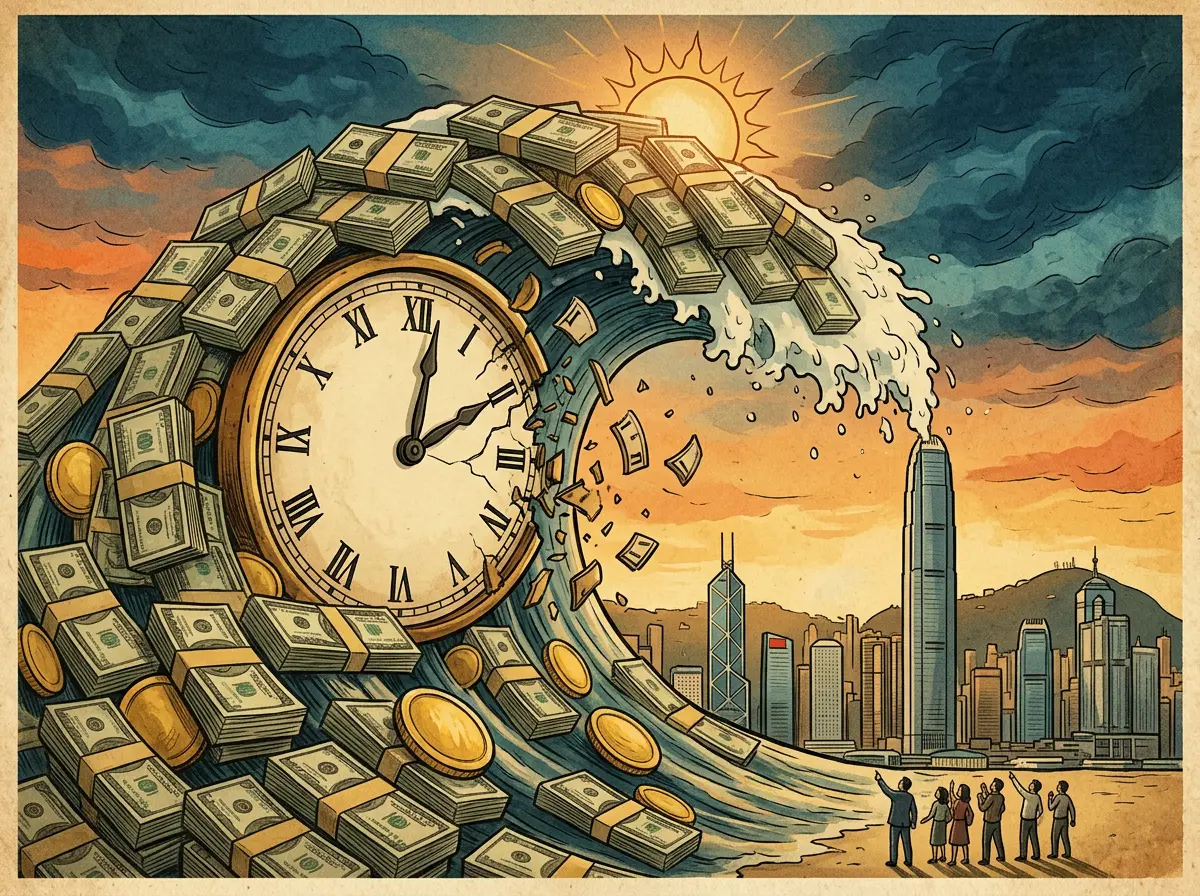
According to calculations by Bloomberg on June 16 based on exchange data, Hong Kong stocks with a minimum value of HK$255 billion, including those involving initial public offerings (IPOs) and secondary market sales, have their lock-up periods due to expire in July, with the largest amount of expirations among the remaining months this year. This round of unlocks stems from the late-2025 and early-2026 Hong Kong IPO boom, when technology companies surged in to capitalize on the AI investment frenzy.
Goldman Sachs June 14 report: historical data and unlock scale
Goldman Sachs Group analysts (including Si Fu) released a report on June 14, 2026 that confirmed: “Historical precedents show that after the end of a lock-up period, stocks typically face moderate downward price pressure.” The report confirmed the historical median figures: a 4% median decline in stock prices over the three months following lock-up expiry, and a 7% median decline within six months. Goldman estimates that the lock-up unlock scale for Hong Kong IPOs over the next year will reach $274 billion, the highest record within 12 months.
In the same report, Goldman also confirmed that among this year’s 60-plus newly listed companies in Hong Kong, the average increase in the first three months after their IPOs was 67%—meaning potential unlock pressure and strong post-IPO performance coexist, forming the market backdrop for this lock-up expiry.
July lock-up expiration list: companies confirmed by Bloomberg
The following are some of the July lock-up expiration companies confirmed in Bloomberg’s coverage; all are in the AI or technology sectors:
· MiniMax Group (AI model developer; the stock price has risen significantly since listing)
· Zhipu Technology (Knowledge Atlas Technology JSC) (AI-related; performed strongly after listing)
In addition, Insilico Medicine Cayman TopCo and the chip design company Shanghai Biren Technology (Shanghai Biren Technology) will face lock-up expirations later this year; dual-listed companies Zhaozhao Semiconductor and Sany Heavy Industry (Sany Heavy Industry) are also included.
Analysts’ views: Mizuho and Allspring
A Mizuho Securities analyst, Chen Weilun, confirmed: “For technology and healthcare companies, multiple rounds of financing before an IPO usually lead to larger lock-up expiry pressure, because these companies hold a large number of shares and their holding costs are relatively low. Stocks with low holding costs and a higher proportion of shares that are not locked up relative to free float will be affected most significantly.”
Gary Tan, portfolio manager at Allspring Global Investments, confirmed: “A higher free-float ratio should increase liquidity and allow Hong Kong’s quality listed companies to better discover price after lock-up periods are lifted.” Tan’s view contrasts with Mizuho’s cautious stance; both are opinions from individual analysts.
Frequently asked questions
How is the HK$255 billion figure for Hong Kong’s July lock-up expirations calculated?
According to Bloomberg’s explanation, the figure comes from Bloomberg’s calculations based on exchange data. It covers temporary lock-up arrangements in IPOs and secondary market stock sales, and does not include Goldman’s estimated $274 billion over the next year (the latter uses a broader definition and is in USD).
Why is the Hang Seng Index lagging this year behind Korea and Taiwan?
According to Bloomberg’s report, the Hang Seng Index is down about 3% this year. Key pressures include China’s economic softness, as well as doubts in the market about the sustainability of Chinese companies’ massive spending in the AI sector. By contrast, South Korea’s composite stock price index is up more than 100% this year, and Taiwan’s weighted index is up 57%; both benefit from demand for AI chips and related supply chains.
How big is the Hong Kong IPO market this year?
According to Bloomberg’s confirmation, around 400 companies in Hong Kong are preparing to list this year. The IPO size is expected to exceed $43 billion, which would be the highest record in six years; in the first three months of this year, IPO fundraising has already totaled nearly $14 billion, the best quarterly performance since 2021; January IPO fundraising was about $5 billion, setting the highest record for that month.


