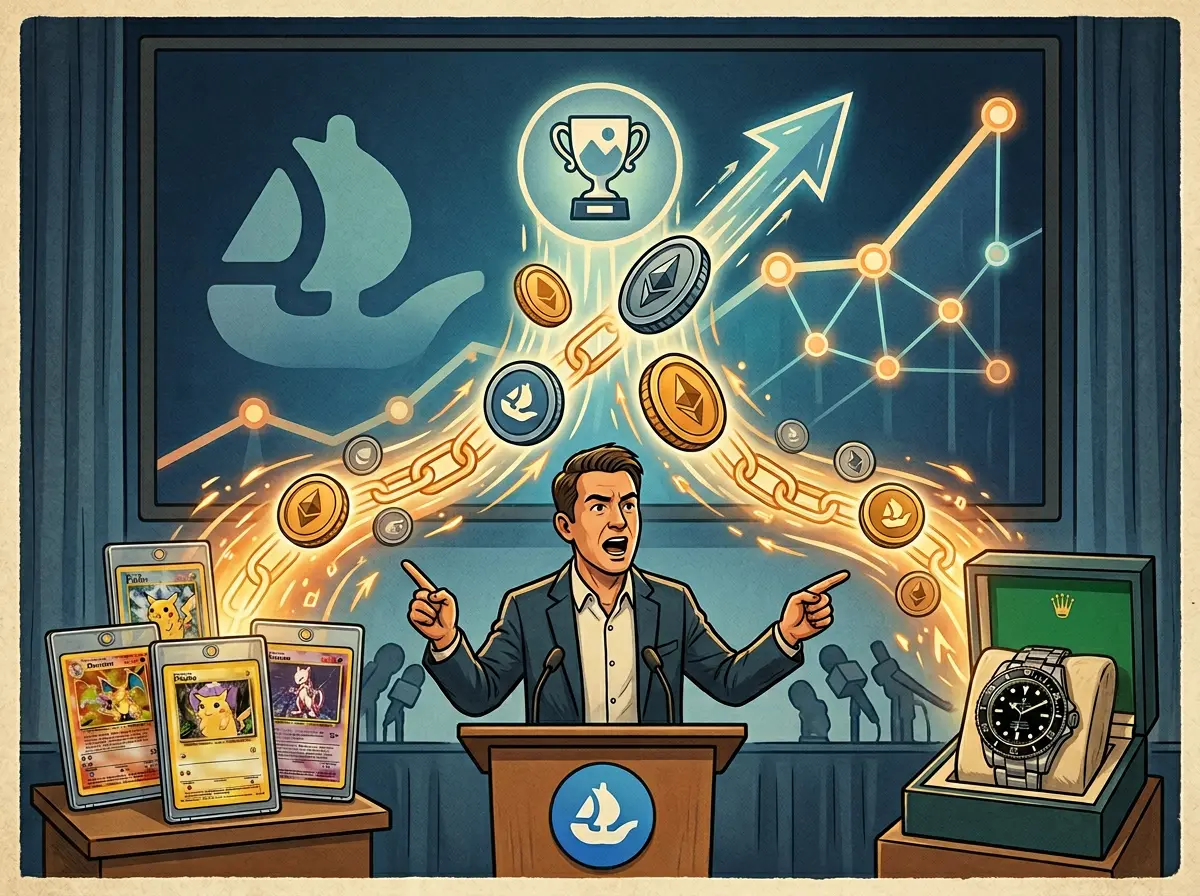
According to CryptoCity on June 5, citing OpenSea CMO Adam Hollander’s interview at the Consensus Miami event, collectible tokenization is the main opportunity to drive the next round of growth for the NFT market. He specifically named high-value collectibles such as Pokémon card trading cards and Rolex watches, noting that these physical assets themselves have scarcity, trading demand, and a collecting culture.
Hollander’s confirmed remarks at Consensus Miami: opportunity areas
Based on Adam Hollander’s published interview remarks, the specific opportunity areas he mentioned are as follows: collectible tokenization (high-value physical collectibles such as Pokémon cards and Rolex); digital tickets and in-game items; AI-generated assets and online creation tools—he said that with rapid advances in AI technology, more everyday users will be able to create digital art, animations, games, and virtual assets more easily, which may further drive NFT demand in the future.
Hollander believes that NFTs, as proof-of-ownership tools for digital and physical assets, have not lost value. What the market truly needs is to adjust the way they have been used for excessive speculation in the past.
OpenSea’s full-asset platform transformation: confirmed functional directions
According to Hollander’s explanation, OpenSea’s transformation direction includes: allowing users to manage all cryptocurrencies, NFTs, collectibles, and assets on different blockchains within the same platform; adding fiat payment functionality similar to Apple Pay; and displaying product prices in dollars rather than ETH. Hollander’s rationale is that most mainstream users are not accustomed to reading price formats like “0.00-something ETH.” To bring more mainstream users into the NFT market, the platform must present the transaction flow in a way that is closer to everyday spending.
Regarding $SEA tokens, Hollander said that the relevant decisions are mainly handled by the OpenSea Foundation; he himself does not know the specific timeline. At the same time, he acknowledged that if, after the token is launched, it is only used as a short-term trading/speculation tool, it would be difficult to create long-term value for the platform and its users.
Common questions
Why did OpenSea CMO specifically name Pokémon cards and Rolex as tokenization cases?
According to Hollander’s explanation, physical collectibles like these naturally have three key qualities: scarcity (limited editions or rare items in good condition), genuine market trading demand (a large secondary market), and deep collecting culture. These traits make them ideal targets for ownership verification and transaction circulation through blockchain. In the interview, Hollander used them as a concrete example of collectible tokenization rather than an official partnership announcement.
What fundamental differences exist between OpenSea’s “full-asset platform” transformation and the current NFT exchange model?
According to Hollander’s explanation, existing NFT exchanges mainly serve crypto-native users, with prices denominated in ETH and a focus on image collecting and meme hype. The “full-asset platform” aims to let users manage multiple types of digital assets within a single interface, while introducing fiat payments and dollar pricing—so mainstream users can participate in transactions without needing to hold cryptocurrencies. As of the time of the report, OpenSea had not announced specific feature rollout timelines.
What is the current status of the $SEA token plan?
Based on Hollander’s public remarks at Consensus Miami, decisions related to the $SEA token are handled by the OpenSea Foundation, and Hollander himself does not know the specific timeline. He also pointed out that if, after the token is launched, it is only used as a short-term trading/speculation tool, it would be difficult to create long-term value for the platform and users. OpenSea has not released any official timeline announcements regarding the token plan.


