# StrongNonfarmPayrollsRekindleRateHikeFear

1.82M

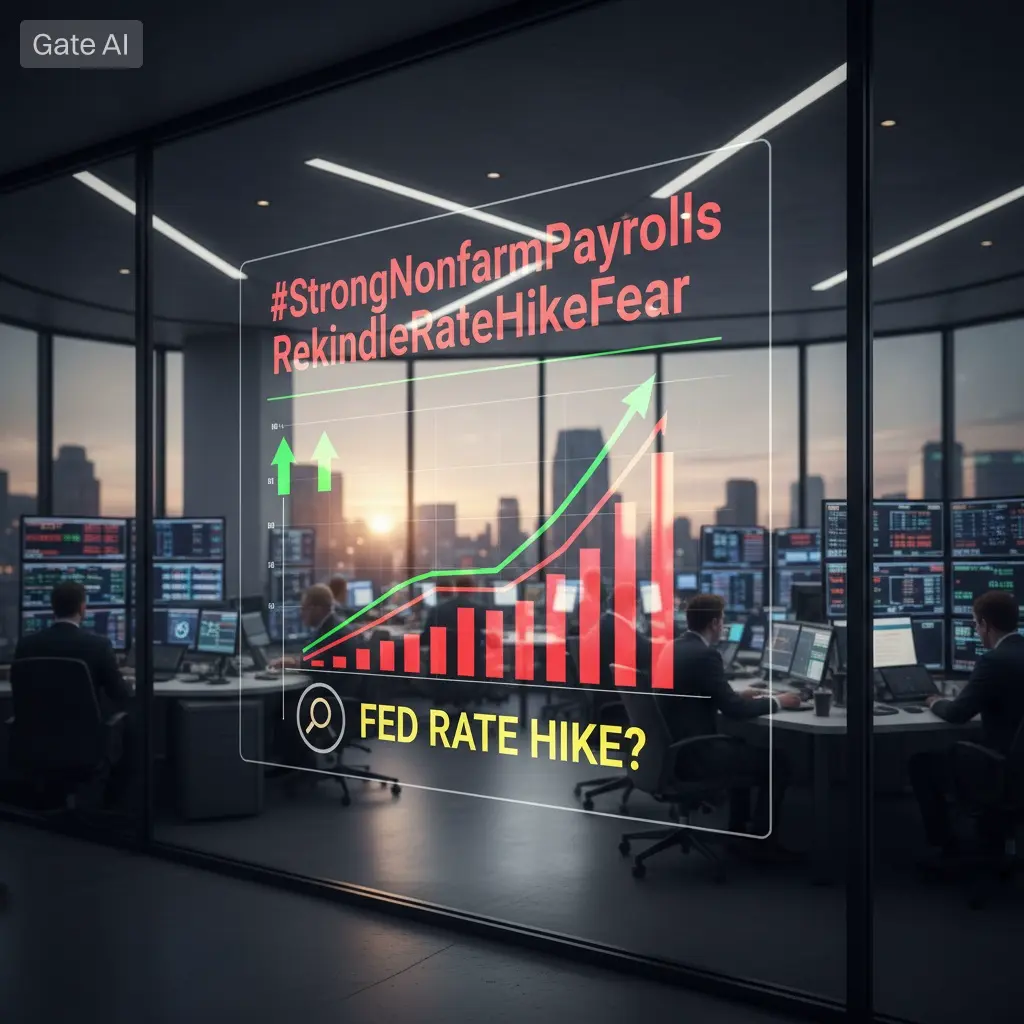
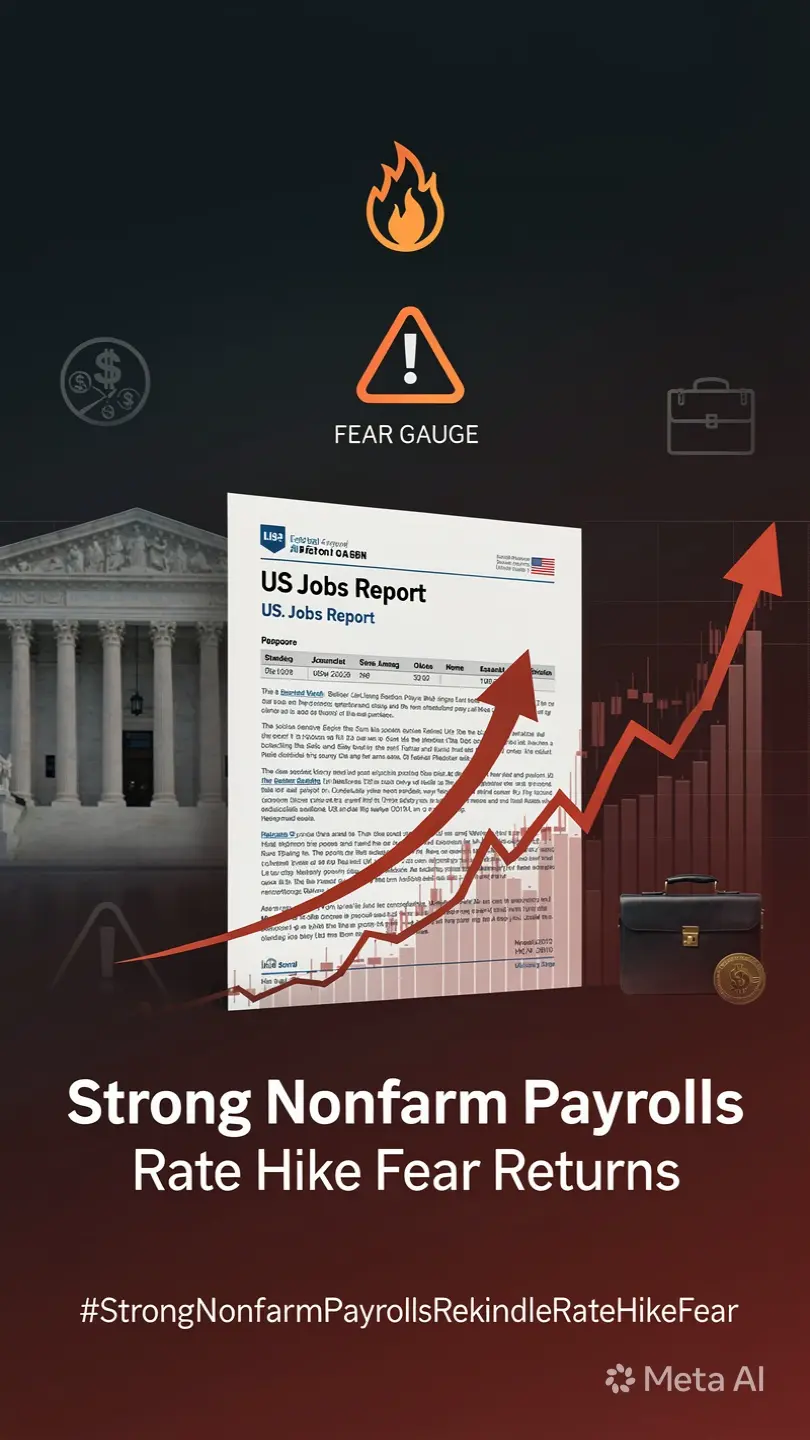
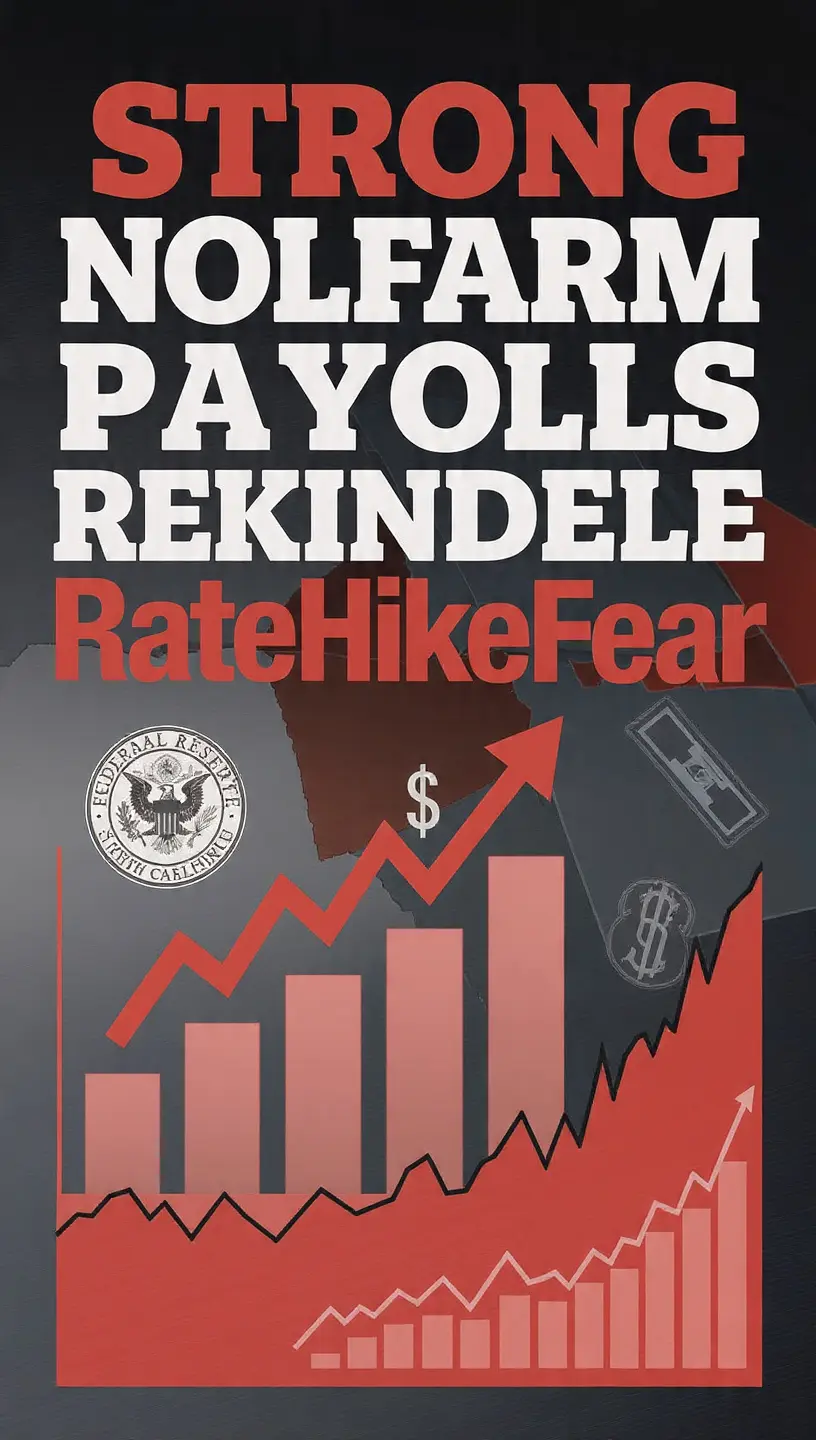
On June 5, US May nonfarm payrolls surged by 172,000, far exceeding expectations of 85,000 and hitting a three-month high. Following the data release, market pricing for a Fed rate hike by year-end jumped from 48% to about 70%. The Nasdaq plunged over 4%, while the Philadelphia Semiconductor Index tumbled more than 10%. Macro pressure continues to weigh on markets. 📊 Sources: US Labor Department / CME FedWatch

#StrongNonfarmPayrollsRekindleRateHikeFear
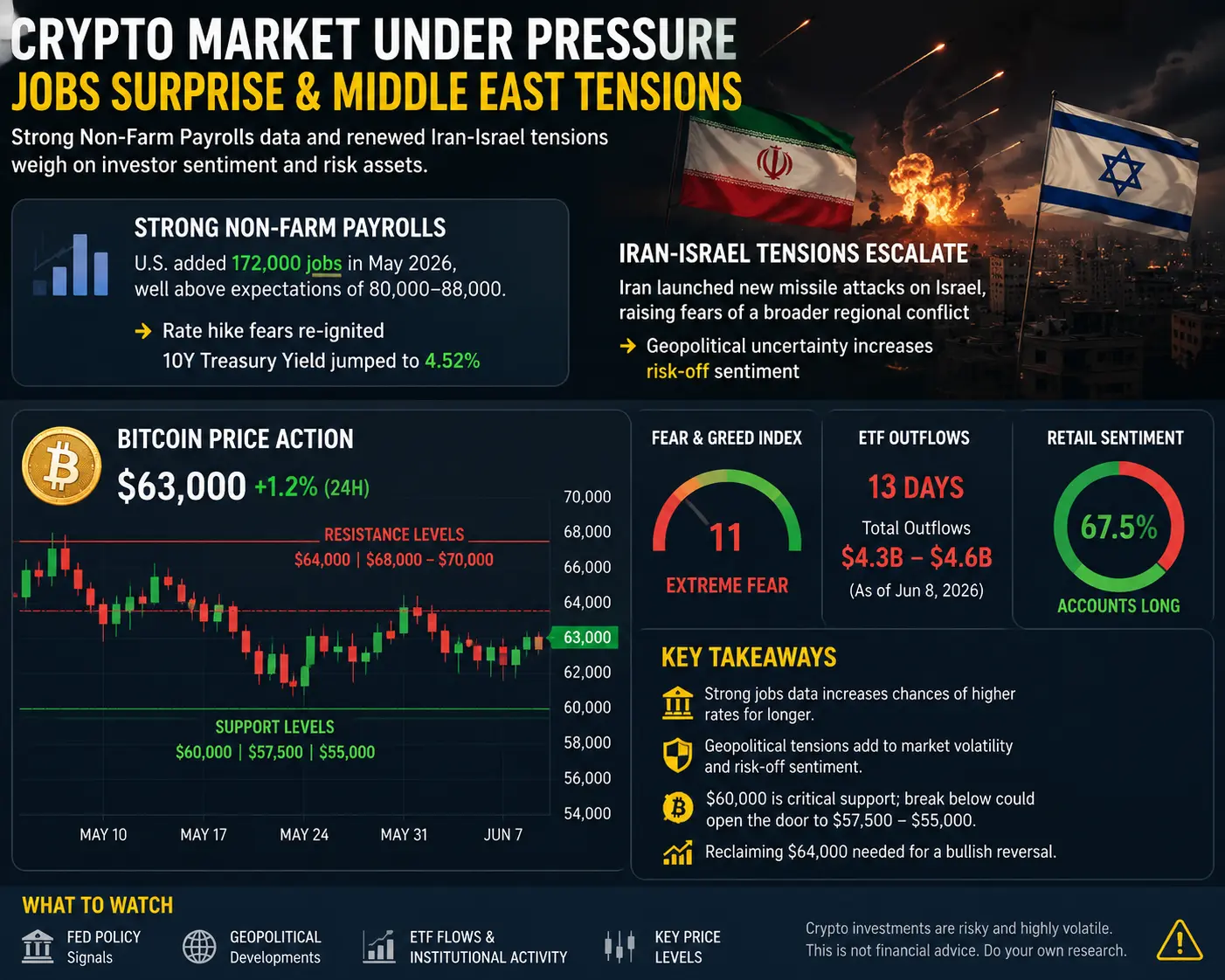
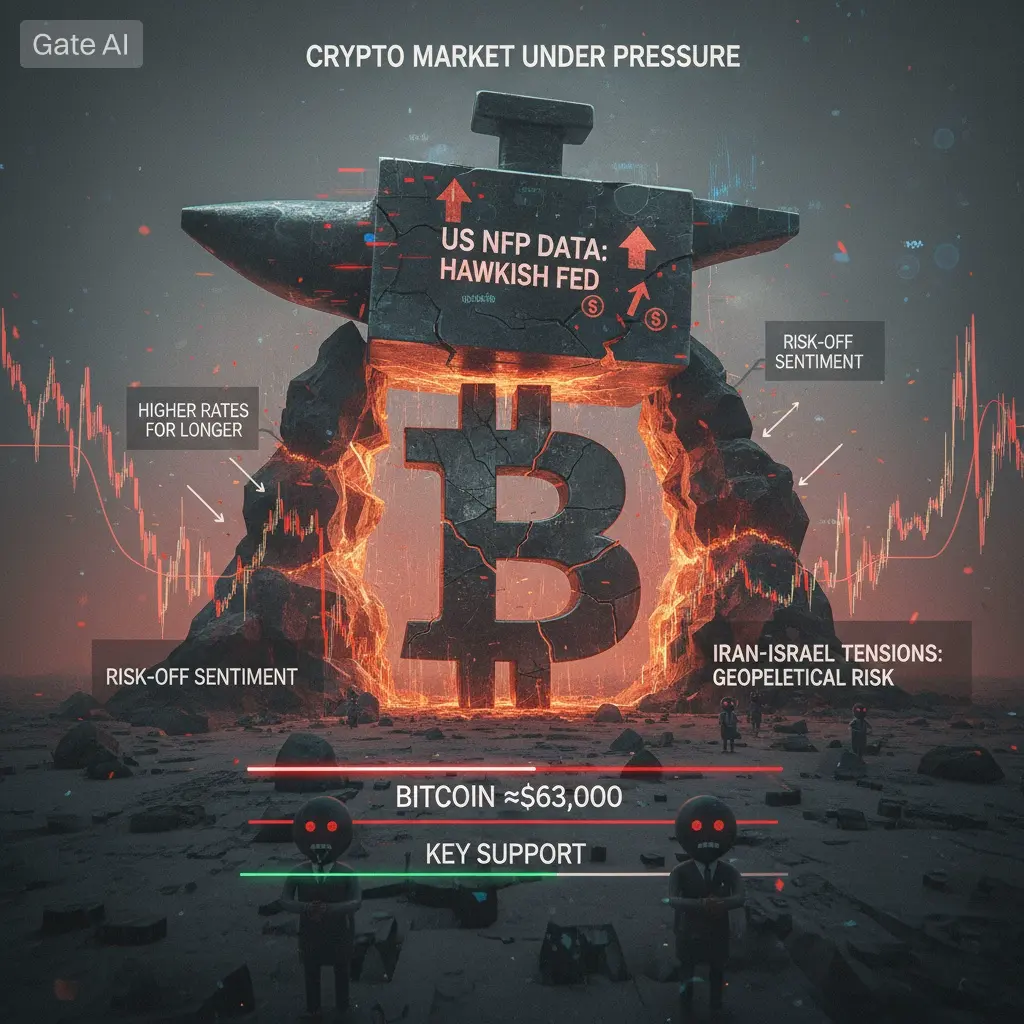
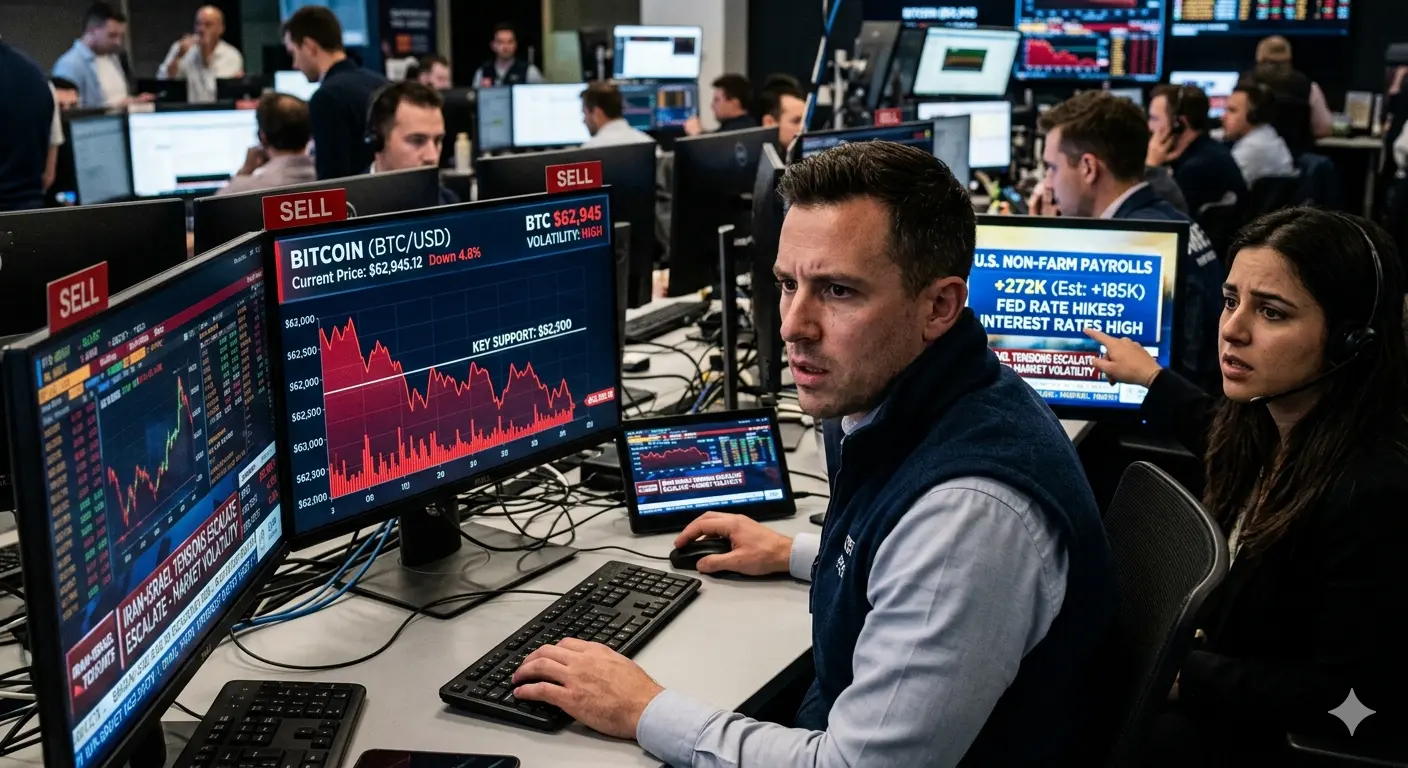
The cryptocurrency market is caught in a dual storm right now. On one side, the May 2026 US Non-Farm Payrolls report crushed all expectations, adding 172,000 jobs versus a consensus forecast of just 80,000 to 88,000. On the other side, Iran has launched fresh missile attacks against Israel, reigniting Middle East conflict fears. These two forces together are reshaping the entire crypto landscape, and understanding their impact is essential for anyone holding or trading digital assets.
Point 1: The Jobs Report Was a Shock
The Bureau of Labor Statistic
BTC-0.92%
ETH-0.07%
SOL0.13%
post-image
post-image
post-image
  • Reward
  • 21
  • Repost
  • Share
ybaser:
2026 GOGOGO 👊
View More
Payments remain one of the easiest crypto narratives to understand.
That is what makes $XLM relevant.
Stellar is built around fast value transfer, low-cost settlement, and improving financial access. In a market filled with increasingly complex narratives, payment infrastructure still has simple user logic: people want money to move quickly, reliably, and efficiently.
The stablecoin conversation makes this even more important.
Digital dollars, tokenized deposits, and cross-border settlement are becoming serious topics for both policymakers and financial institutions. Payment-focused networks m
XLM-1.62%
TON0.39%
  • Reward
  • Comment
  • Repost
  • Share
#StrongNonfarmPayrollsRekindleRateHikeFear
BLOCKBUSTER NFP: 172K JOBS SMASH EXPECTATIONS RATE HIKE FEAR RETURNS
May 2026 nonfarm payrolls surged by 172,000 absolutely demolishing the consensus estimate of 85,000. April's figure was revised upward to 179,000. The US labor market is not just holding steady it is accelerating. Three consecutive months of strong job growth confirm the economy is nowhere near cracking, and that reality is terrifying for anyone hoping for rate cuts.
The unemployment rate held steady at 4.3% for the second straight month, matching expectations. Average hourly earnin
NFP-2.23%
BTC-0.92%
post-image
Falcon_Official
#StrongNonfarmPayrollsRekindleRateHikeFear The Jobs Market Refuses to Cool Fed Rate Hike Is Back on the Agenda
One employment report has just reshaped the entire macro landscape for 2026. May nonfarm payrolls came in at 172,000 double the 85,000 economists had predicted, and the prior two months were revised upward by 93,000 jobs combined. The message is unmistakable: the U.S. labor market is not slowing down. It is accelerating.
The immediate market reaction was swift and brutal. The S&P 500 plunged more than 2% to near 7,427 the worst day since October. The Dow dropped 0.9% to around 51,094. Big tech led the sell-off, dragging the entire market lower. The benchmark 10-year U.S. Treasury note surged more than 7 basis points to 4.553%, with bonds suffering a sharp sell-off. The U.S. Dollar Index rocketed nearly 30 points higher, pushing the yen beyond 160 approaching levels that previously triggered Japanese intervention, with Finance Minister Satsuki Katayama already warning of decisive action. The euro fell 0.29% to $1.1575.
But the most consequential shift happened in rate expectations. Before the jobs report, prediction market Kalshi showed just a 25.3% chance of a Fed rate hike this year. After the report, that probability doubled to 52%. CME's FedWatch tool recorded a 68.4% probability of a rate increase by the December meeting, up from 52% just 24 hours earlier. Bloomberg reported that interest-rate swaps show traders fully pricing in a quarter-point increase by year-end, with roughly a 60% chance the move comes as early as October. This is a dramatic reversal just months ago, markets were debating how many cuts would come this year.
The context is essential. The federal funds rate currently sits at 3.50% to 3.75%. The Fed, now led by Kevin Warsh, faces a dual challenge: war-driven inflation and employment resilience. Core CPI hit 3.3% year-over-year in April well above the 2% target. The Iran conflict has pushed headline CPI to 3.8%, with energy prices serving as a persistent inflation catalyst. The jobs report essentially told the Fed: the economy can absorb higher rates. The labor market has no cracks, providing the necessary firepower to fight inflation.
For Bitcoin, the rate hike narrative is direct downward pressure. BTC trades around $60,000 to $63,500, down roughly 50% from its all-time high of $126,080. Spot Bitcoin ETFs have seen record outflows over $1.40 billion in the first week of June alone. Higher rates mean tighter liquidity, a stronger dollar, and greater pressure on risk assets. The correlation between crypto and tech stocks remains tight, and tech suffered the worst of the sell-off on jobs report day.
Gold took a double hit. Despite traditionally serving as a safe haven during geopolitical risk and inflation, gold has fallen 23% from its January peak of $5,608 to approximately $4,314 on June 8. Rate hike expectations have overwhelmed geopolitical premium — higher rates make non-yielding metals less attractive relative to yield-bearing assets. Analysts now describe gold's behavior as more risk-asset-like than safe-haven-like.
The strategic landscape: the Fed is now likely to hike before year-end, with the June 17-18 FOMC as the next critical checkpoint. The 10-year Treasury yield is heading toward 4.70%. Dollar strength is creating ripple effects across emerging market currencies and commodities. Risk assets face twin pressure: geopolitical uncertainty plus monetary tightening.
Trading strategies are adapting. Some analysts see tactical Bitcoin accumulation near the $60,000 to $62,000 zone, but with a hard stop at $55,000 given structural ETF outflow pressure. The short Treasury thesis is reinforced. Position sizing should be reduced ahead of geopolitical binary risk events over the weekend.
The bottom line from the May jobs report: the U.S. economy is not giving the Fed permission to cut rates it is paving the road for a hike. Markets are now grappling with an entirely different rate path, and the implications for equities, bonds, gold, and crypto will play out over the coming months.
repost-content-media
  • Reward
  • 5
  • Repost
  • Share
discovery:
To The Moon 🌕
View More
#StrongNonfarmPayrollsRekindleRateHikeFear
𝗧𝗵𝗲 𝗖𝗿𝘆𝗽𝘁𝗼 𝗠𝗮𝗿𝗸𝗲𝘁 𝗙𝗮𝗰𝗲𝘀 𝗜𝘁𝘀 𝗕𝗶𝗴𝗴𝗲𝘀𝘁 𝗠𝗮𝗰𝗿𝗼 𝗧𝗲𝘀𝘁 𝗢𝗳 𝟮𝟬𝟮𝟲
The cryptocurrency market has entered a critical phase where macroeconomic forces are becoming more important than traditional crypto-specific narratives. Recent developments in the United States economy, combined with rising geopolitical tensions in the Middle East, have created an environment of uncertainty that is influencing investor behavior across global financial markets. While many traders were expecting a gradual recovery in digital assets dur
BTC-0.92%
MrFlower_XingChen
#StrongNonfarmPayrollsRekindleRateHikeFear
𝗧𝗵𝗲 𝗖𝗿𝘆𝗽𝘁𝗼 𝗠𝗮𝗿𝗸𝗲𝘁 𝗙𝗮𝗰𝗲𝘀 𝗜𝘁𝘀 𝗕𝗶𝗴𝗴𝗲𝘀𝘁 𝗠𝗮𝗰𝗿𝗼 𝗧𝗲𝘀𝘁 𝗢𝗳 𝟮𝟬𝟮𝟲
The cryptocurrency market has entered a critical phase where macroeconomic forces are becoming more important than traditional crypto-specific narratives. Recent developments in the United States economy, combined with rising geopolitical tensions in the Middle East, have created an environment of uncertainty that is influencing investor behavior across global financial markets. While many traders were expecting a gradual recovery in digital assets during the second half of 2026, the latest economic data has forced markets to reassess expectations regarding monetary policy, liquidity conditions, and risk appetite.
One of the most significant developments has been the surprising strength of the U.S. labor market. Employment growth continues to exceed expectations, demonstrating that economic activity remains resilient despite higher interest rates and tighter financial conditions. Strong job creation and stable wage growth indicate that inflationary pressures may remain more persistent than policymakers had hoped. As a result, investors are increasingly questioning whether the Federal Reserve will be able to ease monetary policy as quickly as previously anticipated. Financial markets have responded by pushing Treasury yields higher and strengthening the U.S. dollar, both of which traditionally create headwinds for risk-sensitive assets such as cryptocurrencies.
For Bitcoin and the broader digital asset market, liquidity remains one of the most important drivers of price action. During periods when central banks are injecting liquidity and maintaining accommodative policies, speculative assets often benefit from increased capital flows. However, when interest rates remain elevated for longer periods, investors tend to favor safer income-generating assets, reducing demand for higher-risk investments. This shift in capital allocation is one reason why Bitcoin and major altcoins have struggled to regain strong upward momentum despite periods of oversold market conditions.
Adding to the uncertainty is the renewed escalation of tensions in the Middle East. Geopolitical instability has historically increased market volatility by creating concerns about energy supplies, global trade routes, and inflation. Rising oil prices can have a cascading effect across the global economy by increasing transportation and production costs, which in turn can keep inflation elevated. If inflation remains stubbornly high while economic growth begins to slow, investors could face a challenging environment characterized by reduced liquidity and heightened uncertainty. Such conditions have historically been difficult for both traditional risk assets and cryptocurrencies.
Another important trend is the changing behavior of institutional investors. Over the past several years, institutional participation has become a major component of cryptocurrency market structure. Large investment funds, corporate treasury allocations, and exchange-traded products have contributed significantly to market liquidity and price discovery. However, periods of uncertainty often lead institutional investors to reduce exposure and preserve capital. The pace at which institutions either return to or withdraw from the digital asset market may play a decisive role in determining whether current price levels represent a long-term accumulation opportunity or merely a temporary pause before further volatility.
Despite these challenges, it is important to recognize that market cycles are a normal part of every emerging asset class. Bitcoin has historically experienced periods of intense fear, sharp corrections, and prolonged uncertainty before eventually establishing new trends. The current environment highlights the importance of patience, disciplined risk management, and a broader understanding of global macroeconomic developments rather than focusing exclusively on short-term price movements. Market participants who closely monitor central bank policy, inflation trends, energy markets, and institutional capital flows will likely be better positioned to navigate the months ahead.
According to MrFlower_XingChen, the cryptocurrency market is approaching a defining moment where macroeconomic conditions may determine the next major trend. Whether digital assets can regain momentum will depend on the evolution of inflation, interest rate expectations, geopolitical stability, and institutional participation. Until greater clarity emerges, volatility is likely to remain elevated, making risk management and strategic decision-making more important than ever for investors seeking long-term success in the digital asset space.
repost-content-media
  • Reward
  • 16
  • Repost
  • Share
HelalChowdhury:
To The Moon 🌕
View More
#StrongNonfarmPayrollsRekindleRateHikeFear
📉 One Economic Report Just Changed the Entire Market Narrative
For months, investors were preparing for rate cuts.
Wall Street expected inflation to continue cooling, economic activity to slow, and the Federal Reserve to gradually shift toward easier monetary policy.
Then the latest Nonfarm Payrolls report arrived.
Instead of showing weakness, the US labor market delivered another surprisingly strong performance.
Job creation exceeded expectations.
Wage growth remained resilient.
Unemployment stayed relatively stable.
And suddenly, the conversation
BTC-0.92%
post-image
  • Reward
  • 13
  • Repost
  • Share
discovery:
To The Moon 🌕
View More
#StrongNonfarmPayrollsRekindleRateHikeFear 2. The Mega-IPO Threat & The Macro Overhang
The recovery of digital assets is being actively suppressed by two massive external forces: traditional equity "money grabbing" and macroeconomic pressure.
The SpaceX & Anthropic Liquidity Siphon
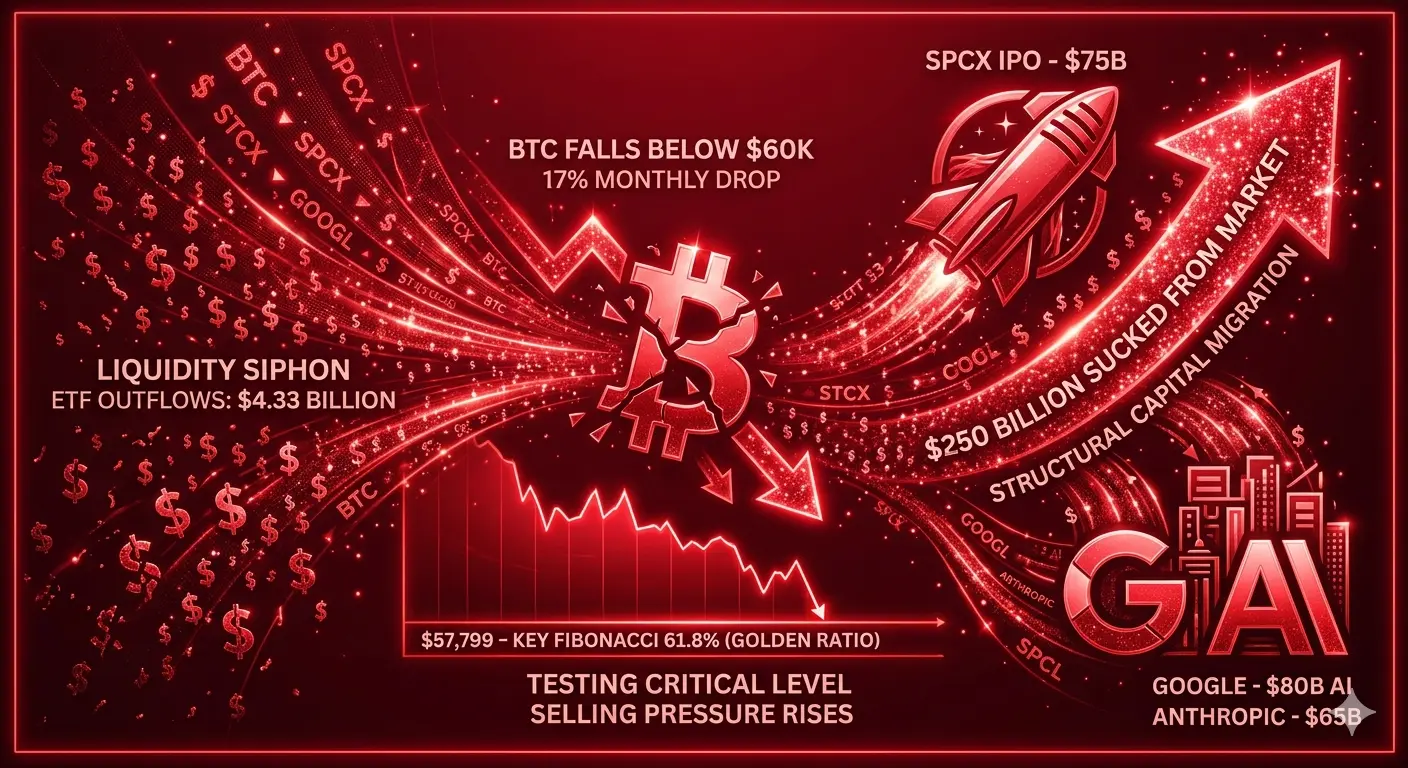
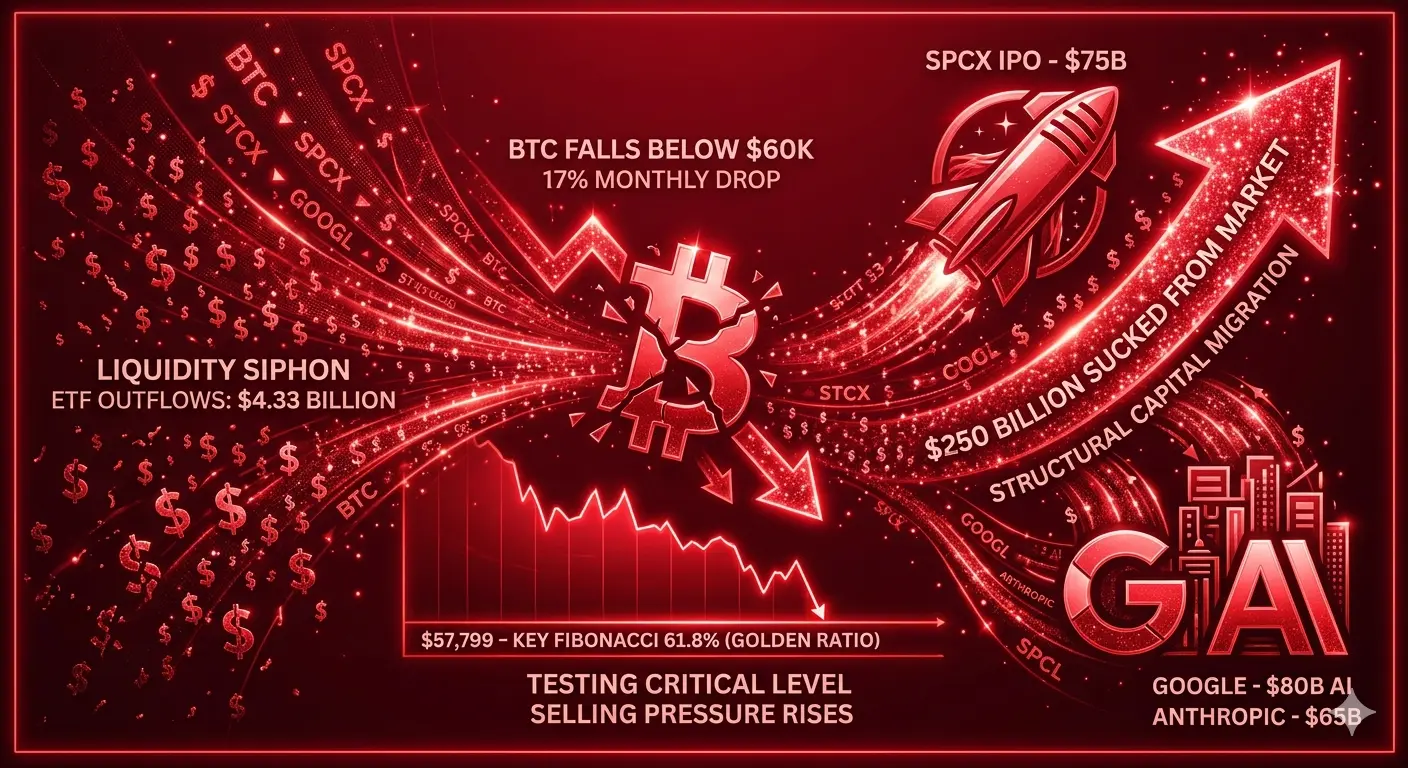
We are on the verge of witnessing the two largest initial public offerings (IPOs) in financial history. As SpaceX and AI pioneer Anthropic prepare to go public, institutional desks are aggressively carving out liquidity from broader risk assets—including crypto—to allocate toward these generational equity sales.3. T
BTC-0.92%
post-image
post-image
  • Reward
  • 5
  • Repost
  • Share
HighAmbition:
Just charge forward 👊
View More
Rate Hike Fear?
Strong U.S. jobs data just changed the conversation.
Markets expected signs of slowing growth.
Instead, the labor market delivered another surprise.
🔹 Jobs Beat Expectations
Recent Nonfarm Payrolls data came in stronger than forecast, showing the U.S. economy continues creating jobs at a healthy pace.
At the same time:
📈 Employment growth accelerated
📈 Wage pressures remained firm
📈 Labor market resilience continued
For the economy, that's a positive signal.
For rate-cut expectations, the picture becomes more complicated.
🔹 Why Markets Reacted
A strong labor market can sup
BTC-0.92%
  • Reward
  • 7
  • Repost
  • Share
Yusfirah:
LFG 🔥
View More
#StrongNonfarmPayrollsRekindleRateHikeFear
The latest U.S. Non-Farm Payrolls (NFP) report has once again reminded markets that the labor market remains far stronger than many economists expected. Job creation exceeded forecasts, unemployment remained relatively stable, and wage growth continued to show resilience. While strong employment data is usually considered positive for the economy, financial markets are interpreting it differently because it may complicate the path toward lower interest rates.
The Federal Reserve's primary objective remains c
BTC-0.92%
post-image
post-image
  • Reward
  • 7
  • Repost
  • Share
discovery:
To The Moon 🌕
View More
#StrongNonfarmPayrollsRekindleRateHikeFear
Strong Nonfarm Payrolls Rekindle Rate Hike Fear
Financial markets entered the new week with renewed caution after the latest U.S. labor market data delivered a significant upside surprise. A stronger-than-expected Nonfarm Payrolls (NFP) report has reshaped expectations for Federal Reserve policy, prompting investors to reassess the possibility of higher interest rates remaining in place for longer—or even the return of additional rate hikes.
According to the latest data, the U.S. economy added 172,000 jobs in May, far exceeding market expectations of
BTC-0.92%
post-image
post-image
  • Reward
  • 12
  • Repost
  • Share
HighAmbition:
Just charge forward 👊
View More
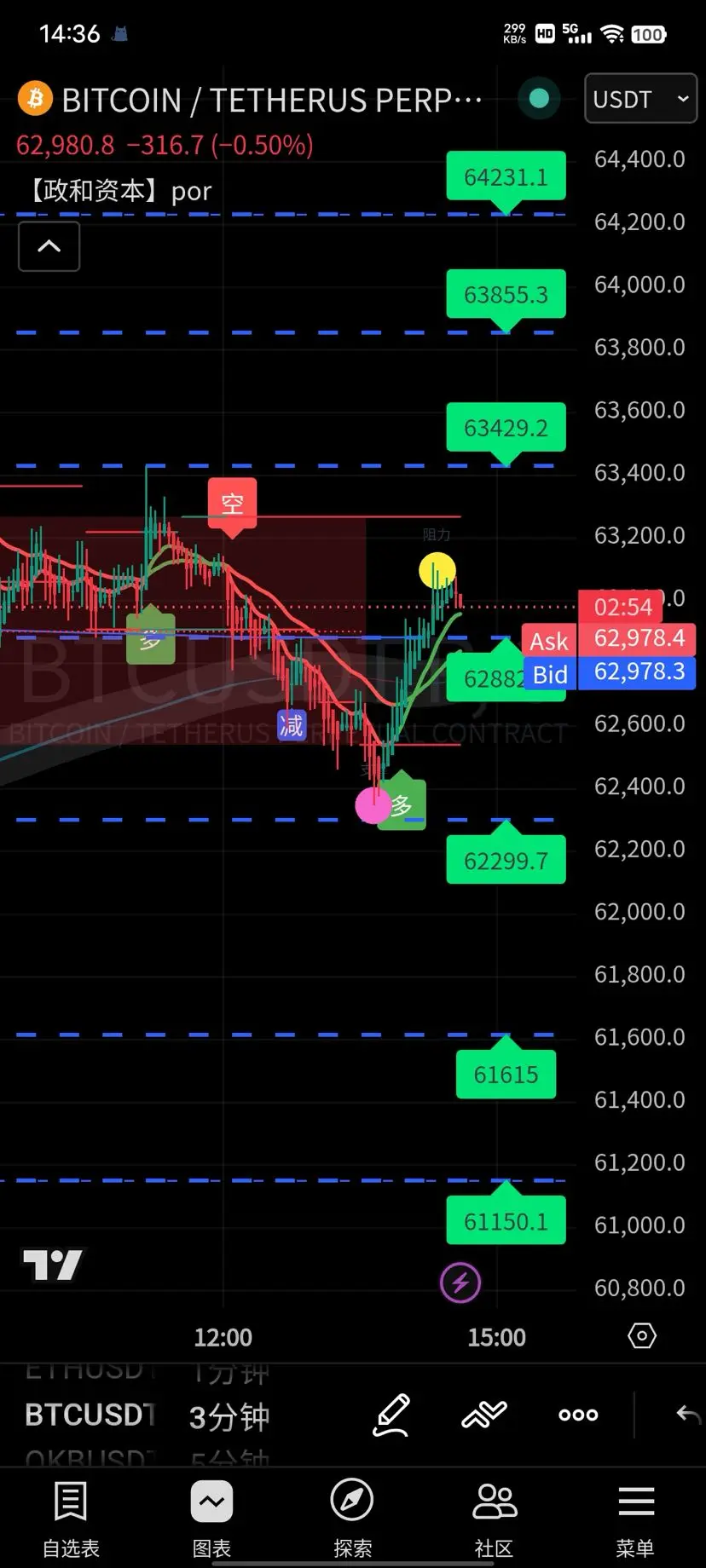
#StrongNonfarmPayrollsRekindleRateHikeFear 📊 Bitcoin (BTC) Technical Analysis & Intraday Strategy
📅 Date: June 8, 2026 | Current Price: ≈ $63,250 USDT
Bitcoin is experiencing an oversold relief rally following a weekend drop. While short-term momentum is turning up, the broader market structure remains firmly bearish. Here is your institutional-grade breakdown and actionable trading blueprint for the day.
1. Macro Trend & Market Sentiment
Major Trend: Bearish. The 22% retracement from May's high of $82,000 officially places BTC in a technical bear market.
Current Structure: The weekend dip t
BTC-0.92%
post-image
post-image
  • Reward
  • 17
  • Repost
  • Share
Yusfirah:
LFG 🔥
View More
Load More