



#AAVE换币风波 50 млн долларов, одна сделка, 36000 долларов на руках — мартовский кошмар Aave не только в этом
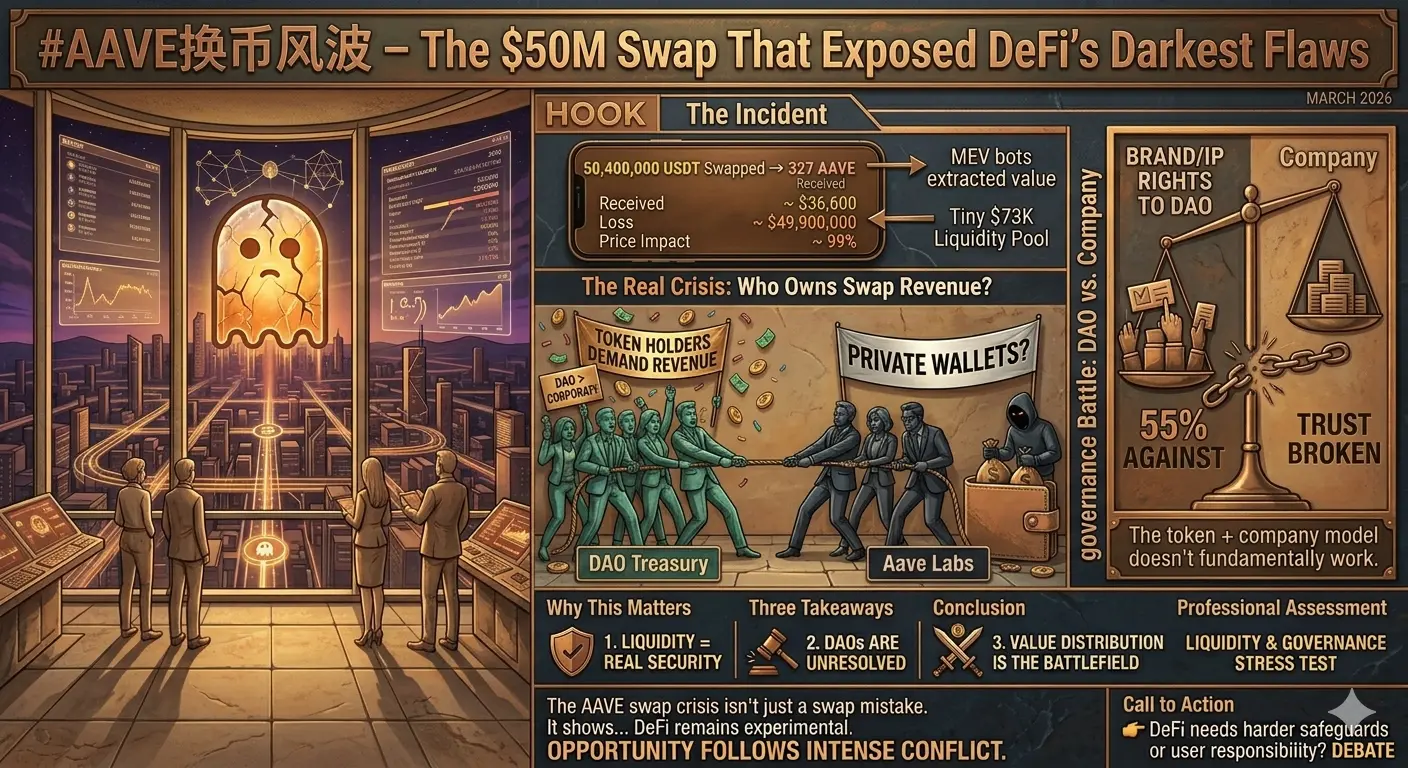
12 марта кто-то обменял 50,4 млн долларов USDT на токены AAVE на интерфейсе Aave. В результате получил: 324 AAVE стоимостью примерно 36000 долларов. Одна сделка испарила 99,93%. Это не атака хакеров, не ошибка контракта, даже не rug pull. Ответ протокола: система работает как предусмотрено. Но это только последняя глава мартовского кошмара Aave.
За последние 12 дней крупнейший протокол заимствования DeFi столкнулся с четырьмя инцидентами подряд. TVL 26,5 млрд долларов, совокупные кредиты только что превысили 1 триллион. А потом начались последовательные сбои.
Что произошло с той сделкой на 50 млн
Сначала разберёмся в цепочке.
Пользователь инициировал операцию на официальном интерфейсе Aave, обменивая aEthUSDT (приносящий доход USDT на Aave) на aEthAAVE. Интерфейс интегрирует CoW Swap для маршрутизации, и в итоге заказ был отправлен на SushiSwap.
Проблема в следующем: одноразовый заказ на 50,4 млн долларов, ликвидность AAVE в цепи просто не могла его поглотить. Представьте, вы приходите с 50 млн наличными на рынок малой монеты с ежедневным объёмом торговли всего в несколько миллионов. Цена взлетает вверх благодаря вам, и каждая приобретённая монета дороже предыдущей. Это и есть проскальзывание.
На интерфейсе Aave появилось предупреждение о проскальзывании, требующее от пользователя подтверждения галочкой. Пользователь согласился.
Затем пришли MEV-боты. Распределение прибыли по данным цепи:
• Пользователь получил: 324 AAVE, примерно 36000 долларов
• Сборы CoW Swap: примерно 619000 долларов
• MEV-бот: примерно 9,9 млн долларов
• Конструктор блока: примерно 34 млн долларов Конструктор блока забрал самую большую часть. Это не баг, это повседневная работа экосистемы MEV Ethereum. Просто обычно никто не демонстрирует это на 50 млн.
Основатель Aave Stani Kulechov сказал в X, что команда свяжется с трейдером и вернёт примерно 600000 долларов сборов, взятых Aave.
600 тысяч при убытке в 50 млн.
12 дней последовательных сбоев Если бы это была просто одна проблемная сделка, это была бы проблема самого пользователя. Но если расширить временную линию, март Aave — это настоящий триллер.
1 марта Aave Labs предложила бюджетную программу "Aave Will Win", запросив у DAO 51 млн USDC и 75000 токенов AAVE. Голосование едва прошло. Основатель ACI Marc Zeller публично обвинил Aave Labs в самоголосовании, чрезмерной концентрации прав голоса и неработающем независимом надзоре.
3 марта ACI объявила о выходе из экосистемы Aave в течение четырёх месяцев. ACI — одна из наиболее активных сил в системе управления Aave, отвечающая за продвижение предложений, координацию сообщества и оценку рисков.
Ещё хуже то, что BGD Labs также объявила о выходе в апреле. BGD Labs разработала Aave V3 — текущую основную версию, поддерживающую TVL в 26,5 млрд долларов. Двое ключевых разработчиков уходят одновременно, причина одна: слишком много власти у Aave Labs в управлении.
Ответ Stani — "DAO не умер, но нуждается в эволюции", призыв упростить управление и повысить эффективность. Звучит разумно. Но критики трактуют это так: "эффективность" — это предлог для возврата власти.
10 марта произойдёт сбой оракула. В системе CAPO Aave была ошибка конфигурации, несоответствие между снимком соотношения и временной меткой, из-за чего wstETH был недооценён на 2,85%. В протоколе заимствования 2,85% достаточно, чтобы привести здоровую позицию к линии ликвидации. Около 34 позиций пользователя были ошибочно ликвидированы на сумму 27 млн долларов. Chaos Labs в тот же день исправила ошибку и вернула 345 ETH. Но это была ошибка собственного инструмента управления рисками Aave, а не третьей стороны.
Затем пришла та сделка на 50 млн 12 марта.
Управление, разработка, оракулы, интерфейс торговли. За 12 дней четыре уровня — всё сломалось.
Что дальше
Stani говорит, что DAO нужна эволюция.
В каком направлении?
Если "эволюция" — это Aave Labs получает больше контроля и меньше балансировки сообществом, то это возврат от децентрализации к централизации. Протокол, управляющий активами на 26,5 млрд долларов, идущий по этому пути, может заплатить цену выше, чем просто низкая эффективность управления.
Если "эволюция" — это создание более профессиональной структуры, например независимый комитет по безопасности, обязывающие соглашения с разработчиками, более прозрачный аудит бюджета, то направление верно. Но это требует времени, а Aave сейчас больше всего нуждается во времени.
V4 всё ещё на этапе аудита. Ключевые команды уходят. Оракул только что сломался. Пользователи только что потеряли 50 млн.
Как протокол Aave не упадёт, технологическая база и рыночная позиция здесь. Но если проблема управления в течение следующих двух-трёх месяцев не найдёт нового баланса, цена токена будет под давлением. Протокол может пережить технические сбои, может пережить ошибки пользователей, но не может пережить то, что ключевые команды больше не доверяют друг другу.
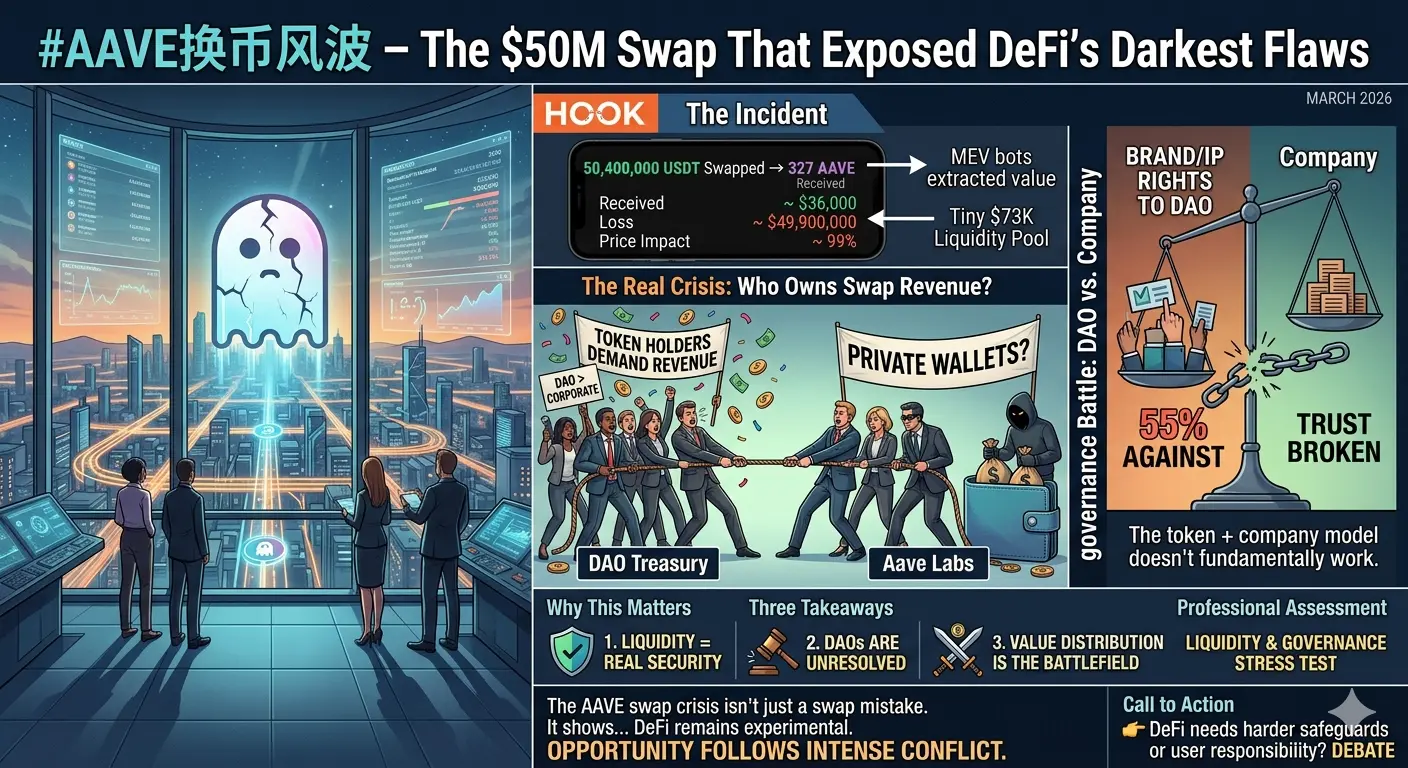
12 марта кто-то обменял 50,4 млн долларов USDT на токены AAVE на интерфейсе Aave. В результате получил: 324 AAVE стоимостью примерно 36000 долларов. Одна сделка испарила 99,93%. Это не атака хакеров, не ошибка контракта, даже не rug pull. Ответ протокола: система работает как предусмотрено. Но это только последняя глава мартовского кошмара Aave.
За последние 12 дней крупнейший протокол заимствования DeFi столкнулся с четырьмя инцидентами подряд. TVL 26,5 млрд долларов, совокупные кредиты только что превысили 1 триллион. А потом начались последовательные сбои.
Что произошло с той сделкой на 50 млн
Сначала разберёмся в цепочке.
Пользователь инициировал операцию на официальном интерфейсе Aave, обменивая aEthUSDT (приносящий доход USDT на Aave) на aEthAAVE. Интерфейс интегрирует CoW Swap для маршрутизации, и в итоге заказ был отправлен на SushiSwap.
Проблема в следующем: одноразовый заказ на 50,4 млн долларов, ликвидность AAVE в цепи просто не могла его поглотить. Представьте, вы приходите с 50 млн наличными на рынок малой монеты с ежедневным объёмом торговли всего в несколько миллионов. Цена взлетает вверх благодаря вам, и каждая приобретённая монета дороже предыдущей. Это и есть проскальзывание.
На интерфейсе Aave появилось предупреждение о проскальзывании, требующее от пользователя подтверждения галочкой. Пользователь согласился.
Затем пришли MEV-боты. Распределение прибыли по данным цепи:
• Пользователь получил: 324 AAVE, примерно 36000 долларов
• Сборы CoW Swap: примерно 619000 долларов
• MEV-бот: примерно 9,9 млн долларов
• Конструктор блока: примерно 34 млн долларов Конструктор блока забрал самую большую часть. Это не баг, это повседневная работа экосистемы MEV Ethereum. Просто обычно никто не демонстрирует это на 50 млн.
Основатель Aave Stani Kulechov сказал в X, что команда свяжется с трейдером и вернёт примерно 600000 долларов сборов, взятых Aave.
600 тысяч при убытке в 50 млн.
12 дней последовательных сбоев Если бы это была просто одна проблемная сделка, это была бы проблема самого пользователя. Но если расширить временную линию, март Aave — это настоящий триллер.
1 марта Aave Labs предложила бюджетную программу "Aave Will Win", запросив у DAO 51 млн USDC и 75000 токенов AAVE. Голосование едва прошло. Основатель ACI Marc Zeller публично обвинил Aave Labs в самоголосовании, чрезмерной концентрации прав голоса и неработающем независимом надзоре.
3 марта ACI объявила о выходе из экосистемы Aave в течение четырёх месяцев. ACI — одна из наиболее активных сил в системе управления Aave, отвечающая за продвижение предложений, координацию сообщества и оценку рисков.
Ещё хуже то, что BGD Labs также объявила о выходе в апреле. BGD Labs разработала Aave V3 — текущую основную версию, поддерживающую TVL в 26,5 млрд долларов. Двое ключевых разработчиков уходят одновременно, причина одна: слишком много власти у Aave Labs в управлении.
Ответ Stani — "DAO не умер, но нуждается в эволюции", призыв упростить управление и повысить эффективность. Звучит разумно. Но критики трактуют это так: "эффективность" — это предлог для возврата власти.
10 марта произойдёт сбой оракула. В системе CAPO Aave была ошибка конфигурации, несоответствие между снимком соотношения и временной меткой, из-за чего wstETH был недооценён на 2,85%. В протоколе заимствования 2,85% достаточно, чтобы привести здоровую позицию к линии ликвидации. Около 34 позиций пользователя были ошибочно ликвидированы на сумму 27 млн долларов. Chaos Labs в тот же день исправила ошибку и вернула 345 ETH. Но это была ошибка собственного инструмента управления рисками Aave, а не третьей стороны.
Затем пришла та сделка на 50 млн 12 марта.
Управление, разработка, оракулы, интерфейс торговли. За 12 дней четыре уровня — всё сломалось.
Что дальше
Stani говорит, что DAO нужна эволюция.
В каком направлении?
Если "эволюция" — это Aave Labs получает больше контроля и меньше балансировки сообществом, то это возврат от децентрализации к централизации. Протокол, управляющий активами на 26,5 млрд долларов, идущий по этому пути, может заплатить цену выше, чем просто низкая эффективность управления.
Если "эволюция" — это создание более профессиональной структуры, например независимый комитет по безопасности, обязывающие соглашения с разработчиками, более прозрачный аудит бюджета, то направление верно. Но это требует времени, а Aave сейчас больше всего нуждается во времени.
V4 всё ещё на этапе аудита. Ключевые команды уходят. Оракул только что сломался. Пользователи только что потеряли 50 млн.
Как протокол Aave не упадёт, технологическая база и рыночная позиция здесь. Но если проблема управления в течение следующих двух-трёх месяцев не найдёт нового баланса, цена токена будет под давлением. Протокол может пережить технические сбои, может пережить ошибки пользователей, но не может пережить то, что ключевые команды больше не доверяют друг другу.