#USIranDraftDeal
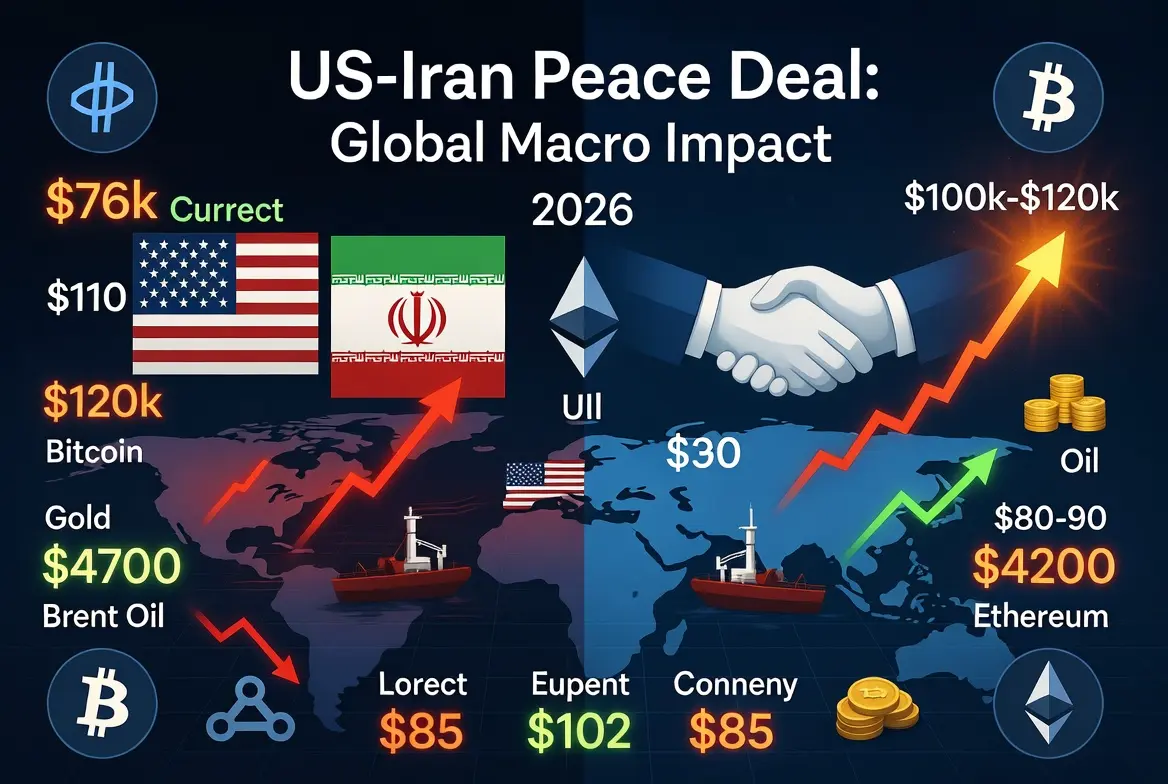
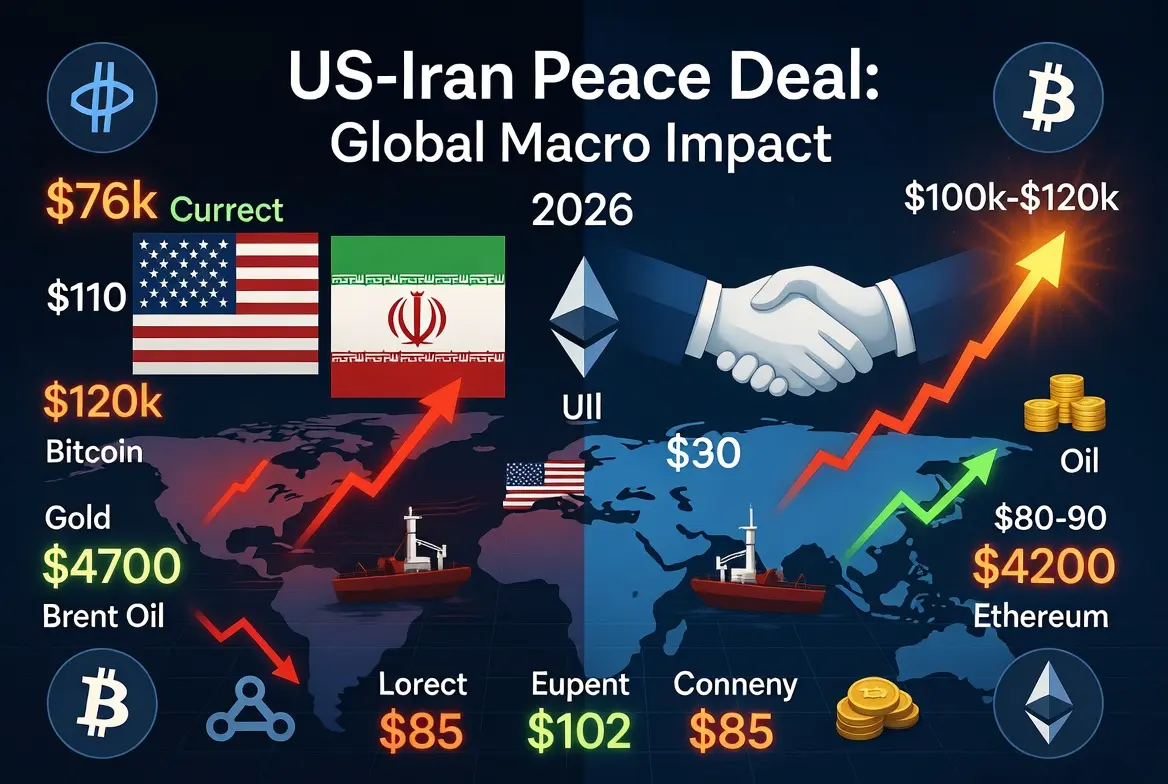
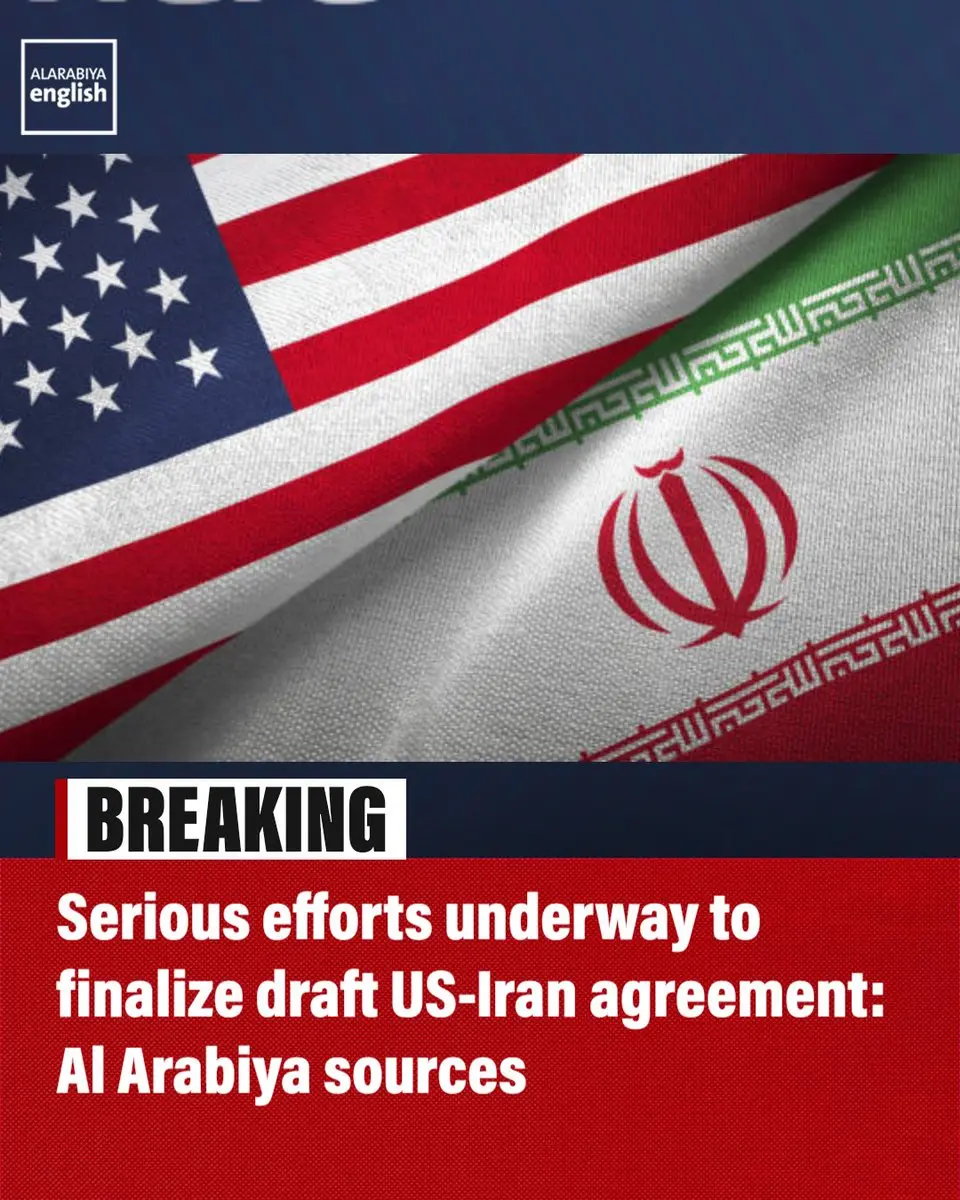
The United States and Iran are currently negotiating a landmark draft peace agreement that could fundamentally reshape global financial markets. This agreement, mediated by Pakistan with involvement from Oman and other regional stakeholders, represents one of the most significant geopolitical developments of 2026.
The draft deal emerged after months of intense negotiations following a prolonged period of military escalation that began in early 2026. That conflict disrupted global supply chains, increased energy volatility, and triggered large-scale institutional risk reallocation across commodities and digital assets.
This transition from conflict to potential stabilization is now acting as a global macro inflection point, shifting markets from geopolitically driven pricing models back toward liquidity-driven and interest-rate-driven structures.
Expanded Geopolitical Context
The strategic importance of this agreement is centered on three pillars:
Strait of Hormuz reopening
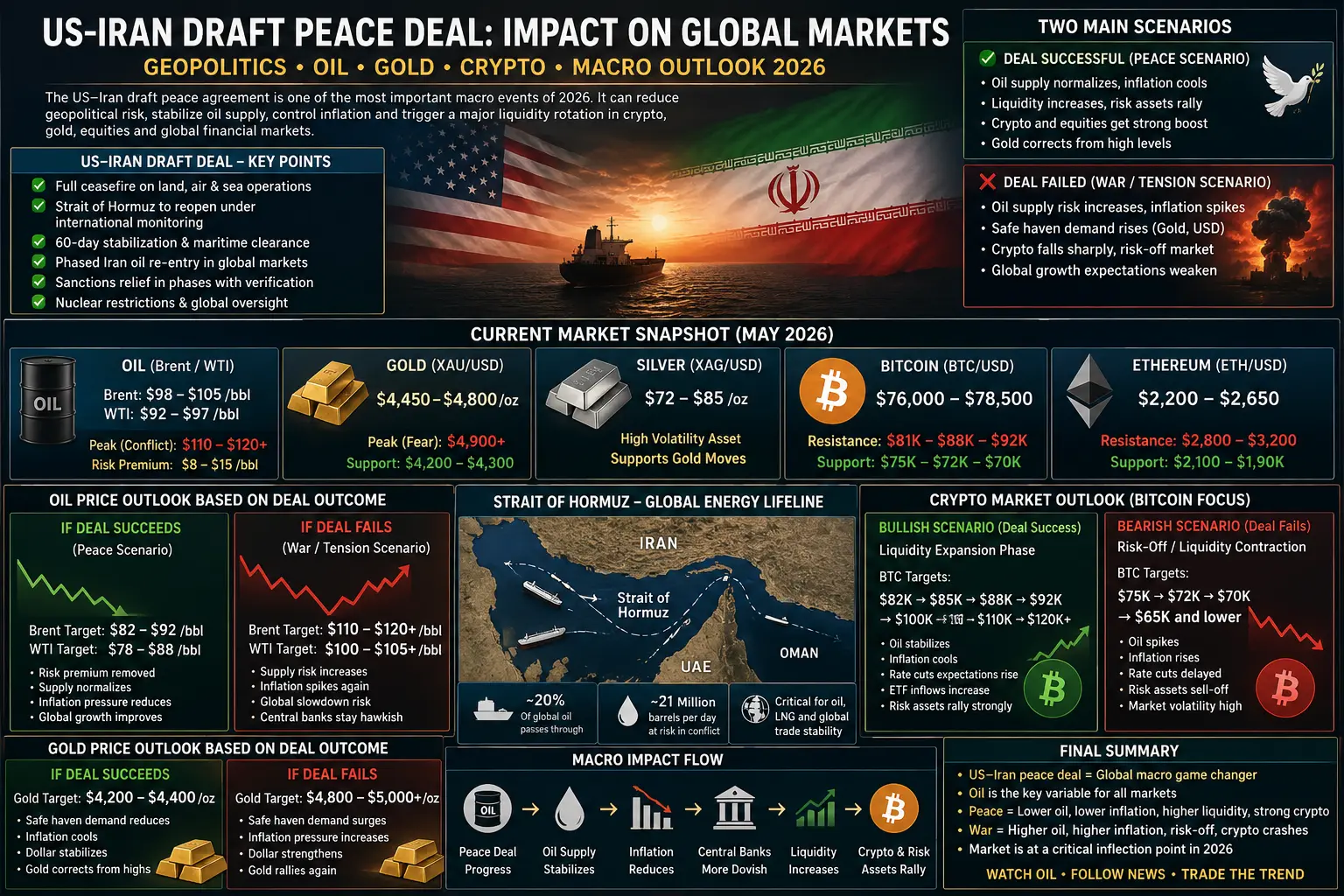
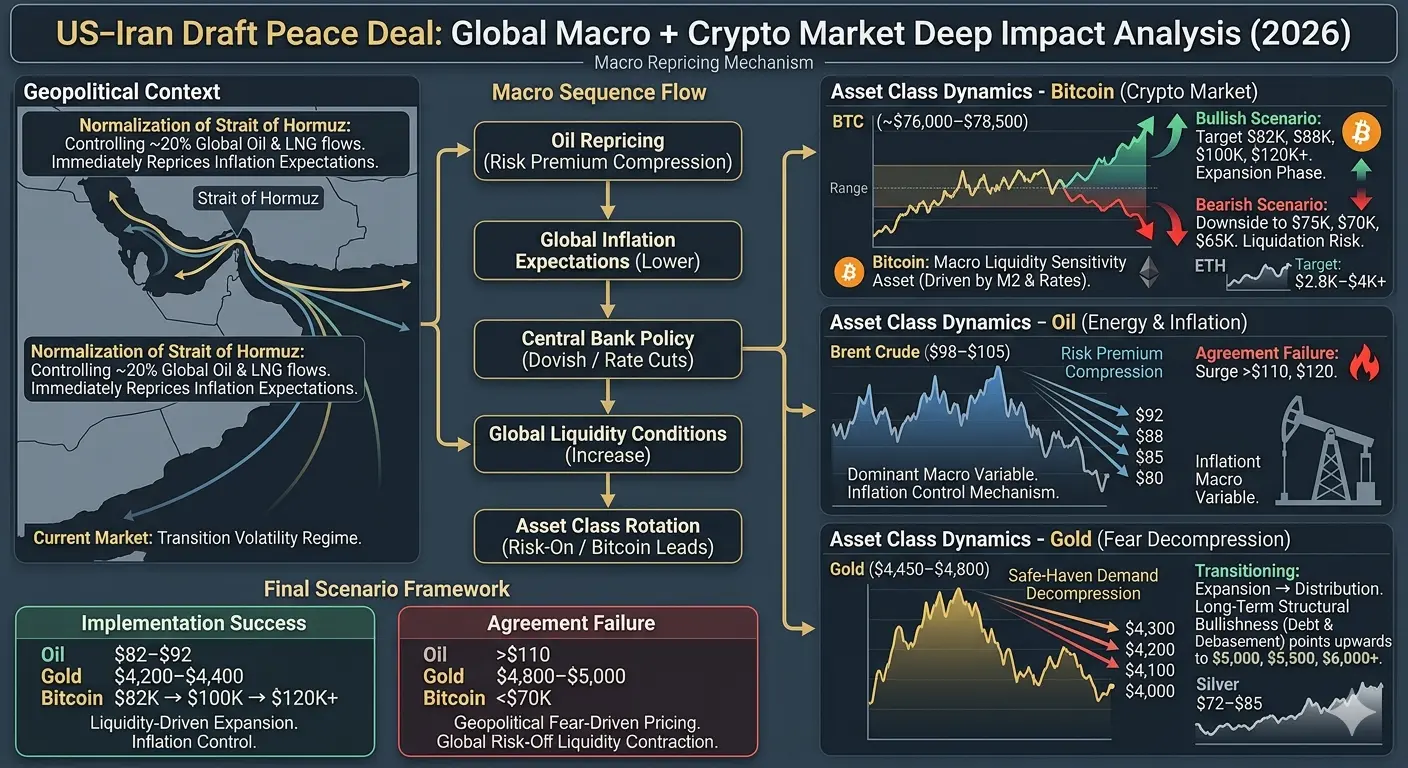
Controls nearly 20% of global oil flow and remains the most critical energy chokepoint in the world. Any disruption here immediately impacts global inflation expectations, shipping insurance premiums, and energy security strategies of major economies including the US, EU, and China.
A reopening would:
Normalize global oil shipping routes
Reduce freight and insurance costs significantly
Restore predictable supply chains for Asia and Europe
Remove a major tail-risk from energy markets
Sanctions restructuring on Iran
Iran’s gradual reintegration into global oil markets would represent a structural supply-side shift.
Increased Iranian crude exports
Gradual compliance-based sanctions easing
Redistribution of OPEC+ influence
Potential competitive pressure on other oil producers
This could reshape medium-term global energy pricing dynamics.
Nuclear program constraints
The nuclear component remains the most sensitive geopolitical pillar.
Long-term verification mechanism
Restrictions on enrichment levels
International monitoring expansion
Reduction in escalation probability between major powers
This reduces the probability of future military escalation cycles, which historically act as volatility triggers across all asset classes.
Overall, this creates a transition from an “energy shock regime” to a controlled geopolitical equilibrium phase.”
Impact on Cryptocurrency Markets
Bitcoin Market Structure
Bitcoin continues to function as the global macro risk indicator for liquidity, sentiment, and institutional positioning.
Peak cycle highs: $110,000+
Conflict-driven low: ~$75,000
Current consolidation: $78,000 – $80,000
Bitcoin’s behavior in this cycle shows a hybrid identity:
Part risk-on asset (like tech equities)
Part geopolitical hedge asset (like gold during crisis periods)
Key Drivers of Crypto Reaction
Bullish structural drivers:
Reduction in geopolitical uncertainty improves institutional risk appetite
Lower oil prices reduce global inflation pressure
Increased probability of central bank rate cuts
Continued ETF inflows and custody adoption
Strengthening institutional infrastructure (pensions, funds, sovereign exposure)
Bearish structural drivers:
Reduced sanctions-related demand for Bitcoin as alternative settlement rail
Short-term capital rotation into equities after risk normalization
Profit-taking after conflict-driven volatility expansion
Liquidity redistribution across traditional markets
Ethereum & Altcoins
Ethereum remains strongly correlated to Bitcoin but shows higher sensitivity to liquidity cycles.
Ethereum range: $2,300 – $2,600
Layer-1 ecosystems remain dependent on liquidity expansion
DeFi activity stabilizes but does not yet expand aggressively
Stablecoins continue growing as global settlement infrastructure
Stablecoins are increasingly functioning as:
Cross-border liquidity tools
Inflation hedges in emerging markets
On-chain dollar exposure instruments
Updated Crypto Scenario Matrix
Bull case: $120K – $150K
Driven by liquidity expansion, ETF inflows, and macro easing cycle
Base case: $90K – $110K
Consolidation phase with moderate institutional accumulation
Bear case: $70K – $75K
Risk-off scenario if geopolitical deal collapses or Fed tightens unexpectedly
Gold Market Deep Analysis
Gold is transitioning from a pure crisis hedge into a structural monetary asset supported by long-term macro forces.
Price Structure
Peak: $4,850/oz
Current range: $4,650 – $4,800/oz
Futures: ~$4,713/oz
Gold remains historically elevated due to:
Persistent central bank accumulation
Global debt expansion
De-dollarization trends
Long-term inflation anchoring
Key Structural Forces
Downward pressures:
Declining geopolitical risk premium
Stronger US dollar in normalization phase
Reduced emergency hedge demand from institutions
Capital rotation into risk assets
Upward structural support:
Central banks increasing reserve diversification
Emerging market demand growth (Asia, Middle East)
Persistent fiscal deficits in major economies
Long-term distrust in fiat currency stability
Institutional Forecast Band
JPMorgan: $5,243/oz revised average
ANZ: $5,600/oz long-term target
Barclays: $5,000 – $5,400/oz range
Gold is therefore not expected to collapse even in peace scenarios, but rather to reprice into a higher structural equilibrium zone.
Oil Market Structural Reset
Oil remains the most geopolitically sensitive commodity and acts as the immediate transmission channel for global inflation shocks.
Current Market Structure
Brent peak: $105 – $110/bbl
Post-deal adjustment: ~$98 – $102/bbl
Current equilibrium: ~$98.80/bbl
Key Mechanism Shift
The peace agreement trig
gers:
Removal of war-risk premium (~$5–$10 per barrel)
Stabilization of shipping through Strait of Hormuz
Reduction in insurance and freight volatility
Expectations of increased Iranian supply output
This results in a rapid repricing of short-term crude futures.
Energy Market Transition Phase
Even after peace is confirmed, oil markets adjust slowly due to:
Global tanker routing delays (30–90 days)
Strategic inventory rebalancing
Refinery throughput adjustment cycles
OPEC+ policy reassessment lag
Thus, oil stability is delayed even after geopolitical resolution.
Oil Scenarios
Bull case: $110 – $115
(OPEC cuts + global demand surge + supply lag)
Base case: $95 – $105
(gradual normalization and supply recovery)
Bear case: $85 – $90
(oversupply risk if Iranian exports ramp quickly)
Macro Liquidity & Fed Policy Impact
The US–Iran agreement has indirect but powerful monetary implications.
Transmission Chain:
Oil price decline → lower inflation (CPI)
Lower inflation → higher probability of Fed easing
Rate cuts → liquidity expansion
Liquidity expansion → risk asset rally
This creates a second-order macro effect that often outweighs the geopolitical headline itself.
Historically, such transitions mark the beginning of:
Multi-month equity expansions
Crypto bull cycles
Weak-dollar phases
60-Day Market Timeline Projection
Phase 1 (0–15 days)
High volatility across crypto and oil
Liquidity shock reactions
Forced liquidation events in leveraged markets
News-driven price instability
Phase 2 (15–40 days)
Stabilization of macro expectations
Gradual trend formation in Bitcoin
Gold consolidation at elevated levels
Oil repricing continues with lower volatility
Phase 3 (40–60 days)
Institutional positioning becomes dominant
Macro data (inflation, Fed signals) drives direction
Market structure shifts from reaction → trend trading
Investor Positioning Strategy
Accumulation Phase
Bitcoin: DCA accumulation $75K – $82K zone
Gold: strategic accumulation near $4,600 dips
Oil: avoid directional leverage due to geopolitical sensitivity
Breakout Strategy
Bitcoin above $85K → momentum acceleration phase
Oil above $105 → renewed geopolitical pricing risk
Gold below $4,600 → liquidity rotation confirmation
Avoid high leverage during geopolitical transitions
Use staggered accumulation instead of lump-sum entries
Track Fed policy expectations and inflation data closely
Monitor Strait of Hormuz operational normalization
Conclusion
The US–Iran draft peace deal represents a global macro regime shift, not just a geopolitical event.
It marks the transition from:
Conflict-driven pricing → liquidity-driven pricing
Risk shock → macro stabilization
Energy volatility → structured supply equilibrium
Final Market Snapshot
Bitcoin: $78K–$80K consolidation with long-term upside toward $150K+
Gold: structurally elevated near $4,700/oz with long-term upside stability
Oil: stabilizing near $98–$100 after geopolitical spike above $110
The next 60 days will determine whether global markets enter:
A sustained expansion cycle
or
A renewed volatility regime driven by policy or geopolitical failure@Gate_Square @Gate广场_Official #DailyPolymarketHotspot #GateSquarePizzaDay
The United States and Iran are currently negotiating a landmark draft peace agreement that could fundamentally reshape global financial markets. This agreement, mediated by Pakistan with involvement from Oman and other regional stakeholders, represents one of the most significant geopolitical developments of 2026.
The draft deal emerged after months of intense negotiations following a prolonged period of military escalation that began in early 2026. That conflict disrupted global supply chains, increased energy volatility, and triggered large-scale institutional risk reallocation across commodities and digital assets.
This transition from conflict to potential stabilization is now acting as a global macro inflection point, shifting markets from geopolitically driven pricing models back toward liquidity-driven and interest-rate-driven structures.
Expanded Geopolitical Context
The strategic importance of this agreement is centered on three pillars:
Strait of Hormuz reopening
Controls nearly 20% of global oil flow and remains the most critical energy chokepoint in the world. Any disruption here immediately impacts global inflation expectations, shipping insurance premiums, and energy security strategies of major economies including the US, EU, and China.
A reopening would:
Normalize global oil shipping routes
Reduce freight and insurance costs significantly
Restore predictable supply chains for Asia and Europe
Remove a major tail-risk from energy markets
Sanctions restructuring on Iran
Iran’s gradual reintegration into global oil markets would represent a structural supply-side shift.
Increased Iranian crude exports
Gradual compliance-based sanctions easing
Redistribution of OPEC+ influence
Potential competitive pressure on other oil producers
This could reshape medium-term global energy pricing dynamics.
Nuclear program constraints
The nuclear component remains the most sensitive geopolitical pillar.
Long-term verification mechanism
Restrictions on enrichment levels
International monitoring expansion
Reduction in escalation probability between major powers
This reduces the probability of future military escalation cycles, which historically act as volatility triggers across all asset classes.
Overall, this creates a transition from an “energy shock regime” to a controlled geopolitical equilibrium phase.”
Impact on Cryptocurrency Markets
Bitcoin Market Structure
Bitcoin continues to function as the global macro risk indicator for liquidity, sentiment, and institutional positioning.
Peak cycle highs: $110,000+
Conflict-driven low: ~$75,000
Current consolidation: $78,000 – $80,000
Bitcoin’s behavior in this cycle shows a hybrid identity:
Part risk-on asset (like tech equities)
Part geopolitical hedge asset (like gold during crisis periods)
Key Drivers of Crypto Reaction
Bullish structural drivers:
Reduction in geopolitical uncertainty improves institutional risk appetite
Lower oil prices reduce global inflation pressure
Increased probability of central bank rate cuts
Continued ETF inflows and custody adoption
Strengthening institutional infrastructure (pensions, funds, sovereign exposure)
Bearish structural drivers:
Reduced sanctions-related demand for Bitcoin as alternative settlement rail
Short-term capital rotation into equities after risk normalization
Profit-taking after conflict-driven volatility expansion
Liquidity redistribution across traditional markets
Ethereum & Altcoins
Ethereum remains strongly correlated to Bitcoin but shows higher sensitivity to liquidity cycles.
Ethereum range: $2,300 – $2,600
Layer-1 ecosystems remain dependent on liquidity expansion
DeFi activity stabilizes but does not yet expand aggressively
Stablecoins continue growing as global settlement infrastructure
Stablecoins are increasingly functioning as:
Cross-border liquidity tools
Inflation hedges in emerging markets
On-chain dollar exposure instruments
Updated Crypto Scenario Matrix
Bull case: $120K – $150K
Driven by liquidity expansion, ETF inflows, and macro easing cycle
Base case: $90K – $110K
Consolidation phase with moderate institutional accumulation
Bear case: $70K – $75K
Risk-off scenario if geopolitical deal collapses or Fed tightens unexpectedly
Gold Market Deep Analysis
Gold is transitioning from a pure crisis hedge into a structural monetary asset supported by long-term macro forces.
Price Structure
Peak: $4,850/oz
Current range: $4,650 – $4,800/oz
Futures: ~$4,713/oz
Gold remains historically elevated due to:
Persistent central bank accumulation
Global debt expansion
De-dollarization trends
Long-term inflation anchoring
Key Structural Forces
Downward pressures:
Declining geopolitical risk premium
Stronger US dollar in normalization phase
Reduced emergency hedge demand from institutions
Capital rotation into risk assets
Upward structural support:
Central banks increasing reserve diversification
Emerging market demand growth (Asia, Middle East)
Persistent fiscal deficits in major economies
Long-term distrust in fiat currency stability
Institutional Forecast Band
JPMorgan: $5,243/oz revised average
ANZ: $5,600/oz long-term target
Barclays: $5,000 – $5,400/oz range
Gold is therefore not expected to collapse even in peace scenarios, but rather to reprice into a higher structural equilibrium zone.
Oil Market Structural Reset
Oil remains the most geopolitically sensitive commodity and acts as the immediate transmission channel for global inflation shocks.
Current Market Structure
Brent peak: $105 – $110/bbl
Post-deal adjustment: ~$98 – $102/bbl
Current equilibrium: ~$98.80/bbl
Key Mechanism Shift
The peace agreement trig
gers:
Removal of war-risk premium (~$5–$10 per barrel)
Stabilization of shipping through Strait of Hormuz
Reduction in insurance and freight volatility
Expectations of increased Iranian supply output
This results in a rapid repricing of short-term crude futures.
Energy Market Transition Phase
Even after peace is confirmed, oil markets adjust slowly due to:
Global tanker routing delays (30–90 days)
Strategic inventory rebalancing
Refinery throughput adjustment cycles
OPEC+ policy reassessment lag
Thus, oil stability is delayed even after geopolitical resolution.
Oil Scenarios
Bull case: $110 – $115
(OPEC cuts + global demand surge + supply lag)
Base case: $95 – $105
(gradual normalization and supply recovery)
Bear case: $85 – $90
(oversupply risk if Iranian exports ramp quickly)
Macro Liquidity & Fed Policy Impact
The US–Iran agreement has indirect but powerful monetary implications.
Transmission Chain:
Oil price decline → lower inflation (CPI)
Lower inflation → higher probability of Fed easing
Rate cuts → liquidity expansion
Liquidity expansion → risk asset rally
This creates a second-order macro effect that often outweighs the geopolitical headline itself.
Historically, such transitions mark the beginning of:
Multi-month equity expansions
Crypto bull cycles
Weak-dollar phases
60-Day Market Timeline Projection
Phase 1 (0–15 days)
High volatility across crypto and oil
Liquidity shock reactions
Forced liquidation events in leveraged markets
News-driven price instability
Phase 2 (15–40 days)
Stabilization of macro expectations
Gradual trend formation in Bitcoin
Gold consolidation at elevated levels
Oil repricing continues with lower volatility
Phase 3 (40–60 days)
Institutional positioning becomes dominant
Macro data (inflation, Fed signals) drives direction
Market structure shifts from reaction → trend trading
Investor Positioning Strategy
Accumulation Phase
Bitcoin: DCA accumulation $75K – $82K zone
Gold: strategic accumulation near $4,600 dips
Oil: avoid directional leverage due to geopolitical sensitivity
Breakout Strategy
Bitcoin above $85K → momentum acceleration phase
Oil above $105 → renewed geopolitical pricing risk
Gold below $4,600 → liquidity rotation confirmation
Avoid high leverage during geopolitical transitions
Use staggered accumulation instead of lump-sum entries
Track Fed policy expectations and inflation data closely
Monitor Strait of Hormuz operational normalization
Conclusion
The US–Iran draft peace deal represents a global macro regime shift, not just a geopolitical event.
It marks the transition from:
Conflict-driven pricing → liquidity-driven pricing
Risk shock → macro stabilization
Energy volatility → structured supply equilibrium
Final Market Snapshot
Bitcoin: $78K–$80K consolidation with long-term upside toward $150K+
Gold: structurally elevated near $4,700/oz with long-term upside stability
Oil: stabilizing near $98–$100 after geopolitical spike above $110
The next 60 days will determine whether global markets enter:
A sustained expansion cycle
or
A renewed volatility regime driven by policy or geopolitical failure@Gate_Square @Gate广场_Official #DailyPolymarketHotspot #GateSquarePizzaDay