ApeWithHomework

vip
Age 0.1 Year
Peak Tier 0
I ape, but only after reading docs and watching wallets. Not a maxi—just trying to survive the semester of markets.
Recently, doing tasks on the platform really feels a bit like clocking in at work: signing in today, doing reviews tomorrow, and the day after tomorrow, still needing to screenshot proof that I'm not a witch... As soon as the scoring system kicked in, I started to "live by KPIs." Honestly, earning crypto now not only depends on quick hands but also on who can pretend to be a "normal user" better, which is pretty exhausting.
What's more awkward is that, after looking at wallets on the blockchain for a while, people become suspicious and paranoid: this interaction seems robot-like, that address
View Original
  • Reward
  • Comment
  • Repost
  • Share
Lately I’ve been stuck between using grid trading / DCA or just going all-in. Basically, it’s choosing “the way that lets you sleep at night.” I’m the impulsive type—when I see a big bullish candle, my hands start itching—but after going all-in for real, I end up tossing and turning all night, staring at the candlestick chart. The next day, in class (or at work), I feel like I’ve lost my soul… On the other hand, even though grid trading / DCA is slower, it keeps my mindset a lot steadier. If I lose money, it still feels like paying tuition—at least I can sleep.
Now this whole narrative about m
View Original
  • Reward
  • Comment
  • Repost
  • Share
Smart money looks at expectations, retail investors chase headlines, and the gap is right here
View Original
TradingHeights
𝐖𝐇𝐘 𝐆𝐋𝐎𝐁𝐀𝐋 𝐋𝐈𝐐𝐔𝐈𝐃𝐈𝐓𝐘 𝐌𝐀𝐓𝐓𝐄𝐑𝐒 𝐅𝐎𝐑 𝐂𝐑𝐘𝐏𝐓𝐎 🌐
🔶 Crypto does not move in isolation anymore.
🔶 Global liquidity conditions increasingly influence digital asset performance.
🔶 When central banks inject liquidity: Risk assets usually benefit.
🔶 When financial conditions tighten: Volatility and downside pressure increase.
🔶 This is why macroeconomics matters more than ever for crypto traders.
🔶 Markets now react heavily to: ▪️ inflation data
▪️ Federal Reserve policy
▪️ bond yields
▪️ money supply trends
▪️ recession expectations
🔶 Another major reality: Bitcoin is slowly behaving more like a macro-sensitive asset.
🔶 Institutional participation accelerates this transition.
🔶 Large funds analyze Bitcoin alongside: ▪️ gold
▪️ equities
▪️ bonds
▪️ currency markets
🔶 Liquidity drives speculation.
🔶 During easy monetary conditions: Capital flows aggressively into high-risk sectors.
🔶 During tightening cycles: Investors become defensive and reduce exposure.
🔶 Understanding liquidity cycles helps traders avoid emotional decision-making.
🔶 Another important point: Markets often rally before rate cuts actually happen.
🔶 Expectations themselves can move markets powerfully.
🔶 Smart money focuses on future liquidity conditions rather than only current headlines.
🔶 Many retail traders react emotionally after the move already begins.
🔶 Macro awareness provides a major strategic advantage.
🔶 Crypto volatility will remain high… But understanding liquidity cycles helps create stronger positioning.
#GateSquareMayTradingShare
  • Reward
  • Comment
  • Repost
  • Share
Before macro stability is achieved, risk on is all bluffs; withdraw at any moment.
View Original
TradingHeights
𝐑𝐈𝐒𝐊 𝐀𝐏𝐏𝐄𝐓𝐈𝐓𝐄 𝐈𝐒 𝐑𝐄𝐓𝐔𝐑𝐍𝐈𝐍𝐆 𝐓𝐎 𝐂𝐑𝐘𝐏𝐓𝐎 📈
The crypto market is beginning to show early signs that investor risk appetite is returning again.
After weeks of fear, liquidations, and uncertainty, capital is slowly rotating back into higher-risk assets as macro sentiment stabilizes.
This shift is becoming visible across multiple areas: 🔶 Bitcoin reclaiming key support zones
🔶 Crypto stocks rallying sharply
🔶 Open Interest increasing again
🔶 Altcoins attempting recovery moves
The biggest driver behind this improvement is psychology.
Markets are highly emotional.
When traders fear recession, geopolitical escalation, or tighter financial conditions, capital usually moves toward: ▫️ cash
▫️ bonds
▫️ defensive assets
▫️ lower volatility markets
But when conditions begin stabilizing, even slightly, investors start rotating back into growth and speculative sectors.
Crypto is usually one of the first sectors to react aggressively during these shifts.
Right now, improving sentiment appears linked to: ⚠️ stronger ETF demand ⚠️ easing geopolitical concerns ⚠️ expectations of future rate cuts ⚠️ institutional participation returning
However, traders should not confuse short-term optimism with guaranteed continuation.
Risk appetite can disappear very quickly if: ▫️ inflation rises again ▫️ geopolitical tensions escalate ▫️ liquidity conditions tighten ▫️ macro data weakens unexpectedly
That is why volatility remains elevated despite bullish momentum.
Another important factor is leverage.
Funding rates are turning positive again, meaning traders are increasingly positioning for upside continuation.
Historically, markets often punish overcrowded bullish positioning before major expansions continue.
Still, structurally, the market no longer looks as defensive as it did during recent panic phases.
The tone is shifting.
And sentiment shifts often happen before full trend confirmation appears.
𝐓𝐑𝐀𝐃𝐈𝐍𝐆 𝐇𝐄𝐈𝐆𝐇𝐓𝐒 𝐕𝐄𝐑𝐃𝐈𝐂𝐓 ⚡
Crypto markets are showing early signs of renewed risk appetite, but sustainability depends on whether macro conditions continue improving over the coming weeks.
#GateSquareMayTradingShare
  • Reward
  • Comment
  • Repost
  • Share
I’ve been working on the documentation for IBC / cross-chain lately, and the more I read, the more I feel that “one-time cross-chain” is absolutely not as simple as just pressing a button… Honestly, what you end up trusting is a lot: the source chain shouldn’t roll back by itself, the light client / validator set should not act up, relayers—these messengers—shouldn’t tamper with things, and the inter-chain message channel / timeout logic shouldn’t be written sloppily; if it’s a bridge, then you also have to add the people-and-code combo of multi-signatures / oracles / escrow contracts.
Before
View Original
  • Reward
  • Comment
  • Repost
  • Share
My biggest problem now isn't the market, but having too many wallets... Mainnet, L2, various testnets, assets fragmented to the point that I can't even remember which chain still has a little leftover. In the past, I would impulsively create a new address whenever I got excited, but now looking at a bunch of 0.xx balances makes my mood explode.
Recently, everyone has been interpreting ETF capital flows, US stock risk appetite, and crypto market fluctuations together, and I also get tempted to join in. But before taking action, I need to understand my "bottom line" clearly; otherwise, even if t
View Original
  • Reward
  • Comment
  • Repost
  • Share
The traditional energy alliance is loosening, and the energy narrative of the Web3 era should also be rewritten.
View Original
CryptoFrontier
UAE Exits OPEC, Signals Shift in Petrodollar System
The United Arab Emirates formally withdrew from the Organization of the Petroleum Exporting Countries (OPEC) and the OPEC+ mechanism on May 1 (local time), according to reports. The move is viewed as a landmark event in which Middle Eastern oil-producing nations are reassessing security, market
  • Reward
  • Comment
  • Repost
  • Share
Recently reviewing my wallet records, I found that I had once granted unlimited approval to a certain DEX… Back then, I just wanted to save some hassle, signed it and went to sleep, but it turns out this is even more damaging than staying up all night. Put simply, revoking authorizations is just as important as sleeping: if you don’t turn off the lights or lock the door, you won’t feel at ease when you wake up the next day.
Especially now, with all these AI Agents and automated trading scripts shouting “free your hands” every day—the hype is flying high, but security is… extremely strict. I al
View Original
  • Reward
  • Comment
  • Repost
  • Share
Lately, I've been feeling a bit anxious about taxes and reporting... In the past, I would impulsively place an order and enjoy it, then at the end of the year, reconciling accounts would drive me crazy. Now I force myself to keep a record every time I switch positions / cross chains / farm airdrops: first export a copy of the exchange bill, then use a browser on the blockchain to note down the key transaction hash and amount into a spreadsheet. Don’t ask, just “save a screenshot” first—jokes aside, it can really save your life. Especially these days, with extreme funding rates, whether to reve
View Original
  • Reward
  • Comment
  • Repost
  • Share
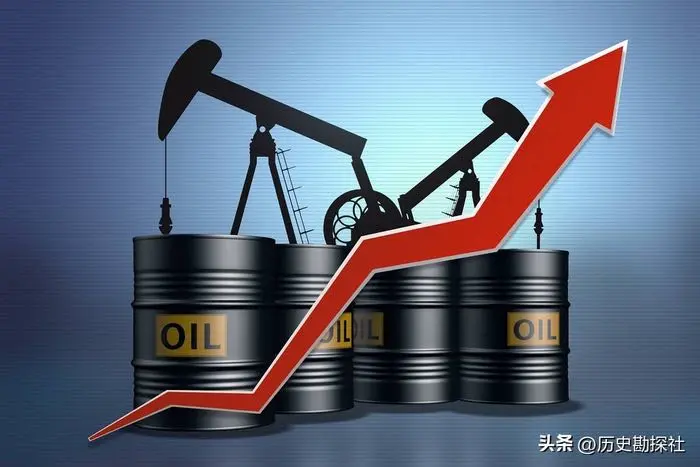
When the Strait of Hormuz is tense, the world pays the bill, but on-chain funds are fleeing.
View Original
Furan86999
U.S.-Iran Conflict Escalation Shakes Markets: Oil Prices Break $100, Crypto Assets Under Pressure
The U.S.-Iran blockade continues into its 10th week, and global markets are experiencing intense volatility. Brent crude oil has surged past $126 per barrel, reaching a new high since 2022. Supply fears triggered by disruptions in the Strait of Hormuz continue to ferment, compounded by the UAE's announcement to exit OPEC, fundamentally reshaping the global energy market pricing logic.
Meanwhile, Trump authorized the national security team to initiate an assessment of the feasibility of military strikes, with geopolitical risks shifting from economic confrontation to the anticipation of military conflict, rapidly spreading risk-averse sentiment. In stark contrast to the soaring oil prices, Bitcoin has retraced to $75,622, and the cryptocurrency market is plunged into intense fluctuations.
Iran's use of encrypted channels to evade sanctions has also prompted secondary sanctions from the U.S. Treasury Department, further increasing regulatory uncertainty around crypto assets. The core contradiction in the current market lies in the information vacuum before the public release of military assessment conclusions, where any minor movement could trigger extreme asset price volatility.
Investors should be alert to the chain reactions caused by escalating geopolitical tensions: if the conflict expands, oil prices may continue to surge, further suppressing risk assets with inflationary pressures; if tensions ease, the short-term spike in oil prices may see a correction, and the crypto market could also experience a sentiment recovery window. #油价突破110美元 #WCTC交易王PK $BTC $ETH @Gate广场_Official
repost-content-media
  • Reward
  • Comment
  • Repost
  • Share
Last night, I saw a bunch of people rushing into memes again, plus a celebrity's one-liner that sets the tone, and it feels like attention and the trend indicator are shifting so quickly... The old player’s line "Don’t take the last baton" is increasingly convincing to me now.
My understanding of DA/ordering/finality is to focus on one main line: whether this transaction is "visible to everyone + can be reviewed," and whether it will be reversed in the end. Data availability is like whether the homework has been submitted to the academic system; ordering is like which teacher grades first or l
View Original
  • Reward
  • Comment
  • Repost
  • Share
Lately I've been debating again: should I stick to the mainnet or just move everything to L2 to save trouble. The mainnet definitely feels more secure, especially for long-term holdings—I’d rather spend a bit more gas as a learning fee; but for frequent trades and rebalancing, the moment I confirm with a pop-up, I start to feel the pain… L2 offers a much smoother experience, just a few clicks and it's done, but the cost is that cross-chain step always makes me a little uneasy. Anyway, I plan to do a small test first to make sure there are no pitfalls before committing more.
By the way, I check
View Original
  • Reward
  • Comment
  • Repost
  • Share
Recently, I've been reviewing stablecoin reserve reports again. To be honest, I'm not afraid of small fluctuations during normal times; I'm worried that everyone will panic and rush to redeem at the same time. Bank runs are really a psychological game. Watching a bunch of wallets move simultaneously on the blockchain makes my palms sweat. Transparency is obviously important, but sometimes even if you understand the report, it’s useless because the market votes with its feet first.
By the way, I see a lot of narratives about AI agents automatically placing orders and interacting automatically.
View Original
  • Reward
  • Comment
  • Repost
  • Share
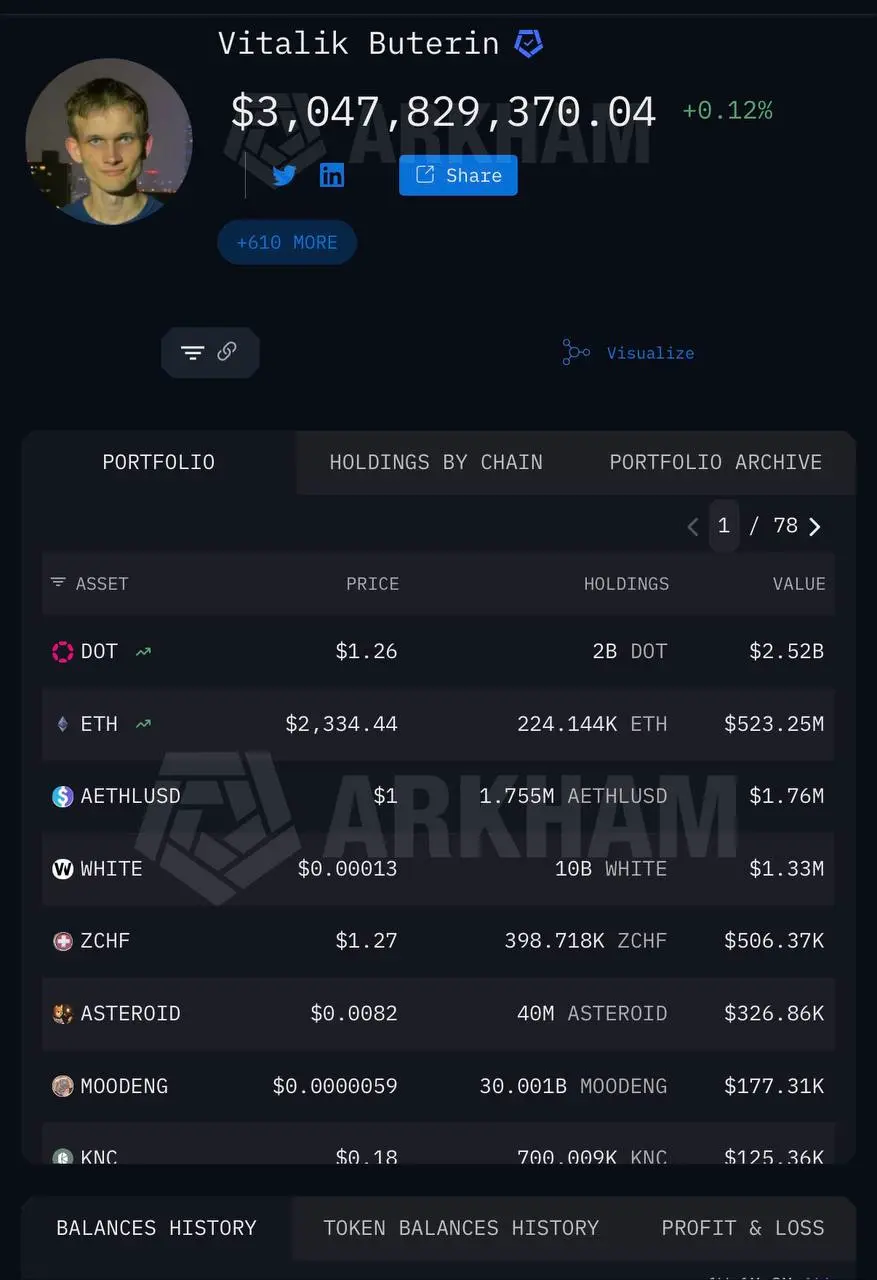
V God’s move this time is pretty impressive
View Original
CryptoRevolutionMaster
VITALIK BUTERIN SECRETLY BUYS 2.52 BILLION USD WORTH OF #DOT #POLKADOT AND SOLD MORE #ETH FOR #DOT
$DOT
repost-content-media
  • Reward
  • Comment
  • Repost
  • Share
Short-term short position, don't be greedy
View Original
CryptoSat
💰 $GWEI
🔻 SHORT
✳️ ENTRY: 0.1180 – 0.1230 – 0.12760
🎯 Targets check below 👇 👇
  • Reward
  • Comment
  • Repost
  • Share
A 10.1% rebound, a bottom signal in the semiconductor cycle?
View Original
CryptoFrontier
Singapore manufacturing output rebounds 10.1% in March, led by electronics
Singapore's manufacturing production increased by 10.1 per cent year-on-year in March 2026, bouncing back after a slight dip in February, according to data released by the Economic Development Board (EDB) on April 27. The slower February growth was attributed to temporary shutdowns during the
  • Reward
  • Comment
  • Repost
  • Share
These past few days, looking at the liquidation list has made me a bit nervous: if the oracle feed is a half beat slow, your position is like waiting for a bus, the bus hasn't arrived but the rain has already started... The on-chain price actually changed earlier, but the feed is still stuck at the old level, and the result is that when you need to add margin, you don't react, or even though you've already recovered, you're still liquidated at the old price, which feels pretty unfair. To put it simply, don't just focus on the K-line; before opening a position, I now check the oracle update fre
View Original
  • Reward
  • Comment
  • Repost
  • Share
A few days ago, I wanted to go all-in on LST/re-staking again, and my thoughts were pretty simple: take the ETH staking proof and layer on an "additional yield," which is basically like doing two jobs with the same principal... Later I realized that the returns don't come out of nowhere; it's mainly because someone is willing to pay for security/liquidity/services, plus a portion from MEV, incentive subsidies, and the like combined. The problem is that the risks also stack up: the underlying staking can be penalized or confiscated, and if the layer above re-staking encounters protocol bugs, pa
ETH1.07%
View Original
  • Reward
  • Comment
  • Repost
  • Share
  • Pin