# 2025 RBC Price Prediction: Expert Analysis and Market Forecast
This comprehensive analysis examines Rubic (RBC), a DeFi service platform trading at $0.005148 as of December 2025, offering investors detailed price forecasts through 2030 alongside professional investment strategies. The article addresses critical concerns for cryptocurrency investors: understanding RBC's historical performance (down 84.94% YTD), evaluating market sentiment during extreme fear conditions, and assessing viable entry strategies across different risk profiles. Structured in five core sections—market analysis, macroeconomic factors, price forecasts, investment methodologies, and risk management—this guide equips both beginners and experienced traders with actionable insights. Covering technical metrics, holdings distribution, and ecosystem development catalysts, the report provides a realistic framework for RBC evaluation on Gate's trading platform. Whether seeking long-term DCA strategies or active trading approaches, readers ga
Introduction: Market Position and Investment Value of RBC
Rubic (RBC) is a DeFi service platform that integrates token creation, management, and trading functionalities. Since its launch in 2021, Rubic has established itself as a multi-chain P2P trading solution with an upgraded user interface designed for ease of operation. As of December 27, 2025, RBC has a market capitalization of approximately $1,083,502, with a circulating supply of around 210.47 million tokens, currently trading at $0.005148. This innovative platform token serves as the fuel within the Rubic ecosystem, powering its expanding array of decentralized finance services.
This article will comprehensively analyze RBC's price trends from 2025 through 2030, incorporating historical patterns, market supply and demand dynamics, ecosystem development, and macroeconomic factors to provide investors with professional price forecasts and practical investment strategies.
Rubic (RBC) Market Analysis Report
I. RBC Price History Review and Current Market Status
RBC Historical Price Evolution Trajectory
- February 2021: RBC reached its all-time high of $0.793213, representing the peak of its market value during the early DeFi boom period.
- December 2022: RBC hit its all-time low of $0.00066293, marking the lowest price point in the token's history.
- 2025: Continued downward pressure with a year-to-date decline of -84.94%, reflecting sustained negative market sentiment and reduced investor demand.
RBC Current Market Status
As of December 27, 2025, RBC is trading at $0.005148, down 0.46% over the past 24 hours. The token has experienced broader weakness, with declines of -0.37% in the past hour and -0.55% over the past seven days. The monthly performance shows a steeper decline of -10.87%, underscoring the persistent downtrend.
Current market metrics indicate:
- 24-hour Trading Volume: $21,766.37
- Market Capitalization: $1,083,502.38
- Fully Diluted Valuation: $1,083,502.38
- Circulating Supply: 210,470,547.56 RBC (21.05% of total supply)
- Maximum Supply: 1,000,000,000 RBC
- Market Dominance: 0.000034%
- Active Token Holders: 2,747
- 24-hour Price Range: $0.005059 - $0.005268
RBC maintains a market rank of 2,564 among cryptocurrencies. The market sentiment indicator reflects "Extreme Fear" (VIX level 20), suggesting widespread pessimism across digital asset markets.
Click to view current RBC market price

RBC Market Sentiment Index
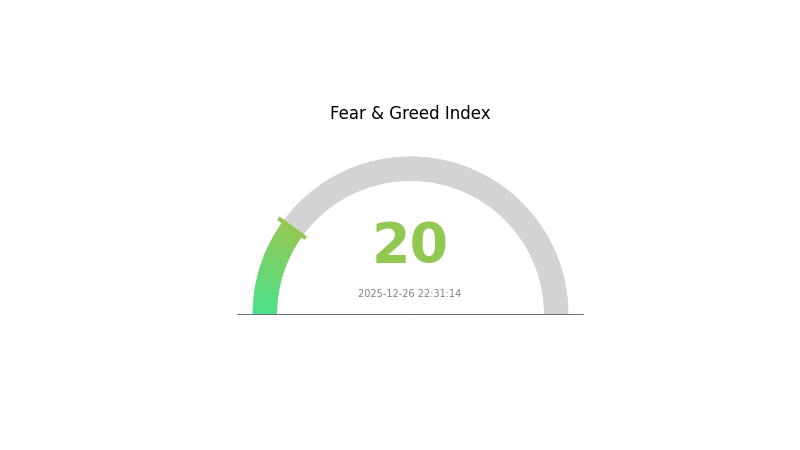
2025-12-26 Fear and Greed Index: 20 (Extreme Fear)
Click to view current Fear & Greed Index
The cryptocurrency market is experiencing extreme fear with an index reading of 20. This historically low level indicates maximum pessimism among investors, presenting potential opportunities for contrarian traders. Such extreme fear conditions often precede significant market reversals. Traders should exercise caution, conduct thorough research before entering positions, and consider dollar-cost averaging strategies. This sentiment snapshot reflects market psychology at a critical juncture—understanding these dynamics can help inform your investment decisions on Gate.com's comprehensive trading platform.
RBC Holdings Distribution
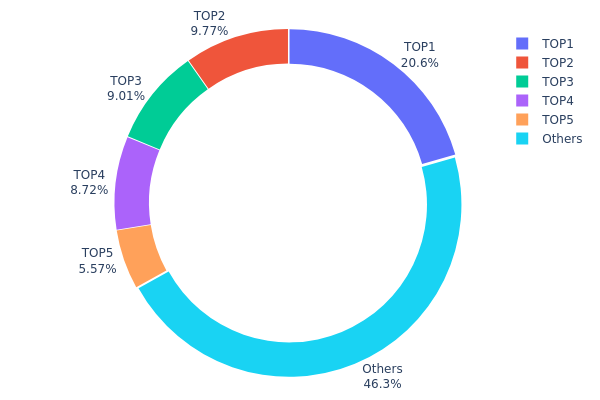
The holdings distribution chart illustrates the concentration of RBC tokens across different addresses, providing critical insights into the tokenomics structure and potential market dynamics. This metric tracks the top addresses by holding quantity and their respective percentage share of total token supply, alongside the aggregated holdings of all remaining addresses, thereby revealing the degree of decentralization and wealth concentration within the token ecosystem.
RBC's current holdings distribution exhibits moderate concentration characteristics. The top five addresses collectively control approximately 53.64% of the token supply, with the leading address (0xa3a7...d60eec) accounting for 20.60% of total holdings. While this concentration is notable, the distribution does not suggest extreme centralization given that nearly half of all tokens (46.36%) remain distributed among other addresses. The second and third largest holders maintain comparable positions at 9.77% and 9.00% respectively, indicating a relatively gradual decline in holdings rather than a sharp concentration spike.
The current distribution pattern presents a balanced market structure with regard to potential manipulation risks. The presence of multiple significant stakeholders with meaningful yet not overwhelming holdings suggests that unilateral price manipulation would require coordination among multiple parties. The substantial tail represented by other address holders provides a meaningful counterbalance to the concentrated positions. However, investors should monitor whether top holders maintain consistent positions or exhibit accumulation patterns, as significant changes in these metrics could signal shifting market dynamics and evolving decentralization trends within the RBC ecosystem.
Visit RBC Holdings Distribution on Gate.com for real-time data.
| Top |
Address |
Holding Qty |
Holding (%) |
| 1 |
0xa3a7...d60eec |
43468.68K |
20.60% |
| 2 |
0xd2dd...e6869f |
20616.46K |
9.77% |
| 3 |
0x7daf...706f83 |
19008.35K |
9.00% |
| 4 |
0x9642...2f5d4e |
18394.52K |
8.71% |
| 5 |
0x2fa9...8399be |
11751.37K |
5.56% |
| - |
Others |
97768.09K |
46.36% |
II. Core Factors Affecting RBC's Future Price Trends
Monetary Policy Impact
-
Federal Reserve Rate Expectations: The most critical "tailwind" for market gains in 2026 is the potential for Federal Reserve rate cuts. Historically, when the Fed implements modest rate cuts of 1% or less over a 12-month period, the S&P 500 averages a 13.3% increase during the same period. However, RBC BlueBay's Chief Investment Officer Mark Dowding suggests the Fed will not implement further rate cuts before Powell's departure in May 2026, with rates likely remaining unchanged over the next six months.
-
Inflation Environment: Current U.S. inflation remains elevated at approximately 3%, with projections suggesting it could rise to 3.5% by mid-2026. This persistent inflation constrains the Fed's ability to cut rates aggressively, creating a "mild stagflation" environment where inflation remains above target while economic growth remains positive.
Macroeconomic Environment
-
Economic Growth Prospects: RBC Capital Markets projects moderate economic growth with strong corporate earnings as core drivers of equity market performance. S&P 500 constituent companies achieved 13.4% earnings growth in Q3 2025, marking the fourth consecutive quarter of double-digit growth. However, economic uncertainty and potential recession risks remain focal points, with predicted market corrections expected to be limited to a 5-10% range unless recession risks become pronounced.
-
Corporate Earnings Trajectory: Technology sector earnings growth significantly outpaces other market segments, with tech stocks advancing approximately 26% in earnings growth during Q1 2024 and maintaining strong momentum. This fundamental strength supports continued outperformance of mega-cap stocks, with analyst projections indicating earnings growth sustainability through Q1 2027.
-
Valuation Bubble Concerns: The U.S. equity market is gradually moving toward bubble territory, particularly in the technology and artificial intelligence sectors. AI capital expenditure cannot accelerate indefinitely; when growth momentum begins to decelerate, market corrections may materialize. Historically, bubbles burst when earnings growth begins to slow, potentially emerging as a significant concern in 2026's second half.
Technology Development and Ecosystem
-
Artificial Intelligence Development Cycle: The current market rally is primarily driven by "AI 1.0" phase, focusing on infrastructure capital expenditure, model training, and execution. The market may transition toward "AI 2.0" phase, where productivity gains and financial returns extend beyond technology companies to broader industries, potentially supporting valuations across diverse sectors previously outside AI development focus.
-
Market Rotation Dynamics: While mega-cap technology stocks have dominated throughout 2025, rotation toward value stocks and broader markets has begun. The top 10 S&P 500 constituents surged 175% since October 2022, compared to 100% for the broader S&P 500 index and 58% for equal-weighted indices, suggesting potential for continued diversification as non-mega-cap company earnings improve.
III. 2025-2030 RBC Price Forecast
2025 Outlook
- Conservative Forecast: $0.00364 - $0.00513
- Neutral Forecast: $0.00513
- Bullish Forecast: $0.00713 (requires sustained market momentum and positive ecosystem developments)
2026-2027 Medium-term Outlook
- Market Phase Expectation: Gradual recovery and consolidation phase with measured growth trajectory
- Price Range Forecast:
- 2026: $0.00539 - $0.00895
- 2027: $0.00543 - $0.01116
- Key Catalysts: Ecosystem expansion, increased adoption metrics, potential protocol upgrades, and improving market sentiment across the broader crypto sector
2028-2030 Long-term Outlook
- Base Case: $0.00673 - $0.01187 (assuming moderate adoption growth and stable market conditions)
- Bullish Case: $0.00758 - $0.01637 (contingent on accelerated user adoption, strategic partnerships, and positive regulatory environment)
- Transformative Scenario: $0.01136 - $0.01637 (predicated on breakthrough technological innovation, mainstream institutional adoption, and paradigm shift in market perception)
- 2030-12-31: RBC reaches $0.01637 (represents 113% cumulative growth from baseline, reflecting optimized network utility and expanded market capture)
| 年份 |
预测最高价 |
预测平均价格 |
预测最低价 |
涨跌幅 |
| 2025 |
0.00713 |
0.00513 |
0.00364 |
0 |
| 2026 |
0.00895 |
0.00613 |
0.00539 |
18 |
| 2027 |
0.01116 |
0.00754 |
0.00543 |
46 |
| 2028 |
0.01187 |
0.00935 |
0.00673 |
81 |
| 2029 |
0.01136 |
0.01061 |
0.00658 |
105 |
| 2030 |
0.01637 |
0.01098 |
0.00758 |
113 |
Rubic (RBC) Professional Investment Strategy and Risk Management Report
I. Executive Summary
Rubic (RBC) is a DeFi service platform that integrates token creation, management, and trading. As of December 27, 2025, RBC is trading at $0.005148 with a market capitalization of approximately $1.08 million. The token has experienced significant depreciation, down 84.94% over the past year, reflecting the broader challenges faced by the DeFi ecosystem.
II. RBC Professional Investment Strategy and Risk Management
RBC Investment Methodology
(1) Long-Term Holding Strategy
Target Investors: DeFi platform believers, long-term cryptocurrency investors, and those with high risk tolerance
Operational Recommendations:
-
Entry Strategy: Consider dollar-cost averaging (DCA) over multiple months rather than lump-sum purchases to mitigate volatility risk. Current price levels present historical opportunities but carry significant downside risks.
-
Portfolio Integration: Allocate RBC as a high-risk, speculative component within a diversified cryptocurrency portfolio. This token should represent no more than 2-5% of total crypto holdings for conservative investors.
-
Storage Solution: For long-term holding, utilize Gate.com's secure Web3 wallet functionality for convenient access to the Rubic platform services. Alternatively, maintain tokens on Gate.com's platform with enabled security features including two-factor authentication and IP whitelisting.
(2) Active Trading Strategy
Technical Analysis Tools:
-
Volume Analysis: Monitor the 24-hour trading volume (currently $21,766) to identify liquidity conditions. Low volume periods may indicate reduced trading opportunities and increased slippage risk.
-
Price Action Patterns: Track support and resistance levels relative to the 30-day low ($0.005059) and high ($0.005268). Recent price consolidation within a narrow range suggests potential breakout opportunities.
Wave Trading Key Points:
-
Volatility Exploitation: The token's intraday movement of 0.37-0.46% provides limited opportunities for day traders. Focus on macro-driven catalyst events rather than micro-fluctuations.
-
Trend Confirmation: Verify trading signals with volume confirmation before executing positions. Given the small market cap and limited liquidity, traders should use tight stop-losses to manage downside risk.
III. RBC Risk Management Framework
(1) Asset Allocation Principles
- Conservative Investors: 0-1% allocation within cryptocurrency portfolio
- Aggressive Investors: 2-5% allocation within cryptocurrency portfolio
- Professional Investors: 1-3% allocation with hedging strategies, primarily for research and ecosystem participation
(2) Risk Hedging Solutions
-
Position Sizing Hedge: Limit individual position size to allow for multiple entry points during market corrections, reducing impact of adverse price movements.
-
Portfolio Diversification: Combine RBC holdings with stablecoins and established cryptocurrencies to offset potential losses from RBC's high volatility.
(3) Secure Storage Solutions
-
Hot Wallet Option: Gate.com Web3 Wallet provides convenient access for active traders while maintaining reasonable security standards with multi-signature backup options.
-
Cold Storage Consideration: For significant holdings, consider keeping a portion in address-only format (non-exchange storage) to reduce counterparty risk, though this requires advanced technical knowledge.
-
Security Critical Points: Enable all available security features on Gate.com including two-factor authentication, withdrawal whitelisting, and IP address restrictions. Never share private keys or recovery phrases. Be vigilant against phishing attempts targeting DeFi platform users.
IV. RBC Potential Risks and Challenges
RBC Market Risk
-
Extreme Volatility: RBC has declined 84.94% year-over-year, indicating severe market pressure. The token may experience further significant price depreciation if project adoption does not accelerate.
-
Liquidity Constraints: With only $21,766 in 24-hour trading volume and 2,747 token holders, liquidity is severely limited. Large trades could face substantial slippage and difficulty executing positions at expected prices.
-
Market Capitalization Pressure: At $1.08 million, RBC's market cap is extremely small. Any negative news or shift in investor sentiment could trigger rapid capital outflows and accelerated price decline.
RBC Regulatory Risk
-
DeFi Regulatory Uncertainty: As a DeFi platform token, RBC faces evolving regulatory landscapes across multiple jurisdictions. Increased regulatory scrutiny on DeFi platforms could directly impact Rubic's operational viability and token utility.
-
Securities Classification Risk: Depending on jurisdictional interpretation, RBC could be classified as a security, triggering compliance requirements that may impede the platform's operation or token trading.
-
Multi-Chain Compliance: Rubic's stated goal of adding multi-chain P2P transactions introduces regulatory complexity across different blockchain networks, each with varying legal frameworks.
RBC Technology Risk
-
Platform Execution Risk: The stated roadmap includes significant features (multi-chain P2P transactions, liquidity pools, UI upgrades) that require successful technical implementation. Delays or technical failures could diminish platform utility and token demand.
-
Smart Contract Vulnerability: Like all DeFi platforms, Rubic faces inherent smart contract risks. Historical DeFi exploits demonstrate that even audited contracts can be vulnerable to novel attack vectors.
-
Competition and Obsolescence: Established DeFi platforms with larger user bases and more robust features present significant competition. RBC could face obsolescence if Rubic fails to deliver differentiated value propositions.
V. Conclusions and Action Recommendations
RBC Investment Value Assessment
Rubic represents a high-risk, speculative investment opportunity within the DeFi sector. The platform's core concept of integrating token creation, management, and trading addresses genuine market needs. However, the 84.94% year-over-year price decline, minimal market capitalization ($1.08M), and severely constrained liquidity suggest that market participants have significantly de-risked expectations for the project's success.
The token's viability depends critically on: (1) successful execution of announced platform upgrades and multi-chain features, (2) meaningful adoption growth that drives platform utility and token demand, and (3) favorable regulatory developments for the DeFi sector. Given the current market sentiment and technical execution risks, RBC should be considered exclusively for investors with high risk tolerance and ability to bear total capital loss.
RBC Investment Recommendations
✅ Beginners: Exercise extreme caution. RBC is unsuitable for novice investors unless as part of a highly controlled research allocation (maximum 0.5% of total portfolio). Prioritize learning about DeFi fundamentals and risk management before considering RBC exposure.
✅ Experienced Investors: Consider small, speculative positions (1-3% of crypto portfolio) if you have conviction in Rubic's platform roadmap and market conditions align with your risk parameters. Implement strict stop-losses at 20-30% below entry prices.
✅ Institutional Investors: RBC's limited market cap ($1.08M) and low liquidity ($21K daily volume) make meaningful institutional positions impractical. Research-only holdings may be appropriate for understanding DeFi ecosystem dynamics.
RBC Trading and Participation Methods
-
Direct Trading on Gate.com: Access RBC trading through Gate.com's spot trading markets. Ensure compliance with your jurisdiction's regulations and utilize Gate.com's security features.
-
Platform Participation: Interact directly with Rubic.exchange or Rubic.finance to understand platform utility and assess actual user adoption beyond token speculation.
-
Community Engagement: Monitor Rubic's GitHub repository and Twitter account (@CryptoRubic) for development updates, technical roadmap progress, and ecosystem news that may signal changing risk parameters.
Critical Risk Disclaimer: Cryptocurrency investment carries extreme risk of total capital loss. This report does not constitute investment advice. All individuals must conduct independent research and consult qualified financial advisors before making investment decisions. Never invest funds you cannot afford to lose completely. RBC's extreme volatility, minimal market cap, and limited liquidity create exceptional risk profiles unsuitable for most investors. Past performance does not guarantee future results.
FAQ
Is RBC stock a buy or sell?
RBC stock holds a consensus Buy rating from analysts. With 40% Strong Buy and 40% Buy recommendations, it presents a compelling buying opportunity for investors seeking exposure to this asset.
Is it better to invest with TD or RBC?
Based on valuation, dividend potential, and growth prospects, Toronto-Dominion Bank generally offers better investment value than Royal Bank of Canada for most investors seeking balanced returns.
Is RBC undervalued?
RBC is currently trading above fair value estimates around CA$227.0 per share. With a PE ratio of 16.42x versus fair value of 13.86x, RBC appears fairly valued to slightly overvalued rather than undervalued at present levels.
Is RBC a good investment?
RBC demonstrates strong fundamentals with record earnings, healthy credit performance, and excellent capitalization ratios. Its steady recovery and profitability make it an attractive investment opportunity for those seeking stability and growth potential in the cryptocurrency and digital asset space.
* The information is not intended to be and does not constitute financial advice or any other recommendation of any sort offered or endorsed by Gate.