ARTFI vs OP: A Comprehensive Comparison of Two Leading DeFi Governance Tokens

2026-01-01 16:13:19
Altcoins
Crypto Insights
DeFi
Layer 2
NFTs
Article Rating : 4.5
half-star
105 ratings
# ARTFI vs OP: A Comprehensive Comparison of Two Leading DeFi Governance Tokens This comprehensive guide compares ARTFI and OP—two distinct DeFi tokens representing different market opportunities. ARTFI, launched in 2024, democratizes fine art investment through NFT fractional ownership, while OP, established in 2022, serves as the governance token for Optimism's Layer 2 scaling solution. The article analyzes both tokens across historical price trends, tokenomics, ecosystem development, and market positioning to help investors determine which asset aligns with their investment strategy. Through detailed price forecasts (2026-2031), risk assessments, and allocation recommendations tailored for beginner, experienced, and institutional investors, this analysis addresses the critical question: "Which is the better buy?" Discover real-time prices on Gate and make informed investment decisions based on liquidity, volatility, and long-term growth potential.
ARTFI vs OP: A Comprehensive Comparison of Two Leading DeFi Governance Tokens

Introduction: ARTFI vs OP Investment Comparison

In the cryptocurrency market, ARTFI vs OP comparison has always been an unavoidable topic for investors. The two not only show significant differences in market cap rankings, application scenarios, and price performance, but also represent different positioning of crypto assets. ARTFI (ARTFI): Since its launch in 2024, it has gained market recognition by leveraging NFTs and blockchain technology to democratize the fine art market through fractional ownership of blue-chip artworks. OP (OP): Since its establishment in 2022, it has been recognized as a low-cost, high-speed Ethereum Layer 2 solution, serving as a native governance token for the Optimism Collective with significant trading volume and market capitalization. This article will comprehensively analyze the investment value comparison between ARTFI vs OP from multiple dimensions including historical price trends, supply mechanisms, ecosystem development, and market positioning, while attempting to answer the question investors care most about:

"Which is the better buy right now?"

I. Historical Price Comparison and Current Market Status

  • June 2024: ARTFI reached its all-time high of $0.08599, driven by early market enthusiasm following its launch in June 2024.
  • March 2024: OP reached its all-time high of $4.84, reflecting strong adoption of the Optimism Layer 2 solution.
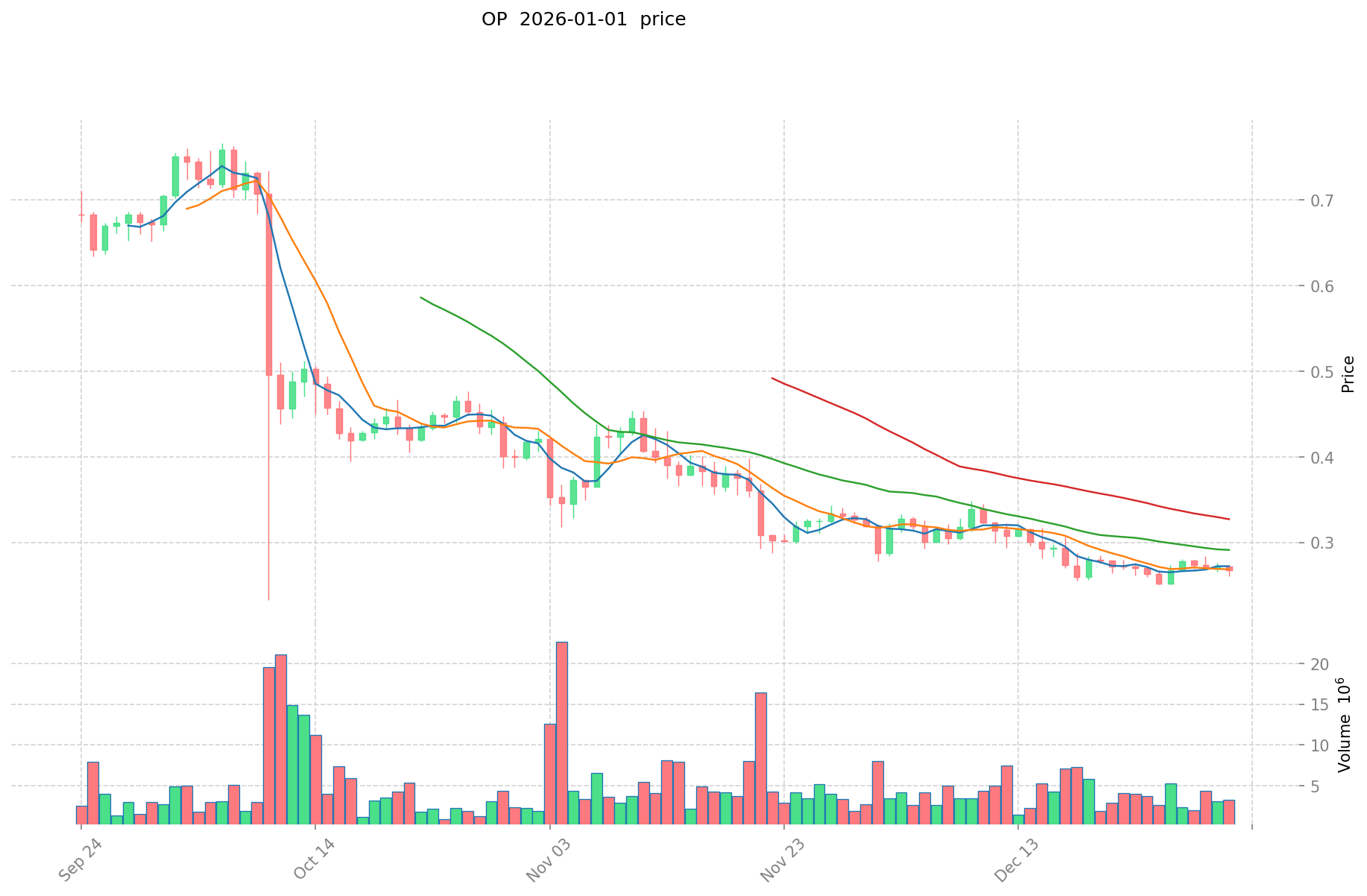
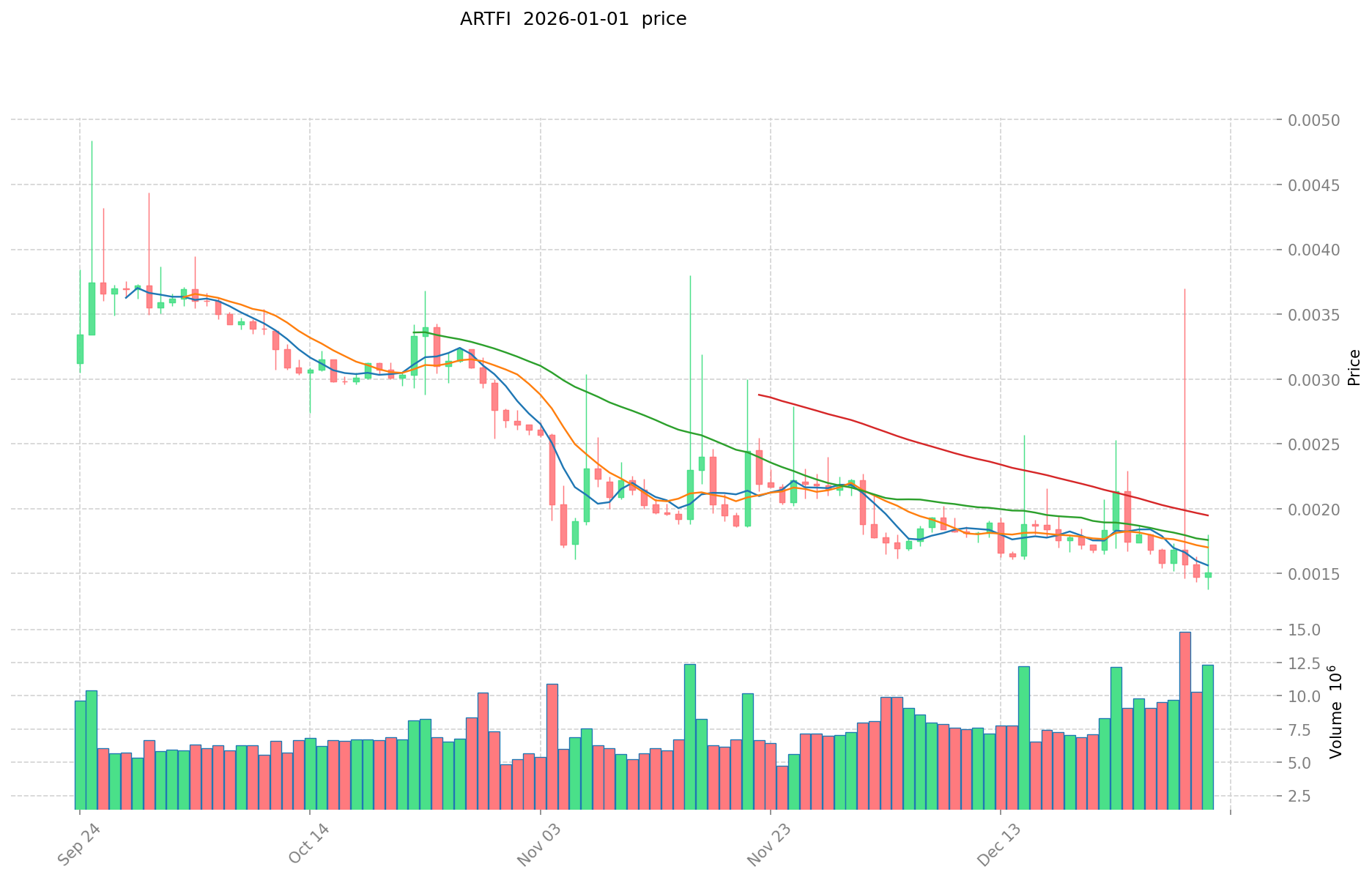
  • Comparative Analysis: Over the past year, ARTFI has declined 89.25% from its historical high, while OP has experienced an 83.89% decline from its peak, indicating both tokens have faced significant downward pressure in the current market cycle.

Current Market Status (02 January 2026)

  • ARTFI current price: $0.001486
  • OP current price: $0.2828
  • 24-hour trading volume: ARTFI $15,779.73 vs OP $1,083,877.86
  • Market Emotion Index (Fear & Greed Index): 20 (Extreme Fear)

Check real-time prices:
price_image1 price_image2

II. Core Factors Influencing Investment Value of ARTFI vs Aptos

Supply Mechanism Comparison (Tokenomics)

  • ARTFI: Limited information available on supply mechanism in provided sources.
  • Aptos (APT): Currently has 219.33 million APT tokens in circulation. APT adopts a Proof of Stake model where validators holding the minimum required amount of staked APT tokens can participate in transaction verification on the Aptos blockchain. Stakers receive pre-agreed reward distributions.
  • 📌 Historical Pattern: Supply mechanisms influence price cycles through validator participation incentives and token circulation dynamics.

Institutional Adoption and Market Application

  • Institutional Holdings: Aptos has attracted attention from prominent cryptocurrency figures making investments in related ventures. ARTFI information on institutional adoption is not available in the provided sources.
  • Enterprise Adoption: Aptos supports over 50 DeFi projects within its ecosystem and provides a scalable, cost-effective cloud infrastructure platform for building widely-used applications. ARTFI focuses on democratizing art investment through NFT-based fractional ownership of high-value artwork.
  • National Policy: No specific regulatory information regarding either token is provided in the available sources.

Technology Development and Ecosystem Building

  • ARTFI Technology: Blockchain-based platform designed to democratize art investment by enabling partial ownership of high-value artworks through NFTs, allowing broader access to art investment opportunities.
  • Aptos Technology Development: Provides advanced features as a Layer 1 blockchain including higher scalability, security, and sustainability. The network processes large transaction volumes simultaneously by utilizing available physical resources, improving throughput and transaction speed while reducing costs. Aptos offers a unique smart contract execution model using cloud infrastructure as a scalable platform.
  • Ecosystem Comparison: Aptos demonstrates mature DeFi ecosystem integration with over 50 projects in operation. ARTFI specializes in NFT-based art investment applications.

Macroeconomic Environment and Market Cycles

  • Performance in Inflationary Environments: Information comparing inflation-resistant properties between ARTFI and Aptos is not available in the provided sources.
  • Monetary Policy Impact: APT token price fluctuations may reflect overall cryptocurrency market sentiment, with bullish outlooks stimulating buying pressure and bearish views potentially triggering selling pressure. Broader factors affecting the cryptocurrency market include Web3 adoption trends and cryptocurrency market sentiment.
  • Geopolitical Factors: Not addressed in the available source materials.

III. 2026-2031 Price Forecast: ARTFI vs OP

Short-term Forecast (2026)

  • ARTFI: Conservative $0.00109354 - $0.001498 | Optimistic $0.001498 - $0.00178262
  • OP: Conservative $0.208828 - $0.2822 | Optimistic $0.2822 - $0.36686

Mid-term Forecast (2028-2029)

  • ARTFI may enter growth consolidation phase, projected price range $0.00141247 - $0.00273554
  • OP may enter accelerated appreciation phase, projected price range $0.30936406 - $0.57802233
  • Key drivers: institutional capital inflows, ETF approvals, ecosystem development

Long-term Forecast (2030-2031)

  • ARTFI: Base scenario $0.00201746 - $0.00271764 | Optimistic scenario $0.00301618 - $0.00353294
  • OP: Base scenario $0.32015110 - $0.57134658 | Optimistic scenario $0.59991391 - $0.6501530

View detailed ARTFI and OP price forecasts

ARTFI:

年份 预测最高价 预测平均价格 预测最低价 涨跌幅
2026 0.00178262 0.001498 0.00109354 0
2027 0.0019355658 0.00164031 0.0008529612 10
2028 0.002234922375 0.0017879379 0.001412470941 20
2029 0.002735544987 0.0020114301375 0.00108617227425 35
2030 0.003061798955302 0.00237348756225 0.002017464427912 59
2031 0.003532936236409 0.002717643258776 0.002011056011494 82

OP:

年份 预测最高价 预测平均价格 预测最低价 涨跌幅
2026 0.36686 0.2822 0.208828 0
2027 0.4089078 0.32453 0.2790958 15
2028 0.447397058 0.3667189 0.322712632 30
2029 0.57802233018 0.407057979 0.30936406404 44
2030 0.6501530040588 0.49254015459 0.3201511004835 75
2031 0.59991390829062 0.5713465793244 0.37137527656086 103

IV. Investment Strategy Comparison: ARTFI vs OP

Long-term vs Short-term Investment Strategy

  • ARTFI: Suitable for investors focusing on emerging NFT-based asset democratization opportunities and seeking exposure to the art investment sector through blockchain technology
  • OP: Suitable for investors pursuing established Layer 2 infrastructure plays with proven ecosystem adoption and seeking participation in Ethereum scaling solutions

Risk Management and Asset Allocation

  • Conservative Investors: ARTFI 10% vs OP 90%
  • Aggressive Investors: ARTFI 30% vs OP 70%
  • Hedging Tools: Stablecoin positioning, options strategies, cross-token portfolio diversification

V. Potential Risk Comparison

Market Risk

  • ARTFI: Limited trading liquidity ($15,779.73 daily volume) creates higher slippage risk and potential market manipulation vulnerability; early-stage project with shorter operational history increases uncertainty
  • OP: Larger daily trading volume ($1,083,877.86) provides better liquidity, though exposure to broader Layer 2 competitive pressures and potential market saturation risks

Technology Risk

  • ARTFI: NFT platform scalability challenges, smart contract security vulnerabilities in art ownership verification systems
  • OP: Layer 2 sequencer centralization concerns, bridge security risks, dependency on Ethereum mainchain stability

Regulatory Risk

  • Global regulatory frameworks governing digital assets and NFTs remain evolving, with potential restrictions on fractional ownership of physical assets affecting ARTFI's business model
  • Layer 2 protocols like OP face ongoing regulatory scrutiny regarding their classification and compliance requirements across different jurisdictions

VI. Conclusion: Which Is the Better Buy?

📌 Investment Value Summary:

  • ARTFI Advantages: Early-stage entry opportunity in art market democratization; NFT-based fractional ownership innovation; potential high-growth trajectory if art tokenization gains institutional adoption
  • OP Advantages: Established Layer 2 infrastructure with proven scalability; over 50 DeFi projects in ecosystem demonstrating maturity; significantly higher trading liquidity and market recognition; clearer near-term utility as Ethereum scaling solution

✅ Investment Recommendations:

  • Beginner Investors: Focus on OP for exposure to established infrastructure with clearer fundamentals and lower volatility; consider minimal ARTFI allocation only if comfortable with emerging market risk
  • Experienced Investors: OP suitable for core portfolio holdings; ARTFI viable as speculative high-risk/high-reward allocation pending ecosystem development validation
  • Institutional Investors: OP preferable due to established governance structures, Optimism Collective framework, and institutional-grade liquidity; ARTFI requires further ecosystem maturation before significant institutional capital deployment

⚠️ Risk Disclaimer: Cryptocurrency markets exhibit extreme volatility. This analysis does not constitute investment advice.

FAQ

ARTFI和OP分别是什么?它们的核心功能有什么区别?

ARTFI是艺术金融代币,专注于艺术品资产化和交易;OP是乐观主义二层扩展方案,专注于提升以太坊交易速度和降低成本。核心区别在于应用场景不同,ARTFI聚焦艺术生态,OP聚焦基础设施优化。

ARTFI和OP在技术架构和扩容方案上有什么不同?

OP是以太坊二层方案,采用Optimistic Rollup技术;ARTFI专注于艺术金融领域。OP通过降低交易费用实现扩容,ARTFI则整合链上资产与艺术品交易,两者技术路线和应用场景存在明显差异。

使用ARTFI和OP的成本对比如何?交易费用和性能表现怎样?

ARTFI交易费用低于OP,成本优势明显。ARTFI性能稳定高效,OP吞吐量大但费用较高。两者都提供优质的L2体验,选择应根据具体需求而定。

ARTFI和OP各自的生态应用和DeFi支持程度如何?

OP生态应用丰富,DeFi支持完善,拥有众多主流项目。ARTFI生态相对新兴,DeFi支持程度有限。OP在二层扩展方案中优势更明显,应用集成度更高。

从安全性和风险角度看,ARTFI和OP哪个更值得信任?

OP作为成熟公链,有更强的生态支持和社区验证,安全性更有保障。ARTFI作为新兴项目,需要更多时间验证。综合考虑,OP更值得信任。

ARTFI和OP分别适合什么样的用户和使用场景?

ARTFI适合艺术品资产化和NFT衍生品交易的用户,提供专业的艺术金融工具。OP适合寻求低成本交易和快速支付的普通用户,专注Layer2扩容生态。

ARTFI和OP的代币经济模型和治理机制有什么差异?

OP由持有者通过治理机制掌控收益分配权,拥有完善的去中心化治理体系。ARTFI则采用不同的经济模型设计,两者在代币分配机制和治理权重上存在明显差异。

未来发展前景看,ARTFI和OP谁更有潜力?

ARTFI专注艺术金融创新,具有独特赛道优势;OP作为L2生态龙头,生态繁荣度更强。ARTFI增长潜力更大,OP稳定性更优。各有千秋,取决于个人投资倾向。

* The information is not intended to be and does not constitute financial advice or any other recommendation of any sort offered or endorsed by Gate.
Related Articles
TKO vs IMX: A Comprehensive Comparison of Two Leading Blockchain Platforms

TKO vs IMX: A Comprehensive Comparison of Two Leading Blockchain Platforms

The article provides a thorough comparison between TKO and IMX, two prominent blockchain platforms, focusing on their investment potential. It examines historical price trends, market status, technological infrastructure, and market position, offering insights into market dynamics, risks, and potential growth opportunities. Aimed at investors, it addresses which asset presents a better buy by evaluating their individual strengths and weaknesses. The article is structured to guide readers through price performance, project overview, technical architecture, risk assessment, and strategic recommendations, optimizing keyword density for effective scanning.
2025-12-23 04:14:55
NOM vs IMX: Understanding the Key Differences Between Two Leading Layer 2 Solutions

NOM vs IMX: Understanding the Key Differences Between Two Leading Layer 2 Solutions

This article presents a detailed comparison between NOM and IMX, two leading Layer 2 solutions in the cryptocurrency market. It evaluates their historical price performance, technical specifications, market capitalization, and community engagement. The analysis helps investors decide which token offers better value based on current market conditions and future potential. Intended for crypto investors, the article addresses investment strategies, risk management, and regulatory considerations. Key insights include liquidity risks and price volatility, with data sourced from Gate for real-time monitoring.
2025-12-22 22:19:48
NFTFI vs ARB: Which DeFi Protocol Offers Better Yield Opportunities for Cryptocurrency Investors?

NFTFI vs ARB: Which DeFi Protocol Offers Better Yield Opportunities for Cryptocurrency Investors?

# Article Overview: NFTFI vs ARB - Which DeFi Protocol Offers Better Yield Opportunities? This comprehensive analysis compares NFTFI and Arbitrum (ARB) across market performance, tokenomics, ecosystem adoption, and investment potential to help cryptocurrency investors make informed decisions. The article addresses critical questions: which protocol generates superior yields, which carries lower risk, and how to optimize portfolio allocation between these two distinct DeFi opportunities. Structured through historical price trends, technical architecture comparisons, and institutional adoption metrics, this guide serves beginner and experienced investors seeking exposure to NFT financial infrastructure versus Ethereum Layer 2 solutions. Real-time data from Gate, detailed price forecasts through 2031, and risk management strategies provide actionable insights. Whether you prioritize high-growth NFT fintech innovation or stable Layer 2 scalability, this article delivers the comparative framework needed to evalua
2026-01-04 06:56:21
2025 LUMIA Price Prediction: Future Value Analysis and Market Trends for Investors

2025 LUMIA Price Prediction: Future Value Analysis and Market Trends for Investors

This article offers a comprehensive analysis of Lumia's price trends from 2025 to 2030, emphasizing its role in the DeFi landscape and potential investment value. It explores Lumia's market position, historical price movements, and factors influencing future prices, providing investment strategies for different risk tolerances. Investors will benefit from insights into market sentiment, macroeconomic impacts, and technological developments. Suitable for beginners to institutional investors, the article highlights key risks, including market volatility and regulatory challenges, while recommending trading options like spot trading and staking on Gate.

2025-10-05 02:02:29
What is CFX: Understanding the Fundamentals and Applications of Computational Fluid Dynamics eXchange

What is CFX: Understanding the Fundamentals and Applications of Computational Fluid Dynamics eXchange

The article provides an in-depth analysis of Conflux (CFX), a high-performance layer-1 blockchain launched by the Conflux Foundation to address scalability issues in blockchain networks. It explores Conflux's technical architecture, market performance, and its impact on DeFi, NFTs, and cross-chain applications. Readers will gain insight into Conflux's history, key milestones, and operational mechanisms, alongside its market dynamics and ecosystem applications. The article also discusses challenges faced by Conflux and highlights its community and future roadmap, offering value to blockchain enthusiasts, developers, and investors seeking to understand this significant player in the blockchain industry.
2025-09-16 01:03:53
What is APT: Understanding Advanced Persistent Threats and Their Impact on Cybersecurity

What is APT: Understanding Advanced Persistent Threats and Their Impact on Cybersecurity

The article "What is APT: Understanding Advanced Persistent Threats and Their Impact on Cybersecurity" explores the significance of Aptos as a high-performance Layer 1 blockchain launched by Aptos Labs in 2022. It addresses scalability and security issues within blockchain technology, gaining a market cap of over $3 billion by 2025. Readers can expect insights into Aptos's technical architecture, market performance, ecosystem applications, and community impact. Aptos is particularly relevant for developers and blockchain enthusiasts seeking innovative solutions. Through sections detailing decentralized control, market trends, controversies, and a future roadmap, the article showcases Aptos's potential to enhance decentralized technology.
2025-09-12 01:27:28
Recommended for You
Fear, Uncertainty and Doubt (FUD)

Fear, Uncertainty and Doubt (FUD)

# Understanding FUD in Cryptocurrency: A Guide to Managing Fear and Uncertainty FUD (Fear, Uncertainty, and Doubt) represents a manipulative tactic spreading misleading information to influence market sentiment and investor behavior, particularly prevalent in cryptocurrency trading on platforms like Gate. This guide helps traders and investors distinguish between legitimate risk warnings and baseless speculation, enabling informed decision-making in volatile markets. Covering FUD's origins, manifestations across crypto and traditional markets, and identification strategies, this article addresses how misinformation spreads through social media and news channels. Readers will learn practical approaches to verify information from credible sources, separate emotions from investment decisions, and maintain long-term perspective amid market noise. Additionally, the guide explores how crypto projects and enterprises build credibility through transparent communication and proactive risk management. Essential readin

2026-01-05 23:32:34
When Will Pi Mining End? Pi Network Mining Timeline

When Will Pi Mining End? Pi Network Mining Timeline

# Article Overview: Pi Network Mining Timeline This comprehensive guide demystifies Pi mining for mainstream users seeking accessible cryptocurrency participation. Learn how Pi mining revolutionizes crypto accessibility through smartphone-based, energy-efficient consensus mechanisms—requiring zero technical expertise or hardware investment. The article addresses critical concerns: when Pi mining ends (Grace Period deadline: March 14, 2025), how to maximize earnings through Security Circles and referral networks, and why KYC verification is essential. Structured progressively from foundational concepts to actionable steps, this resource serves cryptocurrency newcomers, mobile users, and anyone interested in sustainable blockchain alternatives. Discover how Pi Network democratizes digital currency access while clarifying important timelines and participation requirements you must understand before the final migration deadline arrives.
2026-01-05 22:43:49
What is MOOO: A Comprehensive Guide to Understanding the Emerging Digital Currency Revolution

What is MOOO: A Comprehensive Guide to Understanding the Emerging Digital Currency Revolution

# What is MOOO: A Comprehensive Guide to Understanding the Emerging Digital Currency Revolution **Introduction** MOOO is a SocialFi utility token powering Hashtagger.com, a decentralized community marketing platform for blockchain projects. This guide explores MOOO's core functionality, tokenomics, and market performance as of January 2026. Discover how MOOO enables users to earn rewards for social media engagement while participating in community governance decisions. Learn the token's technical infrastructure on Binance Smart Chain, current trading availability on Gate, and strategic positioning within the SocialFi ecosystem. Whether you're exploring decentralized incentive mechanisms or seeking emerging digital currency opportunities, this comprehensive resource clarifies MOOO's purpose, utility, and investment considerations in the evolving crypto landscape.
2026-01-05 22:41:55
How to Withdraw Funds from a Leading Cryptocurrency Exchange to Your Bank Account

How to Withdraw Funds from a Leading Cryptocurrency Exchange to Your Bank Account

# Article Overview This comprehensive guide explains how to safely transfer cryptocurrency to your bank account through Gate, covering the complete withdrawal process from account access to fund receipt. Designed for crypto traders and investors managing profits or personal transfers, the article addresses common concerns about security, fees, processing times, and account verification. The step-by-step instructions walk readers through eight essential stages, from logging in to confirming transactions, while practical tips highlight account verification, withdrawal limits, and fee structures. The guide also tackles frequently asked questions regarding identity verification, withdrawal timeframes (typically 1-5 business days), and troubleshooting failed transactions. Whether you're a beginner or experienced user, this resource ensures a smooth, secure fiat withdrawal experience on Gate.
2026-01-05 22:41:11
What is RUNI: A Comprehensive Guide to Understanding the Revolutionary Universal Network Interface

What is RUNI: A Comprehensive Guide to Understanding the Revolutionary Universal Network Interface

# Article Introduction **Runes Terminal (RUNI): A Comprehensive Guide to Understanding the Revolutionary Universal Network Interface** This guide provides a complete overview of Runes Terminal, a blockchain infrastructure platform democratizing access to Web3 development tools. RUNI serves developers, investors, and project founders seeking streamlined launchpad services, block exploration, and token creation solutions. The article addresses critical adoption barriers by examining RUNI's technical architecture, tokenomics (21M fixed supply, 12.05% circulation ratio), and market performance across Gate trading data. Structured from project positioning through risk analysis, this resource equips both beginners and experienced participants with essential information for evaluating RUNI's infrastructure value proposition and ecosystem potential in the evolving Bitcoin Runes ecosystem.
2026-01-05 22:41:09
What is FTR: A Comprehensive Guide to Functional Trait Recovery in Modern Applications

What is FTR: A Comprehensive Guide to Functional Trait Recovery in Modern Applications

# Fautor (FTR): Comprehensive Guide to Creator Economy Blockchain Token **Fautor (FTR)** is an ERC-20 token revolutionizing the creator-fan economy through blockchain technology, enabling authentic, transparent connections between creators and supporters. This guide examines FTR's market performance, technical architecture, and ecosystem positioning for investors, creators, and crypto enthusiasts exploring Web3-based creator platforms. Covering current metrics, price volatility, trading availability on Gate, and community resources, this analysis addresses how blockchain integration enhances creator monetization and fan engagement. Learn FTR's technical specifications, market challenges, growth potential, and practical applications in the decentralized creator economy landscape. Whether assessing investment opportunities or understanding blockchain's role in content creation, this comprehensive overview provides essential insights into Fautor's vision and market dynamics.


2026-01-05 22:41:02