NFTFI vs ARB: Which DeFi Protocol Offers Better Yield Opportunities for Cryptocurrency Investors?

2026-01-04 06:56:21
Altcoins
Crypto Insights
DeFi
Layer 2
NFTs
Article Rating : 4.5
half-star
22 ratings
# Article Overview: NFTFI vs ARB - Which DeFi Protocol Offers Better Yield Opportunities? This comprehensive analysis compares NFTFI and Arbitrum (ARB) across market performance, tokenomics, ecosystem adoption, and investment potential to help cryptocurrency investors make informed decisions. The article addresses critical questions: which protocol generates superior yields, which carries lower risk, and how to optimize portfolio allocation between these two distinct DeFi opportunities. Structured through historical price trends, technical architecture comparisons, and institutional adoption metrics, this guide serves beginner and experienced investors seeking exposure to NFT financial infrastructure versus Ethereum Layer 2 solutions. Real-time data from Gate, detailed price forecasts through 2031, and risk management strategies provide actionable insights. Whether you prioritize high-growth NFT fintech innovation or stable Layer 2 scalability, this article delivers the comparative framework needed to evalua
NFTFI vs ARB: Which DeFi Protocol Offers Better Yield Opportunities for Cryptocurrency Investors?

Introduction: NFTFI vs ARB Investment Comparison

In the cryptocurrency market, the comparison between NFTfi and Arbitrum has always been a topic that investors cannot avoid. The two differ significantly in market cap ranking, application scenarios, and price performance, while representing different positioning within the crypto asset landscape. NFTfi (NFTFI): Since its launch in June 2024, it has gained market recognition by building settlement infrastructure for NFT financial transactions. Arbitrum (ARB): Since its emergence in 2023, it has been recognized as a technology suite designed to scale Ethereum, enabling faster and cheaper transactions while inheriting Ethereum-level security. This article will comprehensively analyze the investment value comparison between NFTfi and Arbitrum across historical price trends, supply mechanisms, market adoption, technical ecosystem, and future outlook, while attempting to answer the most pressing question for investors:

"Which is the better buy right now?"

I. Historical Price Comparison and Current Market Status

  • June 2024: NFTFI reached its all-time high of $0.0479 due to increased interest in NFT financial infrastructure.
  • January 2024: ARB achieved its all-time high of $2.39, reflecting strong market sentiment toward Ethereum Layer 2 solutions.
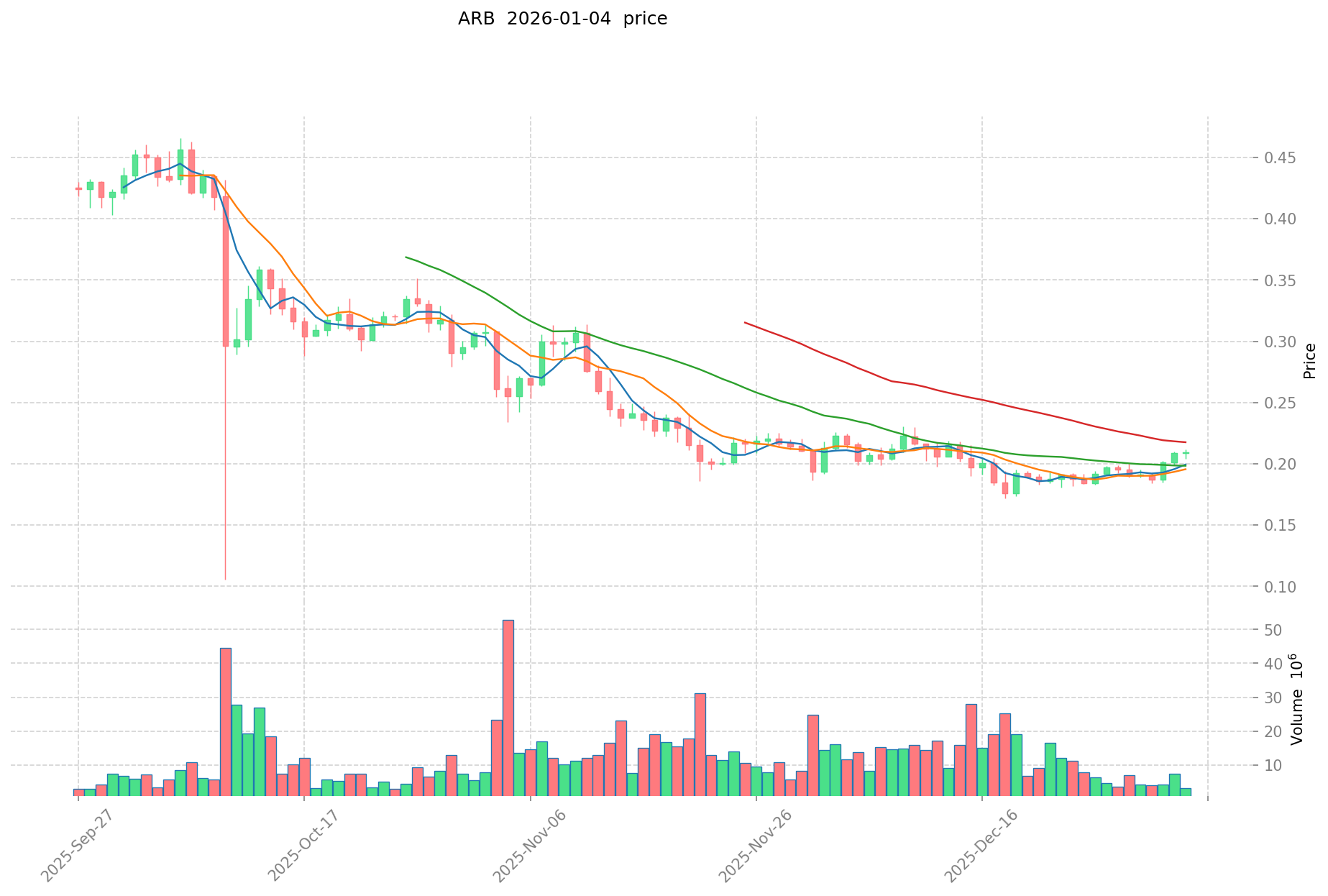
  • Comparative Analysis: Over the past year, NFTFI declined by 94.48% from its historical peak to current levels, while ARB experienced a 74.83% decline from its all-time high, demonstrating greater relative stability despite significant market corrections in both assets.

Current Market Status (January 4, 2026)

  • NFTFI current price: $0.0003608
  • ARB current price: $0.211
  • 24-hour trading volume: NFTFI $11,793.56 vs ARB $668,613.30
  • Market Sentiment Index (Fear & Greed Index): 29 (Fear)

View real-time prices:
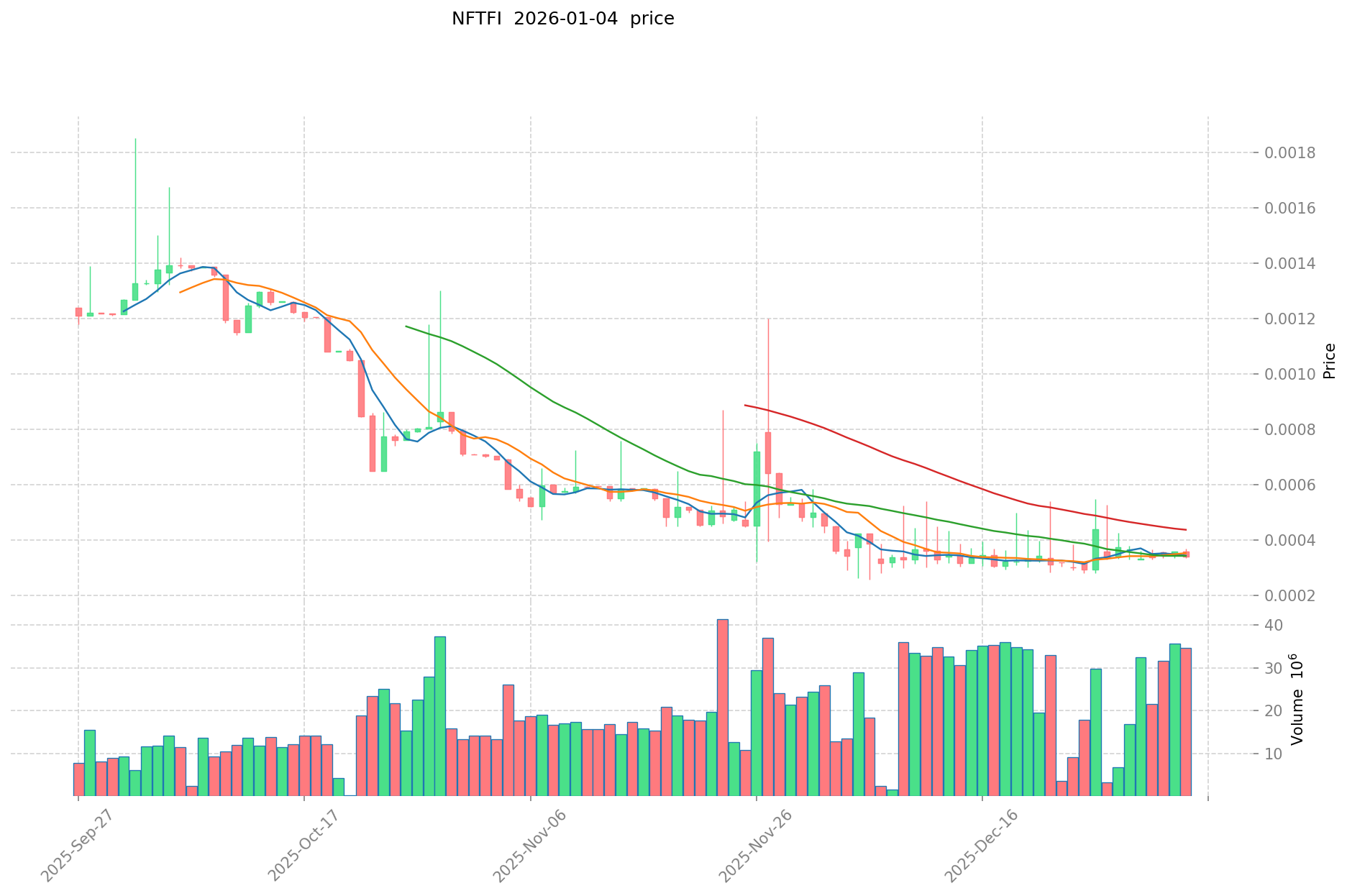
price_image1 price_image2

二、影响 NFTFi vs ARB 投资价值的核心因素

供应机制对比(Tokenomics)

Based on the reference materials provided, specific tokenomics data for NFTFi and ARB are not comprehensively detailed. This section cannot be completed without additional information on supply mechanisms, distribution schedules, or historical price cycle patterns for these assets.

机构采用与市场应用

机构持仓

The reference materials do not provide specific institutional holding data for NFTFi or ARB tokens.

企业采用

NFTFi Application Landscape:

  • Unicly: Multi-NFT pooling and fragmentation with TVL exceeding $500 million, holding 40% market share
  • Floor Protocol: Blue-chip NFT fragmentation (e.g., BAYC) with 12% annual staking yield
  • BendDAO: ETH lending accounting for over 60% of volumes, supporting blue-chip NFTs (BAYC, CryptoPunks) with bad debt ratio controlled below 3%
  • OpenSea: Launched "OpenSea Pro" professional version with aggregator functions supporting cross-platform price comparison and listing; pioneered "Bid Pool" batch quotation system for one-click floor price sweeping

ARB Ecosystem Application:

  • Arbitrum functions as an Ethereum Layer 2 network based on Optimistic Rollup technology, representing current user volume and total value locked (TVL) in the ecosystem
  • Integration with Odyssey NFT program: Users collecting 13 specific NFTs can obtain an ultimate Odyssey NFT, demonstrating high-value heavy user status on Arbitrum

国家政策

Regulatory Environment:

  • NFTFi faces regulatory scrutiny: U.S. SEC reviews fragmented NFTs; European Union plans to incorporate NFTs into MiCA regulatory framework, requiring KYC and transparent disclosure from issuers. Potential compliance costs may cause some NFT projects to exit the market
  • Regulatory risk: U.S. SEC proposes classifying cross-chain bridges as "securities trading platforms," increasing compliance costs

技术发展与生态建设

NFTFi 技术特性

  • Smart contract-based NFT fragmentation: Single NFTs divided into multiple ERC-20 tokens (such as ERC-721E standard), lowering investment barriers and enhancing liquidity
  • NFT derivatives: NFT perpetual contract protocols (e.g., Hook Protocol) enable traders to speculate on specific NFT collection floor prices without owning the actual NFTs, supporting price discovery mechanisms

ARB 技术发展

  • Optimistic Rollup architecture: Enables efficient layer 2 scaling for Ethereum
  • Cross-chain functionality: Integration with Odyssey program demonstrates ecosystem engagement mechanisms

生态对比

NFTFi Ecosystem:

  • Marketplace dominance: Blur and OpenSea combine for over 70% market share in NFT trading
  • DeFi integration: Lending protocols (BendDAO) support collateralization of blue-chip NFTs
  • Liquidity infrastructure: DEX protocols enable fractional NFT trading and price discovery

ARB Ecosystem:

  • Layer 2 scaling solution positioning for Ethereum DeFi applications
  • User engagement programs through NFT-based loyalty mechanisms (Odyssey)
  • Support for various DApp categories including DEX, lending, and other protocols

宏观经济与市场周期

The reference materials do not provide specific data on inflation resistance attributes, macroeconomic policy impacts (interest rates, USD index effects), or geopolitical factors affecting NFTFi and ARB valuations.

III. 2026-2031 Price Forecast: NFTFI vs ARB

Short-term Forecast (2026)

  • NFTFI: Conservative $0.000234–$0.000366 | Optimistic $0.000366–$0.000533
  • ARB: Conservative $0.180428–$0.209800 | Optimistic $0.209800–$0.297916

Mid-term Forecast (2028-2029)

  • NFTFI may enter growth consolidation phase, estimated price range $0.000465–$0.000594
  • ARB may enter recovery acceleration phase, estimated price range $0.243424–$0.450760
  • Key drivers: institutional capital inflows, ETF approvals, ecosystem development

Long-term Forecast (2030-2031)

  • NFTFI: Base scenario $0.000326–$0.000600 | Optimistic scenario $0.000340–$0.000633
  • ARB: Base scenario $0.322987–$0.442611 | Optimistic scenario $0.265029–$0.483782

View detailed price forecasts for NFTFI and ARB

NFTFI:

年份 预测最高价 预测平均价格 预测最低价 涨跌幅
2026 0.0005329 0.000365 0.0002336 1
2027 0.000583635 0.00044895 0.000404055 24
2028 0.000583410525 0.0005162925 0.00046466325 43
2029 0.0005938396335 0.0005498515125 0.000527857452 52
2030 0.00060043785165 0.000571845573 0.00032595197661 58
2031 0.000633033049311 0.000586141712325 0.000339962193148 62

ARB:

年份 预测最高价 预测平均价格 预测最低价 涨跌幅
2026 0.297916 0.2098 0.180428 0
2027 0.31224534 0.253858 0.13200616 20
2028 0.4104249215 0.28305167 0.2434244362 34
2029 0.450759784475 0.34673829575 0.1837712967475 64
2030 0.442611434524875 0.3987490401125 0.322986722491125 88
2031 0.48378227291649 0.420680237318687 0.265028549510773 99

四、投资策略对比:NFTFI vs ARB

长期 vs 短期投资策略

  • NFTFI:适合关注NFT金融基础设施发展、寻求高增长潜力的投资者,重点关注NFT碎片化、DeFi集成等生态应用扩展
  • ARB:适合寻求以太坊Layer 2解决方案稳定性、相对成熟生态应用的投资者,关注Arbitrum网络规模和用户采用率

风险管理与资产配置

  • 保守型投资者:NFTFI 15% vs ARB 85%
  • 激进型投资者:NFTFI 40% vs ARB 60%
  • 对冲工具:配置稳定币作为基础储备、通过期权管理下行风险、跨币种组合分散单一资产风险

五、潜在风险对比

市场风险

  • NFTFI:历史价格从历史高点下跌94.48%,市场认可度仍需验证;交易量相对较低(24小时$11,793.56),流动性风险较大
  • ARB:虽从历史高点下跌74.83%但相对更稳定,交易量充足(24小时$668,613.30),但面临市场情绪低迷(恐惧指数29)

技术风险

  • NFTFI:智能合约风险、NFT估值波动、碎片化标准不统一可能影响互操作性
  • ARB:Optimistic Rollup机制依赖欺诈证明机制有效性、跨链桥接安全风险、网络拥塞可能性

监管风险

  • 全球监管政策对两者的不同影响:美国SEC对碎片化NFT的审查加强,欧盟MiCA框架将NFT纳入监管,要求发行者进行KYC和信息披露,可能导致合规成本上升;美国SEC拟将跨链桥接分类为"证券交易平台",增加ARB生态中跨链应用的合规难度

六、结论:Which Is the Better Buy?

📌 投资价值总结:

  • NFTFI 优势:代表NFT金融基础设施新兴赛道,具有高成长潜力;Blur和OpenSea等头部平台主导超70%市场份额,BendDAO等借贷协议逐步成熟,生态应用加速落地
  • ARB 优势:以太坊Layer 2成熟解决方案,Optimistic Rollup技术经过验证;生态应用范围广泛涵盖DEX、借贷等多个赛道;用户基础相对稳定,Odyssey计划等激励机制持续推动生态参与

✅ 投资建议:

  • 新手投资者:优先考虑ARB,风险相对可控且技术路线明确;如对NFT金融感兴趣可在充足了解的前提下小额配置NFTFI
  • 有经验投资者:根据对NFT生态发展和Layer 2技术路线的判断灵活配置;可通过长期持有ARB获得相对稳定收益,同时在NFTFI生态成熟期进行波段操作
  • 机构投资者:ARB作为Layer 2基础设施具有战略配置价值;NFTFI可作为NFT金融创新赛道的前沿探索,建议等待市场认可度进一步提升后介入

⚠️ 风险提示:加密货币市场波动性极高,本文不构成投资建议。

FAQ

NFTFI和ARB分别是什么?它们的核心功能有什么区别?

NFTFI是NFT借贷平台,允许用户以NFT作为抵押品获得流动性。ARB是Arbitrum区块链的治理代币,用于提高交易速度并降低费用。两者核心功能不同,前者专注NFT抵押借贷,后者专注区块链性能优化。

NFTFI和ARB哪个更适合投资?各自的风险和优势是什么?

NFTFI聚焦NFT金融,高风险高收益,适合激进投资者。ARB作为L2解决方案,安全性强、生态完善,适合稳健投资。选择需根据个人风险承受力决定。

NFTFI和ARB在生态应用场景上有什么不同?

NFTFI专注于NFT相关应用,ARB是Arbitrum二层扩容方案的治理代币,用于激励开发者和用户。ARB生态涵盖DeFi、衍生品、GameFi等多个领域,应用场景更加广泛。

NFTFI的NFT金融产品与ARB的Layer2解决方案如何对比?

NFTFI专注NFT金融产品与借贷,而ARB的Layer2解决方案(Arbitrum One和Nova)主要提升可扩展性与降低交易费用。两者应用方向不同:NFTFI服务NFT资产金融化,ARB赋能整个生态基础设施,可相互协作提升NFT金融体验。

投资NFTFI还是ARB,应该如何选择?

NFTFI专注NFT金融生态,成长潜力强;ARB作为Layer2生态代币,应用场景广泛。可根据风险偏好选择:看好NFT发展选NFTFI,追求稳定性选ARB。

NFTFI和ARB的市场前景分别如何?

ARB作为二层龙头,市值210亿,未来有望突破1000亿市值。NFTFI作为NFT金融赛道项目,前景需进一步观察。两者都具有长期增长潜力。

* The information is not intended to be and does not constitute financial advice or any other recommendation of any sort offered or endorsed by Gate.
Related Articles
TKO vs IMX: A Comprehensive Comparison of Two Leading Blockchain Platforms

TKO vs IMX: A Comprehensive Comparison of Two Leading Blockchain Platforms

The article provides a thorough comparison between TKO and IMX, two prominent blockchain platforms, focusing on their investment potential. It examines historical price trends, market status, technological infrastructure, and market position, offering insights into market dynamics, risks, and potential growth opportunities. Aimed at investors, it addresses which asset presents a better buy by evaluating their individual strengths and weaknesses. The article is structured to guide readers through price performance, project overview, technical architecture, risk assessment, and strategic recommendations, optimizing keyword density for effective scanning.
2025-12-23 04:14:55
NOM vs IMX: Understanding the Key Differences Between Two Leading Layer 2 Solutions

NOM vs IMX: Understanding the Key Differences Between Two Leading Layer 2 Solutions

This article presents a detailed comparison between NOM and IMX, two leading Layer 2 solutions in the cryptocurrency market. It evaluates their historical price performance, technical specifications, market capitalization, and community engagement. The analysis helps investors decide which token offers better value based on current market conditions and future potential. Intended for crypto investors, the article addresses investment strategies, risk management, and regulatory considerations. Key insights include liquidity risks and price volatility, with data sourced from Gate for real-time monitoring.
2025-12-22 22:19:48
ARTFI vs OP: A Comprehensive Comparison of Two Leading DeFi Governance Tokens

ARTFI vs OP: A Comprehensive Comparison of Two Leading DeFi Governance Tokens

# ARTFI vs OP: A Comprehensive Comparison of Two Leading DeFi Governance Tokens This comprehensive guide compares ARTFI and OP—two distinct DeFi tokens representing different market opportunities. ARTFI, launched in 2024, democratizes fine art investment through NFT fractional ownership, while OP, established in 2022, serves as the governance token for Optimism's Layer 2 scaling solution. The article analyzes both tokens across historical price trends, tokenomics, ecosystem development, and market positioning to help investors determine which asset aligns with their investment strategy. Through detailed price forecasts (2026-2031), risk assessments, and allocation recommendations tailored for beginner, experienced, and institutional investors, this analysis addresses the critical question: "Which is the better buy?" Discover real-time prices on Gate and make informed investment decisions based on liquidity, volatility, and long-term growth potential.
2026-01-01 16:13:19
2025 LUMIA Price Prediction: Future Value Analysis and Market Trends for Investors

2025 LUMIA Price Prediction: Future Value Analysis and Market Trends for Investors

This article offers a comprehensive analysis of Lumia's price trends from 2025 to 2030, emphasizing its role in the DeFi landscape and potential investment value. It explores Lumia's market position, historical price movements, and factors influencing future prices, providing investment strategies for different risk tolerances. Investors will benefit from insights into market sentiment, macroeconomic impacts, and technological developments. Suitable for beginners to institutional investors, the article highlights key risks, including market volatility and regulatory challenges, while recommending trading options like spot trading and staking on Gate.

2025-10-05 02:02:29
What is CFX: Understanding the Fundamentals and Applications of Computational Fluid Dynamics eXchange

What is CFX: Understanding the Fundamentals and Applications of Computational Fluid Dynamics eXchange

The article provides an in-depth analysis of Conflux (CFX), a high-performance layer-1 blockchain launched by the Conflux Foundation to address scalability issues in blockchain networks. It explores Conflux's technical architecture, market performance, and its impact on DeFi, NFTs, and cross-chain applications. Readers will gain insight into Conflux's history, key milestones, and operational mechanisms, alongside its market dynamics and ecosystem applications. The article also discusses challenges faced by Conflux and highlights its community and future roadmap, offering value to blockchain enthusiasts, developers, and investors seeking to understand this significant player in the blockchain industry.
2025-09-16 01:03:53
What is APT: Understanding Advanced Persistent Threats and Their Impact on Cybersecurity

What is APT: Understanding Advanced Persistent Threats and Their Impact on Cybersecurity

The article "What is APT: Understanding Advanced Persistent Threats and Their Impact on Cybersecurity" explores the significance of Aptos as a high-performance Layer 1 blockchain launched by Aptos Labs in 2022. It addresses scalability and security issues within blockchain technology, gaining a market cap of over $3 billion by 2025. Readers can expect insights into Aptos's technical architecture, market performance, ecosystem applications, and community impact. Aptos is particularly relevant for developers and blockchain enthusiasts seeking innovative solutions. Through sections detailing decentralized control, market trends, controversies, and a future roadmap, the article showcases Aptos's potential to enhance decentralized technology.
2025-09-12 01:27:28
Recommended for You
The Merge Ethereum Upgrade: All You Need To Know

The Merge Ethereum Upgrade: All You Need To Know

This comprehensive guide explores Ethereum's historic Merge upgrade completed in September 2022, marking the platform's transition from energy-intensive Proof of Work to sustainable Proof of Stake consensus. The upgrade dramatically reduced ETH issuance by 90% and decreased network energy consumption by 99.95%, fundamentally reshaping Ethereum's economic model. The article examines why Ethereum required this transformation to address scalability challenges and the blockchain trilemma, details The Merge's technical implementation through validators rather than miners, and outlines subsequent developments including proto-danksharding. It explains how the reduced issuance combined with EIP-1559 fee-burning mechanisms creates deflationary pressure on ETH supply. Ideal for investors, developers, and users seeking clarity on Ethereum's evolution, this guide demonstrates how The Merge positioned Ethereum for sustainable growth while maintaining decentralization and security.
2026-01-07 13:56:00
COMING SOON: How FDV Could Impact MetaMask's $12 Billion Token Valuation

COMING SOON: How FDV Could Impact MetaMask's $12 Billion Token Valuation

This comprehensive guide explores MetaMask's token valuation and Fully Diluted Valuation (FDV) analysis. It examines how FDV serves as a critical metric for evaluating potential token market capitalization beyond current circulation. The article analyzes MetaMask's sustainable revenue model—including trading fees, cross-chain bridge revenues, and ecosystem partnerships—which supports a potential $12 billion FDV. Through comparisons with XRP and Ethereum, the guide illustrates FDV dynamics and market positioning. Key sections cover tokenomics design, vesting schedules, adoption metrics, and risk assessment. The analysis demonstrates how MetaMask's 140 million user base and proven $120 million annual revenue provide fundamental support for valuation, while highlighting the importance of genuine token utility, ecosystem development, and sustained user engagement for long-term value sustainability.
2026-01-07 13:53:56
Phishing Emoji: Meaning and Security Implications

Phishing Emoji: Meaning and Security Implications

This comprehensive guide explores phishing emojis—a sophisticated cybercrime tactic leveraging visual symbols to deceive users and steal sensitive information. Particularly critical for crypto investors and traders operating on platforms like Gate, phishing emoji attacks bypass traditional security filters while exploiting psychological vulnerabilities, achieving 25% higher open rates than text-only phishing. The article examines why emojis are effective deception tools, documents evolving attack methods including dynamic rendering and animated GIFs, and provides practical prevention strategies encompassing enhanced email filtering, user education, and AI-driven threat detection. With emoji-based phishing rising 30% recently and cryptocurrency sector attacks surging over 50%, understanding these threats has become essential. Key takeaways include scrutinizing unexpected emoji usage, implementing multi-factor authentication, maintaining continuous security awareness, and adopting skeptical communication practi
2026-01-07 13:48:35
What is Worldcoin Crypto All Time High?

What is Worldcoin Crypto All Time High?

This comprehensive guide explores Worldcoin's blockchain technology ecosystem, highlighting its all-time high achievement at $3.45 on April 12, 2024. The article examines Worldcoin's transformative applications including advanced biometric identity verification, universal basic income distribution, and seamless global payment integration. With over 10 million active wallets and partnerships with 20+ governments, Worldcoin demonstrates significant market adoption. The guide analyzes investor implications, market sentiment, and practical use cases across developing regions. Key insights include blockchain's revolutionary impact on identity systems and financial inclusion, alongside technical risk considerations. Traders can access Worldcoin on Gate exchange for liquidity and trading opportunities, while stakeholders gain valuable understanding of cryptocurrency's social impact potential and future digital economy applications.
2026-01-07 13:38:17
Ethereum (ETH) Short-Term Price Prediction

Ethereum (ETH) Short-Term Price Prediction

This comprehensive Ethereum price analysis examines ETH short-term trading dynamics across 24-hour, weekly, and monthly timeframes. Currently trading in the $2,800–$3,100 range with consolidation near the critical $3,000 support level, ETH demonstrates neutral-to-cautiously bullish momentum. Technical analysis integrating moving averages, RSI, and Bollinger Bands suggests potential upside toward $3,300–$3,400 if resistance breaks on strong volume. Expert forecasts assign 70% probability to ETH reaching $3,400 within 2–3 weeks, provided key support holds. The article synthesizes technical indicators, market sentiment, and trading strategies from Gate and other major platforms to guide traders through current market conditions. Success requires disciplined risk management and continuous monitoring of fundamental catalysts alongside technical signals.


2026-01-07 13:36:23
How to Keep Yourself Safe from Email Scams

How to Keep Yourself Safe from Email Scams

This comprehensive guide helps crypto asset owners defend against online scams and phishing attacks. The article teaches you to identify fraudulent emails by recognizing warning signs like suspicious sender addresses, urgent language, and requests for sensitive information. Learn step-by-step procedures to report phishing attempts to platform security teams across Gmail, Yahoo, and other email providers. Discover essential security practices including protecting authentication credentials, using dedicated email addresses, verifying contact information independently, and taking immediate action if compromised. Whether you're a beginner or experienced trader on Gate, this guide provides multi-layered defense strategies and actionable responses to safeguard your cryptocurrency holdings and personal information against cybercriminals.
2026-01-07 13:32:10