CFI vs LRC: A Comprehensive Comparison of Two Leading Financial Certification Programs

2026-01-01 08:13:41
Altcoins
Crypto Trading
DeFi
Investing In Crypto
Layer 2
Article Rating : 4
120 ratings
# Article Overview: CFI vs LRC – A Comprehensive Investment Comparison This comprehensive guide compares CyberFi (CFI) and Loopring (LRC), two prominent cryptocurrency projects with distinct DeFi positioning. The article provides historical price analysis, current market status on Gate, tokenomics insights, and detailed 2026-2031 price forecasts for both tokens. It addresses critical investor questions through technical ecosystem evaluation, risk assessment across market, technology, and regulatory dimensions, and tailored investment strategies for beginners, experienced traders, and institutional investors. The structured analysis examines liquidity metrics, ecosystem adoption, long-term growth potential, and practical allocation recommendations, helping readers determine which token better suits their investment profile and risk tolerance in the volatile crypto market.
CFI vs LRC: A Comprehensive Comparison of Two Leading Financial Certification Programs

Introduction: CFI vs LRC Investment Comparison

In the cryptocurrency market, the comparison between CyberFi and Loopring has always been a topic investors cannot avoid. The two not only show significant differences in market cap rankings, application scenarios, and price performance, but also represent different positioning of crypto assets. CyberFi (CFI): A non-custodial intelligent automation platform for DeFi applications that combines decentralized trading platforms, intelligent automation systems for complex DeFi strategies, and cross-chain layers for multi-chain DeFi automation. It provides limit order functionality to decentralized exchanges through the "Best Trading Value" (BTV) concept, automatically searching for the best available prices and lowest fees across multiple exchanges. Loopring (LRC): An open multi-token transaction protocol based on ERC-20 and smart contracts that enables the establishment of decentralized exchange applications without asset custody and capital freezing. Since its introduction, it has provided a zero-risk token exchange model and allows multiple exchanges to compete in off-chain matching and on-chain settlement of the same orders. This article will comprehensively analyze the investment value comparison between CFI and LRC across historical price trends, supply mechanisms, market adoption, and technical ecosystems, while attempting to answer the question investors care most about:

"Which is the better buy right now?"

Cryptocurrency Market Analysis: CyberFi (CFI) vs Loopring (LRC)

I. Historical Price Comparison and Current Market Status

  • April 2, 2021: CyberFi (CFI) reached its all-time high of $76.41, reflecting early market enthusiasm for DeFi automation platforms.
  • November 10, 2021: Loopring (LRC) achieved its all-time high of $3.75, driven by growing interest in Layer 2 scaling solutions and decentralized exchange protocols.
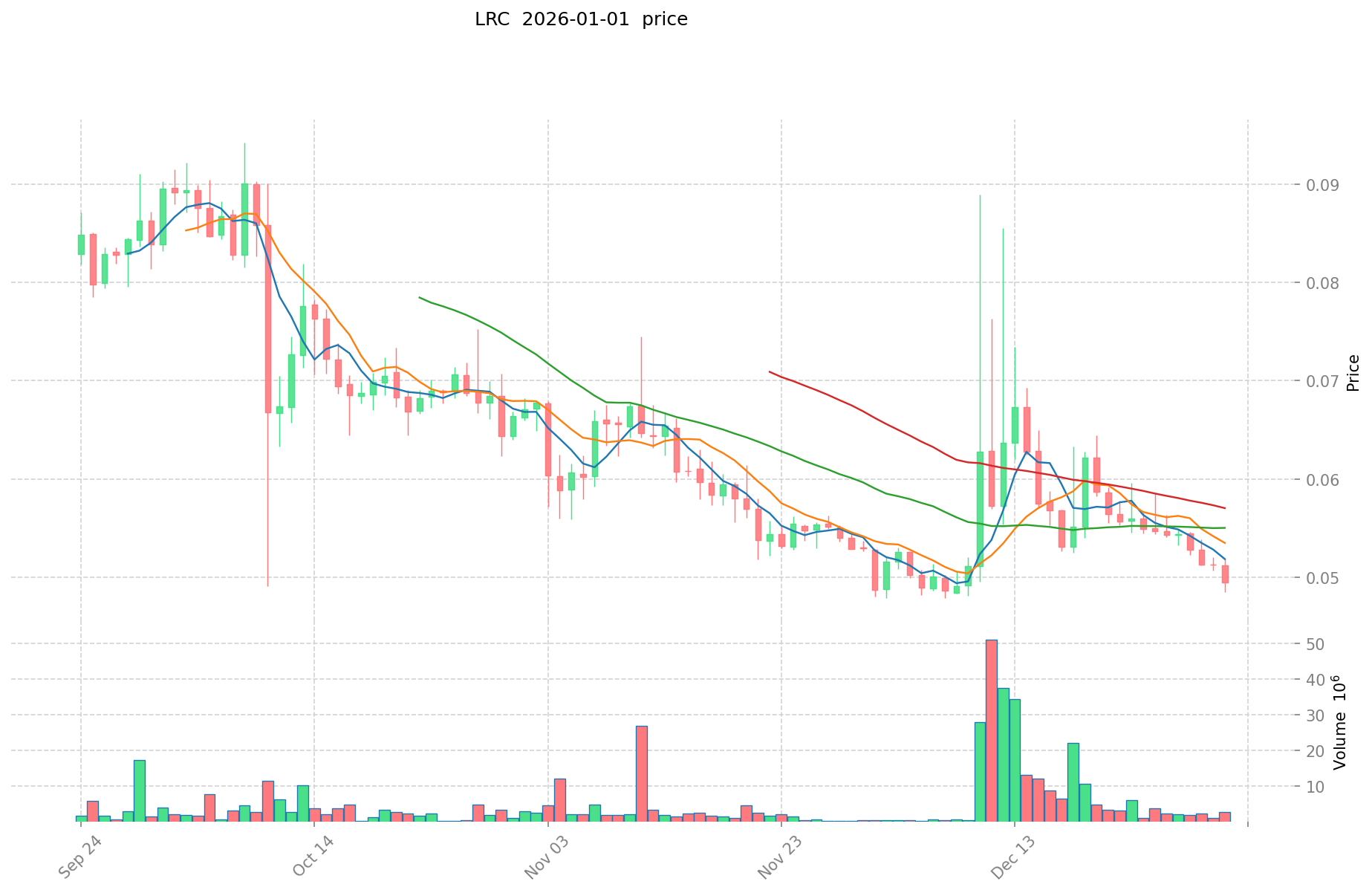
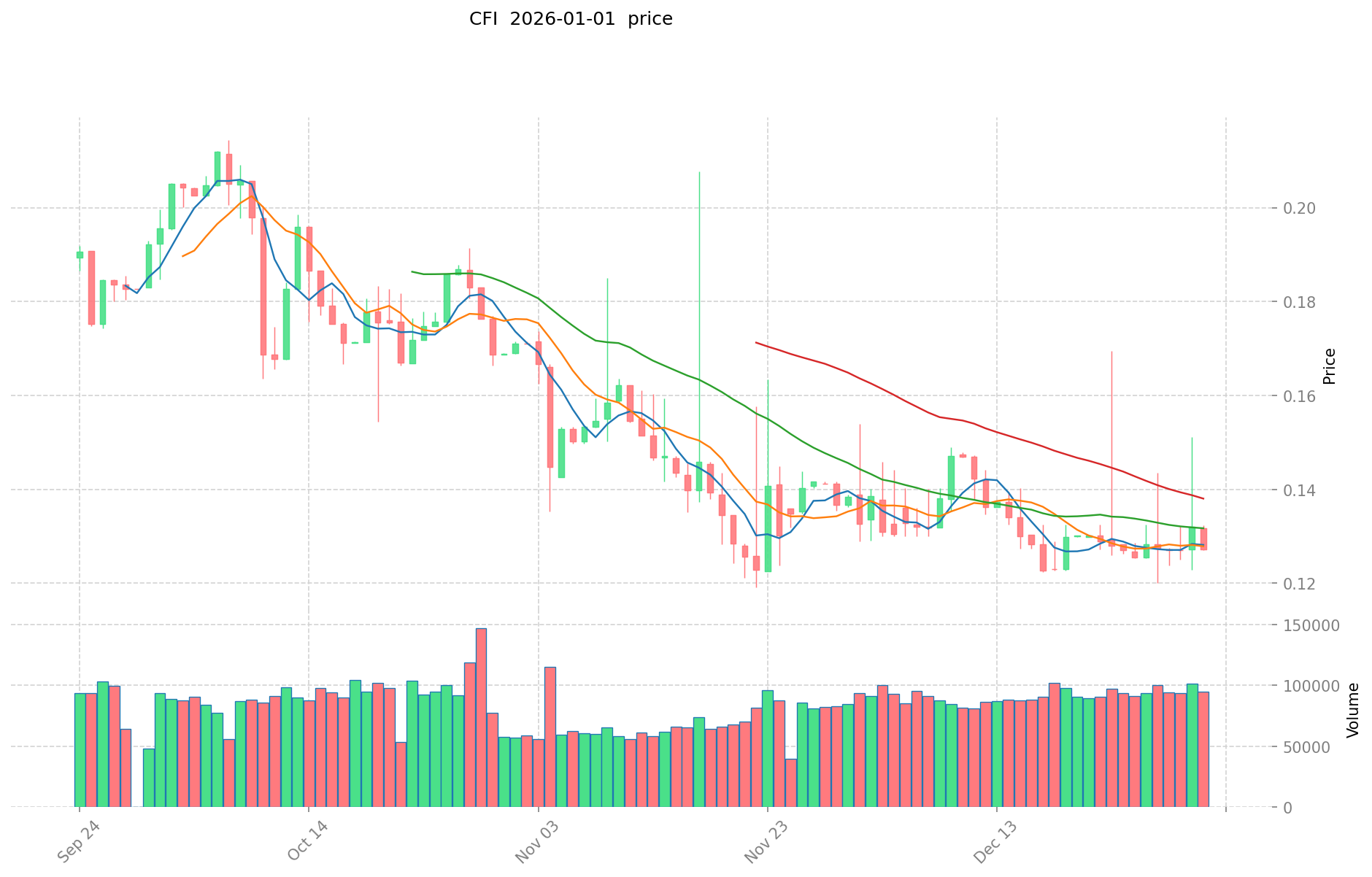
  • Comparative Analysis: Over the market cycle from 2021 to 2026, CFI experienced a decline from $76.41 to $0.12889, representing approximately a 99.83% decrease. In contrast, LRC fell from $3.75 to $0.04999, corresponding to approximately a 86.67% decline. Both tokens have experienced significant corrections from their peak valuations, reflecting broader market cycles and project-specific developments.

Current Market Status (January 1, 2026)

  • CyberFi (CFI) Current Price: $0.12889
  • Loopring (LRC) Current Price: $0.04999
  • 24-Hour Trading Volume: CFI $12,655.95 vs LRC $134,461.62
  • Market Sentiment Index (Fear & Greed Index): 20 (Extreme Fear)

Click to view real-time prices:
price_image1 price_image2

Core Factors Influencing CFI vs LRC Investment Value

I. Tokenomics and Supply Mechanism Comparison

Based on available reference materials, specific tokenomics data for CFI and LRC are not provided in the source documents. This section requires direct supplementation from reliable cryptocurrency databases.

II. Institutional Adoption and Market Application

Institutional Holdings

Reference materials lack specific data on institutional positioning for CFI and LRC tokens.

Enterprise Adoption

Information regarding enterprise adoption of CFI and LRC in cross-border payments, settlement operations, and investment portfolio applications is not available in the provided sources.

Regulatory Policies by Jurisdiction

Reference materials do not contain comparative analysis of regulatory attitudes toward CFI and LRC across different jurisdictions.

III. Technological Development and Ecosystem Construction

CFI Technology Upgrades

Technical upgrade information and potential impacts for CFI are not documented in the provided reference materials.

LRC Technology Development

Technological advancement details and development trajectories for LRC are absent from the source documents.

Ecosystem Comparison

Data on DeFi integration, NFT applications, payment functionality, and smart contract deployment for both CFI and LRC is not available in the reference materials.

IV. Macroeconomic Environment and Market Cycles

Performance During Inflationary Periods

The anti-inflationary attributes of CFI and LRC compared to traditional assets are not discussed in the provided sources.

Impact of Monetary Policy

Effects of interest rate changes and USD index fluctuations on CFI and LRC valuations are not documented in the reference materials.

Geopolitical Factors

Implications of cross-border transaction demands and international geopolitical developments on both tokens are not covered in the available sources.


Note: The reference materials provided contain limited specific information about CFI and LRC investment fundamentals. Comprehensive analysis requires access to specialized cryptocurrency research databases, project whitepapers, and on-chain analytics platforms.

III. 2026-2031 Price Forecast: CFI vs LRC

Short-term Forecast (2026)

  • CFI: Conservative $0.0898-$0.1302 | Bullish $0.1302-$0.1458
  • LRC: Conservative $0.0379-$0.0499 | Bullish $0.0499-$0.0559

Mid-term Forecast (2028-2029)

  • CFI could enter accumulation phase, projected price range $0.1486-$0.2649
  • LRC could enter recovery phase, projected price range $0.0363-$0.0708
  • Key drivers: institutional capital inflows, ETF adoption, ecosystem development

Long-term Forecast (2030-2031)

  • CFI: Base scenario $0.1687-$0.2903 | Bullish scenario $0.2905-$0.3700
  • LRC: Base scenario $0.0459-$0.0809 | Bullish scenario $0.0809-$0.1091

CFI:

年份 预测最高价 预测平均价格 预测最低价 涨跌幅
2026 0.1458128 0.13019 0.0898311 1
2027 0.195961988 0.1380014 0.093840952 7
2028 0.24045363936 0.166981694 0.14861370766 29
2029 0.264832966684 0.20371766668 0.183345900012 58
2030 0.29050139268568 0.234275316682 0.16867822801104 81
2031 0.369967580104214 0.26238835468384 0.157433012810304 103

LRC:

年份 预测最高价 预测平均价格 预测最低价 涨跌幅
2026 0.055888 0.0499 0.037924 0
2027 0.06294386 0.052894 0.0370258 5
2028 0.0718194732 0.05791893 0.0417016296 15
2029 0.070058737728 0.0648692016 0.036326752896 29
2030 0.0809567635968 0.067463969664 0.05869365360768 34
2031 0.109089238946688 0.0742103666304 0.045268323644544 48

IV. Investment Strategy Comparison: CFI vs LRC

Long-term vs Short-term Investment Strategy

  • CyberFi (CFI): Suitable for investors focused on DeFi automation platforms and cross-chain infrastructure development, seeking exposure to complex trading strategy automation and multi-exchange optimization
  • Loopring (LRC): Suitable for investors interested in Layer 2 scaling solutions and decentralized exchange protocols, emphasizing zero-risk token exchange models and protocol-based trading infrastructure

Risk Management and Asset Allocation

  • Conservative Investors: CFI 30% vs LRC 70%, prioritizing established protocol infrastructure with higher trading volume stability
  • Aggressive Investors: CFI 70% vs LRC 30%, targeting higher growth potential from DeFi automation innovations
  • Hedging Tools: Stablecoin allocation, options strategies, cross-token portfolio diversification

V. Potential Risk Comparison

Market Risk

  • CFI: Concentrated liquidity risk with 24-hour trading volume at $12,655.95, indicating lower market depth and higher slippage potential during volatile periods
  • LRC: Relatively higher market liquidity at $134,461.62 trading volume, though still modest compared to major cryptocurrencies, presenting moderate liquidity constraints

Technology Risk

  • CFI: Cross-chain layer dependency, complexity of multi-exchange price aggregation algorithms, potential smart contract vulnerabilities in limit order execution
  • LRC: Layer 2 protocol reliance on Ethereum mainchain security, off-chain matching integrity risks, on-chain settlement bottlenecks during network congestion

Regulatory Risk

  • Global regulatory policies increasingly scrutinize decentralized exchange platforms and non-custodial DeFi solutions, potentially affecting both CFI and LRC operational frameworks
  • Jurisdictional variations in classification of automated trading systems and Layer 2 protocols introduce compliance uncertainty for both tokens

VI. Conclusion: Which Is the Better Buy?

📌 Investment Value Summary

  • CFI Advantages: Non-custodial automation for complex DeFi strategies, Best Trading Value (BTV) optimization across multiple exchanges, cross-chain functionality addressing fragmented liquidity
  • LRC Advantages: Established multi-token protocol framework, zero-risk token exchange model, multiple exchange competition mechanism reducing rent-seeking behavior

✅ Investment Recommendations

  • Beginner Investors: LRC offers more established protocol infrastructure with clearer use cases in decentralized exchange operations, though both tokens carry significant market risk at current valuations
  • Experienced Investors: CFI presents higher growth potential in the DeFi automation sector with projected 2031 price range of $0.1574-$0.3700, while LRC offers defensive positioning with projected 2031 range of $0.0453-$0.1091
  • Institutional Investors: Consider CFI for portfolio exposure to emerging DeFi infrastructure automation; allocate to LRC for Layer 2 scaling solution diversification; both require thorough due diligence on project development roadmaps and ecosystem adoption metrics

⚠️ Risk Disclaimer: Cryptocurrency markets exhibit extreme volatility. Both CFI and LRC have declined over 86% from peak valuations. This analysis is for informational purposes only and does not constitute investment advice.

FAQ

CFI和LRC分别是什么?各自有什么用途和应用场景?

CFI是Cumulative Finance Index代币,用于DeFi借贷和收益聚合平台。LRC是Loopring代币,用于去中心化交易所和支付结算。两者分别在流动性挖矿和链上交易中应用广泛。

CFI和LRC在技术架构上有什么主要区别?

CFI主要用于防止控制流弯曲攻击,依赖编译器和运行时保护机制。LRC则专注于检测内存错误,基于静态分析和动态检测技术。两者在安全防护的侧重点和实现方式上存在本质差异。

CFI和LRC的性能指标对比如何?交易速度、成本、安全性等方面有什么差异?

CFI交易速度更快,LRC交易成本更低。CFI在安全性方面有更严格的监管保障。两者在交易额和确认时间上也存在差异,用户可根据需求选择。

投资CFI和LRC各有什么风险?哪个更适合长期持有?

CFI和LRC都存在市场波动、流动性和技术风险。CFI侧重DeFi生态,LRC为Layer2方案,风险特征不同。长期持有需根据个人风险承受能力选择,两者都需持续关注项目进展。

CFI和LRC在市场流动性和交易对方面有什么区别?

LRC市场流动性更强,交易对数量众多,交易额较大。CFI流动性相对较弱,交易对较少,市场关注度较低。总体而言LRC更适合大额交易。

CFI和LRC未来的发展前景和生态建设计划分别是什么?

CFI致力于DeFi生态完善和跨链互操作性发展,计划扩展应用场景和提升交易额。LRC专注于Layer2扩容方案优化和生态伙伴拓展,目标是降低交易成本、提升网络吞吐量。两者均致力于推动Web3产业发展。

* The information is not intended to be and does not constitute financial advice or any other recommendation of any sort offered or endorsed by Gate.
Related Articles
CRO vs DYDX: Comparing Two Leading Crypto Exchanges for Optimal Trading Experience

CRO vs DYDX: Comparing Two Leading Crypto Exchanges for Optimal Trading Experience

The article "CRO vs DYDX: Comparing Two Leading Crypto Exchanges for Optimal Trading Experience" presents a thorough analysis comparing Cronos (CRO) and dYdX (DYDX) from an investment perspective. It covers their historical price trends, current market status, supply mechanisms, institutional adoption, technological ecosystems, and potential risks. Suitable for investors uncertain about which token to choose, it addresses questions regarding historical performance, price predictions, and investment strategies. Offering insights into risk management, market cycles, and regulatory implications, the article is essential for both new and experienced investors seeking to optimize their crypto portfolio with CRO and DYDX.
2025-10-15 03:57:34
NETT vs RUNE: Comparing Two Leading Edge Technologies in Network Security

NETT vs RUNE: Comparing Two Leading Edge Technologies in Network Security

This article offers a detailed comparison between NETT and RUNE, two leading technologies in network security. It aims to provide investors with insights into historical price trends, key factors influencing investment value, and strategic portfolio allocation options. Suitable for both new and experienced investors, the content explores network stability, regulatory risks, and potential opportunities. The article concludes by addressing which coin might be a stronger investment, emphasizing growth potential on Layer 2 for NETT and cross-chain liquidity strengths for RUNE. Read more for strategic investment insights on Gate.

2025-10-31 11:12:06
Is Dfyn Network (DFYN) a good investment?: A Comprehensive Analysis of Features, Risks, and Market Potential

Is Dfyn Network (DFYN) a good investment?: A Comprehensive Analysis of Features, Risks, and Market Potential

# Is Dfyn Network (DFYN) a Good Investment? A Comprehensive Analysis This in-depth report evaluates whether DFYN represents a viable investment opportunity by analyzing its market position, technology infrastructure, tokenomics, and risk factors. The analysis addresses key investor concerns: Is DFYN worth buying given its 99.98% decline from all-time highs? What are the realistic growth prospects through 2030? What risk management strategies apply to this micro-cap asset? Structured across six major sections—price history, project overview, token economics, market performance, investment forecasts, and risk assessment—this guide serves beginners seeking foundational knowledge, experienced traders evaluating speculative positions, and institutions assessing multi-chain DEX exposure. The report combines historical performance data, technical metrics from Gate, and forward-looking scenarios to provide informed investment reference points for cryptocurrency portfolios.
2025-12-30 14:22:38
KYO vs ARB: A Comprehensive Comparison of Two Leading Cryptocurrency Tokens

KYO vs ARB: A Comprehensive Comparison of Two Leading Cryptocurrency Tokens

This article offers a comprehensive comparison of KYO and ARB, two major cryptocurrency tokens, analyzing their investment potential in terms of market performance, application scenarios, price trends, and supply mechanisms. It addresses crucial investor queries such as market status, investment strategies, and risk assessments, catering to both new and seasoned investors looking to balance portfolio choices. Readers can explore historical price trends, tokenomics, and market sentiment, while gaining insights on short and long-term price predictions. Key considerations are made regarding KYO's growth potential and ARB's stability and ecosystem maturity.
2025-12-26 06:11:43
2025 CLEAR Price Prediction: Expert Analysis and Market Forecast for the Upcoming Year

2025 CLEAR Price Prediction: Expert Analysis and Market Forecast for the Upcoming Year

# Article Overview: 2025 CLEAR Price Prediction: Expert Analysis and Market Forecast This comprehensive analysis examines Everclear (CLEAR), a Layer 2 clearing infrastructure token, delivering professional price forecasts and investment strategies for 2025-2030. The report addresses critical investor needs: understanding CLEAR's market position, evaluating price trajectories, and implementing risk-managed trading approaches. The article systematically covers historical price evolution (96.77% decline from January peak), current market dynamics with $747,891 market cap, and tiered price predictions ranging from $0.00214-$0.00928 across five-year horizons. Tailored for beginners, experienced traders, and institutional investors, it provides actionable Gate trading strategies, comprehensive risk management frameworks, and detailed exposure to emerging chain abstraction infrastructure opportunities in cryptocurrency markets.
2025-12-28 08:31:20
KAT vs OP: A Comprehensive Comparison of Two Leading Trading Platforms

KAT vs OP: A Comprehensive Comparison of Two Leading Trading Platforms

# KAT vs OP: A Comprehensive Comparison of Two Leading Trading Platforms This article delivers an in-depth investment analysis comparing Karat Token (KAT), a Web3 data privacy asset, with Optimism (OP), Ethereum's leading Layer 2 scaling solution. It addresses critical investor questions about market positioning, price performance, and portfolio allocation strategies across both tokens. The guide examines historical price trends, tokenomics, ecosystem adoption, and technical development to determine optimal investment opportunities. Structured through market analysis, price projections (2025-2030), risk assessment, and strategic recommendations, this resource serves beginner, experienced, and institutional investors seeking clarity on KAT vs OP investments. View real-time prices and trading data on Gate for informed decision-making.
2025-12-29 04:14:42
Recommended for You
Is Crypto Gambling Legal in Australia?

Is Crypto Gambling Legal in Australia?

# Australian Regulations on Cryptocurrency Gambling: What You Need to Know **Introduction** This comprehensive guide navigates Australia's cryptocurrency gambling regulatory landscape, addressing critical concerns for investors, traders, and users operating in this legal grey area. The Interactive Gambling Act 2001 lacks explicit cryptocurrency provisions, creating regulatory ambiguity that impacts platform credibility, tax obligations, and legal exposure. This article examines current regulatory frameworks, AUSTRAC compliance requirements, real-world cryptocurrency gambling platforms on Gate, industry statistics, and practical risk management strategies. Whether you're considering crypto gambling participation or evaluating investment opportunities, this resource provides essential insights into Australia's evolving regulatory environment, tax implications, and best practices for navigating this uncertain yet rapidly growing sector with confidence and compliance awareness.
2026-01-02 13:20:41
Bitcoin Pizza Guy: The Historic First Real-World Bitcoin Transaction

Bitcoin Pizza Guy: The Historic First Real-World Bitcoin Transaction

# Article Introduction This article chronicles the historic Bitcoin Pizza transaction of May 22, 2010, when Laszlo Hanyecz purchased two pizzas for 10,000 BTC—the first documented real-world Bitcoin commerce. It explores how this milestone transformed cryptocurrency from theoretical concept into practical payment method, examining its significance in Bitcoin adoption and price appreciation (those coins now worth over $350 million). The piece analyzes key lessons about digital asset volatility, investment returns, and decentralized finance principles while tracing cryptocurrency's evolution from early adoption to mainstream acceptance. Ideal for investors, blockchain enthusiasts, and newcomers seeking to understand Bitcoin's historical trajectory and market dynamics, this narrative serves as essential context for anyone navigating today's cryptocurrency landscape on platforms like Gate.
2026-01-02 13:12:12
Illia Polosukhin

Illia Polosukhin

# Introduction This article explores Illia Polosukhin's transformative career in artificial intelligence and blockchain technology. Discover how his seven-year tenure at Google developing TensorFlow shaped modern machine learning, and how he co-founded NEAR Protocol to revolutionize blockchain scalability and user accessibility. The piece examines key innovations including Nightshade Sharding and Aurora Layer 2 solutions, tracing milestones from TensorFlow Lite (2017) to NEAR Mainnet launch (2020). Ideal for developers, investors, and Web3 enthusiasts seeking to understand how AI and blockchain expertise converge to build practical, user-centric solutions. Learn how NEAR Protocol's lower fees and faster transactions establish competitive advantages while driving decentralized application adoption through accessible blockchain infrastructure.
2026-01-02 13:05:22
ATH là gì? All-Time High trong Crypto là gì?

ATH là gì? All-Time High trong Crypto là gì?

# Tìm Hiểu ATH: Đỉnh Lịch Sử Trong Tiền Điện Tử Là Gì? ATH (All-Time High) là mức giá cao nhất mà một đồng tiền điện tử từng đạt được, đóng vai trò quan trọng trong việc đánh giá tiềm năng tăng trưởng và sự chấp nhận của tài sản số. Bài viết này giúp nhà đầu tư và trader hiểu rõ cách sử dụng ATH để xác định cơ hội đầu tư, phân tích xu hướng thị trường và quản lý rủi ro hiệu quả. Nội dung trình bày chi tiết tầm quan trọng của ATH, ví dụ thực tế từ Bitcoin và Ethereum, cách theo dõi ATH trên các sàn giao dịch như Gate, cũng như các chiến lược kết hợp ATH với phân tích kỹ thuật để xây dựng chiến lược đầu tư bền vững trong thị trường crypto.
2026-01-02 13:02:07
How to Buy Starlink in United Kingdom

How to Buy Starlink in United Kingdom

# Guide to Purchasing Starlink (STARL) Cryptocurrency This comprehensive guide enables UK investors to purchase Starlink tokens through multiple methods on leading cryptocurrency platforms like Gate. From account setup and KYC verification to spot trading and payment options, the guide covers the complete acquisition process using credit cards, bank transfers, and peer-to-peer trading. Discover how to store your STARL tokens securely, explore investment strategies including dollar-cost averaging and ladder buying, and understand essential cryptocurrency risks before investing. Whether you're a beginner or experienced trader, this resource provides step-by-step instructions, storage recommendations, and post-purchase opportunities to maximize your Starlink investment journey.

2026-01-02 12:44:33
What is DAFI: A Comprehensive Guide to Decentralized Finance Infrastructure and Its Impact on Modern Banking

What is DAFI: A Comprehensive Guide to Decentralized Finance Infrastructure and Its Impact on Modern Banking

# Article Introduction: What is DAFI Protocol **Dafi Protocol** is an innovative blockchain framework that creates network-linked synthetic assets to sustain decentralized participation through staking and liquidity provision without excessive token inflation. This comprehensive guide explores DAFI's technical architecture, economic mechanisms, and market performance, addressing how decentralized networks maintain robust incentive structures while protecting token value. Ideal for DeFi participants, investors, and blockchain developers seeking sustainable reward distribution solutions, the article examines DAFI's positioning, operational framework, and trading opportunities on Gate. From genesis to current market dynamics, discover how synthetic asset distribution addresses fundamental decentralized finance challenges while maintaining transparent, scalable network economics.

2026-01-02 12:43:01