# Article Overview: Promising Cryptocurrencies for 2025: Future Investment Opportunities
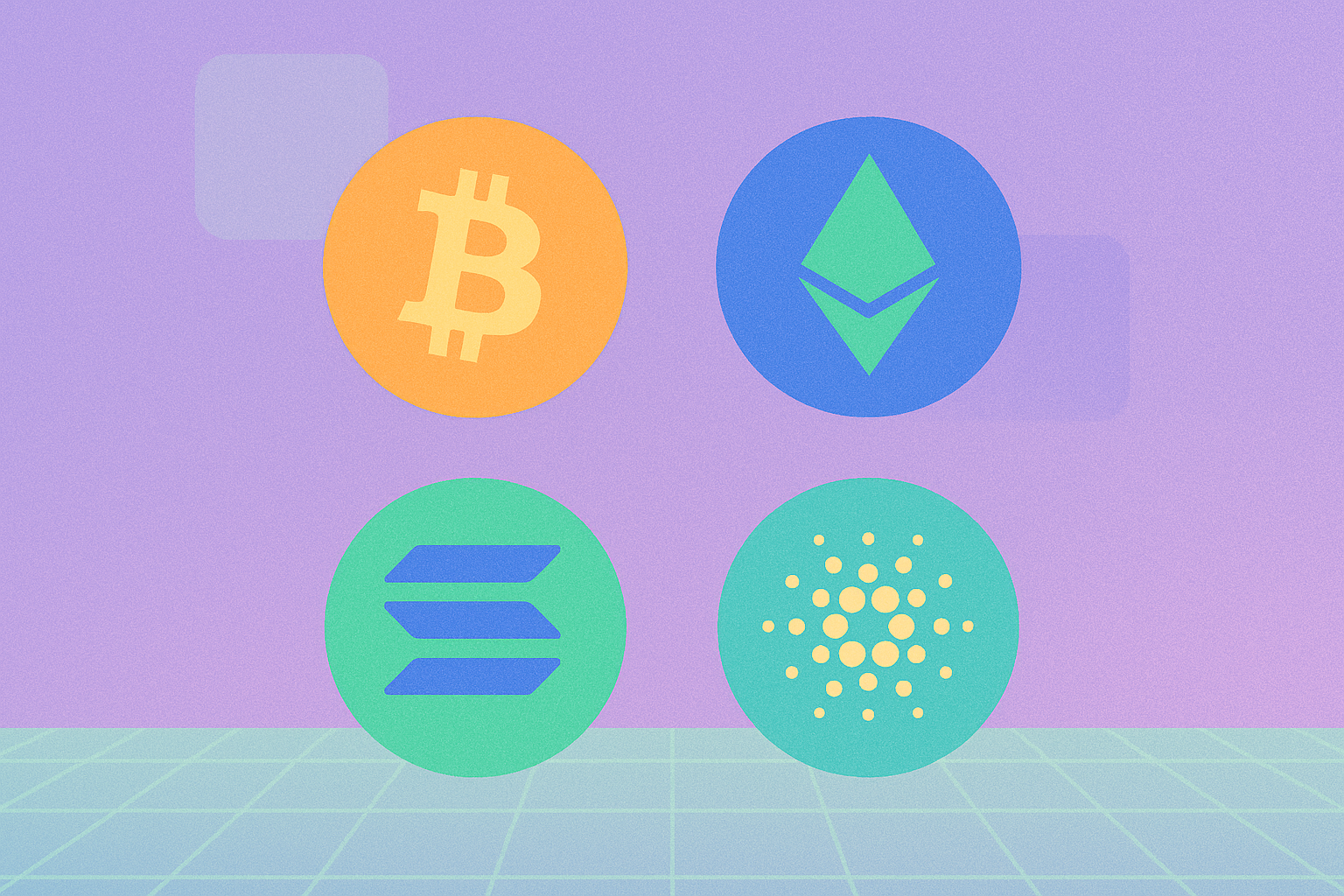
The cryptocurrency market is experiencing transformative growth driven by institutional adoption, regulatory clarity, and technological innovation. This comprehensive guide examines 10+ major digital assets—including Bitcoin, Ethereum, Solana, and Cardano—evaluating their investment potential and real-world applications. Designed for both seasoned and novice investors, the article provides essential insights into asset diversification strategies, blockchain infrastructure solutions, and stablecoin utility. Each cryptocurrency profile highlights unique value propositions, from Bitcoin's store-of-value appeal to Ethereum's DeFi ecosystem dominance. Practical risk assessments, security best practices, and FAQs equip readers to make informed investment decisions on Gate. Navigate cryptocurrency opportunities with clarity and confidence.
Why Invest in Crypto Now?
The cryptocurrency market in 2025 is evolving rapidly, fueled by groundbreaking innovations, regulatory clarity, and increasing institutional adoption. The days of crypto being a niche investment are long gone—major corporations, governments, and financial institutions are now deeply involved.
Several key factors make this an important time to pay attention to cryptocurrencies:
-
Mass Adoption: Cryptocurrencies are no longer purely speculative assets; they are being integrated into mainstream finance and everyday transactions.
-
Regulatory Progress: Many governments, including the U.S., are moving towards clearer regulations, creating a safer and more transparent investment environment.
-
Technological Breakthroughs: Blockchain technology continues to improve, creating faster, more efficient networks that support diverse applications.
Understanding the top cryptocurrencies with strong growth potential is essential for investors seeking to diversify their digital asset portfolios.
Bitcoin (BTC) – The Digital Gold
Bitcoin is the most recognized and trusted cryptocurrency, often referred to as "digital gold." In recent developments, governments and institutional investors have shown increased interest in Bitcoin as a strategic reserve asset, reinforcing its importance in the global financial system.
Bitcoin's value proposition rests on its limited supply of 21 million coins and its role as a store of value. Institutional investors and sovereign wealth funds have been increasing their Bitcoin holdings, which contributes to its market dynamics. The cryptocurrency's historical performance and network security make it a foundational asset for many investment portfolios.
Ethereum (ETH) – The Powerhouse of Decentralized Applications
Ethereum has revolutionized the crypto space with its smart contract capabilities, enabling decentralized finance (DeFi), non-fungible tokens (NFTs), and AI-powered applications. With Ethereum 2.0 now fully operational, the network has achieved significant improvements in transaction speeds while reducing energy consumption, making ETH more scalable and attractive for developers.
The Ethereum ecosystem continues to expand with thousands of decentralized applications built on its platform. Its role as the leading smart contract platform has established it as a critical infrastructure layer in the blockchain industry. Institutional adoption of Ethereum-based solutions continues to grow, reflecting confidence in its long-term viability.
Solana (SOL) – The High-Speed Contender
Solana is gaining recognition as one of the fastest and most cost-effective blockchains available. Its booming NFT ecosystem and partnerships with major companies position it as a strong competitor in the Layer 1 blockchain space. The platform's high throughput and low transaction costs make it attractive for developers building scalable applications.
Solana's network improvements and growing developer community contribute to its expanding ecosystem. The platform has demonstrated resilience and continues to attract institutional and retail interest, making it a notable player in the blockchain landscape.
Cardano (ADA) – The Smart Investment for the Future
Cardano's research-driven approach emphasizes long-term sustainability and peer-reviewed development. The platform has successfully integrated smart contracts and is expanding into real-world applications, particularly in emerging markets. Its focus on academic rigor and formal verification distinguishes it from many competitors.
Cardano's expansion into various sectors, including supply chain management and governance applications, demonstrates its versatility. For investors seeking an asset with strong fundamentals and a clear development roadmap, Cardano represents a methodical approach to blockchain innovation.
XRP (XRP) – The Future of Cross-Border Payments
XRP is designed to facilitate instant, low-cost international transactions, making it attractive to banks and financial institutions seeking to improve cross-border payment efficiency. The cryptocurrency's focus on solving real-world payment problems distinguishes it from many other digital assets.
XRP's utility in the global financial system continues to develop as more financial institutions explore blockchain-based settlement solutions. The platform's liquidity and established use cases in international remittances position it as a significant player in the fintech ecosystem.
Polygon (MATIC) – Scaling Ethereum for Mass Adoption
Polygon addresses Ethereum's scalability challenges by enabling faster and cheaper transactions through its layer 2 solutions. The platform has attracted partnerships with major technology companies and enterprises seeking scalable blockchain infrastructure.
Polygon's role as a scaling solution has made it essential infrastructure for the Ethereum ecosystem. Its continued development and integration with various projects contribute to its importance in enabling mass adoption of blockchain technology.
Chainlink (LINK) – The Oracle Connecting Blockchain to the Real World
Chainlink serves as critical infrastructure for decentralized applications by enabling smart contracts to securely interact with real-world data. As oracle solutions become increasingly important for blockchain applications, Chainlink's role in the ecosystem continues to strengthen.
The platform's decentralized oracle network provides reliable data feeds for thousands of applications across multiple blockchains. As AI-powered applications and complex smart contracts proliferate, Chainlink's infrastructure becomes increasingly vital to the functioning of the broader blockchain ecosystem.
Polkadot (DOT) – The Future of Blockchain Interoperability
Polkadot enables different blockchains to communicate and share information seamlessly, addressing a fundamental challenge in blockchain architecture. As the Web3 ecosystem evolves, interoperability between different blockchain networks becomes increasingly important.
Polkadot's innovative approach to connecting multiple blockchains through its relay chain architecture provides a foundation for cross-chain applications and services. As more developers build on the network and additional parachains launch, the platform's utility and value proposition continue to expand.
Avalanche (AVAX) – The Fast and Scalable Ethereum Rival
Avalanche distinguishes itself through ultra-fast transaction speeds and low fees, making it an attractive platform for developers and enterprises. The platform's innovative consensus mechanism enables high throughput while maintaining security and decentralization.
Avalanche's growing ecosystem of decentralized applications and institutional partnerships demonstrates increasing confidence in its technical architecture. The platform's focus on providing a scalable alternative to established networks positions it as a significant competitor in the Layer 1 blockchain space.
Stablecoins (USDT, USDC) – The Backbone of Digital Finance
Stablecoins provide essential liquidity and price stability in the volatile cryptocurrency market. These assets are increasingly used in payments, remittances, and decentralized finance applications, making them fundamental to the functioning of the broader crypto ecosystem.
The stablecoin market has grown substantially as institutional and retail users seek ways to maintain exposure to blockchain technology while minimizing price volatility. Stablecoins serve as critical on-ramps to the cryptocurrency market and enable efficient capital movement across different blockchain networks and trading venues.
Final Thoughts: Is Now the Right Time to Invest?
The cryptocurrency market is at a significant juncture, with mainstream adoption, regulatory advancements, and technological breakthroughs creating new opportunities. Whether you are a seasoned investor or new to digital assets, understanding the landscape of major cryptocurrencies is essential for informed investment decisions.
A diversified approach to cryptocurrency investment should consider multiple factors:
-
Established assets like Bitcoin and Ethereum offer established track records and significant network effects.
-
Layer 1 alternatives such as Solana, Cardano, and Avalanche provide different technical approaches to scalability and efficiency.
-
Infrastructure and utility tokens like Chainlink and Polkadot address specific needs within the blockchain ecosystem.
-
Stablecoins provide a mechanism for maintaining value stability while participating in the cryptocurrency ecosystem.
The cryptocurrency market continues to evolve, and staying informed about major digital assets and their underlying technology remains important for investors considering exposure to this asset class.
FAQ
Which cryptocurrencies are worth watching in 2025?
Cardano (ADA), Ripple (XRP), Dogecoin (DOGE), Polkadot (DOT), and Chainlink (LINK) are top cryptocurrencies to watch in 2025. Each offers strong growth potential with unique technological advantages and increasing real-world adoption.
What are the development prospects of Bitcoin and Ethereum in 2025?
Bitcoin maintains strong value-storage appeal with steady growth, while Ethereum accelerates with expanding DeFi and real-world applications. Both cryptocurrencies show robust momentum, with Ethereum potentially outperforming Bitcoin percentage-wise due to technological innovation and increased adoption.
What are the risks and opportunities of emerging cryptocurrency projects compared to mainstream coins?
Emerging projects offer high upside potential with significant price volatility, but face lower liquidity and higher failure risk. Mainstream coins provide stability and easier entry, while emerging tokens can deliver exponential returns if projects succeed. Success depends on technology, team, and market adoption.
How to safely buy and store cryptocurrency?
Use reputable platforms with strong security records. Enable two-factor authentication on your accounts. Store most funds in hardware wallets like Ledger or Trezor for long-term holding. Secure your recovery phrases offline. Avoid impulsive trading and suspicious offers.
What are the main drivers of the cryptocurrency market in 2025?
The main drivers include institutional capital inflows, Federal Reserve policy signals, and growing ETH staking rates. Regulatory clarity and increasing adoption of blockchain technology also fuel market growth.
What are the differences between different cryptocurrencies, and how should I choose?
Different cryptocurrencies serve distinct purposes: Bitcoin offers store of value, Ethereum enables smart contracts, Solana provides high speed, stablecoins like USDT ensure price stability, and others focus on payments or specific applications. Choose based on your investment goals, risk tolerance, technical features, transaction volume, and use cases that align with your strategy.
What are the common risks to be aware of in cryptocurrency investment?
Cryptocurrency investment carries several key risks: market volatility can lead to significant price fluctuations, security threats including hacking and phishing attacks, regulatory uncertainty, exchange risks, and liquidity concerns. Investors should conduct thorough research and implement proper security measures.
How does the practical application of blockchain technology impact the value of cryptocurrencies?
Blockchain's real-world applications in DeFi, supply chain, and digital assets create tangible utility and demand. This practical adoption drives institutional interest and market confidence, directly enhancing cryptocurrency value through increased utility and transaction volume.
* The information is not intended to be and does not constitute financial advice or any other recommendation of any sort offered or endorsed by Gate.