Re-staking is emerging as a technology gaining attention inside and outside the industry, allowing ETH already staked on the Ethereum mainnet to be reused to support the security of other projects. This method enables users to earn returns from their original staking while also increasing potential rewards by supporting more projects. EigenLayer's staking mechanism is significantly different from the Ethereum mainnet's PoS staking. This article analyzes the EigenLayer staking mechanism, the possible rewards, and the potential risks.
2026-03-24 11:54:30
This article discusses Morph's new L2 ecosystem development strategy, which aims to address the issues of "ghost chain effect" and "fake TVL prosperity" on public chains by combining incentive airdrops and developer-centric ecosystem development. The article analyzes both the airdrop strategy of Blast and Morph's comprehensive approach, which includes incentives for testnet airdrops, a developer-centric ecosystem development fund, and strategies for attracting user and developer participation. Morph encourages AI, GameFi and other projects to build on Morph through a series of actions, such as the Sparkloom Builder Program and incubator programs, while providing financial support and airdrop incentives for participants..
2026-03-24 11:54:30
Crypto Pulse focuses on the latest developments in the cryptocurrency industry, delivering up-to-date market analysis and insights.
2026-03-24 11:54:30
There has for a long time been interest in the concept of multi-dimensional gas, and with EIP-4844 we actually have multi-dimensional gas working on Ethereum today. This post explores the benefits of this approach, and the prospects for increasing it further.
2026-03-24 11:54:30
Ethereum client teams working together to ship the Pectra devnet. Given this greater technical capacity, one important question to be asking is: are we building toward the right goals?
2026-03-24 11:54:30
EIP-3074 enables externally owned accounts (EOAs) to delegate control to a specified contract, thereby obtaining the extensive execution capabilities akin to contracts. This significantly enhances user experience and can redefine the current familiar authorization methods, improving security while maintaining usability. Nic from imToken Labs analyzes the impact of EIP-3074, including improvements to asset authorization methods.
2026-03-24 11:54:29
In the past two years, the development speed of ZK has far exceeded expectations. The two leading ZK Rollups, ZkSync, and Starknet, have made significant progress in performance and costs. This article explores Starknet's technical advantages in a straightforward manner and simplifies the explanation of the ZK proof process.
2026-03-24 11:54:29
Despite recent disappointments among some cryptocurrency investors regarding Ethereum, believing its performance has failed to surpass Bitcoin, Ethereum continues to demonstrate ongoing technical innovation and market advantages.
2026-03-24 11:54:29
Unlike typical project introductions that provide brief token release diagrams, Eigenlayer has taken a deep dive into explaining the EIGEN token's role and its relationship with ETH tokens in a detailed and technical manner.
2026-03-24 11:54:29
The EIP-7706 proposal aims to reduce the operating costs of Ethereum L2, change the economic model, and introduce a dual pricing model of Base fee and Priority fee. EIP-4844 proposes Blob Transaction to stabilize transaction fees and will be implemented in 2024. The gas model in Ethereum will also increase restrictions as the network develops, such as the consumption of calldata. This helps L2 development and reduces sequencer costs. This article will introduce the latest Ethereum Gas Fee mechanisms.
2026-03-24 11:54:28
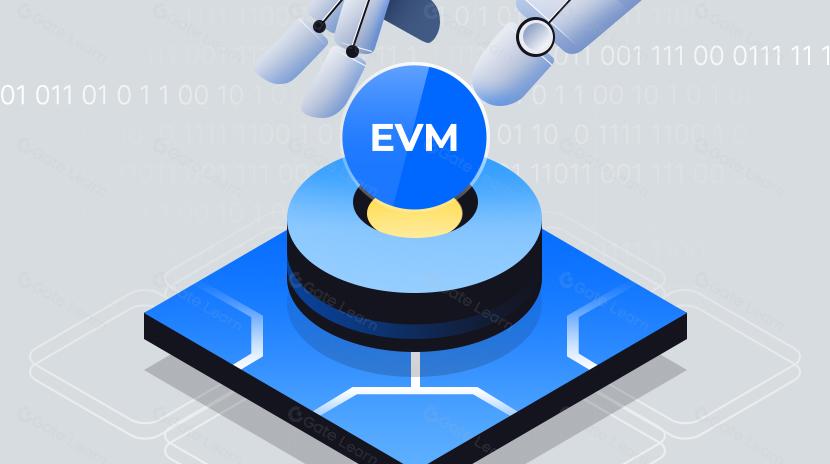
This article introduces how the Axonum platform integrates AI into Ethereum, enabling native AI model inference within smart contracts through OP Rollup and AI EVM. This has significant implications and potential for the development of decentralized ecosystems.
2026-03-24 11:54:28
RISC Zero is one of the leading zkVM developers and has recently launched Steel, a view call proving library based on Alloy. This brings a significant transformation in how developers interact with Ethereum L1 or other EVM chains. Utilizing zero-knowledge proofs and the RISC Zero zkVM, Steel enables developers to perform view calls and provably read and compute the state of Ethereum in a scalable, secure, and cost-effective manner.
2026-03-24 11:54:28
Fasttoken (FTN) is the native currency of the Bahamut blockchain, a Layer 1 solution built on the Ethereum Virtual Machine (EVM). Launched in 2022, Fasttoken’s utility extends across various Fastex offerings, including Fastex Chain and Fastex Exchange.
2026-03-24 11:54:27
Transaction scalability has always been a hot topic, and this article explores how Monad helps to expand TPS (transactions per second), along with a detailed explanation of its workings. The bottleneck is not in re-execution; the bottleneck is accessing Ethereum's memory. Ethereum's method of storing state in the database makes accessing state difficult (time-consuming and therefore expensive), which is another improvement by Monad.
2026-03-24 11:54:26
This article provides a detailed introduction to the features of the Minted platform, including how to buy, sell, and stake NFTs, and how to effectively utilize its native token $MTD. This is a comprehensive guide for beginners to get started with Minted.
2026-03-24 11:54:26