The Jupiter presale of Huma Finance is essentially an experiment about the future form of Decentralized Finance.
Written by: Lawrence
Introduction: When PayFi Meets Solana, the Prelude to Value Reconstruction
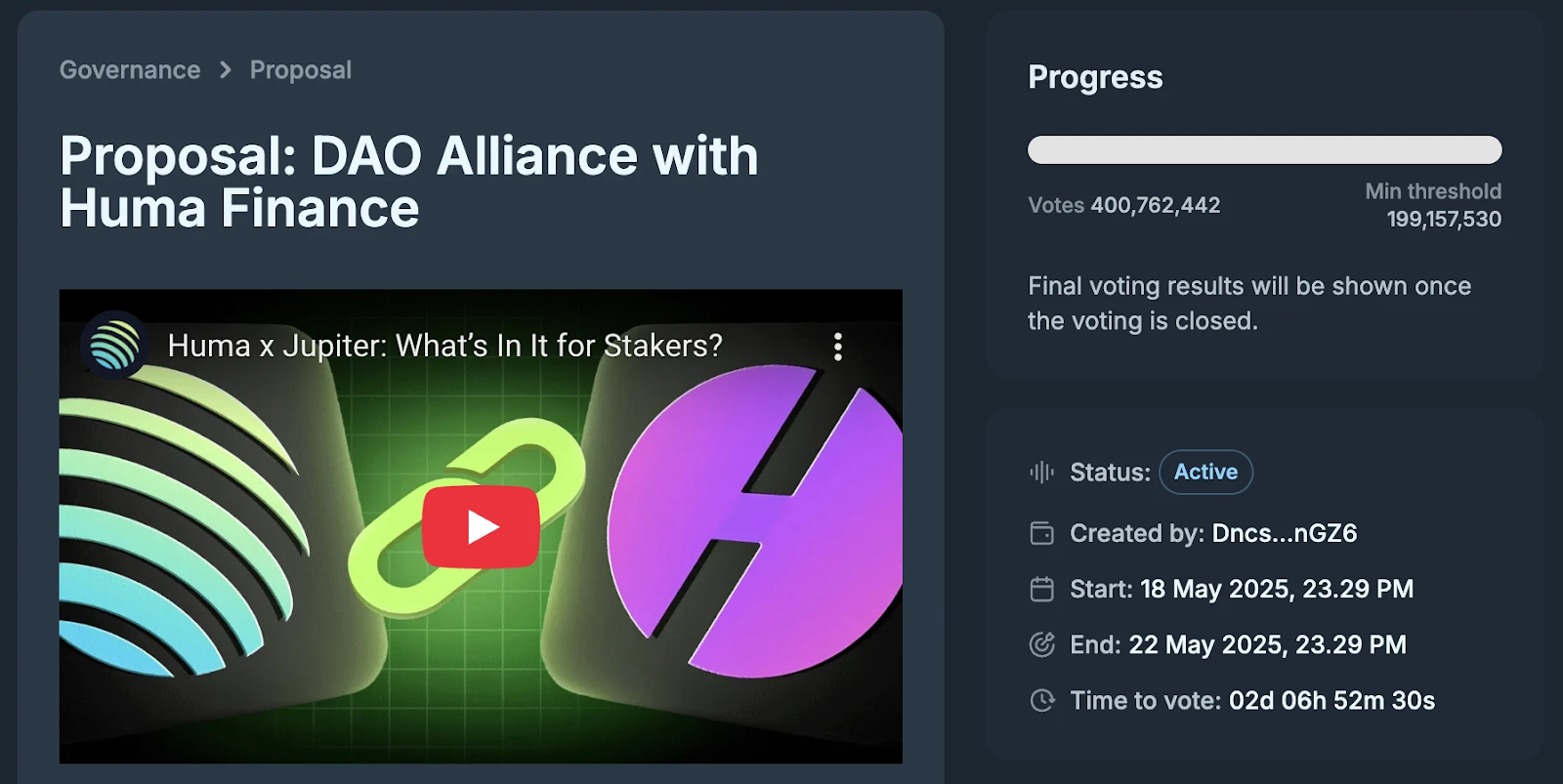
In May 2025, the Launchpad battleground of the Solana ecosystem was filled with smoke. In the struggle between Pump.Fun and Raydium over Meme tokens and liquidity mining, Jupiter broke the deadlock with a strategic partnership — the world’s first PayFi protocol Huma Finance announced the launch of its IDO (Initial DEX Offering) on its new platform TGE (Token Generation Event).
This collaboration is not only about the competition for traffic in token issuance but is also seen as a milestone in the deep integration of PayFi and Decentralized Finance (DeFi). Huma Finance injects a long-awaited value anchor into the Solana ecosystem with a cumulative trading volume of $4.3 billion, an annualized stable return of 14%, and the narrative of “real assets + blockchain.” Meanwhile, Jupiter, leveraging the community momentum of 400,000 monthly active users, attempts to push this presale towards a battle of faith in “Web3 financial infrastructure.”
1. Huma Finance: The “Disruptor” in the PayFi Track and Data Surge
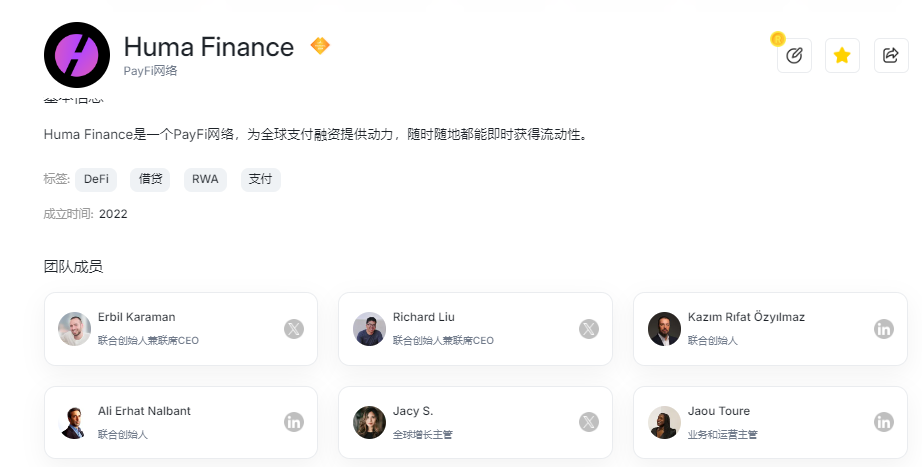
Founded in 2023, Huma Finance is positioned as a blockchain solution provider for cross-border payment and capital turnover. Its core logic is to on-chain trade finance, credit card clearing, cross-border remittance and other scenarios in traditional finance through stablecoin and smart contract technology, so as to realize real-time settlement and income distribution of capital flow. According to the latest disclosure, Huma has achieved a total trading volume of $4.3 billion, a total platform income of $4.09 million, active liquidity assets exceeded $104 million, and the number of deposit users was nearly 49,000 (a 9-fold increase from the previous month). This data can be called “dominant” in the Solana ecosystem - its transaction volume accounts for more than 40% of the total TVL of Solana DeFi, even surpassing established protocols such as Jupiter and Raydium.
Compared to DeFi protocols that rely on speculative liquidity, Huma’s source of income is more realistic. Its 10%-20% annualized rate of return comes from the spread arbitrage and capital turnover needs in cross-border trade, such as SMEs obtaining on-chain credit by pledging accounts receivable. This model gives it a first-mover advantage in the “$30 trillion PayFi market” reported by Messari, and has attracted a total of $46.3 million in two rounds of funding from Distributed Global, Circle Ventures, and others.
2. Token Economic Model: Pragmatic Design and Circulation Game
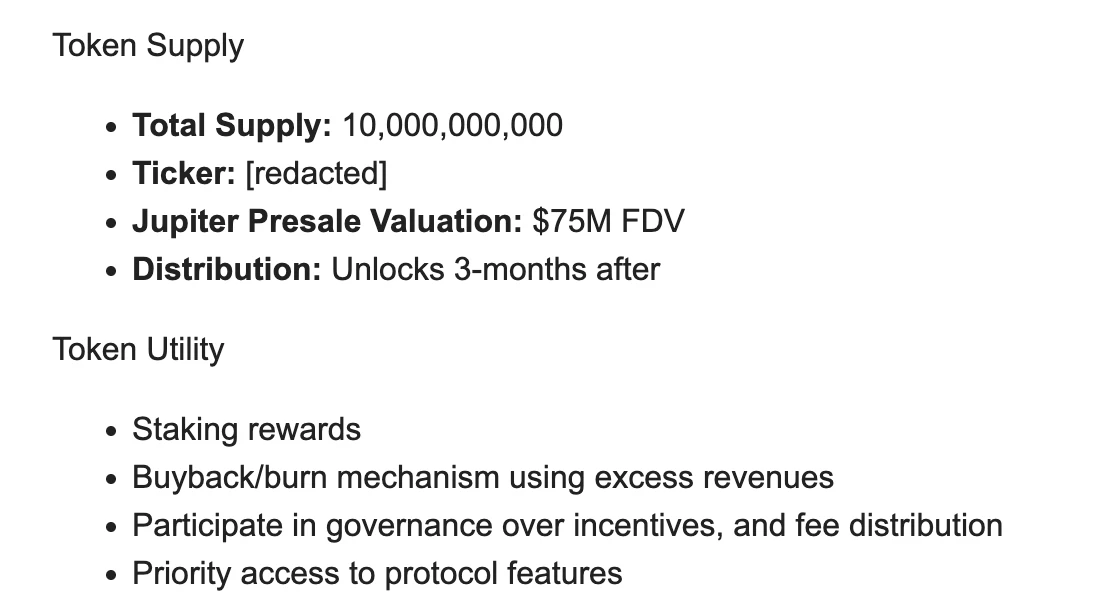
The total supply of Huma token (HUMA) is 10 billion, with an initial circulation ratio of 17.33%. Its economic model highlights the dual logic of “revenue sharing + deflationary mechanism:”
- Token Utility: Holders can share staking rewards (a portion of the annualized 14% yield distribution), participate in governance voting, and enjoy buyback and burn of the protocol’s excess income. The team emphasizes that Huma’s profit sources are stable, with a single month profit reaching 9 million USD in April 2024, which provides fundamental support for the token’s value.
- Allocation Structure: 5% for initial airdrop (targeted at early deposit users), 31% for ecological incentives, 20.6% allocated to early investors, and 19.3% distributed to the team and advisors. It is worth noting that the presale accounts for only 1% of the total supply (100 million tokens) and is subject to a 3-month lock-up. This “low circulation + high lock-up” design not only provides discount opportunities for early participants but also attempts to alleviate the selling pressure in the initial stages of the token’s listing.
Compared to the previous round of financing with an FDV of 171 million USD, this presale is valued at 75 million USD, with a discount of over 56%. This strategy is clearly aimed at attracting the retail power of the Jupiter community, but its 1% supply has also sparked controversy—many users in community proposals are calling for an increase in the presale ratio to balance the entry costs for institutions and retail investors.
III. The Ambition of Jupiter: From Traffic Wars to Ecological Alliances
As the traffic entrance of the Solana ecosystem, Jupiter has exceeded 400,000 monthly active users, but its Launchpad business has been suppressed by Pump.Fun for a long time (the latter has more than 500,000 daily active addresses). This partnership with Huma marks Jupiter’s transformation from a “transaction aggregator” to an “ecological incubator”:
- Strategic Synergy: The $250,000 asset swap between Jupiter and Huma (based on a $75 million FDV) is not only a financial investment but also a declaration of ecological collaboration. Huma’s payment and clearing capabilities can enhance Jupiter’s stablecoin liquidity, while Jupiter’s user base will accelerate Huma’s adoption rate.
- Community co-governance: The presale is only open to JUP stakers, and there is no minimum threshold, but the quota is allocated according to the staked amount. This design not only incentivizes JUP to lock up, but also gives the token distribution rights to the community, forming a differentiated competition with Pump.Fun’s “indiscriminate new listings”.
In addition, both parties plan to jointly establish a DAO alliance to expand their influence through Meme dissemination, joint events, and other methods. Meow, co-founder of Jupiter, revealed in a lengthy article that his ten-year friendship with Huma founder Erbil Karaman has laid the foundation of trust for their collaboration—from their early acquaintance on Quora, to the internal Bitcoin advocacy at Facebook, and then to the joint planning of the JUP token burn event, their relationship has transcended commercial interests and become an “emotional bond” for ecological linkage.
IV. Opportunities and Challenges of PayFi: Between Idealism and Realistic Barriers
Despite Huma’s imaginative PayFi narrative, the challenges it faces cannot be overlooked:
- Competitive Red Sea: Traditional payment protocols such as Ripple and Stellar have laid out their blockchain strategies, while Parcl and Kamino within the Solana ecosystem are also exploring the real asset track. Huma needs to establish barriers through technological openness (supporting multi-chain asset access) and the high-performance advantages of Solana.
- Compliance Risks: Cross-border payments involve regulatory frameworks such as KYC and anti-money laundering, and Huma’s “partially centralized” architecture (such as the credit assessment module) may become a regulatory focus. The team claims to achieve zero defaults by 2024, but must continuously prove its risk control capabilities.
- Token Liquidity Game: A 3-month lock-up period may reduce selling pressure, but it could weaken short-term speculative enthusiasm. If there is a systemic risk in the market during the same period (such as a resurgence of congestion in the Solana network), the price pressure after the token unlock will increase sharply.
5. Presale Strategy and Community Sentiment: A Tug of War Between Rationality and FOMO
For ordinary investors, participating in the Huma presale requires weighing three key factors:
- Cost Assessment: Based on a $75 million FDV, the initial price of HUMA is approximately $0.0075. If you benchmark the previous $171 million valuation, the potential increase is about 128%, but you need to deduct the funding cost of the 3-month lock-up (assuming an annualized return of 15% and the opportunity cost of about 3.75%).
- Community Governance Rights: HUMA holders can participate in key decisions such as protocol fee distribution, which holds strategic value for long-term investors. If Huma can continue to attract genuine commercial demand, the premium on governance rights will gradually become apparent.
- Ecological Bonus: As the first Launchpad project of Jupiter, HUMA may receive additional incentives such as ecological airdrops and liquidity mining. Historical data shows that JUP stakers have averaged over 3 times the return in previous projects like JTO and WEN.
In the community discussion, proponents believe that Huma’s “real return + low valuation” combination is a scarce target in a bear market; Opponents questioned the lock-up mechanism to suppress liquidity, and the PayFi track still needs time to verify. Platform X user @DeFiGuru commented: “This is a turning point for Solana DeFi to move from casinos to banks, but banks need 100 years of credit, and the crypto market only gives 3 months of patience.”
Conclusion: The “Coming of Age” of the Solana Ecosystem
The Jupiter presale of Huma Finance is essentially an experiment about the future form of Decentralized Finance. If successful, PayFi will prove that blockchain can create real value without relying on a Ponzi model; if unsuccessful, it means the narrative of “real assets on-chain” still needs to be dormant. For Solana, this battle is not only a competition for traffic on the Launchpad but also a rite of passage for the ecosystem from “rapid expansion” to “value deposition.”
As the founder of Jupiter, meow, said: “We need to let funds flow on-chain to create jobs, not just paper wealth.” Regardless of the outcome, the collaboration between Huma and Jupiter has written a tension-filled prologue for the crypto world in 2025.
Disclaimer: The information on this page may come from third parties and does not represent the views or opinions of Gate. The content displayed on this page is for reference only and does not constitute any financial, investment, or legal advice. Gate does not guarantee the accuracy or completeness of the information and shall not be liable for any losses arising from the use of this information. Virtual asset investments carry high risks and are subject to significant price volatility. You may lose all of your invested principal. Please fully understand the relevant risks and make prudent decisions based on your own financial situation and risk tolerance. For details, please refer to
Disclaimer.


