Most people will never realize that marketing is the most difficult creative work.
Author: Stacy Muur
Compiled by: Luffy, Foresight News
What is the biggest problem with Web3 marketing? It’s talent. Or more precisely, it’s a lack of talent. Lack of talent, lack of wisdom, lack of critical thinking.
90% of teams just copy and paste the same marketing manuals, without stopping to ask why they do this, or if the strategy is effective.
- The task design of Zealy/Galxe/Intract is only for fake social interaction brushing
- X ‘Intern’ account that appeared out of thin air
- Discord Poker Night with no participants
- Airdrops and points programs inflate data… but watch capital escape after TGE
- Shouting orders without any strategy
- Rose Robot Customer Service
- Six-digit number of fans but zero interaction
- All-platform fake interaction
- Lucky draw, trading competition…
These strategies are all the same. You have seen them, I have seen them, we have all seen them, over and over again. The question is, can we do better? My answer is: Of course we can.
1. Are you sure you’ve targeted the right audience?
Has your team done real competitor and vertical domain analysis? Have they used tools like @Similarweb to capture audience data? Do you know who your users are and where they are?
If you think the target audience overlaps with Binance, quickly check the reality: you may be targeting the US market, but actual users may be in Asia.
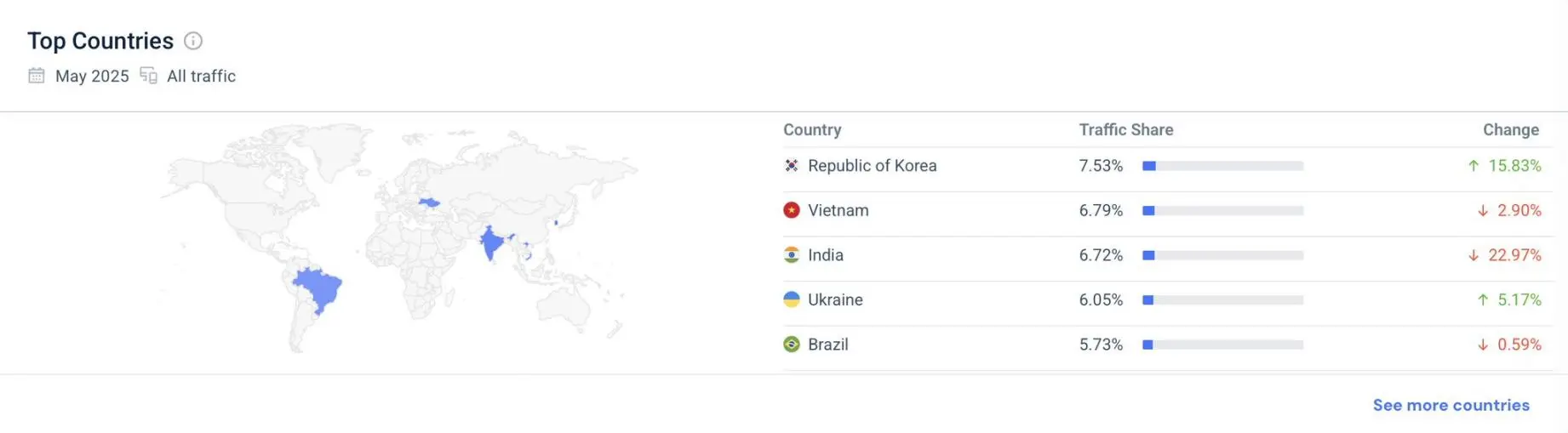
Now guess what will happen if you launch the Zealy event without verification? New community members will flock in from areas you never thought of.
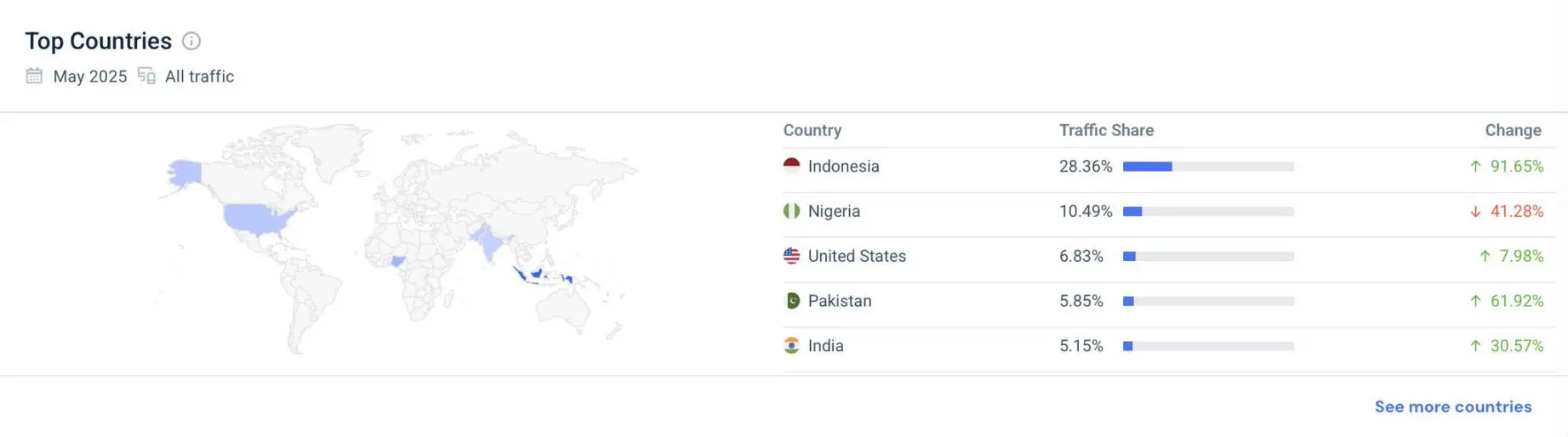
It’s not bad luck, it’s bad marketing.
Web3 allows you to easily access transparent data, but most marketers are too lazy to use it. Instead, they plan campaigns based on atmosphere, number of fans, and surface indicators.
But the fact is: blockchain is the best tool for user research.
- Who used it early?
- Who has persevered during the testnet phase?
- Who did the liquidity mining? Who sold? Who came back again?
Do you think on-chain = anonymous? Not really. You can match on-chain behavior patterns with off-chain behavior — it’s just that most teams are too lazy to do so.
2. Is the airdrop really effective?
This is a rebellious idea: what if the airdrop… is useless?
What is the attrition rate after the airdrop? What proportion of funds can be retained?
Because the tokens you airdrop = your marketing budget. You could have spent these tokens on strategy, creativity, community, data, or media. Instead, you dump them into ruins…and then wonder why the token’s K-line plunges after the TGE.
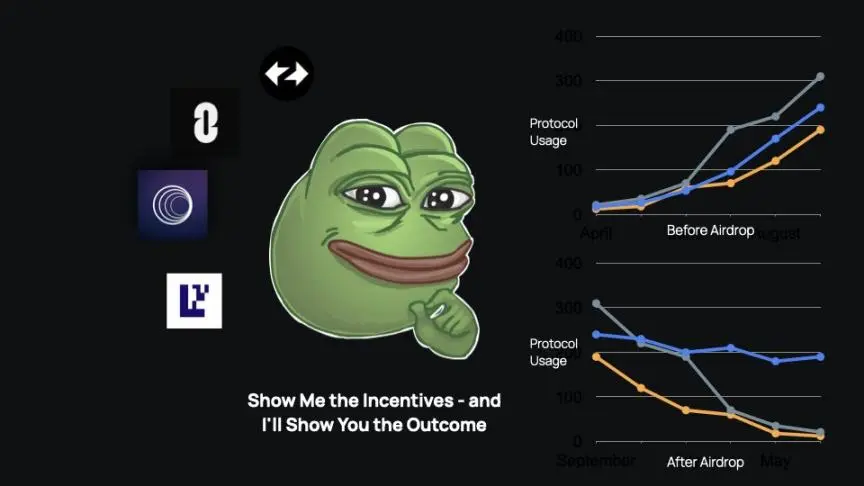
To be honest, some airdrops have been successful. Such as Uniswap, Hyperliquid, Arbitrum. Why? Because their underlying products are very good, have demand, and can retain users. But this list is very short, the list of failed airdrops is much longer.
So ask yourself: Do you really need an airdrop for your project? Or do you want to inflate the data and get a higher valuation from the venture capitalists?
3. Developer relations are not technical support, but distribution channels
If you are building infrastructure, then developers are not ‘partners,’ but your users. They are your early adopters, the most honest feedback loop, and the best distribution channel.
However, most projects still consider developer relations (DevRel) as backend support rather than a part of marketing, which is a huge mistake.
- The document is your login page,
- GitHub is your conversion channel,
- Hackathon is your product laboratory.
If DevRel and marketing team do not communicate, you are working on the project in a vacuum.
4. Creativity is King
Ideally, the job of marketing personnel is to create “marketing products” for the product.
Some marketers just recycle existing ideas, repackage them, and throw them into the market. This is no different from teams forking Uniswap or cloning Pump.fun to chase the original success. Most of them have failed.
So, why do you have different expectations for marketing professionals who simply copy the strategies of others?
Airdrops, points program, zero-fee trading activities… same old wine in a new bottle.
Yes, originality is difficult and time-consuming. It requires months of research, client development, testing, and iteration, and marketers who can truly do this work are not cheap.
But that doesn’t mean you shouldn’t try. At the very least, you should ask yourself: Why am I doing this? What results do I actually expect?
We don’t need more publicity, we need more conviction. Most projects overemphasize scale and overlook trust.
Your market size is not in the millions, maybe just tens of thousands. The truly important people are tired of hype and allergic to nonsense. You can’t win their favor by:
- Another draw
- Another points program
- Another paid call-for-entry event
- Another AMA
- Another staking lottery
- Another trading competition
By solving some practical problems and honestly explaining how you solved them, you will win them.
Start small, first win the first 10 true believers, then 100, then 1000. This is the law of survival here.
Before the next activity, ask yourself:
- Do we know who we are talking to?
- Do we appear where they are?
- Are we talking about words worth believing in?
Web3 marketing is not hype, but the fit between product, values, and identity. The best projects don’t sell features, they build beliefs. When these are done well, there is no need to beg for attention. Their community will market for them.
Finally
Most people will never realize that marketing is the most difficult creative work. Just because when it is done right, everything seems natural.
So don’t just go through the motions. Don’t throw some prompts into ChatGPT, sprinkle with emojis, and call it an event. Dive deep into the product, converse with users, sketch out the outline on the whiteboard until inspiration strikes, write it down, erase, rewrite.
Great marketing offers a perspective that pushes you out of self-excitement and into the needs of others—then clearly, honestly show how you meet those needs. That’s the job. Do it well, and your results will be more enduring than clichés.


