Author: Bao Yilong, Wall Street Journal
For investors concerned about the development of virtual assets in Hong Kong, the new stablecoin regulatory framework effective August 1 in Hong Kong provides a clear picture of the industry for investors.
This week, JPMorgan and Guotai Junan Securities published research reports, indicating that a global market exceeding $230 billion is welcoming the compliant entry of Hong Kong. For investors, this means that stablecoin issuers, licensed virtual asset exchanges, and related financial and technology service providers in Hong Kong will become direct beneficiaries.
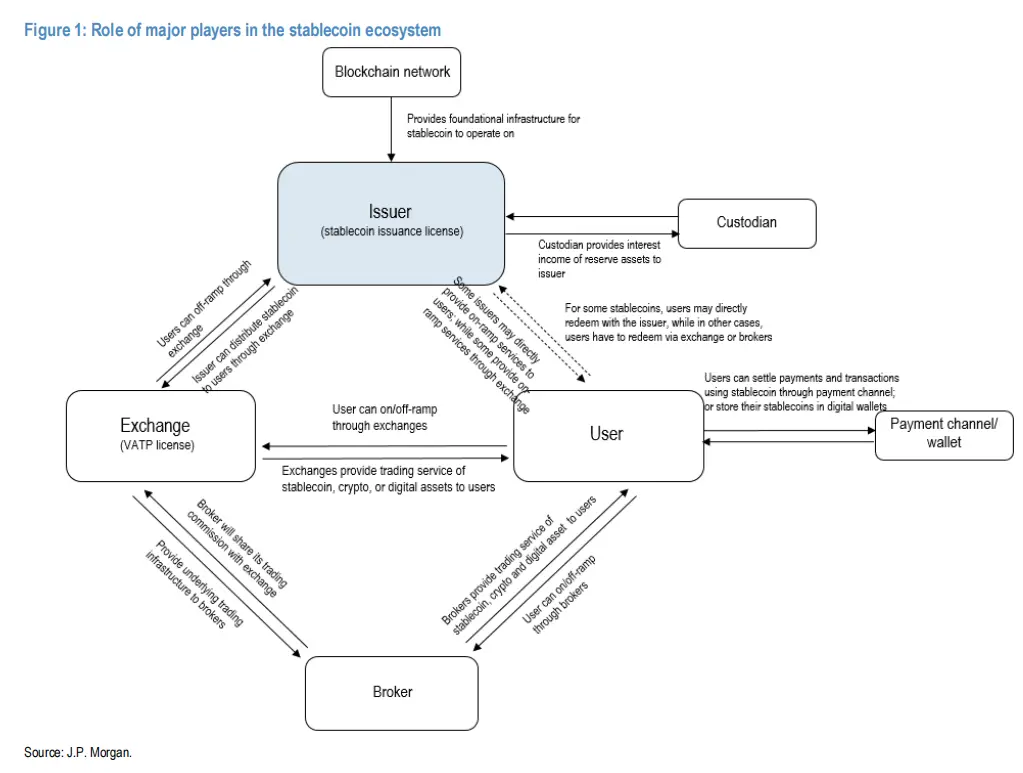
However, JPMorgan emphasized that despite the high market enthusiasm, the entry ticket to Hong Kong is not accessible to everyone, and making a profit in the short term is also not an easy task.
The market size is in its early stage: The current trading volume of the cryptocurrency market in Hong Kong is still very small compared to the US and the global market. Investors should rationally assess its short-term growth potential and avoid overly high expectations.
Differentiation of Profit Models: The issuer is the starting point of the ecosystem, directly sharing the income from reserve assets; licensed exchanges (such as OSL) earn fees by providing trading and clearing services; reserve banks (like ZhongAn Bank) offer custody services; technology/financial brokers (such as Futu and Sifang Jichuang) provide trading systems, technical support, and compliance services.
Regulatory Decision Winners: Those who can obtain the Hong Kong Monetary Authority (HKMA) stablecoin issuance license, as well as exchanges that already hold the VATP license, will become the main beneficiaries of this game. For individual stocks, internet brokerages (such as Futu) with a large retail customer base and a layout of VATP licenses have more advantages than traditional brokerages.
Stablecoin Yield: The business model of stablecoin issuers is extremely clear and attractive. However, regulations in Hong Kong explicitly prohibit paying interest to stablecoin holders, which means that the “hold to earn” model is not viable in Hong Kong, and investment strategies need to be adjusted accordingly.
The Trillion Dollar Table: Current Status of the Stablecoin Market and Giants
The stablecoin market is no longer a niche concept, but a massive market worth hundreds of billions.
According to data cited by Guoxin Securities, the market is dominated by a few giants. The scale of USDT issued by Tether exceeds $150 billion, and the scale of USDC issued by Circle exceeds $60 billion. Both are off-chain stablecoins pegged to the US dollar at a 1:1 ratio, together accounting for nearly 87% of the market share.
According to a report by JPMorgan, by the second quarter of 2025, the total market value of global stablecoins will exceed $230 billion. JPMorgan categorizes stablecoins into four types:
- Off-chain type (fiat-backed): Issued 1:1 with real-world assets (such as USD, US Treasury bonds) as credit guarantees, like USDT and USDC. This is the mainstream in the current market and the core focus of regulation in Hong Kong.
- On-chain: Issued based on blockchain smart contract collateralization of crypto assets (such as Bitcoin), like Dai.
- Stablecoins Supported by Products: For example, Tether Gold, a stablecoin pegged to gold, is backed by actual gold assets.
- Algorithmic: Stablecoin value relies on algorithms and market arbitrage mechanisms, such as the former UST, which once peaked at nearly $20 billion but has since been liquidated, highlighting its high-risk nature.

For investors, this means that the future competition in the Hong Kong market will mainly revolve around the most robust and regulator-favored “off-chain” stablecoins.
“Making Money While Lying Down”? The Core Profit Model of Stablecoin Issuers
The business model of stablecoin issuers is extremely clear and attractive.
The report from GuoXin Securities takes Circle, the issuer of the world’s second-largest stablecoin USDC, as an example to detail its sources of income. Circle’s revenue mainly comes from two major areas, but they are extremely unbalanced.
The core is reserve asset income. When a user buys 1 USDC with 1 dollar, Circle will reserve that 1 dollar. The report states that Circle invests more than 80% of its reserves in short-term U.S. Treasury funds managed by BlackRock, while the remaining 10-20% of cash is kept in globally systemically important banks. The risk-free interest income generated from these investments constitutes the core of Circle’s profits. Data shows that in 2024, this portion of reserve asset income accounted for 99% of Circle’s total revenue.
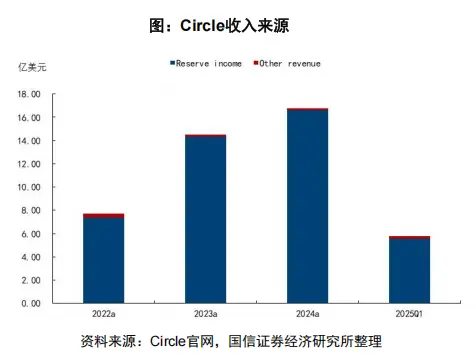
Another source of income is payment and settlement fees, which are the fees generated when users exchange stablecoins, but this portion of income is relatively small.
The essence of this model is that the issuer uses a large reserve of user funds to make low-risk investments and earn interest spread. Its profitability entirely depends on the scale of the reserves and the level of short-term interest rates.
For companies seeking to invest in the stablecoin ecosystem, whether they can obtain an issuance license to control a large reserve is the key to determining whether they can share in this largest cake.
The Battle for Hong Kong Licenses: Who Are the Beneficiaries in the Ecosystem?
With the Hong Kong Stablecoin Regulation officially taking effect on August 1, 2025, a competition for licenses has begun. Reports from Guosen Securities and JPMorgan have jointly identified several key participants and potential beneficiaries in the ecosystem.
First is the starting point of the ecosystem - the issuer. The Hong Kong Monetary Authority launched the “Stablecoin Issuer Sandbox” in 2024, with three groups of issuers and a total of 5 institutions shortlisted. They are the popular candidates that obtained the first batch of licenses:
- A joint venture between Standard Chartered Bank, ANZ Group, and HKT plans to issue the Hong Kong dollar stablecoin HKDG.
- JD Coin Chain Technology plans to issue the Hong Kong dollar stablecoin JD-HKD, focusing on cross-border payments and supply chain finance.
- Yuanbi Innovation Technology plans to collaborate with Cobo and Lianlian International to issue HKDR, focusing on DeFi and cross-border payments. In addition, Ant Group’s Ant Digital and Ant International have also clearly stated that they will apply for licenses in Hong Kong.

Secondly, the channel for traffic monetization - virtual asset trading platforms. Licensed exchanges are the core venues for the circulation and trading of stablecoins. According to a report by GuoXin Securities, as of June 25, the Hong Kong Securities and Futures Commission has issued 11 licenses for virtual asset trading platforms.
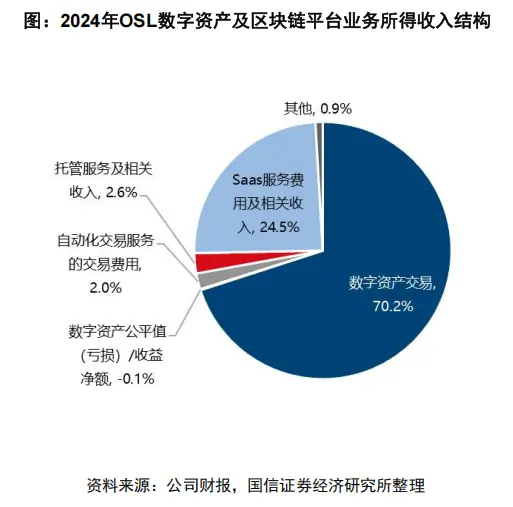
Guosen Securities takes the Hong Kong first licensed platform OSL Group as an example, and its revenue structure for 2024 clearly demonstrates the monetization path:
24.5% comes from SaaS services and related income, 70.2% comes from digital asset trading. The trading fee rates vary based on customer type and trading method, with retail customers at 0.2%-0.28% and institutional customers at 0.15%-0.225%.
Then there are the securities firms and financial institutions where opportunities and challenges coexist. JPMorgan’s report suggests that, compared to issuers that directly share reserve income and exchanges that charge transaction fees, traditional brokers have a more indirect profit model that requires revenue sharing with exchanges. However, brokers like Futu, which have a large retail customer base and advanced technology platforms, are in a more advantageous position in the competition. The report mentions that Futu has provided cryptocurrency trading services to clients (in cooperation with HashKey) and is actively applying for its own VATP license.
Finally, the indispensable “water seller” - infrastructure providers. The operation of the entire ecosystem relies on bottom-level support. The report from GuoXin Securities mentions reserve banks (such as ZhongAn Bank providing custody for YuanCoin Technology), asset management companies (such as BlackRock managing Circle’s reserves), and technology providers offering KYC/AML, payment, blockchain security services (such as Sifang Jinchuan, Shenzhou Information, etc.), all of which will benefit from the industry’s compliance and scaling.
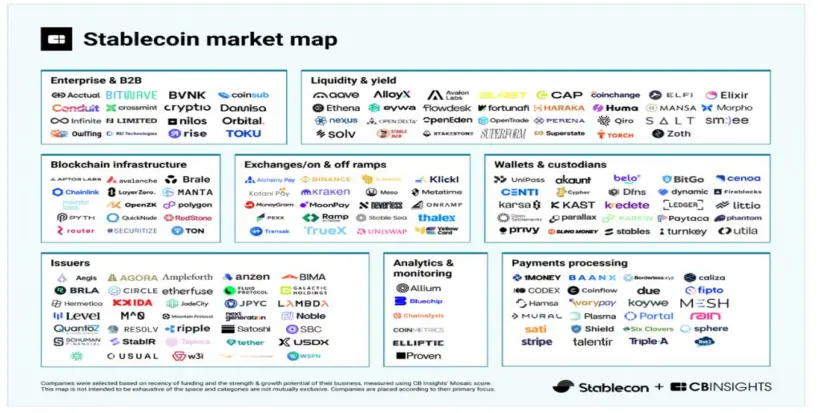
In summary, the compliance process of the stablecoin market in Hong Kong provides investors with a clear picture of the industry. Capturing companies that have a first-mover advantage in licensing, technology, and customer base will be key to sharing in this digital financial feast.


