Host: Sam, Rosa
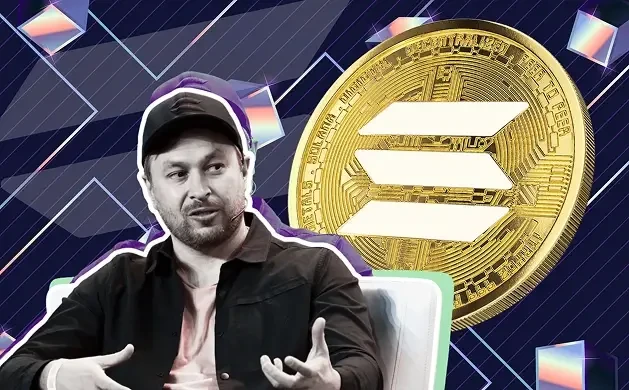
Guest: Anatoly Yakovenko, Founder of Solana
Source: Crypto Isn’t for Everyone ( And That’s a Good Thing) with Anatoly Yakovenko
Podcast date: July 12, 2025
Compiled & Organized by: Lenaxin, ChainCatcher
Abstract:
This article is organized from a deep conversation between the More or Less podcast and Solana founder Anatoly Yakovenko. He analyzes the industry cycle law of “punk, hoodie, suit,” points out that AI is just a product while cryptocurrency is a movement, and reveals how stablecoins quietly promote the globalization of the dollar. At the same time, he explains Solana’s mission to challenge the monopoly of app stores and suggests that the future of the cryptocurrency industry does not lie in mass adoption, but should focus on serving high-net-worth niche groups.
Wonderful Insights:
- AI is just a product while cryptocurrency is a movement.
- If Bitcoin becomes a hedging tool equal to gold, the crypto market will have won.
- Develop exclusive devices and app stores for crypto users, charging low fees, to carve out new paths amidst the monopoly of giants.
- When stablecoins are backed by real assets such as government bonds, they will disrupt the traditional financial system.
- The current market perception of stablecoins is both overly focused and severely underestimating their potential.
- Real market demand remains highly concentrated in USD stablecoins
- When individuals are long-term immersed in such information cocoons, the disconnection between cognition and reality becomes inevitable.
- When those who hold on to their ideals withdraw, their voices also disappear.
Opening Story: Anatoly’s Growth and the Birth of Solana
Rosa: Could you please briefly introduce the background and the founding process of Solana?
Anatoly: I was born in the Soviet Union. My parents immigrated right after the fall of the Berlin Wall, specifically after the dissolution of the Soviet Union. I grew up in Chicago, arriving in the U.S. at the age of 11, just in time for Michael Jordan’s peak with the Chicago Bulls, and I was completely immersed in that excitement. I spent the entire 90s there and later went on to attend Illinois State University to study computer science.
At that time, it was the wave of the mobile revolution. From 2004 to 2015, I worked at Qualcomm and participated in all mobile phone research and development projects you can think of, getting in touch with all mobile operating systems of that time.
The inspiration for founding Solana came one day after drinking two cups of coffee and a bottle of beer at the Soleil café in San Francisco, when a sudden spark of insight hit me at four in the morning while I was tossing and turning unable to sleep. Six months later, I pitched this idea to Sam Russo at the Slow bar.
The Evolutionary Trajectory of the Crypto World: Punk, Hoodies, and Suits
Rosa: We are currently in a critical period: regulations have been significantly relaxed, and innovative projects are emerging intensively. In your opinion, what is the current market situation? What are the essential differences compared to a year ago?
Anatoly: I have observed that the crypto movement shares many commonalities with other technological waves, such as the open-source movement. Objectively speaking, AI is closer to concrete products rather than social movements. This development model always follows a fixed trajectory: initially pioneered by punk rebellious geeks, then commercialized by hoodie-wearing entrepreneurs, and finally taken over by suited capital.
We are currently in a delicate transitional period, where the hoodie-wearing entrepreneurial teams are becoming increasingly mature, while the suited capital is just beginning to explore how to incorporate this industry, attempting to transform it into a form indistinguishable from traditional industries.
Rosa: Speaking of capital entering the market, hedge funds and traditional asset management companies are now issuing various crypto products. Are you saying they will directly incorporate the underlying blockchain technology?
Anatoly: Stablecoins are ready-made success stories. This kind of programmable currency is simply perfect, especially when backed by real assets like government bonds, which essentially disrupts the traditional financial system built on fax technology since World War II.
Rosa: What is the actual value of stablecoins in the US market?
Anatoly: When the world craves dollars, if Tether or Circle becomes the standard vehicle for programmable dollars, the U.S. can only go with the flow. After all, the current global economic scale has made the transformation of the dollar system inevitable. Ordinary consumers certainly will not give up credit cards, but the collaboration model between Visa and banks will undoubtedly innovate, as it can directly reconstruct the entire settlement system based on stablecoins.
Observations on the Evolution of the Crypto Ecosystem: From Value Storage to the Meme Economy
Sam: Will traditional financial institutions adopt a public transformation or an implicit infiltration model for the acceptance of crypto technology?
Anatoly: The key lies in functional implementation. If banks only allow holding Bitcoin but do not support its actual use, the situation will become delicate. When this model scales, Bitcoin may evolve into digital gold. Although from the perspective of “Security Analysis”, neither Bitcoin nor gold can be valued using cash flow discount models.
The essential motivation for people to hold them is fear, just as my parents fled the disintegrating Soviet Union with gold back in the day. Today, Bitcoin plays the same role, which may be the only reasonable explanation. If Bitcoin one day becomes a mainstream hedge tool on par with gold, then regardless of how you define success, the entire crypto market can be considered successful.
Sam: What is the essential difference between crypto assets and stocks/gold when traditional valuation models generally fail? Isn’t gold also a millennium meme?
Anatoly: The difference lies in the scale. When this gold meme reaches a trillion-dollar level and forms a global consensus, it reflects a certain essence of human civilization; we have always stored and transferred value using abstract concepts.
Sam: Can you compare the different value systems in the cryptocurrency field?
Anatoly: The abstraction of Bitcoin makes it difficult to value using engineering thinking, but Solana’s positioning is very clear: it is essentially an efficient information transmission channel. When users conduct token transactions, they are effectively broadcasting valuable information. Since the system only executes the first matched transactions, a natural incentive mechanism for paying priority fees is formed. The larger the transaction volume handled by this channel, the higher the generated revenue. It does not matter whether Bitcoin or USDC is being transmitted; the system only processes the data stream.
We are fortunate to live in an increasingly affluent world, where people naturally invest in various interesting things when they have more disposable income. For example, meme coins; some people find it interesting to issue the “Bowdoin” coin that mocks Biden.
Rosa: Are meme coins all based on Solana?
Anatoly: Currently, the vast majority are. Although there are a few with the highest market cap on Ethereum, Solana can produce 20,000 to 50,000 new meme coins daily, and at peak times, even exceed 100,000.
Sam: Why is the infrastructure construction of the meme coin ecosystem seriously lagging behind?
Anatoly: This is actually a systems engineering problem. Whenever value distribution is involved, there will be people looking for loopholes. It’s just like when there are countless virtual numbers popping up to take advantage of discounts when selling phones.
Encryption Mobile Strategy: Decoding Platform Domination
Rosa: Why did Solana choose to enter the mobile hardware field?
Anatoly: This stems from my professional background: having been deeply involved in the mobile phone industry for over ten years, I am able to assemble a core team. The current internet should be open and free, yet it is confined by the “sandbox” models of companies like Apple, which monetize users. Although value has been created, this closed ecosystem is suffocating.
Apple, Google, and Meta are all extracting user value through sandbox mechanisms. Although their products are indeed excellent (for example, I am using Google’s free email AI), blockchain technology has the potential to break this monopoly. Because digital assets like NFTs and meme coins are scarce, platforms find it difficult to charge a 30% cut like they do with in-game items. After all, these are not virtual goods that can be infinitely replicated.
The scarcity of crypto assets has completely changed the rules. Take CryptoPunk NFTs as an example: there is only one in the world, and it cannot be infinitely replicated like game items. When users spend $10,000 to purchase it, the Apple Store cannot possibly charge a 20% fee. Users would not accept it, and issuers would also find it hard to bear.
This fundamental conflict reveals an opportunity: developing dedicated devices and app stores for crypto users, charging fees far below those of traditional platforms (for example, 0.5% instead of 30%), can open new paths amid the monopolies of giants.
Rosa: Is the business model just to earn trading fees?
Anatoly: Just like Binance or Metamask, it charges a small fee for massive crypto transactions. Although the fee rate is less than 1/30 of traditional platforms, the average transaction amount for crypto users is several times that of regular internet users.
Rosa: Is it necessary to adjust the existing incentive system to attract talent for building crypto infrastructure?
Anatoly: The core is about targeting the user base. I can’t determine whether the general public needs crypto products. However, the existing crypto user base, despite only accounting for 1% of the global population (about 100 million people), has an average revenue per user (ARPU) that is several times that of regular internet users.
Just as Pump.fun’s founders were determined to challenge TikTok after achieving initial success, entrepreneurs are always in pursuit of their ultimate goals.
How Stablecoins Affect the Global Currency Landscape
Rosa: How will the listing of Circle and other stablecoins affect the crypto financial ecosystem?
Anatoly: There is a clear contradiction in the current market’s perception of stablecoins: it is both overly focused and severely underestimating their potential. Imagine a scenario where the global circulation of stablecoins reaches $5 trillion, which means that the US dollar has completed a full digital transformation and has become a daily circulating currency in Europe, Southeast Asia, and even Africa.
In an environment lacking official support from the U.S. government and facing strict regulatory pressure, the stablecoin market size has surpassed $250 billion, and this trend will continue to accelerate.
Rosa: Has there been a shift in the policy stance of global regulators towards stablecoins?
Anatoly: This year, the regulatory attitude has indeed shifted, but the legislative process still requires 2-4 years to complete. Bitcoin has formed a unique value belief system, while the development trajectory of other crypto applications is akin to the early days of email technology, and its final form cannot be accurately predicted.
Sam: How will stablecoins affect the global monetary landscape?
Anatoly: The data clearly reveals the current landscape: the development of the euro stablecoin is hindered, while the renminbi stablecoin mainly relies on policy-driven factors.
However, the real market demand remains highly concentrated on USD stablecoins. Even street vendors in Argentina have widely adopted USDT to hedge against the inflation risk of their local currency. This process of dollarization driven spontaneously by the public may further reinforce the global dominant position of the dollar.
Rosa: Does this mean that “native stablecoins” are just wishful thinking from VCs?
Anatoly: Under the current financial infrastructure framework, USD stablecoins effectively address real payment pain points. Just as the existing model of cross-border e-commerce commonly adopts USD settlement, the on-chain economy is spontaneously forming a similar USD-dominated settlement area. This currency landscape based on network effects will remain stable unless faced with mandatory policy interventions.
Sam: Is the global penetration of US dollar stablecoins reshaping a new paradigm of dollar hegemony?
Anatoly: From a practical perspective, spontaneous selection at the micro level is more influential. When Argentine merchants independently adopt USDT for trade settlement, this grassroots dollarization process is more effective than any policy intervention. If, two years from now, the stablecoin market size exceeds $1 trillion, it would mean that 5% of the global dollar supply has completed its transition to an on-chain form.
The Opinion Dilemma in the Crypto World
Rosa: Linda has a strong network of media, clients, and industry professionals. I believe her future is still bright. This follows the controversy surrounding Grok, who made anti-Semitic remarks, while Musk downplayed it. What do you think of this uproar?
Anatoly: This is the norm of the internet; there will always be someone spreading malice. Interestingly, people are trying to solve these problems with cryptocurrency, such as developing anti-counterfeit coins. But once the AI system allows public input, it is destined that someone will deliberately cross the line. To be honest, Grok’s remarks are relatively restrained.
Rosa: Can cryptographic technology reconstruct trust verification mechanisms in the crisis of information trust?
Anatoly: It is more likely to return to the prediction market (Polymarket), although there is also room for manipulation, but scale effects will create a balance.
Rosa: What do you think about Sequoia Capital partner Shawn Maguire being labeled as an “Islamist” recently for his comments on the Mandani project?
Anatoly: Although I do not always agree with Shawn’s views and sometimes he even seems aggressive, I support the principle of freedom of speech. The internet should accommodate different voices; people can oppose his opinions, but that should not deprive him of his right to speak.
Rosa: Why does Shawn Maguire choose controversial statements over professional means to gain attention?
Anatoly: This phenomenon is fundamentally linked to the quality dilemma of information on the internet: highly cognitive groups often seek to maximize information absorption and form judgments about everything, while algorithms continue to push content that reinforces existing biases in order to maintain user engagement.
For example, if users believe that Curry’s shooting is inefficient, the system will repeatedly play his missed shots. When individuals are long immersed in such information cocoons, a disconnection between cognition and reality becomes inevitable.
Rosa: What is the attitude of crypto punks towards the current industry ecosystem? Are they furious, or are they too busy making profits to care about anything else?
Anatoly: This question is very interesting. Those truly angry punks have already left. Just like no one remembers the open internet before Facebook, when the idealists withdraw, their voices disappear as well.
Disclaimer
The content of this article does not represent the views of ChainCatcher. The opinions, data, and conclusions in the text represent the personal positions of the original authors or interviewees. The compiler maintains a neutral stance and does not endorse their accuracy. It does not constitute any professional advice or guidance, and readers should use independent judgment with caution. This compilation is for knowledge-sharing purposes only. Readers should strictly adhere to the laws and regulations of their respective regions and refrain from participating in any illegal financial activities.


