Deng Tong, Golden Finance
On September 10, 2025, the U.S. Senate Banking Committee voted 13 to 11 to approve the nomination of Stephen Moore, nominated by Trump, for the Federal Reserve Board. This result may allow Moore to be in position before the two-day meeting of the Federal Reserve scheduled for September 16 to 17.
Who is Milan? Will the Federal Reserve become Trump's controlling institution? What statements has Milan made regarding cryptocurrency?
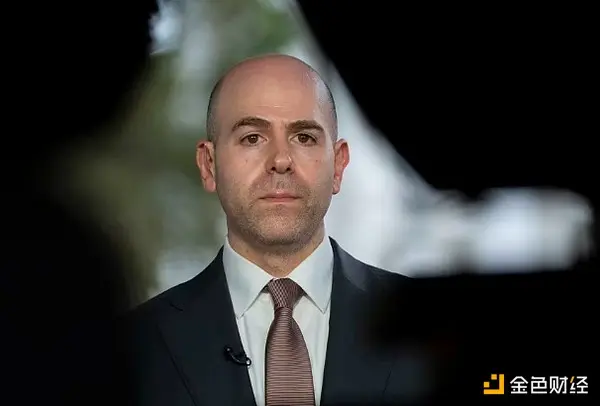
I. The Person of Milan
1. Milan Resume Overview
Stephen A. Mira is an American economist who has been serving as the Chairman of the Economic Advisory Council since 2025.
Milan graduated from Boston University with a Bachelor's degree in Economics and Philosophy. He obtained his PhD in Economics from Harvard University in 2010.
After graduating from Harvard University, he worked as an analyst at Lily Pond Capital Management, later joining Fidelity Investments and Sovarnum Capital. Milan became the Head of Macroeconomic Strategy at Sovarnum in 2015.
In April 2020, Milan served as a senior economic strategy advisor at the U.S. Department of the Treasury. After Biden took office in January 2021, Milan returned to the private sector and co-founded Amberwave Partners. In February 2024, he joined Hudson Bay Capital Management as a senior strategist.
In December 2024, Trump nominated Milan as a candidate for the Chair of the Council of Economic Advisers. In March 2025, he was confirmed by the U.S. Senate. After Federal Reserve Governor Kuger announced his resignation in August, Trump nominated Milan to replace Kuger.
2. Trump's “Tariff Designer”
In February 2024, Besant began supporting Trump's presidential campaign for 2024. Besant approached Milan seeking his support. That same year, Milan donated $1,000 to the pro-Trump political action committee Never Surrender, and also donated $1,000 to the joint fundraising committee Trump 47. On December 22, Trump nominated Milan as a candidate for the chair of his Economic Advisory Council.
In January 2025, Bloomberg News reported that Milan is one of Trump's advisors, who is studying the gradual increase of tariffs using the International Emergency Economic Powers Act. On February 27, he attended a hearing of the Senate Banking, Housing, and Urban Affairs Committee. Milan reiterated his support for raising tariffs to encourage investment. On March 6, the Banking, Housing, and Urban Affairs Committee passed his nomination with a party-line vote of 13 to 11. On March 12, Milan's appointment was confirmed by the Senate.
As the chairman of the Economic Advisory Council, Milan formulated Trump's tariff policy; the Financial Times referred to him as the “architect” of Trump's tariffs. Milan's approach contradicted optimistic forecasts and early data.
3. The Federal Reserve Board career begins
On August 7, 2025, Trump nominated Milan to replace Kugler as a member of the Federal Reserve Board. Milan will hold the position until the remainder of Kugler's term, which ends in January 2026. Trump hinted that he would be looking for a “permanent replacement” for Powell. Milan's appointment gives Trump more time to consider Powell's successor.
JPMorgan analysts have stated that if Milan's nomination is confirmed, the yield curve could steepen. According to The New York Times, although Milan's term will end in a few months, he will be able to influence discussions about interest rates and Powell's successor.
On September 4, Milan attended a hearing of the Senate Banking, Housing, and Urban Affairs Committee. Milan intends to continue serving as the chairman of the Economic Advisory Council during his tenure on the Federal Reserve Board, but will take a period of unpaid leave.
2. Will the Federal Reserve become Trump's controlling institution?
1. Milan's appointment may lead the Federal Reserve to yield to Trump
CNN believes that Milan's appointment will become a milestone in Trump's attempt to bend the Federal Reserve to his personal will.
Milan has publicly stated his intention to maintain a connection with the White House during his tenure at the Federal Reserve. He has not resigned from his position as presidential economic policy advisor and chairman of the Council of Economic Advisers, but plans to take an unpaid leave of absence. This way, after he completes his term at the Federal Reserve, he can return to government service.
White House spokesperson Kush DeSai stated in a statement: “Based on legal advice, if confirmed, Milan may take an unpaid leave from his position on the Economic Advisory Council.”
This arrangement has raised concerns from the outside: Milan may have an attachment to Trump and be unwilling to support policies that, while economically beneficial, could create political trouble for Trump. Some former White House officials, legal experts, economists, and Democratic lawmakers have warned that confirming Milan's qualifications under these circumstances could set a dangerous precedent and undermine the long-standing independence of the Federal Reserve.
2. Many are concerned about Milan's performance in office.
Glenn Hubbard, who served as the chairman of the Council of Economic Advisers during the George W. Bush administration, stated: “Clearly, this approach is inappropriate and raises significant concerns about its ability to operate independently.”
Kathleen A. Jahnke, a renowned law professor studying financial markets and regulation at Columbia University, pointed out that the Federal Reserve's founding legislation did not “directly” stipulate whether individuals like Milan could effectively retain a White House position while serving in a central bank role. When Congress established the Federal Reserve System in 1935 and set up various constraints, this arrangement was not considered. “From these carefully designed mechanisms, it is clear that Congress intended for the Federal Reserve to have substantial independence.” Any attempt to undermine the independence of the Federal Reserve could pose “great risks” to the economy.
Lisa Gilbert, co-chair of the watchdog organization “Public Citizen” stated that the ongoing ties between Milan and the White House “completely contradict” the original intention of Congress in establishing the Federal Reserve. This situation is especially inappropriate as Trump attempts to pressure the Federal Reserve to lower interest rates. “The Trump administration has been continually pressuring the Federal Reserve, and given that we know they are trying to influence this independent institution, this dual identity inherently poses a problem.”
Virginia Senator Mark Warner stated: “Trump is trying to install political supporters at the Federal Reserve, which will bring greater instability for consumers. I strongly oppose the nomination of Stephen Moore and urge my colleagues to reject this latest attempt to politicize the Federal Reserve.”
Senior member of the Senate Banking Committee, Massachusetts Democratic Senator Elizabeth Warren stated before the vote: “This nomination is clearly a test of Dr. Milan's loyalty to Trump, and every vote determines whether he can return to the White House. That's not independence; it's enslavement. If he is confirmed to the board under these circumstances, his credibility in the market, among businesses, and in the eyes of the public will be zero.”
Trump's need for control
Trump does not hide his desire for a more compliant central bank that can meet his demands for interest rate cuts. For months, the Federal Reserve has maintained stable interest rates to control inflation. The president even boasts that he will soon gain majority support on the powerful Federal Reserve Board, with Milan potentially being the next supporter to join.
If Trump successfully removes another board member, Cook, through mortgage fraud charges, he will have another opportunity to appoint a member to the Federal Reserve Board. Additionally, after Jerome H. Powell's term as Federal Reserve Chairman ends in May next year, the president will also appoint a new chairman candidate.
Since the beginning of his second term, Trump has made a significant impact on the current state of U.S. economic policy by implementing historic tariffs and exerting immense pressure on the Federal Reserve. Trump's influence on the Federal Reserve and even the U.S. economy will become clearer in the coming months and even weeks.
On August 29, a lower court ruled that most of the tariffs imposed under the President's emergency powers were illegal. Now, Trump hopes that the conservative-majority U.S. Supreme Court will overturn this ruling.
According to data from the U.S. Department of Labor, employment in the construction and manufacturing sectors decreased over the year, with a reduction of 10,000 and 31,000 jobs respectively compared to three months ago. The business survey from the Institute for Supply Management (ISM) shows that manufacturers and service providers are still frustrated by Trump's back-and-forth trade war, making it difficult to plan ahead.
3. Milan's Cryptocurrency Remarks
In December 2024, Milan stated during an appearance on the blog show “Forward Guidance” that the United States should focus on policies that support innovation: “I believe that financial deregulation will be a strong component of this. I think cryptocurrencies could play an important role in innovation and driving a new wave of economic prosperity under the Trump administration.”
In November 2023, Milan responded to Zhao Changpeng's resignation by saying, “I have always been amazed at how much 'innovation' has been achieved in recent decades by circumventing regulation. Uber, cryptocurrency, Airbnb…”
Many people in the cryptocurrency field have welcomed Milan, considering it a positive development for the cryptocurrency industry.
Under the leadership of Milan, the Federal Reserve may adopt policies that promote cryptocurrency innovation and its integration with traditional finance, accelerating the incorporation of cryptocurrencies into mainstream finance.
Milan's perspective, combined with the fact that cryptocurrencies traditionally perform well in low interest rate and high liquidity environments, may become an important catalyst for assets like Bitcoin and Ethereum.


