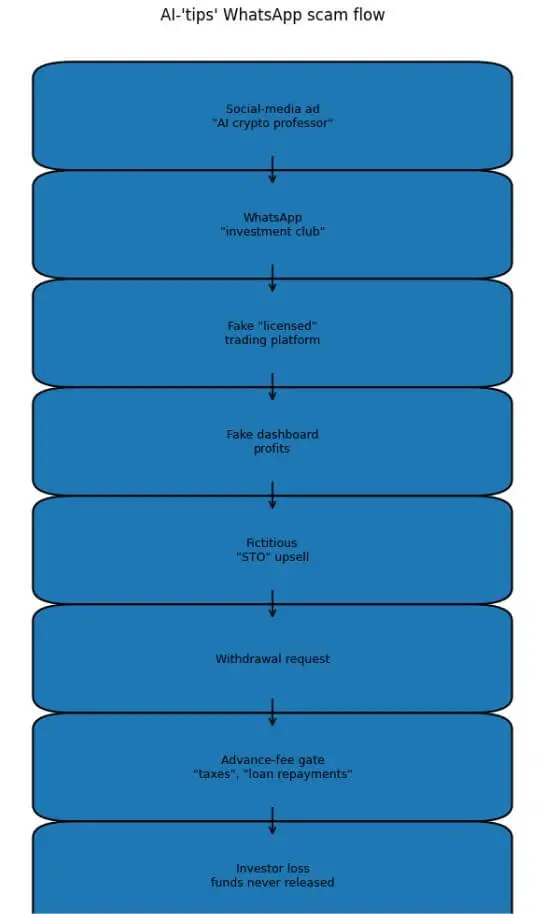
The SEC has just announced a major lawsuit involving three crypto trading platforms and four “investment clubs,” with total damages of USD 14 million, spanning from January 2024 to January 2025. This case illustrates a sophisticated, systematic scam model that is particularly confusing for investors in Vietnam, as the tactics mimic professional credibility, combining social media and AI.
5-Step Scam Model
- Social media advertising and investment clubs on messaging apps
Groups like AI Wealth, Lane Wealth, AIIEF, and Zenith run ads on Facebook, Instagram, or TikTok, then invite investors to join “investment clubs” on WhatsApp or Telegram.
- In the groups, fake “professors” or “assistants” appear to provide guidance, creating a sense of high expertise.
- This tactic exploits FOMO (fear of missing out) and trust in experts, making investors willing to send money without verifying information.
- Trading signals and fake images
- “Professors” promise high profits from AI, sharing screenshots of “successful” transactions to build trust.
- They impersonate financial experts, using AI to generate fake content: websites, screenshots, deepfake videos.
- Goal: make investors believe these tools and strategies are truly effective.
- Redirecting investors to fake trading platforms
- After gaining trust, investors are led to platforms like Morocoin, Berge, Cirkor.
- These platforms claim to have government licenses and high security, but in reality, no real transactions occur; all accounts and balances are fake.
- Scammers often create warnings of “investigation by regulatory authorities” to pressure investors into depositing more money.
- Fake STO to raise additional funds
- Tokens like NNET, SCT, HMB are promoted as IPOs of real companies (e.g., NeuralNet, SatCommTech) but do not exist at all.
- This is a tactic borrowing credibility from real securities to trick investors into depositing more money.
- Vietnamese investors often get confused because the simulated STO resembles an IPO, complete with price tables, charts, and sample contracts that look very “professional.”
- Money withdrawal traps and upfront fees
- When investors try to withdraw, platforms and clubs demand various upfront fees: “loan fees,” “investigation fees,” “fast withdrawal fees.”
- They also warn that accounts could be locked or frozen for three years if fees are not paid.
- This is classic (advance-fee fraud), combined with fake platforms, turning investors from “depositors” into “victims of extortion.”
Warning signs for Vietnamese investors
- Chat groups with strange “professors”: Never invest based on chat groups from strangers, even if they show AI signals or successful results.
- Excessively high profits with no risk: The crypto market is always volatile. Promising “no risk” is a scam indicator.
- Fake licenses and regulatory agencies: Verify directly with authorities like (SEC, FINRA, or Vietnamese financial regulators) instead of trusting website claims.
- Upfront fees to withdraw: Reputable companies only deduct fees after transactions are completed, not before.
- Forcing crypto deposits or international transfers: This is a serious warning, especially if involving personal wallets or opaque foreign bank accounts.
Advice for Vietnamese investors
- Always verify platform information: Look up company names, licenses, and registration numbers with official regulatory agencies.
- Verify personnel: Check if promoters are listed among certified experts or advisors.
- Be cautious of pressure tactics: Any urgent deposit requests, upfront fees, or promises of extraordinary profits should raise suspicion.
- Report promptly: If you suspect fraud, contact authorities such as SEC, FBI, or in Vietnam, the Ministry of Public Security – Criminal Police Department.
Thach Sanh
Disclaimer: The information on this page may come from third parties and does not represent the views or opinions of Gate. The content displayed on this page is for reference only and does not constitute any financial, investment, or legal advice. Gate does not guarantee the accuracy or completeness of the information and shall not be liable for any losses arising from the use of this information. Virtual asset investments carry high risks and are subject to significant price volatility. You may lose all of your invested principal. Please fully understand the relevant risks and make prudent decisions based on your own financial situation and risk tolerance. For details, please refer to
Disclaimer.


