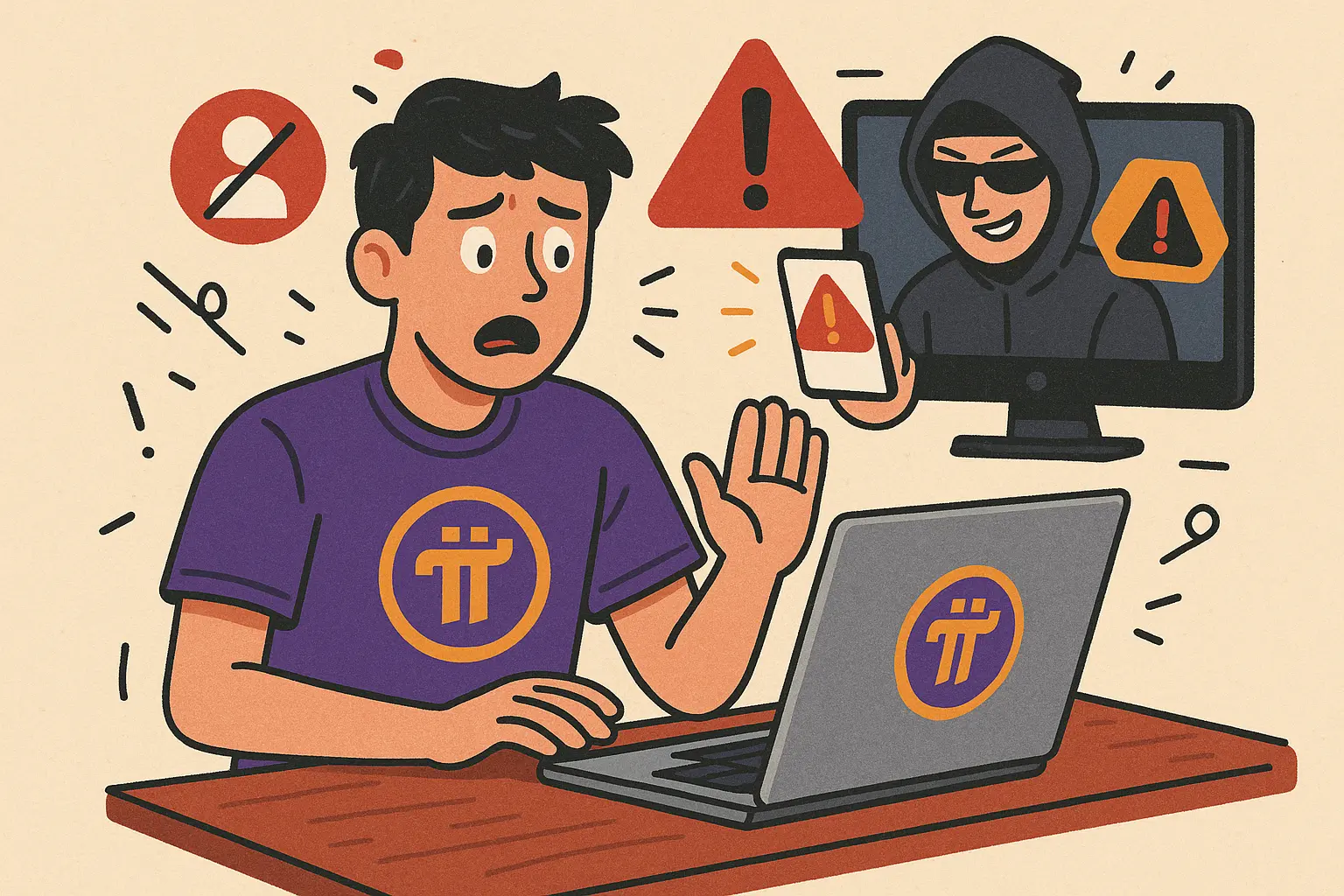
Pi Network official reminds that the only legitimate account is PiCoreTeam (4.2 million subscribers), and numerous fake accounts are spreading scams. PI has risen 3.2% to $0.21, with analysts optimistic about breaking through $0.215. Critics point out that the token’s autonomous online launch has dropped 88%, and after 5 years of KYC completion, there are no plans for token migration.
The Crisis of Fake Accounts Behind 4.2 Million Followers
Pi Network clarified on January 7th that the only official X account is named Pi Network (PiCoreTeam). This account has 4.2 million followers, surpassing the subscription numbers of popular altcoins like Ripple and Ethereum. The announcement states that if users have any questions or need assistance, they should visit the official Pi Security Center, which offers multiple communication channels.
Why is this reminder necessary? Pi Network is one of the hottest topics in the cryptocurrency space, naturally leading to a surge of X accounts mentioning the project in various ways. This can be very risky for users, as unofficial pages may spread misleading information or even promote scams. Common scam tactics include impersonating official accounts to announce “airdrops,” asking users to input seed phrases, or directing users to phishing sites for KYC verification.
This reminder has sparked different reactions. Some appreciate the clarification, believing that protecting users from scams is a basic responsibility of the project team. Others argue that the team should focus on more important issues to rebuild investor trust. These “more important issues” include slow mainnet migration progress, inability to withdraw after KYC, significant token price drops, and the delayed listing on mainstream exchanges.
Critics point out that Pi Network spends a lot of effort managing its social media image but reacts slowly to core technical problems and user pain points. This “superficial over substance” approach is one of the reasons many question whether Pi Network is a Ponzi scheme or a worthless token. When a project allocates more resources to branding rather than product development, it is often a warning sign.
Can Pi Token Break Through the Critical Resistance at $0.215?
Since early 2026, Pi Network’s native token Pi has also risen along with the overall crypto market recovery, although its gains are not as strong as mainstream digital assets. Over the past 7 days, Pi’s valuation increased by 3.2%, with a current trading price of around $0.21 (data from CoinGecko). This relatively weak performance contrasts sharply with Bitcoin, Ethereum, and other major coins, indicating that market confidence in Pi Network remains insufficient.
X user Aman claims that PI has been “sideways consolidating” below a key resistance level after the rise. The analyst believes that once PI breaks through $0.215, it could reach new highs. From a technical analysis perspective, sideways consolidation is often a pre-breakout phase, with narrowing volatility indicating an imminent directional move. However, such a breakout could go either up or down, depending on trading volume and market sentiment.
Another influential X user suggests that listing on Binance could truly push its “takeoff.” He wrote: “If PI gets listed on Binance, can it shake off selling pressure? The answer is: not only can it shake it off— it will be reborn and break through Nx.” As the world’s largest cryptocurrency exchange, Binance’s listing often brings significant liquidity and exposure to a token. However, Pi Network’s failure to list on Binance or other top-tier exchanges so far highlights underlying issues.
Three Unsolved Mysteries of Pi Network
Mainnet Migration Progress: Hundreds of thousands of users have completed KYC but still cannot transfer Pi to the mainnet wallet, and the official timeline remains unclear.
Tokenomics: Core parameters such as total supply, inflation rate, and release mechanisms are opaque, making it difficult for investors to perform reasonable valuation.
Mainstream Exchange Listings: Besides a few small exchanges, major platforms like Binance, Coinbase, and OKX have not listed PI.
These unresolved issues are at the root of Pi Network’s biggest trust crisis. When a project operates for 5 years without clear tokenomics or mainnet migration plans, doubts about its true intentions are inevitable.
Anger of 5-Year Users and 88% Token Collapse
Critics of Pi Network are also very active. X user Honey describes Pi Network as “a complete scam,” sharing her experience: “I joined Pi Network 5 years ago, completed KYC, but until today, there is no migration plan or clear deadline—nothing. They keep changing statements and lying. Since the mainnet launch, the token value has shrunk by 88%, with a market cap evaporating billions of dollars, yet no one seems to care.”
An 88% drop is catastrophic. It means that if someone bought PI at a high of $1.9 during the mainnet launch, their current holdings are worth only about $0.23, nearly a 90% loss. Such declines are not uncommon in bear markets, but the problem with Pi Network is that the decline did not happen during a market crash but occurred amid Bitcoin’s all-time high and most mainstream coins rallying. This “counter-market decline” indicates structural issues rather than cyclical adjustments.
What further angers users is the lack of transparency in official communication. “They keep changing statements and lying” reveals Pi Network’s most fatal flaw: trust collapse. The success of a crypto project heavily depends on community trust. Once users believe the team is lying or delaying, the project essentially loses the chance of recovery. Pi Network’s repeated missed deadlines for mainnet migration and lengthy, opaque KYC processes have accumulated into a systemic trust crisis.
From a user experience perspective, Pi Network’s problems are very obvious. Users spend years clicking daily to mine, completing complex KYC, but ultimately cannot freely use or trade their PI. This “see but can’t eat” situation makes many feel deceived. In contrast, other mainstream crypto projects typically take only a few months from token generation to exchange listing. After 5 years of operation, Pi Network still cannot solve basic withdrawal issues, raising serious doubts about its technical capability or true intentions.
The controversial Pi Network project is currently at a crossroads. Optimists believe breaking through $0.215 could open a new chapter, and Binance listing might trigger a surge. Pessimists point out the 88% decline, unfulfilled promises, and opaque operations, suggesting it could be a carefully crafted Ponzi scheme. Investors should stay highly alert, only trust information from the official Pi Network (PiCoreTeam) account, and carefully evaluate whether to continue holding or investing more funds.
Disclaimer: The information on this page may come from third parties and does not represent the views or opinions of Gate. The content displayed on this page is for reference only and does not constitute any financial, investment, or legal advice. Gate does not guarantee the accuracy or completeness of the information and shall not be liable for any losses arising from the use of this information. Virtual asset investments carry high risks and are subject to significant price volatility. You may lose all of your invested principal. Please fully understand the relevant risks and make prudent decisions based on your own financial situation and risk tolerance. For details, please refer to
Disclaimer.


