Author: The Kobeissi Letter
Translation: Jesse
This is an in-depth analysis from The Kobeissi Letter regarding Greenland tariffs and President Trump’s “tariff strategy.”
Will the trade war resurface due to Greenland’s new tariffs?
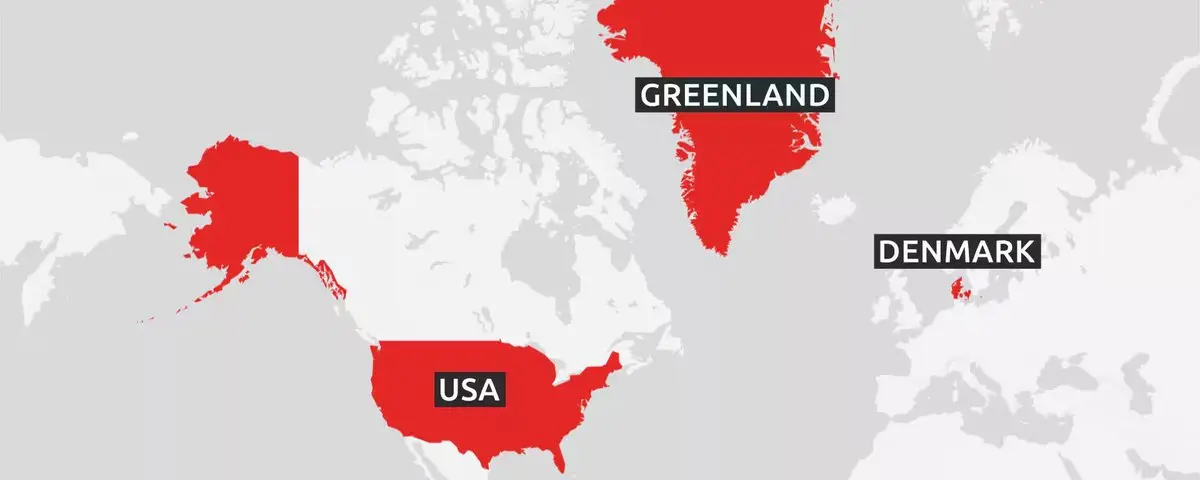
Just now, President Trump announced new tariffs on the EU and confirmed his primary strategic goal: to acquire Greenland. This includes imposing a new 10% tariff on Denmark, Norway, Sweden, France, Germany, the UK, the Netherlands, and Finland starting February 1.
Furthermore, these tariffs will be increased to 25% on June 1 and will not be lifted until an agreement on Greenland is reached. According to Trump, this deal must be a “full and comprehensive purchase” of Greenland.
Before analyzing our precise strategy, it must be pointed out: the trade war has become a “cyclical headwind.” Tariffs tend to re-emerge unexpectedly in the markets and then gradually dissipate. This is a product of President Trump’s “tariff strategy,” which is carefully designed.
The most recent example occurred on October 10, when President Trump threatened to impose 100% tariffs on China starting November 1 (just 21 days after the announcement). This timeline may sound familiar because it is an integral part of the strategy manual. After the announcement, the S&P 500 futures expanded their decline to -3.5% before the weekend close.
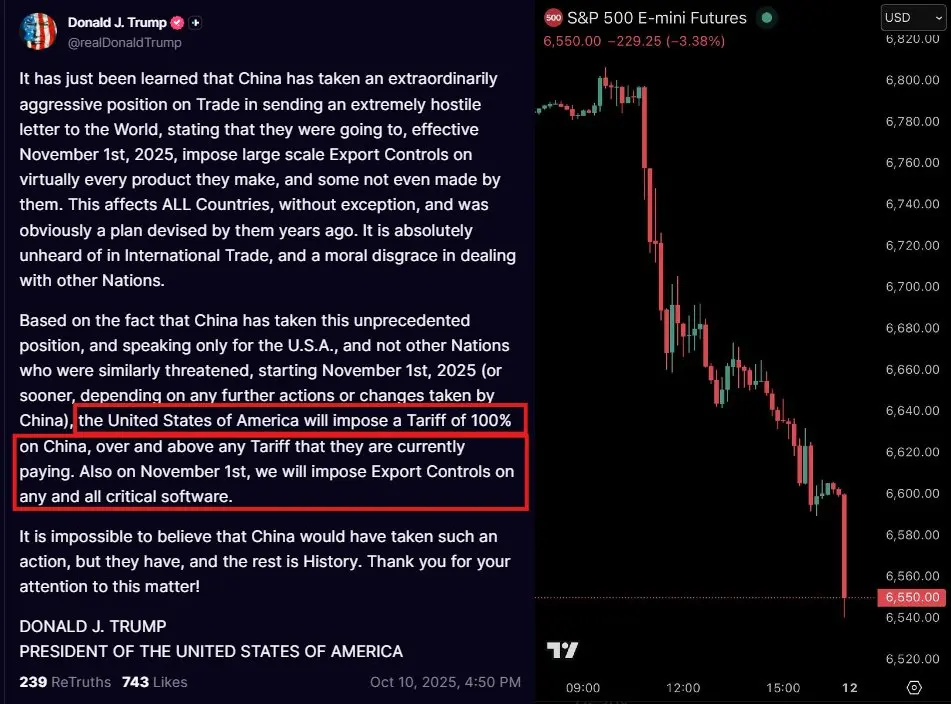
October 10 - Trump Threatens 100% Tariffs on China
President Trump always begins with punitive and threatening messages, which are part of his negotiation tactics. And this move is very effective for him. In the October confrontation with China, it ended with the signing of a new trade agreement and China canceling rare earth export restrictions, which Trump claimed were harming the US.
This time, the statement was issued on Saturday, while futures markets would not open until Saturday evening (since Monday is a federal holiday). Market reactions might include similar “emotional sell-offs,” but given the time to digest the news, the impact may be lighter.
All of this is part of President Trump’s “tariff strategy,” which we will detail below:
Tariff Strategy Manual
By 2025, our investment strategy returns are nearly twice the S&P 500 index, largely because we capitalized early on the volatility of asset prices during the trade war. Here are the specific response strategies we have consistently employed:
A comprehensive step-by-step guide to responding to Trump’s trade war:
- Friday: President Trump releases a cryptic message hinting at tariffs on specific countries or industries. As uncertainty increases, markets decline. This event began on Friday when Trump threatened tariffs on Denmark.
- Later that day or shortly after (this time Saturday): Trump announces a massive new tariff, typically over 25%.
- Saturday and Sunday: Trump repeatedly escalates tariff threats during market closure to exert pressure, maximizing psychological impact.
- During the weekend: Targeted countries usually respond publicly or signal willingness to negotiate.
- Sunday at 6 PM Eastern Time (this time Monday evening): Futures open, markets react emotionally to tariff headlines, futures prices decline.
- Monday and Tuesday: Trump continues to pressure publicly, but investors realize tariffs are not yet in effect, with weeks remaining before implementation (e.g., February 1).
- Wednesday of the same week: Bottom-fishers step in, triggering a relief rally, but this often fades, leading to another decline. This is usually when the “smart money” begins buying.
- The following weekend (about a week later): Trump posts that negotiations are ongoing, and he is working with leaders of target countries to find solutions.
- That weekend at 6 PM Sunday: Optimism returns, futures surge, but gains fade after the cash market opens on Monday.
- After Monday open: Treasury Secretary Bessent and other senior officials appear on live TV to reassure investors and emphasize progress.
- Next 2-4 weeks: Officials at all levels of the Trump administration continue to leak progress on trade agreements.
- Ultimately: Trade agreement is officially announced, markets hit record highs.
- Cycle: Repeat from step 1.
Of course, this is not a 100% guaranteed roadmap, but based on our experience since January 2025, almost all trade war outbreaks have followed a similar pattern.
Note: This time, President Trump’s plan to acquire Greenland undoubtedly has higher stakes than demands for China to reduce export controls. Therefore, the execution process may be longer, but it will follow a similar sequence of events.
( Timing is Key
President Trump’s entire negotiation strategy revolves around timing and pressure. He provides a 2-3 week buffer before tariffs take effect to reach an agreement. Trump’s goal is to prevent these tariffs from ever truly taking effect; he wants a deal. This also explains why more and more of these announcements appear during market closures on weekends. He pushes threats to the edge. That’s why they work: if they actually take effect and persist, they could shake markets and change the world.
In the previous China trade war, Trump announced a new trade deal with China on November 1 — the very day the 100% tariffs were scheduled to take effect.
Ultimately, those who remain objective and follow the process during trade war volatility are enjoying the best trading environment ever.
As mentioned earlier, this objective, systematic approach has allowed us to outperform market benchmarks. As shown below, since 2020, our investment strategy returns are nearly five times the S&P 500 index.
![])https://img-cdn.gateio.im/webp-social/moments-deaa302a57b18be827f1fb6ec7ed3e30.webp###
( Conclusion
This time, President Trump’s plan to acquire Greenland indeed demands more than previous requests. Market volatility may last longer, but we want to emphasize the original point: the best traders are profiting from asset price swings triggered by trade war headlines.
Volatility is opportunity.
Disclaimer: The information on this page may come from third parties and does not represent the views or opinions of Gate. The content displayed on this page is for reference only and does not constitute any financial, investment, or legal advice. Gate does not guarantee the accuracy or completeness of the information and shall not be liable for any losses arising from the use of this information. Virtual asset investments carry high risks and are subject to significant price volatility. You may lose all of your invested principal. Please fully understand the relevant risks and make prudent decisions based on your own financial situation and risk tolerance. For details, please refer to
Disclaimer.


