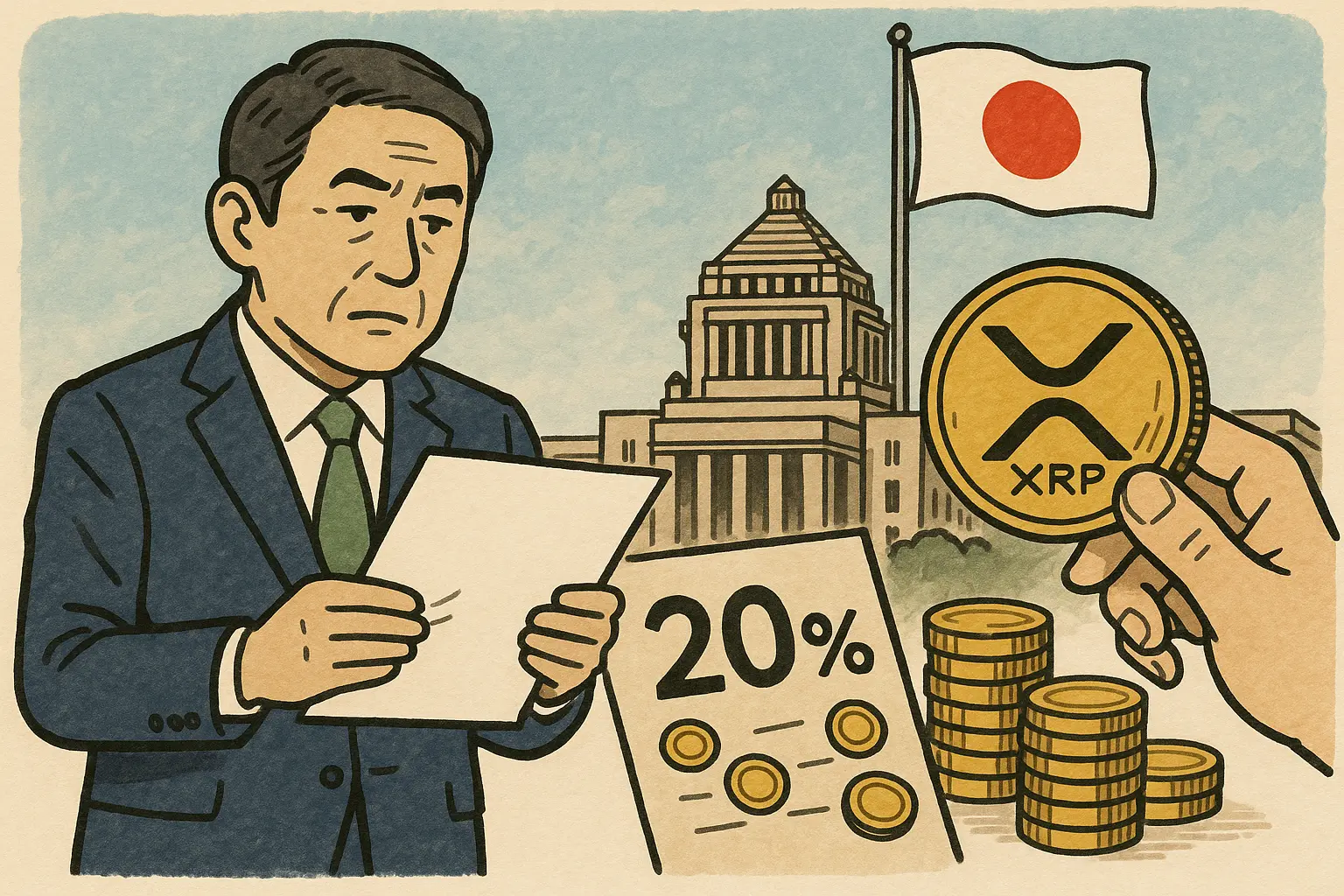
Japan plans to include XRP under the Financial Instruments and Exchange Act in Q2 2026, implementing a unified capital gains tax of 20%. Banks will be able to seamlessly integrate XRP as a payment settlement asset, with XRP already leading Japan’s remittance infrastructure. This classification could enhance liquidity and set a global standard for crypto governance.
Japan Elevates XRP to Financial Product Regulation in Q2
It is reported that Japan intends to recognize XRP as a financial product in 2026. The ultimate goal of regulators is to bring large-scale crypto assets under the scope of the Financial Instruments and Exchange Act, placing XRP within the same jurisdiction as traditional financial products. Authorities are demanding stricter controls on XRP and clearer compliance standards. They also aim to attract more institutional capital into regulated digital assets. This move indicates Japan’s long-term strategy in crypto governance, striving to stay ahead.
This classification will better legitimize XRP in Japan. Banks and financial institutions will find it easier to integrate XRP without facing numerous regulatory hurdles. Companies can use XRP as a legal payment and settlement asset. Institutions typically require regulatory transparency before investing large sums, which could lead to greater liquidity and broader applications. XRP already dominates Japan’s remittance infrastructure, and obtaining the status of a financial product will further solidify this dominance.
Legally, including XRP under the Financial Instruments and Exchange Act means it will be subject to the same level of regulation as stocks, bonds, derivatives, and other traditional financial instruments. This includes issuer disclosure obligations, licensing requirements for trading platforms, anti-money laundering standards, and customer due diligence. While these requirements will increase compliance costs, they also provide XRP with a clear legal status, eliminating regulatory uncertainty.
Japan’s choice to include XRP as the first crypto asset under financial product regulation is no coincidence. XRP’s usage in Japan far exceeds that in other countries, and Japanese exchanges have long ranked among the top globally for XRP trading volume. Additionally, Ripple’s strong partnerships with Japanese financial institutions, such as SBI Holdings and other major financial groups, make XRP’s inclusion a natural choice given the existing market foundation and institutional relationships.
20% Unified Capital Gains Tax Simplifies Investment Processes
Another regulation that regulators may implement is a 20% unified capital gains tax on crypto assets. Such a system would simplify investor reporting processes and alleviate concerns over profit disclosure. Lenient tax policies often attract more participants to the market. Japan aims to balance innovation with investor protection. These policies are expected to boost market confidence in the long term. The crypto community has responded enthusiastically to this news, and traders are showing great optimism.
This 20% tax rate offers significant advantages over Japan’s current crypto tax regime. Currently, Japan treats crypto gains as “miscellaneous income,” subject to progressive tax rates up to 55% (including local taxes). This high rate has been criticized for stifling Japan’s crypto industry, prompting many investors and entrepreneurs to relocate to lower-tax countries like Singapore.
If XRP, as a financial product, is taxed at 20% capital gains, it will align with the tax rates on stocks and bonds. This uniform tax rate not only simplifies tax calculations but also signals that crypto assets are becoming mainstream investment tools. For long-term holders, reducing the tax rate from 55% to 20% will significantly increase net returns. For frequent traders, a clear and lower tax rate also reduces compliance costs and psychological burdens.
XRP already accounts for a substantial share of Japan’s crypto trading volume. Data from major Japanese exchanges show XRP has long been among the top three traded assets. This high usage reflects Japanese investors’ familiarity and preference for XRP. If the tax reforms are implemented, it could further promote XRP’s popularity in Japan, creating a positive feedback loop.
Japan’s Ambition to Become a Global Model for Crypto Governance
Japan continues to strive to be one of the most crypto-friendly countries. Regulators collaborate with blockchain companies, encouraging innovation while establishing strict consumer protection laws. This balanced approach attracts both small startups and large financial institutions. Regulated XRP could serve as a model for other countries, potentially influencing global crypto policies.
If Japan actively promotes crypto development, XRP’s reputation will be significantly enhanced, and the legal risks associated with financial products will be minimized, increasing institutional demand. This trend could foster long-term stability and accelerate XRP’s application in cross-border payments. Japan may once again lead the world in crypto integration. Its history in crypto regulation supports this ambition. The country was among the first to establish licensing systems for crypto exchanges, recognizing Bitcoin as a legal payment method as early as 2017 through amendments to the Payment Services Act.
Japan’s proactive regulatory approach was validated after the 2018 Coincheck hack. The stolen NEM tokens, worth about $500 million, were quickly addressed due to Japan’s comprehensive regulatory framework, allowing exchanges to cooperate with authorities and compensate victims. Although this incident caused short-term disruption, it demonstrated the value of regulation. In contrast, many unregulated regions have experienced similar incidents resulting in total user losses.
If XRP is successfully included under financial product regulation, it could set a precedent for other crypto assets. Regulators evaluating which assets deserve similar status will likely consider XRP’s case. Ripple’s deep cooperation with Japanese financial institutions, XRP’s practical use in cross-border payments, and its relatively decentralized governance structure could serve as benchmarks for other assets seeking certification.
Disclaimer: The information on this page may come from third parties and does not represent the views or opinions of Gate. The content displayed on this page is for reference only and does not constitute any financial, investment, or legal advice. Gate does not guarantee the accuracy or completeness of the information and shall not be liable for any losses arising from the use of this information. Virtual asset investments carry high risks and are subject to significant price volatility. You may lose all of your invested principal. Please fully understand the relevant risks and make prudent decisions based on your own financial situation and risk tolerance. For details, please refer to
Disclaimer.


