Open-source AI assistant Clawdbot triggers Mac mini rush, capable of building LINE and Telegram 24/7 agents in 30 minutes. Alex Finn tested ordering a restaurant via SMS, with AI automatically making calls to complete the reservation. Claude Code receives high praise from The Wall Street Journal for its reasoning ability; both have different positioning and advantages.
Analysis of Why Clawdbot Sparks Mac mini Shopping Frenzy
In online communities, the name Clawdbot appears more frequently. Maintained jointly by developer Peter Steinberger and the community, Clawdbot is an open-source AI assistant that can be self-deployed. It not only responds to messages but can directly execute tasks: operate file systems, call APIs, organize inboxes, schedule meetings, and run in the background for extended periods. After supporting communication platforms like WhatsApp, Telegram, Slack, Discord, users only need to “say a word,” and AI will handle the work behind the scenes.
As a result, more and more people are choosing to buy Mac mini as a low-power, always-on personal AI host. This non-official demand even caused a rush to purchase Mac minis. American crypto AI magnate David Sacks even promoted on Twitter, praising Mac mini as the ideal hardware for running Clawdbot. However, Clawdbot’s founder Peter Steinberger also urged that there’s no need to buy a Mac mini for this purpose; free AWS can run it just as well.
Why has Mac mini become the first choice? The core reason lies in its balance of power consumption and performance. Equipped with Apple M2 or M4 chips, Mac mini has enough performance to run large language model APIs and local tasks, yet consumes only about 20 to 40 watts. Running 24/7 for a month costs less than $10 in electricity. In comparison, cloud servers eliminate hardware investment but long-term running costs can exceed $50 to $100 per month. For users wanting to run AI assistants long-term, a one-time investment in Mac mini is more economical.
Additionally, local deployment of Mac mini offers higher privacy protection. All data processing occurs locally, without uploading sensitive information to the cloud. For users handling personal schedules, emails, financial data, this privacy advantage is crucial. Although Clawdbot still calls APIs like Claude, GPT, or Gemini, user data processing logic and storage are local, reducing the risk of data leaks.
The Mac mini rush also reflects a trend: personal AI infrastructure is emerging. In the past, AI services were provided centrally by large tech companies, and users could only use standardized products. But as open-source AI tools mature, technically skilled users are building their own AI environments. This decentralization trend could change the business model of AI services.
Clawdbot’s Automated Restaurant Booking with AGI Shock
Creator Buddy founder Alex Finn shared a shocking case: he sent a simple SMS to his Clawdbot asking for help booking a restaurant. During the process, when OpenTable reservation failed, AI used ElevenLabs’ voice synthesis technology to call the restaurant and complete the booking. Finn praised that Artificial General Intelligence (AGI) has arrived, but 99% of people are unaware of it.
This case is highly technically impressive. First, Clawdbot needs to understand the user’s vague command (“help me book a restaurant”) and infer what information is needed (time, location, number of people). Then it attempts to use the OpenTable API for online booking. When the API fails, it doesn’t give up but switches to a backup plan: using ElevenLabs to synthesize human voice, dialing the restaurant, and conversing with the staff to complete the reservation. The entire process involves multiple API calls, error handling, plan switching, and voice interaction, demonstrating near-human problem-solving ability.
Note that a key tip for issuing commands to AI assistants is: avoid vague instructions. In Finn’s restaurant booking case, he first specified detailed time and location, so the AI only needed to confirm the number of people before completing the task. If a user only says “I want to eat,” the AI might fall into a loop of repeated questions, reducing efficiency. Clear, structured commands are essential for the best AI assistant experience.
This autonomous execution capability is the fundamental difference between Clawdbot and traditional chatbots. ChatGPT or Claude web versions only provide suggestions or generate text, but cannot directly operate external systems. Clawdbot, once authorized, can autonomously call various APIs, manipulate local files, and even control other applications. This “hands and feet” AI assistant is closer to the intelligent butler depicted in sci-fi movies.
Claude Code Focuses on Developing Clawdbot for Daily Use
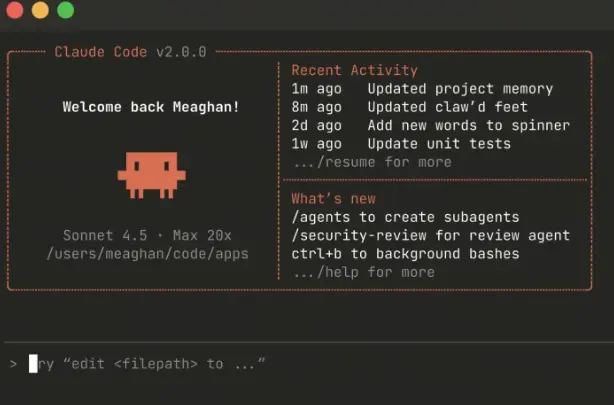
Claude Code and Clawdbot are not competitors but different, complementary tools. Claude Code, launched by Anthropic, is a desktop development tool focused on programming and technical tasks. Although its interface still retains a terminal style similar to MS-DOS, its autonomy and reasoning ability have led many users to see it no longer just as a coding assistant chatbot, but as a thinking system capable of taking over entire workflows.
The Wall Street Journal praised Claude Code, describing its reasoning and programming ability as reaching an astonishing level. Vercel CTO Malte Ubl said he used Claude Code to complete a complex project that would normally take a year in just one week. During holidays, he spent 10 hours daily interacting with Claude, describing each successful execution as a jackpot pull, bringing a strong sense of achievement.
Y Combinator CEO Gary Tan praised: “I’m so addicted to Claude Code that I stayed up 19 hours yesterday until 5 a.m.” This enthusiasm isn’t limited to engineers; many people with no programming background shared that they created working software tools for the first time. Although called Claude Code, its actual uses have long gone beyond programming, including health data analysis, expense report organization, and even daily administrative tasks.
In contrast, Clawdbot’s positioning remains as a 24×7 localized AI assistant. Users can choose whether it runs on ChatGPT, Claude, or Gemini backend. Clawdbot’s advantage is integrating communication platforms, allowing the AI assistant to exist directly within the most-used LINE, Telegram, or WhatsApp, without switching apps. For Taiwanese users, the most friendly approach is building their own 24/7, year-round AI assistant on LINE in just 30 minutes.
Security Risks and Usage Recommendations
Although Clawdbot is an open-source project with publicly available code, in theory, the community would sound the alarm immediately if backdoors or malicious behaviors appear. But because it requires extensive system permissions, some users believe the risks cannot be ignored and choose to try and then uninstall. From a security perspective, some netizens point out differences: ChatGPT’s main risk is that conversation content may be exposed to OpenAI, while Clawdbot’s risk lies in its ability to execute commands; improper setup could lead to unpredictable behavior.
An AI investment expert believes Clawdbot is just a long-armed assistant, and Claude Code can do the same. This view has some merit, as Claude Code can also execute tasks and is maintained by Anthropic, potentially offering better security and stability. However, Clawdbot’s advantage is in integrating communication platforms and its 24/7 background operation, features that Claude Code currently does not provide.
As AI assistant capabilities improve, security will become the most concern for users. Some users report that due to AI misunderstanding or execution errors, their photos have been deleted over years, and they have no way to recover. This irreversible loss reminds us that before granting AI broad permissions, proper safeguards should be set, such as requiring manual confirmation for critical operations, regular backups of key data, and restricting AI’s access to files.


